Author: xtower

  • Integration of Dual-Use Technologies in Civil-Military Infrastructure

    Integration of Dual-Use Technologies in Civil-Military Infrastructure

    Dual-use technologies are no longer confined to research labs or military pilot programs. Across the Indo-Pacific, Europe, and the Middle East, nations are embedding AI-driven logistics, quantum-secure communications, and advanced additive manufacturing directly into civilian and military infrastructure.

    This shift is transforming global supply chain resilience, altering the balance between commercial innovation and strategic national defense.

    1. AI-Integrated Infrastructure: The New Logistics Backbone

    AI-enhanced routing, predictive maintenance, and autonomous transport systems are now standard across major ports and logistics hubs.

    Civilian impact: Faster cargo turnover, reduced downtime.
    Military advantage: Real-time battlefield logistics, resilient supply chains during conflict or sanctions.

    Nations like the U.S., Japan, Singapore, and South Korea are embedding AI into dual-use ports and airbases that seamlessly switch to military operations during crises.

    2. Quantum Communications for Strategic Mobility

    Quantum-resistant encryption is being deployed in civil financial networks while simultaneously securing military command networks.

    This dual deployment creates a self-reinforcing ecosystem: commercial demand funds R&D, and military requirements push security standards upward.

    China, the EU, and the U.S. are leading a new competition for quantum-secure trade corridors and hardened digital supply routes.

    3. Advanced Manufacturing: 3D Printing and Rapid Deployment Hubs

    Factories capable of 3D printing spare parts, drones, and modular infrastructure now serve two masters:

    Civilian: Rapid product development, local industrial capacity.

    Defense: On-demand equipment, field-deployable repair hubs, modular battlefield logistics.

    The result is a tighter integration between commercial production hubs and military force projection, tightening control over global chokepoints.

    4. Geopolitical Implications: New Supply Chain Blocs

    As nations encode dual-use technologies into their infrastructure:

    Supply chains become more localized. Production hubs become more securitized. Global trade routes become strategically contested.

    The world is shifting toward two major tech-infrastructure blocs:
    a U.S.-led open innovation network, and a China-centered state-driven dual-use industrial corridor.

    References

    OECD Digital Security & Emerging Tech Briefings

    U.S. DoD Emerging Capabilities Reports

    EU Dual-Use Export Control Framework

    RAND Corporation: Civil-Military Technology Integration

  • 3D-Printed Military Boats: The Next Breakthrough in Defense Logistics & Rapid Maritime Operations

    3D-Printed Military Boats: The Next Breakthrough in Defense Logistics & Rapid Maritime Operations

    Executive Summary

    A Dutch 3D-printing breakthrough—originally designed to automate civilian boatbuilding—is now rapidly entering military logistics, special-forces operations, and Indo-Pacific maritime support.
    With Navy-grade hulls printed in six weeks (vs years), and deployable shipyard-in-a-container modules, this new manufacturing model could reshape naval defense economics and enable on-demand tactical deployments in forward bases from Guam to the Red Sea.

    1. The Technology Breakthrough: Navy-Grade 3D Boats

    CEAD’s Delft-based Marine Application Center has finally solved the materials challenge:

    • thermoplastic + fiberglass blend
    • UV-resistant
    • marine-grade fouling resistance
    • extremely high impact tolerance (sledgehammer test succeeded)

    Traditional fiberglass hulls require:

    • complex molds
    • heavy labor
    • slow curing
    • high waste
    • heavy shipping
    • multi-month timelines

    3D hulls require:

    • digital design
    • base material flow
    • robotic arm printer
    • 4-day print cycle
    • minimal labor
    • instant redesign capability

    This means the “shipyard” becomes software + a containerized robotic printer.

    2. Direct Military Impact: NATO Already Testing It

    Prototype 12-meter naval boat — built for the Dutch Navy in 6 weeks

    NATO special forces have also run exercises with:

    • unmanned surface vessels (USVs)
    • mission-specific drone boats
    • on-site 3D-printed assets built within hours
    • design changes uploaded instantly during operations

    This is not theoretical — it is already field-tested.

    Why defense forces care:

    • Navy procurement cycles = years
    • 3D printing cycles = days to weeks
    • Adaptability → mission-specific hulls
    • Recyclable materials → reuse older boats
    • Rapid forward deployment → no shipyard required

    3. Strategic Advantage in Indo-Pacific & European Theaters

    The tech allows deployable micro-shipyards, redefining maritime logistics:

    Indo-Pacific Use Cases

    • dispersed island operations (Guam, Saipan, Okinawa)
    • drone-swarm naval decoys
    • amphibious logistics under contested zones
    • rapid replacement of damaged small craft

    European/NATO Use Cases

    • Baltic Sea and North Sea mine-avoidance drones
    • anti-smuggling autonomous patrol vessels
    • Black Sea operational resupply (Ukraine maritime drone model)

    4. Logistics Revolution: “Shipyard as a Container”

    CEAD’s 40-meter printers (or mini-units) can be:

    • flown in by cargo aircraft
    • moved via flatbed truck
    • packed into shipping containers
    • deployed near conflict zones

    The only thing to transport is raw filament in big bags.
    Not finished boats.

    This collapses the entire supply chain:

    Traditional3D-Printed
    Shipyard → Factory → Port → TransportDesign → Printer → Mission
    Months–YearsHours–Weeks
    High laborMinimal labor
    Fixed facilityMobile facility
    Shipping constraintsLocal production

    This is a Navy procurement disruption.

    5. Dual-Use Market: Commercial + Defense Acceleration

    The civilian side — electric ferries, workboats, RIBs — drives scale.
    Defense side benefits from:

    • lower cost
    • multi-mission flexibility
    • instant repair/replace capability
    • modular payload integration
    • covert manufacturing in remote theaters

    This is classic dual-use innovation:
    commercial adoption → military advantage.

    6. Strategic Outlook:

    3D Printing Will Become a Core Component of Maritime Power Projection

    Within 5–10 years:

    • forward-deployed micro-shipyards become standard
    • special-forces teams carry portable printers
    • navies replace USVs monthly, not yearly
    • supply-chain shocks no longer paralyze maritime operations
    • additive-manufactured fleets appear in Indo-Pacific flashpoints

    The manufacturing model itself becomes a force multiplier.

  • Weaponization of Capital Markets in Emerging Tech Competition

    Weaponization of Capital Markets in Emerging Tech Competition

    Introduction: When Finance Becomes Statecraft

    Capital markets have quietly become one of the most powerful tools of geopolitical influence.
    As emerging technologies define national power, financial flows are increasingly regulated, weaponized, and strategically directed by states.

    1. Outbound Investment Controls: Blocking Technology Transfer

    The U.S. leads the trend with restrictions on outbound investment into Chinese:

    • AI
    • Quantum computing
    • Semiconductors
    • Military-relevant biotech

    The EU and Japan are evaluating similar frameworks.
    This is a fundamental shift: capital movements now carry national security implications.

    2. Sovereign Wealth Funds as Global Tech Gatekeepers

    Middle Eastern sovereign wealth funds (SWFs)—PIF, Mubadala, ADIA, QIA—are reshaping emerging technology sectors through:

    • Massive AI and robotics investments
    • Space and satellite tech funding
    • EV, energy storage, and hydrogen ecosystems
    • Advanced materials and aerospace manufacturing

    These funds operate simultaneously as commercial investors and geopolitical actors.

    3. Market Access as a Tool of Political Leverage

    China exercises financial influence through:

    • Venture capital gating
    • IPO approvals and delistings
    • Domestic listing policies
    • State-directed funding into strategic sectors

    Foreign firms often face a trade-off: access to China’s market vs. alignment with Western strategic norms

    4. The Financialization of the Battlefield

    Defense modernization increasingly relies on:

    • Private equity funding missile and drone manufacturers
    • Venture capital scaling dual-use startups
    • SPACs and tech IPOs in commercial space and ISR sectors
    • Investment rerouted through “friendly” jurisdictions

    Financial ecosystems have become part of the military-industrial landscape.

    5. Consequences: A Fragmenting Financial Order

    We now see:

    • Competing capital blocs
    • Conflicting regulatory regimes
    • Politicization of investment flows
    • Techno-financial spheres of influence

    Markets are no longer neutral—they are geopolitical terrain.

    Conclusion

    The weaponization of finance is transforming global capital markets into strategic instruments.
    States that can mobilize financial power alongside technological leadership will dominate the emerging world order.

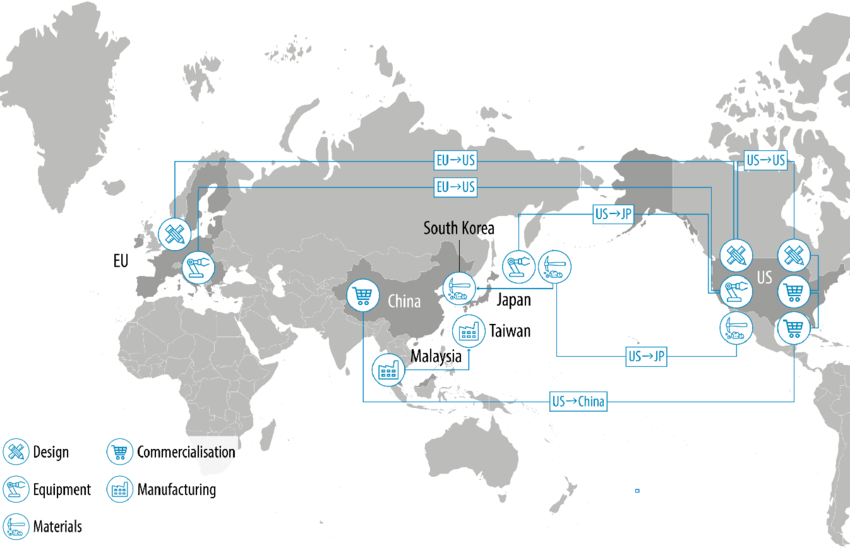
  • Global Supply Chain Realignment Under U.S.–China Strategic Competition Realignment

    Global Supply Chain Realignment Under U.S.–China Strategic Competition Realignment

    The international supply chain architecture built over 30 years of globalization is being re-engineered under geopolitical pressure.
    The U.S.–China competition has triggered a multi-layered realignment across semiconductors, rare earths, aerospace, EV batteries, and advanced materials.

    The world is moving toward two partially decoupled industrial ecosystems.

    1. Semiconductors: The Core Battleground

    Semiconductors sit at the heart of great power competition:

    • U.S. and allied export controls limiting China’s access
    • China’s push for indigenous fabs and lithography
    • Taiwan and Korea reassessing risk exposure
    • Japan and the Netherlands controlling equipment choke points

    The CHIPS Act in the U.S. and Europe’s Chips Act mark the largest industrial policy efforts since the Cold War.

    2. Rare Earths and Advanced Materials: The Hidden Pressure Points

    Rare earths, gallium, germanium, advanced magnets, and aerospace composites are now strategic commodities.

    • China weaponizes export permits
    • The U.S., EU, and Japan build alternative extraction and processing hubs
    • Australia, Canada, and Vietnam emerge as “friend-shoring” partners

    The result is a new resource geopolitics for the tech age.

    3. China’s Outbound FDI Surge Through the Belt and Road

    Facing Western scrutiny, China deploys a parallel strategy:

    • Shifting manufacturing capacity to Southeast Asia, Africa, Middle East
    • Securing minerals and logistics in Global South states
    • Building “shadow supply chains” to bypass export controls

    This allows Beijing to maintain global reach while reducing exposure to Western leverage.

    4. Western Indo-Pacific “Friend-Shoring” Networks

    The U.S., Japan, Korea, Taiwan, and Australia are constructing resilient industrial networks:

    • Joint semiconductor supply corridors
    • Shared defense production (missiles, drones, radars)
    • Critical minerals agreements
    • Maritime security for supply routes

    This marks the rise of a geo-industrial alliance system, not just a military alliance.

    5. The Permanent Restructuring of Global Value Chains

    This realignment is structural:

    • Higher redundancy
    • More regionalization
    • More security-driven production
    • Less efficiency, more resilience

    Companies and states now design supply chains around political risk, not cost.

    Conclusion

    The global supply chain system is shifting into a new phase defined by great power rivalry, industrial security, and technological sovereignty.

  • AI-Driven ISR Fusion: Autonomous Sensor–Targeting Networks Expanding Across Indo-Pacific and European Theaters

    AI-Driven ISR Fusion: Autonomous Sensor–Targeting Networks Expanding Across Indo-Pacific and European Theaters

    1. The New Battlespace: Where Sensors, AI, and Kill-Chains Converge

    Defense markets in 2025 are being reorganized around one dominant theme:
    AI-Driven ISR Fusion — the ability to merge satellite, aerial, maritime, cyber, and ground-sensor intelligence into a single autonomous targeting picture.

    As great-power competition intensifies, both the Indo-Pacific and Europe are shifting their procurement priorities toward systems that compress the sensor-to-shooter timeline from minutes to seconds.
    AI is no longer an “assistive tool”; it is the core orchestrator of the next-generation kill chain.

    2. Indo-Pacific: Countering China’s A2/AD With Distributed Autonomy

    China’s expanding A2/AD belts — from the South China Sea to Taiwan and the First Island Chain — are accelerating demand for:

    • Autonomous maritime ISR drones (USV/UUV swarms)
    • AI-enhanced SIGINT/ELINT processors
    • Multi-domain sensor fusion hubs linking naval, air, and space assets
    • Low-latency tactical cloud networks resilient to jamming
    • Long-range precision fires guided by machine-generated targeting

    The U.S., Japan, Australia, and South Korea are now co-developing architectures that combine real-time ISR streams + autonomous cueing to penetrate contested environments without exposing manned platforms.

    The doctrine is simple:
    Small, cheap, numerous, and AI-coordinated beats big, slow, centralized.

    3. Europe: AI ISR as the Backbone of a Post-Ukraine Defense Posture

    The Russia-Ukraine war permanently altered Europe’s procurement strategy.
    NATO now prioritizes:

    • Counter-battery AI sensors (locating artillery in seconds)
    • AI-accelerated battlefield awareness for armored formations
    • Drone-counter-drone autonomy engines
    • Satellite–drone–ground fusion centers for 24/7 targeting
    • Stand-off weapons guided by synthetic-aperture AI models

    The result is a shift away from legacy heavy platforms toward digital-first lethality where ISR accuracy determines firepower, not the size of the weapon.

    4. Key Industry Players Driving the AI-ISR Revolution

    USA

    • Palantir – real-time fusion & autonomous tasking engines
    • Anduril – Lattice OS, AI kill-chain networking, autonomous drones
    • Lockheed Martin – AI-enabled missile guidance + space ISR integration
    • Raytheon – counter-drone and AI radar suites

    Europe

    • BAE Systems – multi-domain ISR cloud architecture
    • Thales – AI radar + integrated electronic warfare
    • Airbus Defence – satellite-drone fusion ecosystems

    Asia-Pacific

    • Hanwha, LIG Nex1 (Korea) – AI-guided artillery, ISR drones, autonomous fire-control systems
    • Mitsubishi Heavy (Japan) – maritime ISR AI and next-gen Aegis integration

    The competitive frontier is no longer hardware—it is AI orchestration.

    5. Market Outlook: The Rise of Autonomous Targeting Ecosystems

    According to 2025 analyst projections:

    • Global ISR/AI fusion market: ~$72B by 2030
    • Autonomous targeting & sensor networks: CAGR 14–18%
    • Defense cloud & edge AI: fastest-growing segment (over 20% CAGR)

    Three factors drive this acceleration:

    1. Long-range precision warfare becoming standard
    2. Drones & counter-drone races escalating
    3. Multi-domain command requiring machine-speed decision cycles

    Simply put:
    Whoever fuses sensors fastest dominates the battlespace.

    6. Strategic Implication: The Kill Chain Becomes the Platform

    The era of standalone platforms is ending.
    The new battlefield is a mesh of autonomous nodes where:

    • Satellites spot
    • Edge AI classifies
    • Swarms track
    • Ground batteries shoot
    • Cloud AI re-targets
    • Everything updates in seconds

    In both Indo-Pacific flashpoints and the European front, the nation that perfects AI-driven ISR fusion secures the decisive advantage.

    References

    U.S. Department of Defense (DoD). “Joint All-Domain Command and Control (JADC2) Strategy.” 2024.

    NATO ACT. “Multi-Domain Operations and AI-Enabled ISR Integration.” NATO Allied Command Transformation Report, 2024–2025.

    RAND Corporation. “AI-Enabled ISR Fusion and Future Kill-Chain Acceleration.” RAND Defense Analysis Series, 2023–2024.

    CSIS (Center for Strategic & International Studies). “Indo-Pacific A2/AD Trends and Autonomous Systems.” CSIS Strategic Technologies Program, 2024.

    European Defence Agency (EDA). “AI for Defense, ISR, and Targeting Networks in Europe.” EDA Technical Paper, 2024.

    Air Force Research Laboratory (AFRL). “Autonomous Sensor Integration and Machine-Speed Targeting.” AFRL MDO Research Brief, 2025.

    Jane’s Defence Weekly. “Global ISR Market Outlook 2025: Satellite–Drone Fusion and Tactical Edge AI.”

    Anduril Industries. Lattice OS Technical Overview. Corporate Whitepaper, 2024.

    Palantir Technologies. “Meta-Constellation & Autonomous Tasking Architecture.” ISR Fusion Product Guide, 2024.

    BAE Systems. “Digital Battlespace ISR & AI Sensor Networks.” Technology Insights, 2024–2025.

  • How Dual-Use Technologies Are Reshaping Defense and Global Markets

    How Dual-Use Technologies Are Reshaping Defense and Global Markets

    Introduction: The Blur Between Silicon Valley and the Military-Industrial Base

    Across the world, the boundary between civilian innovation and military modernization is collapsing.
    AI laboratories, cloud hyperscalers, semiconductor fabs, and aerospace startups are now critical players in national defense—not because governments invited them in, but because commercial technologies have surpassed traditional defense R&D in scale, speed, and capability.

    Dual-use technologies—AI, quantum computing, hypersonics, robotics, biotech, and space systems—are reshaping both defense architectures and commercial capital markets.

    1. AI as the Central Nervous System of Dual-Use Transformation

    Commercial AI firms now generate innovations far faster than government labs:

    • Large-scale models accelerating ISR fusion
    • Autonomous navigation for logistics and weapons
    • Predictive maintenance & supply forecasting
    • Commercial cloud replacing government data centers

    The shift is so dramatic that defense planners increasingly build strategies around what the commercial sector will produce next—not what military R&D will develop internally.

    2. Quantum Computing and Encryption: Offensive and Defensive Stakes

    Qantum technologies represent one of the most strategically sensitive dual-use domains:

    • Civilian use: chemistry, materials, pharmaceuticals, finance
    • Military use: codebreaking (“Q-Day”), secure comms, navigation without GPS

    States are racing to secure intellectual property, leading to new forms of export control, investment screening, and talent restrictions.

    3. Hypersonics and the Acceleration of Aerospace Commercialization

    Hypersonic propulsion—once exclusive to defense—is now being pursued by commercial space and transportation firms.
    This creates three strategic consequences:

    1. Commercial capital reduces R&D costs for militaries
    2. Supply chains become harder to regulate
    3. Rival states exploit gray zones to acquire sensitive tech

    The dual-use nature makes non-proliferation regimes nearly impossible to enforce.

    4. Capital Markets Become the Battlefield

    Dual-use tech attracts massive venture investment, which becomes a national security factor:

    • U.S. Outbound Investment Controls (EO 14105)
    • Europe’s tightening FDI screening
    • China’s tech funds supporting AI, drones, and materials
    • Gulf sovereign wealth funds investing strategically in dual-use startups

    The global map of “who funds what” now shapes geopolitical alliances.

    5. Regulatory, Ethical, and IP Conflicts Intensify

    As civilian firms hold core strategic IP, governments confront new challenges:

    • Who owns battlefield algorithms?
    • Can commercial AI companies refuse military contracts?
    • How do states secure IP without crippling innovation?

    The result is a world where technology governance = national strategy.


    Conclusion

    The rise of dual-use civil–military innovation is not a trend—it is a structural transformation.
    It will define future military power, economic competitiveness, and geopolitical stability.

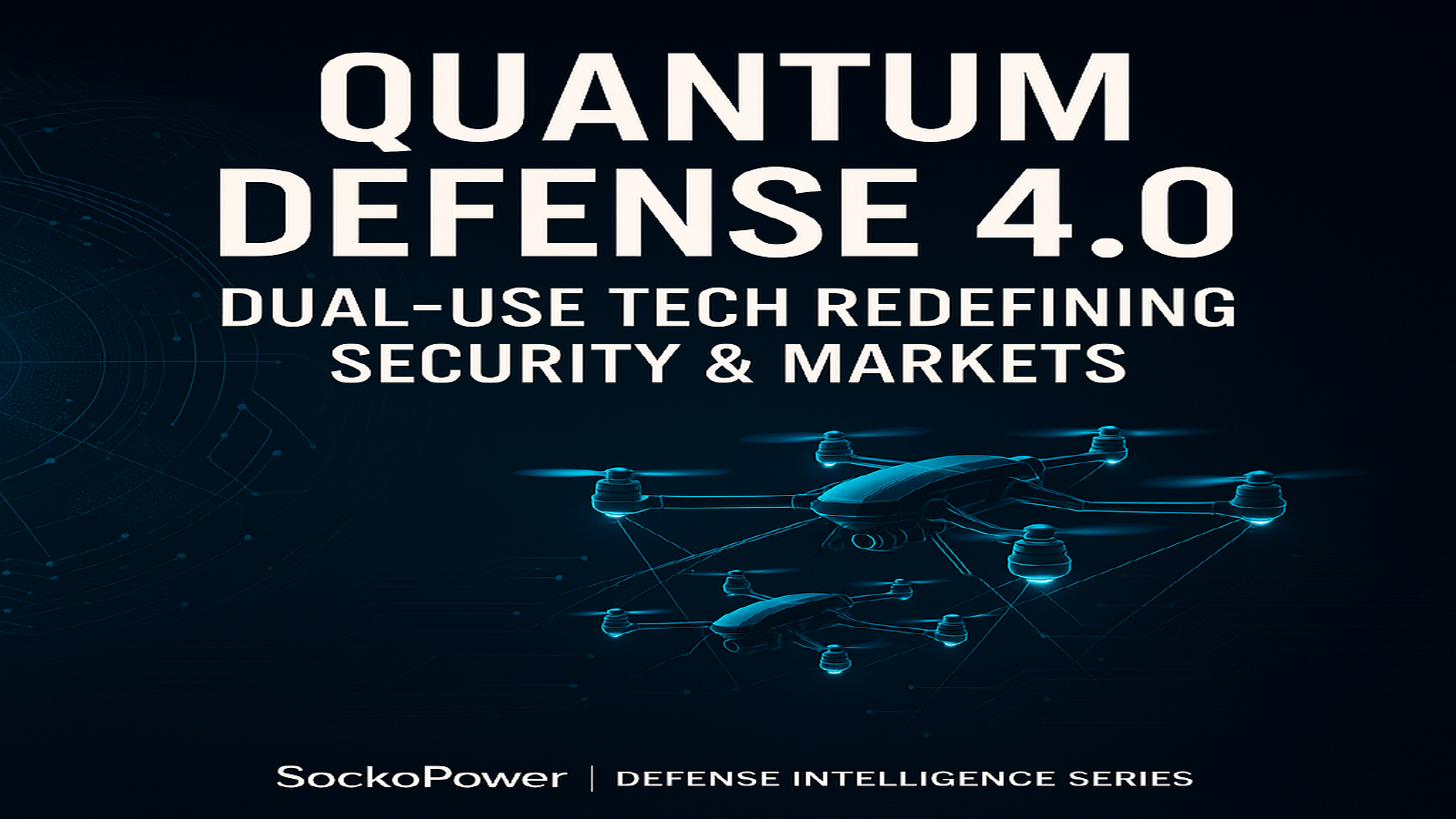
  • Quantum Defense 4.0 — How Dual-Use Tech Is Redefining Security and Markets

    Quantum Defense 4.0 — How Dual-Use Tech Is Redefining Security and Markets

    The next great power competition will not be fought by tanks or missiles, but by algorithms.
    Quantum-resistant encryption, quantum radar, drone swarm optimization, and nuclear detection modeling
    are no longer isolated defense projects—they are the backbone of a new dual-use economy where security and markets converge.

    1. Quantum-Resistant Encryption — Securing the Post-Quantum Economy

    As quantum computing threatens to break classical cryptography, global enterprises are shifting toward
    Post-Quantum Cryptography (PQC). Algorithms such as CRYSTALS-Kyber and CRYSTALS-Dilithium,
    standardized by NIST, are already being tested in NATO’s defense communication networks.
    Beyond military use, PQC is quietly becoming the infrastructure for financial systems, cloud networks, and the IoT ecosystem.

    Market Applications

    • Finance: PQC-based digital signature frameworks for transaction security
    • Cloud: Quantum-safe key management services from AWS and Azure
    • IoT: Secure sensor networks derived from defense-grade modules

    2. Quantum Radar Simulation — The New Optics of Detection

    Quantum radar leverages photon entanglement to detect stealth objects that evade traditional radar systems.
    AI-based simulations can now reconstruct target signatures from quantum noise patterns, offering detection capabilities
    once considered impossible. What began as a military project is now influencing civilian aerospace,
    space surveillance, and next-gen navigation sensors.

    Market Applications

    • Aviation Security: Transparent material scanners based on quantum interference
    • Satellite Systems: Hybrid radar-photon phase sensors for orbital tracking
    • Autonomous Mobility: Quantum-enhanced distance mapping for autonomous vehicles

    3. Drone Swarm Optimization — Collective Intelligence as a Force Multiplier

    AI-driven drone swarms form self-organizing networks that execute missions autonomously.
    DARPA’s OFFSET program is pioneering urban-combat swarm protocols that can adapt to dynamic environments.
    These same algorithms are migrating into the civilian sector, powering logistics, precision agriculture,
    and disaster-response networks.

    Market Applications

    • Logistics: Route optimization for delivery drones
    • Disaster Response: Autonomous search-and-rescue formations
    • Agritech: AI-based crop monitoring and pest control swarms

    4. Nuclear Material Detection Modeling — AI for Invisible Threats

    Detecting illicit nuclear material relies increasingly on AI-based neutron scattering models
    that identify unique particle-interaction patterns. MIT Lincoln Laboratory and the IAEA are developing
    simulation platforms that reduce detection errors by over 30%.
    Defense applications aside, this technology is now entering the domains of energy,
    medical radiation safety, and industrial monitoring.

    Market Applications

    • Port Security: Automated container scanning for radiological materials
    • Healthcare: AI-driven radiation diagnostics and safety analytics
    • Energy: Smart monitoring for nuclear fuel management

    Conclusion — From Defense Tech to Market Intelligence

    The frontier between national defense and commercial innovation has disappeared.
    Each of these technologies—quantum, AI, swarm systems, nuclear modeling—serves both as a weapon
    and as a market platform. Defense technology has become the invisible engine of
    the 21st-century economy: the line between security and profit no longer exists.


    SockoPower | Defense & Market Intelligence Series, Vol. 1

    References

    • NIST PQC Standardization Project — CRYSTALS-Kyber / Dilithium (2024)
    • DARPA OFFSET Program Overview (2023)
    • MIT Lincoln Laboratory — AI-Based Nuclear Detection Models (2024)
    • China NUDT — Quantum Radar Simulation Reports (2023)
    • IAEA Technical Paper — Radiation Pattern Recognition for Security (2024)
  • Unlocking Quantum Potential with NVIDIA CUDA

    Unlocking Quantum Potential with NVIDIA CUDA

    NVIDIA CUDA and the Quantum Frontier:

    How GPU Acceleration Is Shaping the Next Era of Computing: Insights & Market Intelligence Feature Analysis

    1. Introduction: A New Computational Threshold

    For nearly two decades, NVIDIA’s CUDA architecture has been the silent engine powering breakthroughs—from deep learning models and autonomous systems to real-time simulation and robotics.
    But in 2025, CUDA’s role is expanding beyond GPU acceleration alone.
    It is becoming the on-ramp to quantum computing.

    The convergence of GPU-accelerated classical systems and quantum processors is no longer theoretical; it is emerging through NVIDIA’s CUDA-Quantum platform, formerly known as QODA.

    This hybrid model is redefining what “computing power” means.

    2. Why CUDA Matters in the Quantum Era

    CUDA’s continued dominance stems from three pillars:

    1) Unified Developer Environment

    Developers who already write CUDA kernels can now extend workflows into quantum circuits without learning an entirely new paradigm.

    2) Hybrid Execution (GPU + QPU)

    Quantum Processing Units (QPUs) excel at superposition and entanglement tasks,
    while GPUs dominate linear algebra and large-scale simulation.

    CUDA-Quantum orchestrates both.

    3) Scalable Simulation Before Hardware Matures

    Because quantum hardware is still noisy and limited,
    GPU-accelerated simulation becomes essential—allowing enterprises to build quantum algorithms before QPUs reach scale.

    3. Key Technical Advantages

    3.1 CUDA-Quantum Programming Model

    Developers can:

    • Write quantum kernels in C++ or Python
    • Run them on simulators (NVIDIA GPUs)
    • Deploy the same code on real quantum hardware (IonQ, Quantinuum, Rigetti, etc.)

    This bridges the gap between R&D and production.

    3.2 GPU-Accelerated Quantum Simulation

    Quantum systems grow exponentially in complexity.
    A 40-qubit system requires more than 1 trillion complex amplitudes.

    NVIDIA’s cuQuantum libraries allow:

    • Dense and sparse matrix simulation
    • Tensor-network simulation
    • State vector evolution
    • Quantum error correction modeling

    This gives companies production-grade quantum R&D today, instead of waiting for hardware

    4. Real-World Applications: Where Business Meets Quantum

    1) Drug Discovery & Molecular Dynamics

    GPUs handle molecular modeling,
    QPUs explore quantum energy states.

    Outcome: faster protein-folding, material discovery, and docking analysis.

    2) Financial Risk Modeling

    Hybrid Monte Carlo + quantum optimization unlocks:

    • Portfolio optimization
    • Derivative pricing
    • Risk scenario generation
    • Cryptographic resilience testing

    3) Defense & Secure Communications

    Relevant for SockoPower’s Defense Insights segment:

    • Quantum-resistant encryption
    • Quantum radar simulation
    • Drone swarm optimization
    • Nuclear material detection modeling

    NVIDIA’s simulation architecture accelerat

    4) AI Acceleration Itself

    Ironically, quantum computing won’t replace AI—
    it will accelerate the accelerators.

    Quantum-inspired algorithms improve:

    • Transformer efficiency
    • Sparse modeling
    • Reinforcement learning search
    • Multi-agent simulation

    CUDA makes AI-Quantum integration natural.

    5. Market Intelligence: Strategic Outlook for 2025–2030

    5.1 Winners in the Hybrid Era

    NVIDIA

    Controls the unified development stack (CUDA).
    This effectively locks in the next decade of AI + quantum software.

    IonQ / Quantinuum / Rigetti

    Quantum hardware vendors benefit from CUDA-Quantum compatibility.

    Defense & Aerospace Integrators

    Raytheon, Lockheed Martin, and DARPA programs are accelerating hybrid quantum simulations.

    5.2 Enterprise Adoption Timeline

    YearDevelopment StageIndustry Activities
    2025Early Hybrid R&DSimulation-first workflows
    2027Applied QuantumOptimization & logistics use cases
    2030Quantum AdvantageSector-specific deployment

    By 2030, hybrid AI+Quantum systems will replace 5–15% of HPC workloads.

    5.3 Risks & Bottlenecks

    • QPU hardware still noisy
    • High energy costs for GPU clusters
    • Talent shortage in quantum engineering
    • Standardization fragmentation
    • Security concerns around post-quantum cryptography

    These are manageable but real.

    6. Ethical & Humanistic Considerations

    NVIDIA’s roadmap raises a critical question:

    Does more computational power automatically empower humanity?

    Not necessarily.

    Quantum-accelerated AI must be governed with:

    Transparency
    Safety alignment
    Energy responsibility
    Defense ethics

    A system powerful enough to design new materials can also design new threats.
    SockoPower’s mission—linking power with purpose—becomes essential here.

    7. Conclusion: CUDA as the Bridge to the Quantum Future

    Quantum computing will not replace classical systems.

    Instead: CUDA becomes the bridge.

    GPU clusters become the “training wheels” for quantum acceleration.
    Enterprises that adopt hybrid workflows early gain:

    • faster simulation
    • lower R&D risk
    • better optimization
    • long-term computational independence

    This is not just a hardware revolution—
    it is a paradigm shift in how intelligence is computed.

  • Visible Light Communication (VLC)

    Visible Light Communication (VLC)

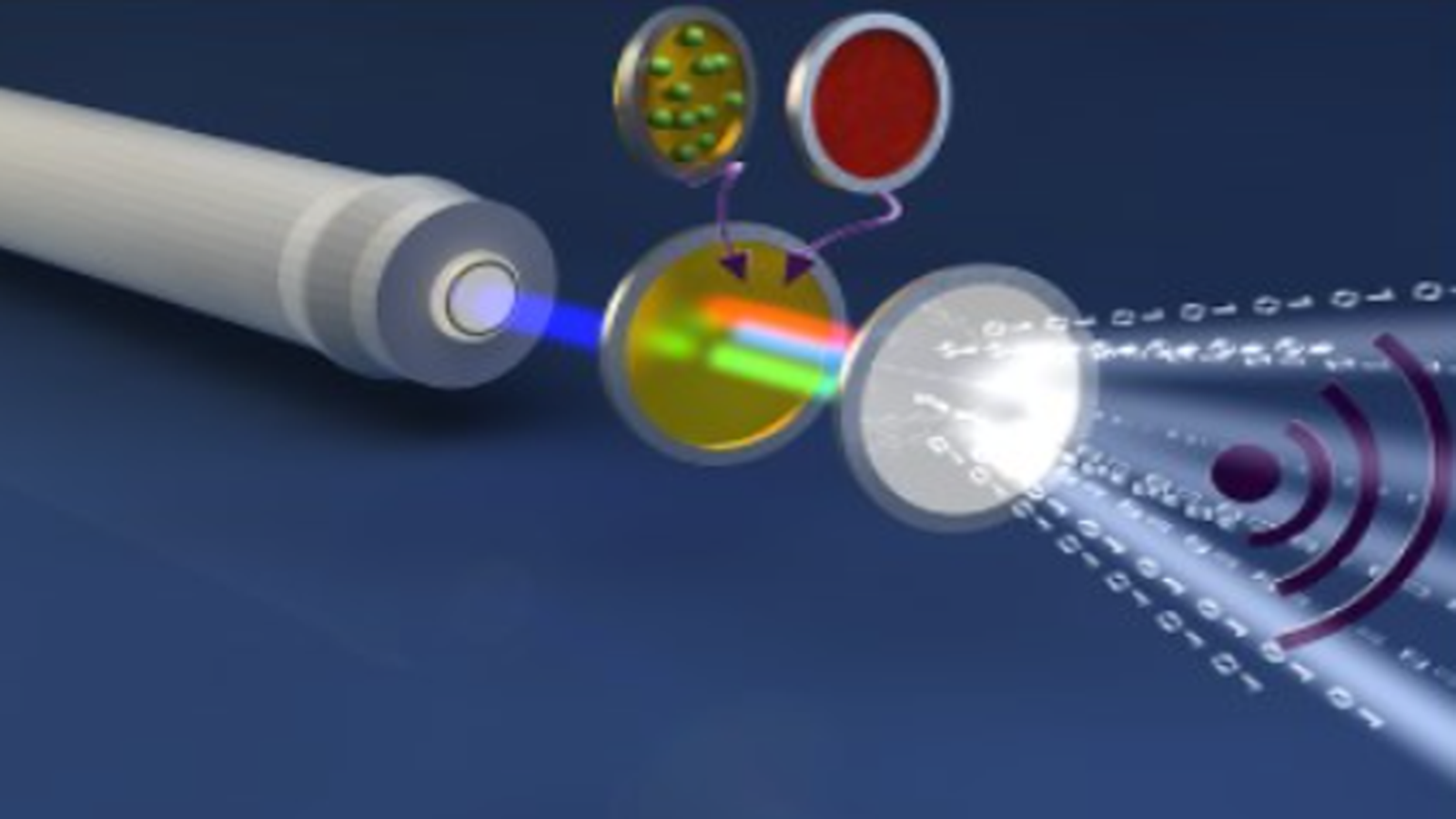
    Li-Fi (Light Fidelity) is a bidirectional, high-speed wireless communication technology that uses Visible Light Communication (VLC), or infrared light, instead of radio frequency (RF) waves for data transmission.1

    Here are the high-tech specifications and an overview of its business prospectus and markets:

    High-Tech Specifications

    FeatureLi-Fi Specification / CharacteristicComparison to Wi-Fi
    MediumVisible light (LEDs, up to $\sim 400$ to $800$ THz) and near-infrared light.Radio Frequency (RF) waves (typically $2.4$ GHz, $5$ GHz, and $6$ GHz).
    Speed (Theoretical)Can reach up to 224 Gbps (Gigabits per second) in lab conditions.Up to $\sim 9.6$ Gbps (Wi-Fi 6/6E).
    Speed (Real-World)Demonstrations often show $\sim 1$ Gbps or higher.Varies greatly, often much lower than theoretical peak.
    BandwidthVisible light spectrum is 10,000 times larger than the entire radio spectrum.Limited and increasingly congested RF spectrum.
    SecurityHighly secure because light cannot penetrate opaque walls, confining the signal to a physical space.RF signals penetrate walls, making them susceptible to interception outside the space.
    RangeShorter range ($\sim 10$ meters) and generally requires line-of-sight (though reflections can work).Longer range ($\sim 32$ meters or more).
    InterferenceInterference-free from RF, making it suitable for sensitive environments.Susceptible to interference from other electronic devices and Wi-Fi networks.
    InfrastructureIntegrates with existing LED lighting infrastructure.Requires dedicated Wi-Fi access points and routers.
    StandardOfficially recognized by the IEEE 802.11bb standard, promoting interoperability.Governed by various IEEE 802.11 standards.

    Business Prospectus and Markets

    Li-Fi is not typically seen as a complete replacement for Wi-Fi but as a complementary technology that offers advantages in specific, demanding environments.2 The market is projected for significant growth, with some forecasts showing a Compound Annual Growth Rate (CAGR) of over 40-50% through the forecast period (ending around 2030-2034).3

    Key Market Drivers:

    • Growing demand for high-speed, high-bandwidth wireless communication.4
    • Increasing RF spectrum congestion and the need for alternative, unlicensed spectrum.5
    • Need for highly secure wireless connections in sensitive sectors.
    • Expansion of smart cities and the ubiquity of LED lighting infrastructure.

    Target Markets and Applications:

    Market SegmentLi-Fi Value Proposition
    Defense & GovernmentMilitary-grade security and anti-jamming capabilities, as light is contained and has a near-zero electromagnetic (EM) signature.
    Aviation & AerospaceInterference-free high-speed passenger and avionics data, as light doesn’t disrupt sensitive RF systems.
    HealthcareSecure, interference-free networking for operating rooms and medical equipment (e.g., MRI machines) where RF is restricted.
    Industrial/ManufacturingReliable, low-latency communication for Industrial IoT (IIoT), automation, and real-time data transmission in factory floors.
    Retail & Indoor NetworkingHigh-speed internet access and location-based services (e.g., product information, promotions) through smart in-store lighting.
    Underwater CommunicationLight waves travel better through water than radio waves, enabling high-speed data transfer for divers and submarines.
    Smart Cities & TransportationVehicle-to-Vehicle (V2V) and Vehicle-to-Infrastructure (V2I) communication using headlights, streetlights, and traffic signals.

    Challenges:

    • Line-of-Sight Requirement: While reflections can work, direct light or reflected light is generally required, limiting mobility outside the light cone.
    • Inability to penetrate walls: This is a security advantage but a coverage disadvantage for whole-building mobility.
    • High Initial Implementation Cost compared to existing Wi-Fi infrastructure.10
    • Limited User Awareness and Compatibility: Most current devices require a Li-Fi dongle or integrated receiver.

    (Source)

      1. ResearchGate/www.researchgate.net/Review on Li-Fi: The Next Generation Wi-Fi – ResearchGate: On the other side of the spectrum, there lies LiFi. LiFi, which means Light Fidelity, is an emerging piece of technology that makes. use of Visible Light …

      2. Lingaya’s Vidyapeeth/www.lingayasvidyapeeth.edu.in/Li-Fi Technology – The Revolutionary Wi-Fi – Lingaya’s Vidyapeeth/Aviation and Underwater Communication: In environments where radio frequency communication faces challenges, such as aircraft cabins and underwater operations, …

      3. Mordor Intelligence/www.mordorintelligence.com/Light Fidelity (Li-Fi) Market Size, Share, Forecast & Analysis – Mordor Intelligence/Study Period. 2019 – 2030. Market Size (2025) USD 1.25 Billion. Market Size (2030) USD 7.73 Billion. Growth Rate (2025 – 2030) 43.96% CAGR. Fastest Growing …

      4. Data Bridge Market Research/www.databridgemarketresearch.com/Global Li-Fi Market Size, Share, and Trends Analysis Report – Industry Overview and Forecast to 2032/The market growth is largely fuelled by the increasing demand for high-speed wireless communication, rising concerns regarding radio frequency spectrum …

      5. Emergen Research/www.emergenresearch.com/Li-Fi Market – Emergen Research/Li-Fi is an advanced Wi-Fi-like system with a bandwidth of 224 gigabytes per second, which is relatively faster than Wi-Fi. Growing demand for highly secure …

      Socko/Ghost

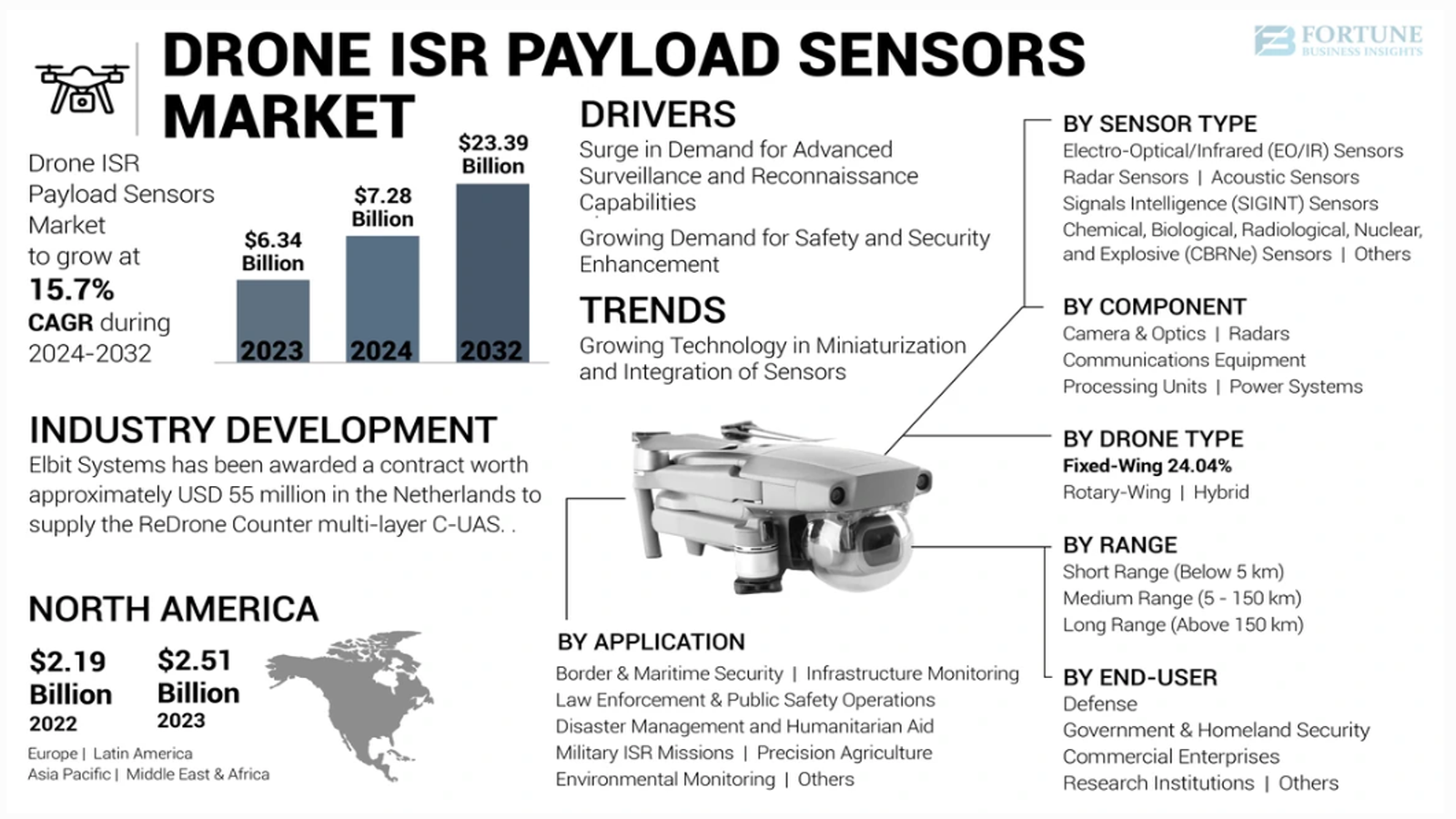
    1. High-tech military robotics market – UAVs/drones, UGVs, UMVs/UUVs

      High-tech military robotics market – UAVs/drones, UGVs, UMVs/UUVs

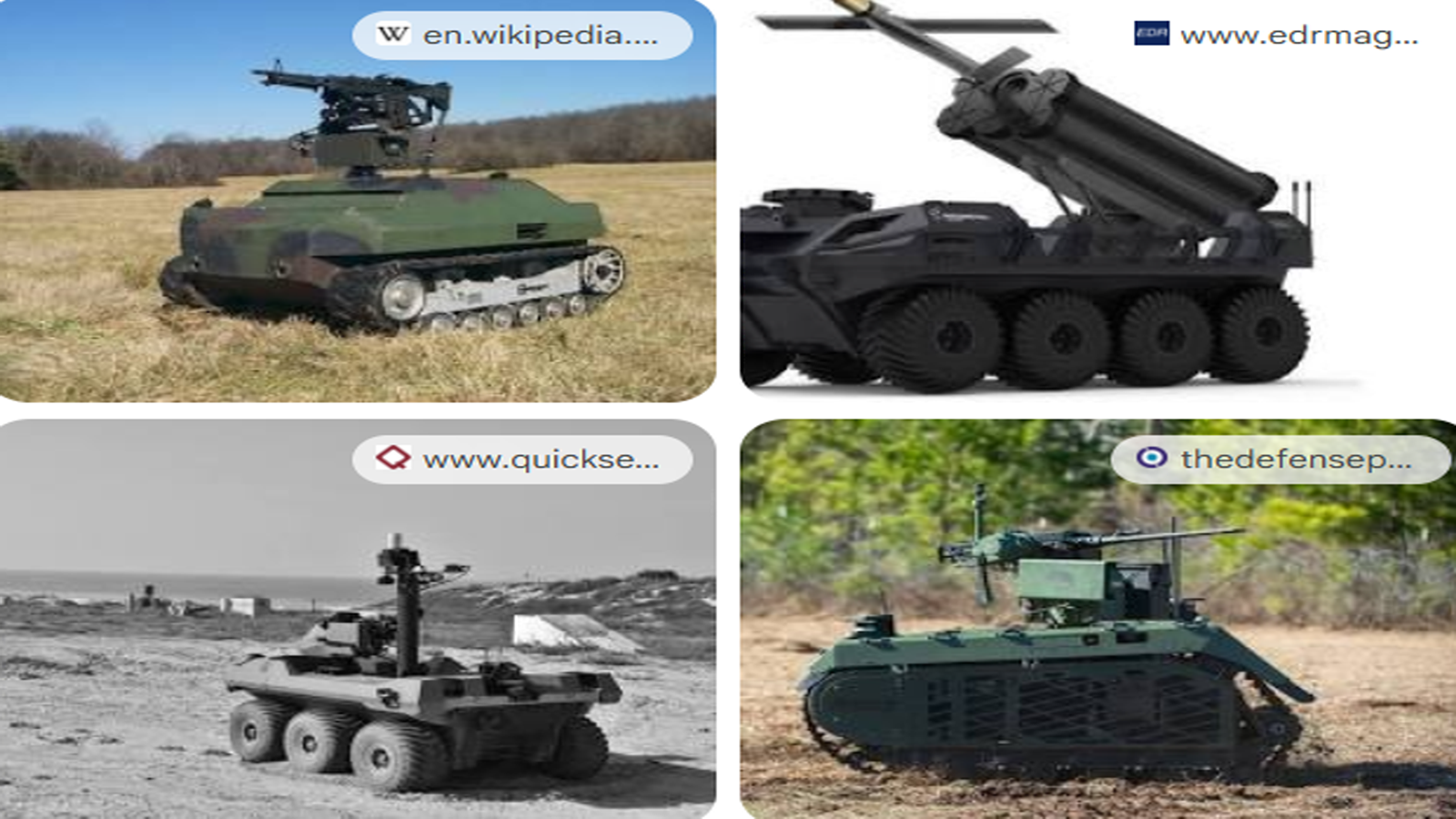
      The military robotics market is a high-growth sector focused on advanced unmanned systems to support, augment, or replace soldiers in various defense roles. This includes Unmanned Aerial Vehicles (UAVs/drones), Unmanned Ground Vehicles (UGVs), and Unmanned Marine Vehicles (UMVs/UUVs).

      The high-tech specifications revolve around autonomy, ruggedization, advanced sensor integration, and human-machine collaboration. The business prospectus is defined by significant market growth, rising defense budgets, and key segments like Intelligence, Surveillance, and Reconnaissance (ISR).

      High-Tech Specifications of Military Robotics

      Advanced military robots are defined by a convergence of cutting-edge technologies that enable operation in complex and contested environments.

      Specification CategoryKey High-Tech FeaturesExamples of Performance/Capability
      Autonomy & ControlAI-Driven Autonomy: Mission planning, real-time threat detection, and target recognition without continuous human input.Semi-autonomous: Human operators maintain decision authority while the robot handles navigation, obstacle avoidance, and task execution. Fully Autonomous (LAWS): Still heavily debated, but aims to select and engage targets independently.
      Sensor & Data FusionAdvanced Sensor Suites: High-resolution cameras, multi-spectral imaging (IR, thermal), LiDAR, and Chemical, Biological, Radiological, and Nuclear (CBRN) detectors.Real-Time Situational Awareness: Fusing data from multiple sensors to provide a comprehensive, 360° view of the battlespace to the operator or command center.
      Mobility & EnduranceAll-Terrain Capability: Ruggedized chassis, advanced track systems, or complex legged mechanisms (e.g., quadrupeds) for traversing stairs, slopes, and debris.Endurance: UAVs like the MQ-9 Reaper offer long-endurance flight (20+ hours). UGVs can have 7+ hour battery runtime or use hybrid propulsion for extended operational range.
      Communication & LinkSecure, Resilient Data Links: Encrypted, high-bandwidth communication for real-time video and control signals, with anti-jamming and Electronic Warfare (EW) shielding.LOS/NLOS Range: Line-of-sight (LOS) ranges often exceed 1000+ meters, with Non-Line-of-Sight (NLOS) capabilities using mesh networks or tethered fiber-optics.
      Payload & ManipulationHigh Lift Capacity & Dexterity: Robotic arms (manipulators) with human-like precision, haptic feedback, and significant lift strength.EOD/HAZMAT: Manipulator arms can lift over 100 lbs (45+ kg) near the chassis and perform delicate tasks like unzipping bags or handling explosive disruptors.
      SurvivabilityRuggedization & Environmental Sealing: Designed to operate in extreme temperatures and conditions (e.g., -20°C to +60°C) and be sealed against dust and water (e.g., IP66/IP67 rating).Self-Righting/Recovery: Ability for ground vehicles to autonomously self-right after a tip-over or for UAVs to manage system failures.

      Business Prospectus for Military Robotics

      The military robotics market is experiencing robust growth driven by the imperative to reduce risk to human personnel, modernize armed forces, and enhance operational efficiency.

      Market Size and Growth Forecast

      The global military robots market is a multi-billion dollar industry projected for substantial growth.

      • Market Size (2024/2025): The market size is estimated to be between USD 19.68 billion and USD 29.06 billion.
      • Projected Growth (CAGR): The market is forecast to grow at a Compound Annual Growth Rate (CAGR) of approximately 8.2% to 8.7% from 2025 through 2030 or 2032.
      • Forecasted Market Value (by 2030-2032): Projections anticipate the market will reach a value of USD 32.50 billion to USD 48.08 billion by the end of the forecast period.

      Key Market Drivers

      1. Force Protection and Casualty Reduction: The primary driver is the growing demand for unmanned systems to perform high-risk missions such as Explosive Ordnance Disposal (EOD), surveillance, and operations in CBRN-affected areas, thereby reducing human risk.
      2. Technological Advancements: Rapid advancements in Artificial Intelligence (AI), Machine Learning (ML), and sensor technologies are leading to more capable and autonomous systems.
      3. Military Modernization: Increased defense budgets globally, particularly in North America and the Asia-Pacific (APAC) region, are funding the procurement of cutting-edge robotic solutions.
      4. Enhanced Operational Efficiency: Robots provide greater speed, precision, and endurance for tasks like ISR (Intelligence, Surveillance, and Reconnaissance) and logistics.

      Segmentation and Opportunities

      SegmentDominant/Fastest Growing AreaKey Application
      By PlatformAirborne Robots (UAVs): Holds the largest market share (over 50%) due to versatile application in surveillance and precision strikes.Intelligence, Surveillance, Reconnaissance (ISR)
      By ApplicationCombat Support and ISR: ISR is currently the largest segment, while combat support is expected to witness the fastest growth.Logistics, Target Acquisition, Fire Support, EOD
      By RegionNorth America: Dominates the market share due to large defense spending and a mature industrial base. Asia-Pacific: Expected to be the fastest-growing region, driven by countries like China and India’s increasing defense investments.Strategic R&D and Procurement
      By OperationSemi-Autonomous: Holds a significant share as it balances advanced autonomous functions with necessary human oversight for critical decision-making.Complex missions requiring human-in-the-loop control.

      Major Industry Players

      The market is dominated by large defense contractors and specialized robotics companies, including Lockheed Martin Corporation, Northrop Grumman Corporation, BAE Systems, Thales Group, Elbit Systems, and specialized firms like and L3Harris Technologies.

      (Source)

      1. Market Research & Industry Reports (for Business Prospectus)

      • Grand View Research: Provided market size (USD 19.68 billion in 2024, CAGR 8.7% to USD 32.50 billion by 2030), regional analysis (North America dominance, APAC fastest growth), and segment analysis (Airborne highest share, ISR highest application share).
      • Fortune Business Insights: Referenced a market size projection (USD 64.13 billion by 2032 at 12.50% CAGR) and analysis of market drivers (AI integration, human augmentation).
      • MarketsandMarkets / Kings Research / Spherical Insights: Provided corroborating market figures (e.g., $18.20 billion in 2024, CAGR around 7.20% to 7.8%) and detailed segmentation by platform (UGV, UAV, UUV), application (EOD, ISR, Combat Support), and mode of operation (Semi-Autonomous, Autonomous).
      • Mordor Intelligence / Research Nester: Reinforced CAGR forecasts and provided detailed segment trends, such as the fastest-growing sub-segments (e.g., legged/bionic platforms, logistics, and EOD applications).

      2. Defense Contractor and Product Specifications (for High-Tech Specifications)

      • L3Harris Technologies: Provided technical data and operational specifications for advanced Explosive Ordnance Disposal (EOD) Unmanned Ground Vehicles (UGVs), such as the T4 and T7 systems (e.g., haptic feedback, lift capacity, battery runtime, IP ratings, and radio range).
      • Ghost Robotics / Standard Bots (as mentioned in the search results): Provided examples of specific robot specifications, such as all-weather operation, endurance, payload capacity, and mobility features of quadrupeds (e.g., Vision 60).
      • Defense News and Government Publications (e.g., DoD ManTech, Defence Equipment & Support): Cited information on real-world military deployments, strategic R&D focus (AI, sensor integration), and the overall strategic direction of military robotics.

      3. Academic and Strategic Analysis (for Autonomy and Trends)

      ResearchGate / Defense Policy Papers: Discussed the evolution towards autonomy, the role of AI and machine learning, and the conceptual frameworks for managing advanced unmanned systems. These provided the context for features like “AI-Driven Autonomy” and “Human-Machine Teaming.”

      Socko/Ghost