Category: Chain

Supply, logistics, and infrastructure movement.

  • RTX and Rheinmetall: How Capital Markets Are Forcing Defense Giants to Redesign Their Supply Chains

    RTX and Rheinmetall: How Capital Markets Are Forcing Defense Giants to Redesign Their Supply Chains

    The restructuring of global defense supply chains is no longer driven solely by military demand or geopolitical tension.
    It is increasingly dictated by capital markets.

    Two companies illustrate this shift with particular clarity: RTX and Rheinmetall.
    Both face surging demand from rearmament cycles, yet both are reshaping their supply chains not for production speed—but for investor compatibility.


    Capital Pressure as a Strategic Constraint

    For much of the post–Cold War era, defense supply chains optimized for cost efficiency and global sourcing. That model is breaking down.

    Institutional investors now evaluate defense firms through overlapping filters:

    • ESG exposure
    • Geopolitical alignment
    • Sanctions and export-control resilience
    • Supply-chain transparency
    Shop strapless bras in a variety of sizes like 32AA, 34DD, and more. Find stick on bras, bras with removable straps & more to go with open back dresses.

    RTX and Rheinmetall are responding by rewriting how defense manufacturing is organized, not merely where it is located.


    RTX: Simplifying the Supply Chain to Preserve Capital Access

    RTX’s challenge is not securing contracts—the backlog is strong across missiles, sensors, and aerospace systems.
    The challenge is maintaining investor confidence amid complexity.

    RTX has moved to:

    • Reduce deep-tier supplier opacity in electronics and propulsion
    • Prioritize sourcing from politically aligned jurisdictions
    • Consolidate critical suppliers to improve auditability and disclosure

    These decisions are not primarily about cost. They are about lowering perceived ESG and geopolitical risk so that large institutional capital—pension funds, sovereign investors, and long-duration asset managers—remains accessible.

    In effect, RTX is trading some supply-chain flexibility for capital predictability.


    Rheinmetall: Turning Geopolitics into a Capital Asset

    Rheinmetall’s transformation is more overt.

    Once viewed largely as a German land-systems producer, Rheinmetall has repositioned itself as:

    • A core European defense supplier
    • A beneficiary of NATO-aligned reindustrialization
    • A politically “safe” alternative to globally dispersed competitors

    The company is expanding production capacity within Europe while tightening control over suppliers of ammunition components, armored systems, and critical subassemblies.

    This strategy signals to capital markets that Rheinmetall’s growth is structurally protected by alliance politics, not dependent on volatile export markets.

    For investors, geopolitical alignment becomes not a risk—but a valuation support mechanism.


    What These Firms Are Really Optimizing For

    RTX and Rheinmetall are not simply responding to war demand.
    They are responding to a new reality:

    As a result:

    • Lowest-cost suppliers are losing relevance
    • Politically aligned suppliers gain pricing power
    • Tier-2 and Tier-3 firms face consolidation or exclusion
    • Vertical integration becomes a financial, not ideological, choice

    Supply chains are being rebuilt to survive capital scrutiny, not just battlefield attrition.


    Strategic Implication for the Defense Industry

    The lesson from RTX and Rheinmetall is clear:

    Those that fail this test may still win contracts—but lack the financial depth to execute them at scale.

    Socko/Ghost
  • TSMC, Foxconn & ST Engineering: How Indo-Pacific Supply Chain Diversification Is Reshaping Critical Technology Networks

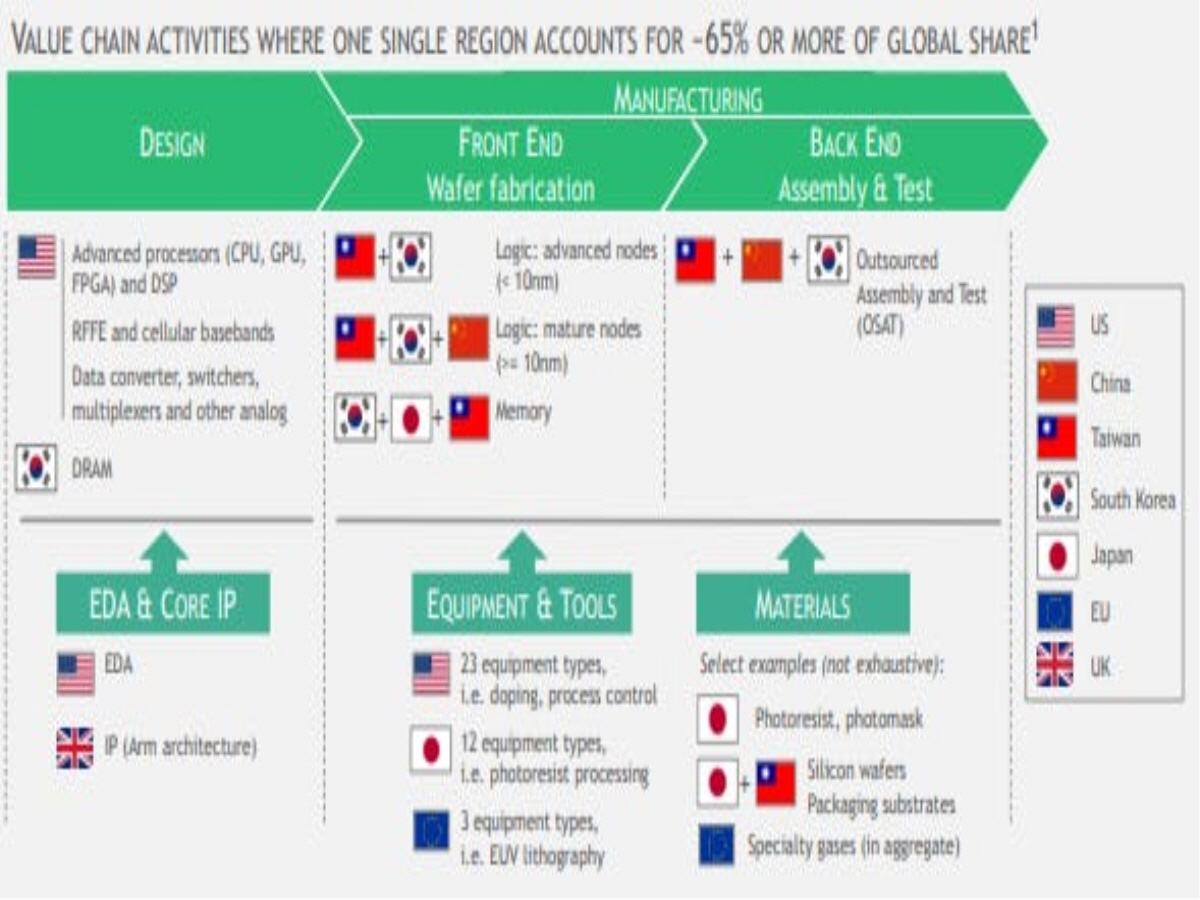
    TSMC, Foxconn & ST Engineering: How Indo-Pacific Supply Chain Diversification Is Reshaping Critical Technology Networks

    In the Indo-Pacific theater, the long-running U.S.–China rivalry is no longer a diplomatic abstraction. It has become a powerful driver of corporate strategy and industrial supply chain restructuring, particularly for firms with exposure to semiconductors, electronics manufacturing, and defense technologies.

    The regional diversification of supply chains reflects more than geopolitical signaling. Companies with strategic technologies are being compelled to rebalance production footprints, secure alternative sourcing, and reduce dependencies on China-centered networks—a shift that is now influencing capital flows and competitive positioning across global markets. trendsresearch.org+1


    TSMC (Taiwan Semiconductor Manufacturing Company): From Risk Zone to Strategic Hub

    The world’s most advanced logic chips are overwhelmingly produced by Taiwan Semiconductor Manufacturing Company. A recent disruption—such as the April 2024 earthquake that briefly shuttered TSMC facilities—highlighted how concentrated semiconductor output can imperil global technology supply chains. saisreview.sais.jhu.edu

    To mitigate such systemic risk, TSMC is expanding fabrication capacity in Japan and the United States, and accelerating investments in India. These moves reflect a broader industry trend in which major chipmakers pursue a “China+1” diversification strategy—maintaining existing bases while building alternative capacity outside China. trendsresearch.org

    The strategic implication is clear:
    TSMC’s production realignment enhances its resilience but also strengthens the technological autonomy of U.S. allies and partners in the Indo-Pacific. That, in turn, embeds TSMC deeper into defense and critical infrastructure supply networks—far beyond its commercial consumer electronics market.


    Shop strapless bras in a variety of sizes like 32AA, 34DD, and more. Find stick on bras, bras with removable straps & more to go with open back dresses.

    Foxconn: Diversifying Electronics Manufacturing Beyond China

    Another pivotal player is Foxconn, known for assembling iPhones and other consumer devices. Foxconn has significantly shifted capacity toward India and Southeast Asia, driven by rising labor costs in China, U.S.–China trade tensions, and customer demand for supply-chain resiliency.

    This “China-plus-regionalization” strategy not only hedges geopolitical risk but also positions Foxconn as a key partner to global OEMs seeking industrial footprints aligned with Western and Indo-Pacific trade frameworks. trendsresearch.org

    For Foxconn, such diversification is not purely defensive. It offers competitive leverage with major Western customers and opens access to new markets in India, ASEAN, and beyond—turning supply-chain reform into revenue growth.


    ST Engineering: Building Defense and Tech Production in Emerging Indo-Pacific Centers

    In defense and integrated systems, Singapore’s ST Engineering exemplifies a strategic response to the evolving supply landscape. Leveraging its diversified portfolio across digital, land, air, and sea domains, ST Engineering has expanded in-country production arrangements with partners such as Kazakhstan and other Indo-Pacific states. wikipedia

    This approach reflects a broader shift away from centralized manufacturing toward regionally distributed value chains that align with political risk profiles and alliance structures. For ST Engineering, this means securing production capacity in multiple jurisdictions, reducing vulnerability to regional disruptions, and embedding itself more deeply in allied defense ecosystems.


    Rare Earths and Critical Inputs: The Case of Vulcan Elements

    Beyond final assembly, critical inputs such as rare earth magnets are increasingly in focus. Vulcan Elements, a U.S. rare earth magnet producer, recently secured a major Department of Defense-backed loan to expand domestic output—explicitly aimed at reducing dependence on foreign mineral supply chains that China dominates. wikipedia

    This illustrates how supply-chain diversification now reaches raw materials and strategic components, not just finished goods. Companies that can localize or regionalize such critical nodes gain both market and geopolitical leverage.


    The Broader Strategic Realignment

    The corporate strategies of TSMC, Foxconn, ST Engineering, and Vulcan Elements underscore a larger pattern:

    • Partial decoupling of China-centric supply chains in critical technologies is underway. Asian Journal of Peacebuilding Vol. 10 No. 2 (2022)
    • Alternative production hubs—India, Southeast Asia, Japan, and U.S./Europe partnerships—are rapidly gaining traction. trendsresearch.org
    • Indo-Pacific nations pursue multi-alignment strategies, balancing ties with the U.S., China, and other partners to extract economic benefits while managing risk. Pacific Forum

    This realignment is not merely defensive. It is reshaping capital allocation, industrial specialization, and strategic influence in global technology sectors.


    Strategic Implications

    For investors and corporate planners, the implications are profound:

    1. Future value will be concentrated among firms that operationalize diversification early.
      Firms that embed supply-chain resilience into their core business models capture both market share and strategic partnerships.
    2. Geopolitical alignment shapes technology ecosystems.
      Companies must choose where to build capacity based on alliance frameworks and regulatory environments—not just pure cost metrics.
    3. Critical technology networks will bifurcate.
      One set oriented toward U.S. and allied markets, another toward China and its partners.

    In the Indo-Pacific economic order, supply-chain strategy is a strategic asset—no less than intellectual property or brand equity.

    Socko/Ghost

  • Ports, Chips, and Redundancy: Why Resilient Logistics Is Becoming a Premium Asset

    Ports, Chips, and Redundancy: Why Resilient Logistics Is Becoming a Premium Asset

    Global trade may be cooling in 2026, but resilient logistics is becoming more valuable, not less. That is the paradox shaping the current chain environment. The WTO’s March 2026 outlook says merchandise trade growth is expected to weaken this year after stronger-than-expected growth in 2025, while higher energy prices tied to the Middle East conflict could dampen GDP growth and, in turn, import demand. In other words, trade is not disappearing. It is becoming more fragile, more selective, and more exposed to disruption.

    That matters because slower trade does not automatically mean lower strategic importance for ports, routes, and logistics systems. In fact, the opposite can be true. When growth softens and geopolitical shocks rise, the firms that can still move goods reliably gain an advantage over those that depend on ideal conditions. The IMF has already said the Middle East conflict is causing disruptions to trade and economic activity, along with surges in energy prices and volatility in financial markets. That combination turns logistics from a support function into a competitive filter.

    UNCTAD’s maritime work reinforces the point. Its 2025 Review of Maritime Transport describes freight rates as high and volatile and says port disruption is becoming chronic. In its overview, UNCTAD adds that Red Sea disruption forced ships that once used that corridor to reroute around the Cape of Good Hope, extending voyages by weeks and putting supply-chain reliability under stress. That is not just a shipping story. It is a reminder that resilience now carries a measurable economic value.


    Semiconductors make the chain story even sharper. OECD work on semiconductor value chains warns that critical inputs remain concentrated in specific regions and segments, and that resilience will require diversification, stronger transparency, secure access to critical materials, and better co-operation across like-minded economies. The same OECD material notes that some chip-related bottlenecks are underestimated by standard sector data because the products are highly specialized and not easily substitutable. That means “just in time” logic becomes much harder to defend in strategic sectors.

    This is where ports, chips, and redundancy converge. A port is no longer just a node. It is part of the risk architecture of the business. A second supplier is no longer just extra cost. It can be a hedge against political shock, rerouting delay, export controls, or regional concentration. And semiconductor exposure is no longer just a procurement issue for electronics firms. It increasingly shapes delivery reliability for defense, automotive, telecom, energy systems, industrial equipment, and AI infrastructure. That last point is partly an inference, but it follows directly from the concentration and resilience problems highlighted in OECD and trade-system reporting.

    Shop strapless bras in a variety of sizes like 32AA, 34DD, and more. Find stick on bras, bras with removable straps & more to go with open back dresses.

    The market implication is straightforward. Resilient logistics is becoming a premium asset because execution certainty is becoming scarcer. In a calmer world, redundancy looked inefficient. In a fractured world, redundancy looks bankable. Buyers, contractors, and investors are more likely to reward firms that can secure alternative routes, diversify sourcing, absorb shipping delays, and protect production schedules when energy shocks or geopolitical disruptions hit. WTO, IMF, and UNCTAD materials do not use the phrase “premium asset” directly, but the underlying pattern is clear: reliable chain performance is becoming a source of pricing power and strategic value.

    This also changes how technology markets should be read. A good product is no longer enough if it sits on top of a brittle route structure, a single chokepoint supplier, or a narrow semiconductor dependency. The next winners may be firms that treat logistics, redundancy, and supply assurance as part of product design rather than as an afterthought. In 2026, the chain is not merely what connects the market. The chain is becoming part of the market itself.

    References
    WTO, Global Trade Outlook and Statistics – March 2026.
    IMF, Statement on the Middle East, March 3, 2026.
    UNCTAD, Review of Maritime Transport 2025.
    UNCTAD, Review of Maritime Transport 2025 Overview.
    OECD, Economic Security in a Changing World — Special Focus: Semiconductor Value Chains.
    OECD, Mapping the Semiconductor Value Chain.
    OECD, The Chip Landscape.

    Socko/Ghost

  • Trade May Slow in 2026, but Strategic Supply Chains Are Reordering Fast

    Trade May Slow in 2026, but Strategic Supply Chains Are Reordering Fast

    The global trade picture for 2026 is slowing, but it is not standing still. The WTO says merchandise trade growth is expected to weaken this year after a stronger-than-expected 2025, while also noting that AI-related investment and stronger Asian export performance are shaping the supply side in important ways. That means the world is not deglobalizing in a simple straight line. It is reorganizing around strategic sectors, resilient routes, and politically favored capacity.

    Shop strapless bras in a variety of sizes like 32AA, 34DD, and more. Find stick on bras, bras with removable straps & more to go with open back dresses.

    The Middle East conflict adds another layer to this realignment. The IMF says the war is already affecting trade, energy prices, and financial markets, and the WTO likewise links the conflict to a weaker trade outlook. For businesses, that turns logistics from a background cost into a strategic variable. Shipping routes, sourcing geography, inventory policy, and supplier redundancy all become part of market positioning.


    This is why “Chain” matters as its own lens. The question is no longer only what demand exists, but how quickly products can move through stressed systems without breaking margin or timing. In 2026, the companies that secure resilient chain access may outperform firms with good products but weak logistics exposure. That conclusion is an inference, but it follows directly from the WTO’s trade outlook and the IMF’s warning about conflict-driven disruption.

    References
    WTO, Global Trade Outlook and Statistics, March 2026.
    WTO, Middle East conflict weighs further on slowing trade outlook.
    IMF, Statement on the Middle East.

    Socko/Ghost

  • Supply Chains as Escalation VectorsHow Logistics, Materials, and Dependencies Shape Modern Conflict

    Supply Chains as Escalation VectorsHow Logistics, Materials, and Dependencies Shape Modern Conflict

    Modern conflicts rarely begin with a battlefield strike.
    They begin with friction.

    Delays in components.
    Restrictions in transit.
    Uncertainty in sourcing.

    Supply chains have become active escalation vectors—not passive background systems.

    From Efficiency to Vulnerability

    For decades, global supply chains were optimized for cost and efficiency.
    That optimization produced a new weakness: dependency density.

    Critical technologies now rely on narrow sets of suppliers, routes, and processing nodes.
    When these nodes are stressed, entire systems slow down.

    In modern conflict, slowdown is leverage.

    Chokepoints Without Missiles

    Escalation no longer requires kinetic strikes.

    Pressure can be applied through:

    • Export controls and licensing delays
    • Logistics bottlenecks and port congestion
    • Insurance repricing and freight denial
    • Energy and materials access restrictions

    These actions operate below traditional thresholds of war, yet they produce strategic effects.

    Semiconductors, Energy, and Dual-Use Chains

    Military capability is increasingly built on civilian supply chains.

    Advanced chips, specialty materials, cooling systems, and precision components serve both markets simultaneously.

    This dual-use reality creates a dilemma:

    Targeting the supply chain affects civilian economies and military readiness at the same time.

    The boundary between economic pressure and military escalation dissolves.

    Supply Chains as Time Weapons

    Supply disruption rarely causes immediate failure.
    Its power lies in time.

    Delays accumulate.
    Maintenance cycles slip.
    Readiness erodes quietly.

    By the time impact becomes visible, strategic options have already narrowed.

    Supply chains function as slow-acting weapons.

    Capital and Pre-Positioned Escalation

    Investment decisions determine where resilience exists—and where it does not.

    • Redundant suppliers
    • Strategic stockpiles
    • Regionalized manufacturing
    • Logistics diversification

    These choices are made years before conflict.
    When crisis arrives, capital allocation becomes escalation posture.

    The Signal–Capital–Chain Loop

    Supply chains complete the strategic loop.

    Signal generates demand for compute and energy.
    Capital finances infrastructure and capacity.
    Chain delivers—or withholds—physical reality.

    Break any link, and the loop falters.

    Conclusion

    Modern escalation is no longer defined solely by force.
    It is defined by control over continuity.

    Supply chains decide:

    • How long systems endure
    • How quickly recovery occurs
    • How credible deterrence remains

    In contemporary conflict environments,
    logistics is leverage,
    dependency is exposure,
    and resilience is power.

    Socko/Ghost

  • Emerging Civil-Military Dual-Use Technologies Driving Strategic Autonomy in Indo-Pacific Supply Chains

    Emerging Civil-Military Dual-Use Technologies Driving Strategic Autonomy in Indo-Pacific Supply Chains

    The Indo-Pacific has become the world’s most contested technological theater, where military innovation and civilian industry are now inseparable. The region’s pursuit of strategic autonomy—the ability to secure economic value chains without dependence on geopolitical rivals—is increasingly driven by dual-use technologies originally developed for defense: AI-enabled sensing, quantum-secure communications, autonomous systems, resilient robotics and advanced semiconductor architectures.

    The convergence of defense and civilian innovation is not a future scenario. It is already rewriting the rules of supply-chain security, investment behavior and industrial strategy across the Indo-Pacific.

    1. AI: From Battlefield Decision Systems to Industrial Optimization

    AI began as a force-multiplier for ISR (intelligence, surveillance, reconnaissance) and autonomous targeting. Today, its dual-use expansion is transforming:

    maritime logistics and port automation,

    energy grid forecasting and resilience,

    aviation maintenance and predictive safety,

    financial risk modeling tied to supply-chain disruptions.

    Indo-Pacific governments increasingly view AI as a strategic asset, not merely a commercial tool. Nations such as South Korea, Japan, Australia and Singapore are integrating military-grade AI frameworks into commercial logistics networks to ensure continuity during geopolitical shocks—a concern heightened by Taiwan Strait tensions and the weaponization of trade routes.

    2. Quantum Computing: The Backbone of Future Supply-Chain Integrity

    Quantum technologies—particularly post-quantum cryptography and quantum key distribution (QKD)—were initially classified defense research.
    Now they are being rapidly deployed into civilian telecommunications and financial clearance systems across the region.

    Quantum integration enables:

    tamper-proof supply-chain authentication,

    secure semiconductor design collaboration,

    encrypted energy-grid command systems,

    high-fidelity modeling of rare-earth mineral extraction.

    As the U.S., Japan and Australia deepen quantum cooperation under AUKUS Pillar II, capital flows to quantum startups have surged, signaling a regional hedge against Chinese technological overreach.

    3. Autonomous Systems: Civilian Infrastructure Built on Military Logic

    Autonomous platforms—UAVs, maritime drones, robotic logistics vehicles—originated as battlefield tools. Today, they shape civilian sectors:

    offshore wind maintenance

    agricultural automation in Australia and Indonesia

    autonomous port operations in Singapore and Busan

    undersea mapping critical for submarine cables and energy pipelines

    These systems reduce vulnerability to chokepoints such as the South China Sea, enabling Indo-Pacific states to maintain operational continuity without foreign intervention.

    4. Supply-Chain Resilience: Dual-Use Technologies Become Strategic Shields

    The Indo-Pacific’s semiconductor reliance, rare-earth vulnerabilities and maritime exposure demand resilience that only dual-use technology can provide.

    New standards emerging include:

    defense-grade cybersecurity in private logistics,

    parallelized “critical tech corridors” bypassing conflict zones,

    AI-managed redundancy frameworks for semiconductor production,

    autonomous monitoring of submarine cable security.

    This shift is pulling institutional capital toward firms specializing in defense-grade AI, robotics, and quantum technologies—blurring the line between commercial and national-security sectors.

    5. Markets Respond: Capital Reallocates to Defense-Tech Innovators

    Regional capital markets—from Tokyo to Sydney to Seoul—are reweighting portfolios toward technology-driven defense firms.
    Drivers include:

    the need for supply-chain sovereignty,

    defense procurement modernization,

    public-private co-investment programs,

    and the recognition that civil-military convergence is irreversible.

    Companies able to demonstrate dual-use scalability—military-origin technology with commercial deployment potential—are becoming prime targets for global funds seeking exposure to Indo-Pacific resilience themes.

    Conclusion: The Indo-Pacific Is Building a New Industrial Doctrine

    Civil-military dual-use technologies are no longer supplementary components of national strategy—they are the central infrastructure of Indo-Pacific security and economic competitiveness.

    AI, quantum and autonomous systems will define which nations can maintain sovereignty, protect value chains and attract long-term capital.
    The region’s future will belong to states and companies that can deploy military-born innovations at industrial scale, constructing supply chains that are self-reliant, intelligent and geopolitically resilient.

    SockoPower | Defense-Tech & Strategic Intelligence
    High-end analysis for a world entering techno-geopolitical competition.

  • Supply Chain Vulnerabilities and Strategic Power Shifts in a Multipolar Global Economy

    Supply Chain Vulnerabilities and Strategic Power Shifts in a Multipolar Global Economy

    How Fragmented Production Networks Are Rewriting Global Power and Military Readine

    In the 21st century, supply chains have evolved far beyond commercial logistics. They now function as ‘sovereign assets’, and the ability to command or disrupt them directly shapes geopolitical leverage, military readiness, and the hierarchy of global governance. Accelerating protectionism, intensifying U.S.–China rivalry, and climate-induced disruptions are dismantling the old model of “low-cost, hyper-efficient globalization,” replacing it with a harsher system of strategic competition.

    1. The Fragmentation of the ‘Intermediate Goods World’

    Geopolitics has seized control of production networks.

    Over 70% of global trade consists of intermediate goods crossing multiple borders before reaching final assembly. This means that any disruption—anywhere—can immobilize entire industries.

    Recent shocks include:

    • U.S.–China semiconductor and AI export controls
    • Apple, Tesla, and major logistics firms accelerating “China-plus-one” exits
    • Red Sea attacks forcing up to 40% of container traffic to reroute
    • Grain and fertilizer shortages triggered by the Russia–Ukraine war

    The pattern is unmistakable:
    Geopolitical pressure has overtaken economic logic as the main driver of supply chain behavior.

    2. The Era of ‘Weaponized Supply Chains’

    States are now more powerful than multinational corporations.

    Where corporations once designed supply chains and governments merely regulated them, the power structure has flipped. Nations now treat supply networks as strategic weapons.

    United States

    • CHIPS and Science Act: semiconductors become defense infrastructure
    • Inflation Reduction Act: restructuring of minerals and battery supply chains
    • Integration of commercial and defense industrial bases for dual-use capability

    China

    • Export controls on rare earths, gallium, germanium, graphite
    • Use of strategic materials as diplomatic leverage
    • Expansion of South China Sea logistics and maritime choke-point control

    European Union

    • Critical Raw Materials Act
    • Diversification into Africa, Latin America, and the Arctic
    • Strategic autonomy efforts in energy, tech, and defense

    The result:
    Supply chain control has become a form of 21st-century coercive power—equal to sanctions, military bases, or currency dominance.

    3. Climate Change as an Emerging Military Variable

    Environmental instability now directly affects global force projection.

    Climate disruptions are no longer marginal. They increasingly degrade military mobility, energy logistics, and operational readiness.

    • The Panama Canal’s prolonged drought cut East–West shipping capacity
    • Middle Eastern and South Asian heat waves limit aircraft payloads
    • Melting Arctic routes are transforming the region into a new front for Russia, China, and NATO

    Climate instability is reshaping both commercial logistics and the strategic geography of warfare.

    4. Military Readiness Is Now Supply-Chain Dependent

    Wars are decided by throughput, not just firepower.

    The Ukraine war exposed how fast modern militaries burn through ammunition and components:

    • NATO’s artillery and missile stockpiles depleted far faster than expected
    • The U.S. drew on Korean and Japanese inventories to backfill shortages
    • China’s dominance in drones, batteries, and critical minerals highlighted its wartime industrial advantage

    The Pentagon now defines the defense industrial base as “the first line of deterrence.”
    A conflict can only last as long as the supply chain beneath it survives.

    5. Winners and Losers in the Multipolar Supply-Chain Order

    Real power is shifting—not through GDP, but through chokepoints and production sovereignty.

    United States

    Maintains global leadership via semiconductors, advanced manufacturing, defense production, and allied industrial coalitions.

    China

    Holds asymmetric leverage through rare earths, mid-stream manufacturing, and battery technologies—its “black-leverage” advantage.

    India & Southeast Asia

    Become the major beneficiaries of diversification away from China; new hubs for electronics, logistics, and heavy manufacturing.

    Japan & South Korea

    Strengthen their roles as indispensable nodes in semiconductors, batteries, shipbuilding, and next-generation defense systems.

    Multinational Corporations

    Transition from “stateless global actors” to politically constrained operators navigating sanctions, export controls, and alliance-based ecosystems.
    They no longer choose sites based on cost—but on geopolitical survivability.

    Conclusion — The State That Controls Supply Chains Controls the Future

    Economic, military, technological, and climate systems are merging into a single competitive domain. Power is no longer measured only by armies or reserves, but by the ability to reshape, protect, and weaponize supply chains.

    • Supply chains = peacetime leverage
    • Sanctions = wartime pressure
    • Chips & critical minerals = strategic sovereignty
    • Climate disruptions = force-projection constraints
    • Logistics realignment = the new map of global power

    In this multipolar era, the winners are the states and corporations that can rapidly reconfigure supply chains under pressure while maintaining technological and military resilience.

    This is the battlefield that will define global order—SockoPower is tracking it at the center of the map.

    References

    • Council on Foreign Relations. Global Supply Chain Pressure Index, 2023–2025.
    • U.S. Department of Defense. National Defense Industrial Strategy (NDIS), 2024–2025.
    • European Commission. Critical Raw Materials Act Briefing, 2024.
    • IMF. Geoeconomic Fragmentation and Supply Chain Resilience, 2024.
    • McKinsey Global Institute. Reimagining Supply Chains in a Fragmented World, 2023.
    • RAND Corporation. Industrial Base Dependencies and Military Readiness, 2024.
    • CSIS. Weaponized Interdependence in the Indo-Pacific, 2024.
  • Strategic Decoupling & Supply Chain Fragmentation

    Strategic Decoupling & Supply Chain Fragmentation

    Geopolitics is no longer about territory — it is about who controls the technology stack that powers nations.

    The rivalry between major powers is pushing global supply chains toward fragmentation and regional tech ecosystems with distinct standards, components, and regulations.

    1. Export Controls as Strategic Weapons

    The U.S., EU, and Japan are restricting exports of:

    AI chips

    Quantum hardware

    Advanced lithography

    Military-grade sensors

    These controls slow adversaries’ military modernization and create two incompatible tech universes.

    2. China’s Push for Autonomous Tech Ecosystems

    China is accelerating domestic production of:

    Semiconductors

    UAV systems

    Rare-earth refining

    Advanced materials

    This reduces vulnerability to Western chokepoints while expanding influence across Belt-and-Road trade corridors.

    3. Indo-Pacific & European Realignments

    Nations caught in the middle are choosing sides based on:

    Defense treaties

    Trade dependencies

    Technology access

    Supply chain resilience

    This realignment is producing new economic blocs that operate on competing technical standards.

    4. Long-Term Impact

    Strategic decoupling will:

    Redesign global manufacturing

    Fragment digital trade

    Force companies to operate dual supply chains

    Increase geopolitical risk premiums

    The world is entering a period of permanent supply chain bifurcation.

    Bottom Line

    Civil-military tech competition is reshaping the global economy.
    Supply chains are no longer neutral — they are geopolitical assets.

    References

    WTO Global Value Chain Fragmentation Study

    U.S. Commerce Department Export Control Briefings

    EU Strategic Autonomy Framework

    Asia Pacific Foundation: Tech Bloc Formation Analysis

  • Integration of Dual-Use Technologies in Civil-Military Infrastructure

    Integration of Dual-Use Technologies in Civil-Military Infrastructure

    Dual-use technologies are no longer confined to research labs or military pilot programs. Across the Indo-Pacific, Europe, and the Middle East, nations are embedding AI-driven logistics, quantum-secure communications, and advanced additive manufacturing directly into civilian and military infrastructure.

    This shift is transforming global supply chain resilience, altering the balance between commercial innovation and strategic national defense.

    1. AI-Integrated Infrastructure: The New Logistics Backbone

    AI-enhanced routing, predictive maintenance, and autonomous transport systems are now standard across major ports and logistics hubs.

    Civilian impact: Faster cargo turnover, reduced downtime.
    Military advantage: Real-time battlefield logistics, resilient supply chains during conflict or sanctions.

    Nations like the U.S., Japan, Singapore, and South Korea are embedding AI into dual-use ports and airbases that seamlessly switch to military operations during crises.

    2. Quantum Communications for Strategic Mobility

    Quantum-resistant encryption is being deployed in civil financial networks while simultaneously securing military command networks.

    This dual deployment creates a self-reinforcing ecosystem: commercial demand funds R&D, and military requirements push security standards upward.

    China, the EU, and the U.S. are leading a new competition for quantum-secure trade corridors and hardened digital supply routes.

    3. Advanced Manufacturing: 3D Printing and Rapid Deployment Hubs

    Factories capable of 3D printing spare parts, drones, and modular infrastructure now serve two masters:

    Civilian: Rapid product development, local industrial capacity.

    Defense: On-demand equipment, field-deployable repair hubs, modular battlefield logistics.

    The result is a tighter integration between commercial production hubs and military force projection, tightening control over global chokepoints.

    4. Geopolitical Implications: New Supply Chain Blocs

    As nations encode dual-use technologies into their infrastructure:

    Supply chains become more localized. Production hubs become more securitized. Global trade routes become strategically contested.

    The world is shifting toward two major tech-infrastructure blocs:
    a U.S.-led open innovation network, and a China-centered state-driven dual-use industrial corridor.

    References

    OECD Digital Security & Emerging Tech Briefings

    U.S. DoD Emerging Capabilities Reports

    EU Dual-Use Export Control Framework

    RAND Corporation: Civil-Military Technology Integration

  • 3D-Printed Military Boats: The Next Breakthrough in Defense Logistics & Rapid Maritime Operations

    3D-Printed Military Boats: The Next Breakthrough in Defense Logistics & Rapid Maritime Operations

    Executive Summary

    A Dutch 3D-printing breakthrough—originally designed to automate civilian boatbuilding—is now rapidly entering military logistics, special-forces operations, and Indo-Pacific maritime support.
    With Navy-grade hulls printed in six weeks (vs years), and deployable shipyard-in-a-container modules, this new manufacturing model could reshape naval defense economics and enable on-demand tactical deployments in forward bases from Guam to the Red Sea.

    1. The Technology Breakthrough: Navy-Grade 3D Boats

    CEAD’s Delft-based Marine Application Center has finally solved the materials challenge:

    • thermoplastic + fiberglass blend
    • UV-resistant
    • marine-grade fouling resistance
    • extremely high impact tolerance (sledgehammer test succeeded)

    Traditional fiberglass hulls require:

    • complex molds
    • heavy labor
    • slow curing
    • high waste
    • heavy shipping
    • multi-month timelines

    3D hulls require:

    • digital design
    • base material flow
    • robotic arm printer
    • 4-day print cycle
    • minimal labor
    • instant redesign capability

    This means the “shipyard” becomes software + a containerized robotic printer.

    2. Direct Military Impact: NATO Already Testing It

    Prototype 12-meter naval boat — built for the Dutch Navy in 6 weeks

    NATO special forces have also run exercises with:

    • unmanned surface vessels (USVs)
    • mission-specific drone boats
    • on-site 3D-printed assets built within hours
    • design changes uploaded instantly during operations

    This is not theoretical — it is already field-tested.

    Why defense forces care:

    • Navy procurement cycles = years
    • 3D printing cycles = days to weeks
    • Adaptability → mission-specific hulls
    • Recyclable materials → reuse older boats
    • Rapid forward deployment → no shipyard required

    3. Strategic Advantage in Indo-Pacific & European Theaters

    The tech allows deployable micro-shipyards, redefining maritime logistics:

    Indo-Pacific Use Cases

    • dispersed island operations (Guam, Saipan, Okinawa)
    • drone-swarm naval decoys
    • amphibious logistics under contested zones
    • rapid replacement of damaged small craft

    European/NATO Use Cases

    • Baltic Sea and North Sea mine-avoidance drones
    • anti-smuggling autonomous patrol vessels
    • Black Sea operational resupply (Ukraine maritime drone model)

    4. Logistics Revolution: “Shipyard as a Container”

    CEAD’s 40-meter printers (or mini-units) can be:

    • flown in by cargo aircraft
    • moved via flatbed truck
    • packed into shipping containers
    • deployed near conflict zones

    The only thing to transport is raw filament in big bags.
    Not finished boats.

    This collapses the entire supply chain:

    Traditional3D-Printed
    Shipyard → Factory → Port → TransportDesign → Printer → Mission
    Months–YearsHours–Weeks
    High laborMinimal labor
    Fixed facilityMobile facility
    Shipping constraintsLocal production

    This is a Navy procurement disruption.

    5. Dual-Use Market: Commercial + Defense Acceleration

    The civilian side — electric ferries, workboats, RIBs — drives scale.
    Defense side benefits from:

    • lower cost
    • multi-mission flexibility
    • instant repair/replace capability
    • modular payload integration
    • covert manufacturing in remote theaters

    This is classic dual-use innovation:
    commercial adoption → military advantage.

    6. Strategic Outlook:

    3D Printing Will Become a Core Component of Maritime Power Projection

    Within 5–10 years:

    • forward-deployed micro-shipyards become standard
    • special-forces teams carry portable printers
    • navies replace USVs monthly, not yearly
    • supply-chain shocks no longer paralyze maritime operations
    • additive-manufactured fleets appear in Indo-Pacific flashpoints

    The manufacturing model itself becomes a force multiplier.