Executive Summary
A Dutch 3D-printing breakthrough—originally designed to automate civilian boatbuilding—is now rapidly entering military logistics, special-forces operations, and Indo-Pacific maritime support.
With Navy-grade hulls printed in six weeks (vs years), and deployable shipyard-in-a-container modules, this new manufacturing model could reshape naval defense economics and enable on-demand tactical deployments in forward bases from Guam to the Red Sea.
1. The Technology Breakthrough: Navy-Grade 3D Boats
CEAD’s Delft-based Marine Application Center has finally solved the materials challenge:
- thermoplastic + fiberglass blend
- UV-resistant
- marine-grade fouling resistance
- extremely high impact tolerance (sledgehammer test succeeded)
Why this matters:
Traditional fiberglass hulls require:
- complex molds
- heavy labor
- slow curing
- high waste
- heavy shipping
- multi-month timelines
3D hulls require:
- digital design
- base material flow
- robotic arm printer
- 4-day print cycle
- minimal labor
- instant redesign capability
This means the “shipyard” becomes software + a containerized robotic printer.
2. Direct Military Impact: NATO Already Testing It
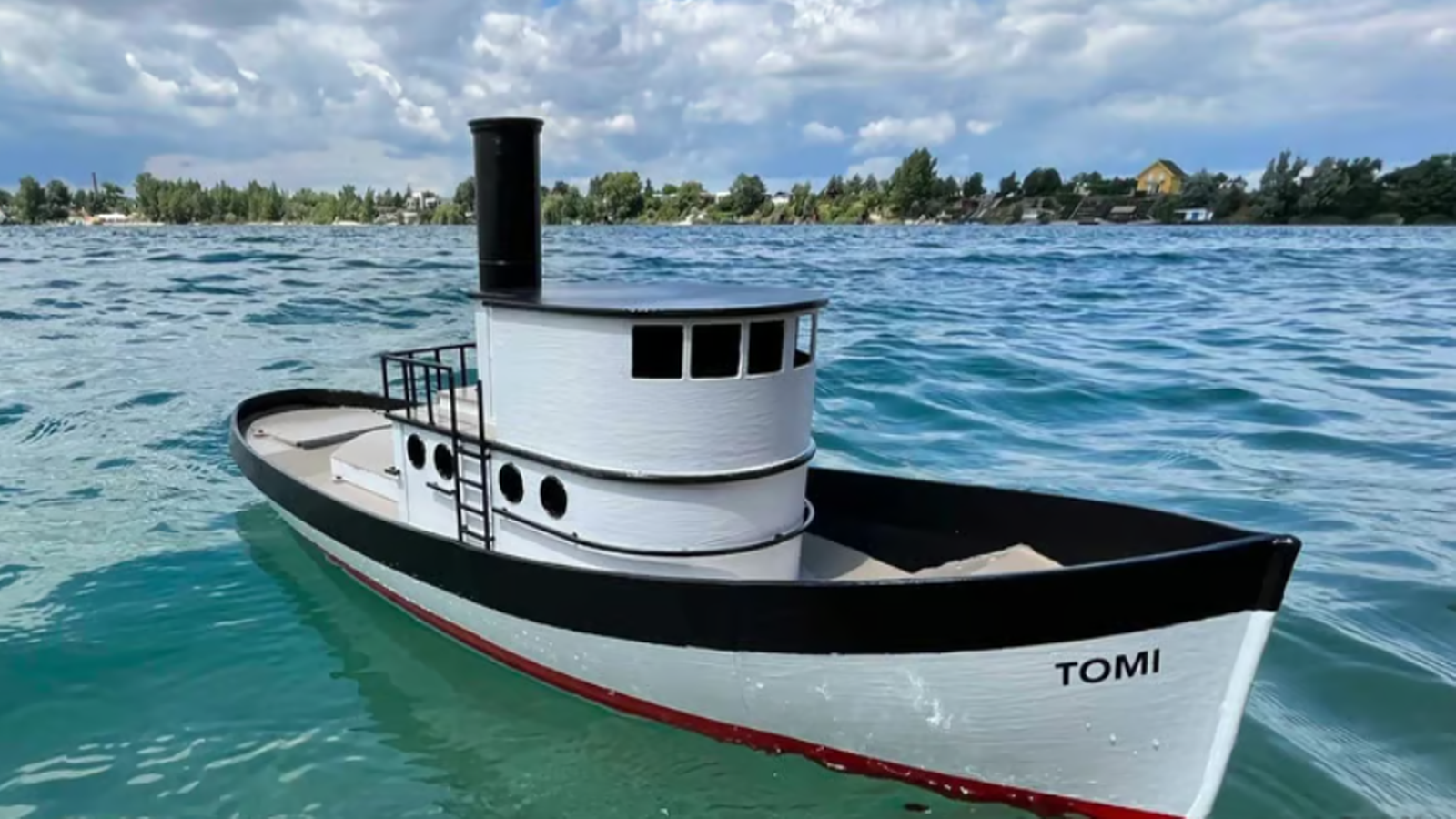
Prototype 12-meter naval boat — built for the Dutch Navy in 6 weeks
NATO special forces have also run exercises with:
- unmanned surface vessels (USVs)
- mission-specific drone boats
- on-site 3D-printed assets built within hours
- design changes uploaded instantly during operations
This is not theoretical — it is already field-tested.
Why defense forces care:
- Navy procurement cycles = years
- 3D printing cycles = days to weeks
- Adaptability → mission-specific hulls
- Recyclable materials → reuse older boats
- Rapid forward deployment → no shipyard required
3. Strategic Advantage in Indo-Pacific & European Theaters
The tech allows deployable micro-shipyards, redefining maritime logistics:
Indo-Pacific Use Cases
- dispersed island operations (Guam, Saipan, Okinawa)
- drone-swarm naval decoys
- amphibious logistics under contested zones
- rapid replacement of damaged small craft
European/NATO Use Cases
- Baltic Sea and North Sea mine-avoidance drones
- anti-smuggling autonomous patrol vessels
- Black Sea operational resupply (Ukraine maritime drone model)
4. Logistics Revolution: “Shipyard as a Container”
CEAD’s 40-meter printers (or mini-units) can be:
- flown in by cargo aircraft
- moved via flatbed truck
- packed into shipping containers
- deployed near conflict zones
The only thing to transport is raw filament in big bags.
Not finished boats.
This collapses the entire supply chain:
| Traditional | 3D-Printed |
|---|---|
| Shipyard → Factory → Port → Transport | Design → Printer → Mission |
| Months–Years | Hours–Weeks |
| High labor | Minimal labor |
| Fixed facility | Mobile facility |
| Shipping constraints | Local production |
This is a Navy procurement disruption.
5. Dual-Use Market: Commercial + Defense Acceleration
The civilian side — electric ferries, workboats, RIBs — drives scale.
Defense side benefits from:
- lower cost
- multi-mission flexibility
- instant repair/replace capability
- modular payload integration
- covert manufacturing in remote theaters
This is classic dual-use innovation:
commercial adoption → military advantage.
6. Strategic Outlook:
3D Printing Will Become a Core Component of Maritime Power Projection
Within 5–10 years:
- forward-deployed micro-shipyards become standard
- special-forces teams carry portable printers
- navies replace USVs monthly, not yearly
- supply-chain shocks no longer paralyze maritime operations
- additive-manufactured fleets appear in Indo-Pacific flashpoints
The manufacturing model itself becomes a force multiplier.
Leave a Reply