Author: xtower

  • RTX and Rheinmetall: How Capital Markets Are Forcing Defense Giants to Redesign Their Supply Chains

    RTX and Rheinmetall: How Capital Markets Are Forcing Defense Giants to Redesign Their Supply Chains

    The restructuring of global defense supply chains is no longer driven solely by military demand or geopolitical tension.
    It is increasingly dictated by capital markets.

    Two companies illustrate this shift with particular clarity: RTX and Rheinmetall.
    Both face surging demand from rearmament cycles, yet both are reshaping their supply chains not for production speed—but for investor compatibility.


    Capital Pressure as a Strategic Constraint

    For much of the post–Cold War era, defense supply chains optimized for cost efficiency and global sourcing. That model is breaking down.

    Institutional investors now evaluate defense firms through overlapping filters:

    • ESG exposure
    • Geopolitical alignment
    • Sanctions and export-control resilience
    • Supply-chain transparency
    Shop strapless bras in a variety of sizes like 32AA, 34DD, and more. Find stick on bras, bras with removable straps & more to go with open back dresses.

    RTX and Rheinmetall are responding by rewriting how defense manufacturing is organized, not merely where it is located.


    RTX: Simplifying the Supply Chain to Preserve Capital Access

    RTX’s challenge is not securing contracts—the backlog is strong across missiles, sensors, and aerospace systems.
    The challenge is maintaining investor confidence amid complexity.

    RTX has moved to:

    • Reduce deep-tier supplier opacity in electronics and propulsion
    • Prioritize sourcing from politically aligned jurisdictions
    • Consolidate critical suppliers to improve auditability and disclosure

    These decisions are not primarily about cost. They are about lowering perceived ESG and geopolitical risk so that large institutional capital—pension funds, sovereign investors, and long-duration asset managers—remains accessible.

    In effect, RTX is trading some supply-chain flexibility for capital predictability.


    Rheinmetall: Turning Geopolitics into a Capital Asset

    Rheinmetall’s transformation is more overt.

    Once viewed largely as a German land-systems producer, Rheinmetall has repositioned itself as:

    • A core European defense supplier
    • A beneficiary of NATO-aligned reindustrialization
    • A politically “safe” alternative to globally dispersed competitors

    The company is expanding production capacity within Europe while tightening control over suppliers of ammunition components, armored systems, and critical subassemblies.

    This strategy signals to capital markets that Rheinmetall’s growth is structurally protected by alliance politics, not dependent on volatile export markets.

    For investors, geopolitical alignment becomes not a risk—but a valuation support mechanism.


    What These Firms Are Really Optimizing For

    RTX and Rheinmetall are not simply responding to war demand.
    They are responding to a new reality:

    As a result:

    • Lowest-cost suppliers are losing relevance
    • Politically aligned suppliers gain pricing power
    • Tier-2 and Tier-3 firms face consolidation or exclusion
    • Vertical integration becomes a financial, not ideological, choice

    Supply chains are being rebuilt to survive capital scrutiny, not just battlefield attrition.


    Strategic Implication for the Defense Industry

    The lesson from RTX and Rheinmetall is clear:

    Those that fail this test may still win contracts—but lack the financial depth to execute them at scale.

    Socko/Ghost
  • TSMC, Foxconn & ST Engineering: How Indo-Pacific Supply Chain Diversification Is Reshaping Critical Technology Networks

    TSMC, Foxconn & ST Engineering: How Indo-Pacific Supply Chain Diversification Is Reshaping Critical Technology Networks

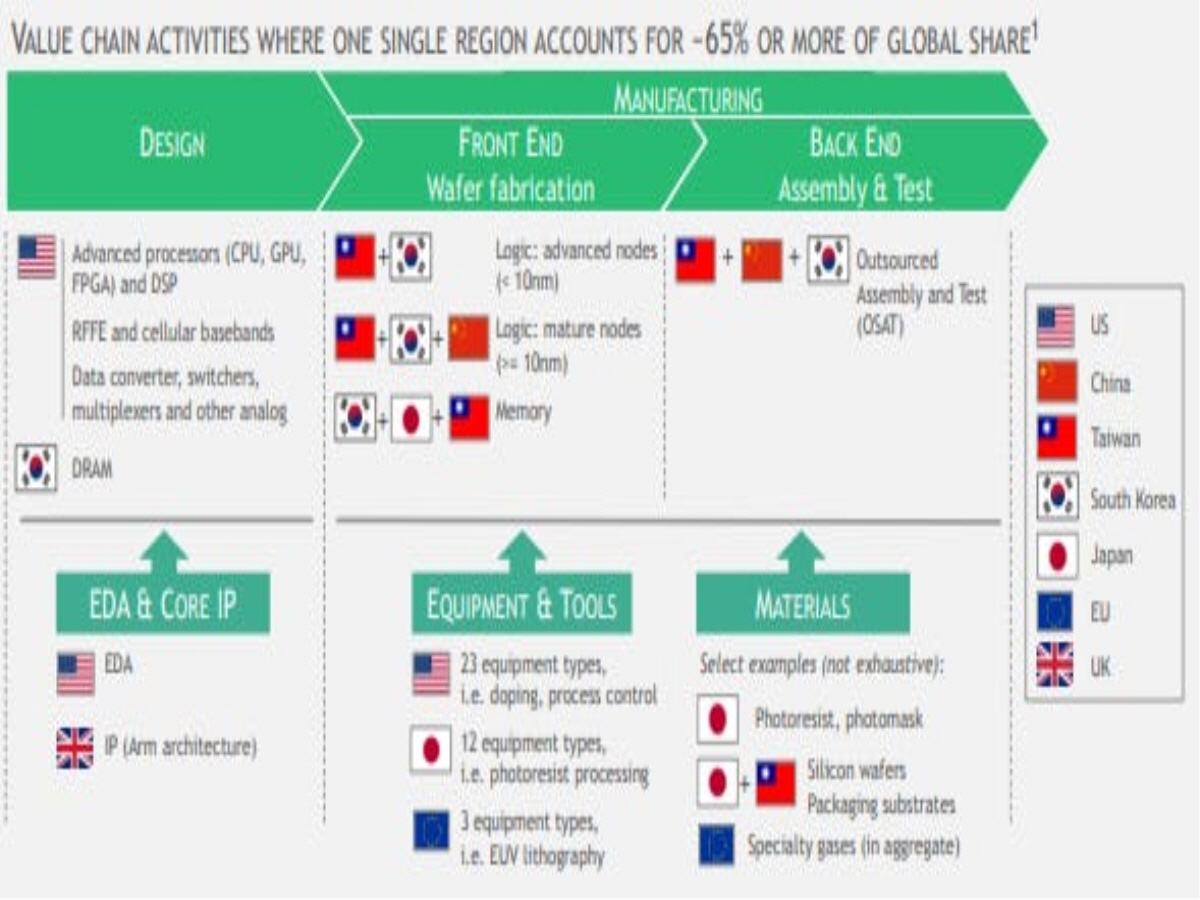
    In the Indo-Pacific theater, the long-running U.S.–China rivalry is no longer a diplomatic abstraction. It has become a powerful driver of corporate strategy and industrial supply chain restructuring, particularly for firms with exposure to semiconductors, electronics manufacturing, and defense technologies.

    The regional diversification of supply chains reflects more than geopolitical signaling. Companies with strategic technologies are being compelled to rebalance production footprints, secure alternative sourcing, and reduce dependencies on China-centered networks—a shift that is now influencing capital flows and competitive positioning across global markets. trendsresearch.org+1


    TSMC (Taiwan Semiconductor Manufacturing Company): From Risk Zone to Strategic Hub

    The world’s most advanced logic chips are overwhelmingly produced by Taiwan Semiconductor Manufacturing Company. A recent disruption—such as the April 2024 earthquake that briefly shuttered TSMC facilities—highlighted how concentrated semiconductor output can imperil global technology supply chains. saisreview.sais.jhu.edu

    To mitigate such systemic risk, TSMC is expanding fabrication capacity in Japan and the United States, and accelerating investments in India. These moves reflect a broader industry trend in which major chipmakers pursue a “China+1” diversification strategy—maintaining existing bases while building alternative capacity outside China. trendsresearch.org

    The strategic implication is clear:
    TSMC’s production realignment enhances its resilience but also strengthens the technological autonomy of U.S. allies and partners in the Indo-Pacific. That, in turn, embeds TSMC deeper into defense and critical infrastructure supply networks—far beyond its commercial consumer electronics market.


    Shop strapless bras in a variety of sizes like 32AA, 34DD, and more. Find stick on bras, bras with removable straps & more to go with open back dresses.

    Foxconn: Diversifying Electronics Manufacturing Beyond China

    Another pivotal player is Foxconn, known for assembling iPhones and other consumer devices. Foxconn has significantly shifted capacity toward India and Southeast Asia, driven by rising labor costs in China, U.S.–China trade tensions, and customer demand for supply-chain resiliency.

    This “China-plus-regionalization” strategy not only hedges geopolitical risk but also positions Foxconn as a key partner to global OEMs seeking industrial footprints aligned with Western and Indo-Pacific trade frameworks. trendsresearch.org

    For Foxconn, such diversification is not purely defensive. It offers competitive leverage with major Western customers and opens access to new markets in India, ASEAN, and beyond—turning supply-chain reform into revenue growth.


    ST Engineering: Building Defense and Tech Production in Emerging Indo-Pacific Centers

    In defense and integrated systems, Singapore’s ST Engineering exemplifies a strategic response to the evolving supply landscape. Leveraging its diversified portfolio across digital, land, air, and sea domains, ST Engineering has expanded in-country production arrangements with partners such as Kazakhstan and other Indo-Pacific states. wikipedia

    This approach reflects a broader shift away from centralized manufacturing toward regionally distributed value chains that align with political risk profiles and alliance structures. For ST Engineering, this means securing production capacity in multiple jurisdictions, reducing vulnerability to regional disruptions, and embedding itself more deeply in allied defense ecosystems.


    Rare Earths and Critical Inputs: The Case of Vulcan Elements

    Beyond final assembly, critical inputs such as rare earth magnets are increasingly in focus. Vulcan Elements, a U.S. rare earth magnet producer, recently secured a major Department of Defense-backed loan to expand domestic output—explicitly aimed at reducing dependence on foreign mineral supply chains that China dominates. wikipedia

    This illustrates how supply-chain diversification now reaches raw materials and strategic components, not just finished goods. Companies that can localize or regionalize such critical nodes gain both market and geopolitical leverage.


    The Broader Strategic Realignment

    The corporate strategies of TSMC, Foxconn, ST Engineering, and Vulcan Elements underscore a larger pattern:

    • Partial decoupling of China-centric supply chains in critical technologies is underway. Asian Journal of Peacebuilding Vol. 10 No. 2 (2022)
    • Alternative production hubs—India, Southeast Asia, Japan, and U.S./Europe partnerships—are rapidly gaining traction. trendsresearch.org
    • Indo-Pacific nations pursue multi-alignment strategies, balancing ties with the U.S., China, and other partners to extract economic benefits while managing risk. Pacific Forum

    This realignment is not merely defensive. It is reshaping capital allocation, industrial specialization, and strategic influence in global technology sectors.


    Strategic Implications

    For investors and corporate planners, the implications are profound:

    1. Future value will be concentrated among firms that operationalize diversification early.
      Firms that embed supply-chain resilience into their core business models capture both market share and strategic partnerships.
    2. Geopolitical alignment shapes technology ecosystems.
      Companies must choose where to build capacity based on alliance frameworks and regulatory environments—not just pure cost metrics.
    3. Critical technology networks will bifurcate.
      One set oriented toward U.S. and allied markets, another toward China and its partners.

    In the Indo-Pacific economic order, supply-chain strategy is a strategic asset—no less than intellectual property or brand equity.

    Socko/Ghost

  • Why LIG Nex1 Could Benefit From the Shift Toward Layered Air and Missile Defense

    Why LIG Nex1 Could Benefit From the Shift Toward Layered Air and Missile Defense

    The next defense cycle may reward companies that fit into layered air and missile defense architectures rather than firms tied to a single prestige platform. That makes LIG Nex1 worth closer attention. The company’s recent public materials emphasize long-range and medium-range air-defense systems, integrated counter-drone capabilities, guided weapons, and broader unmanned and autonomous systems for export markets, especially in the Middle East. At UMEX 2026 in Abu Dhabi, LIG Nex1 showcased L-SAM, M-SAM II, an integrated counter-drone system, and unmanned platforms, explicitly framing the Middle East as a strategic market.

    Shop strapless bras in a variety of sizes like 32AA, 34DD, and more. Find stick on bras, bras with removable straps & more to go with open back dresses.

    The export case is no longer theoretical. Reuters reported in September 2024 that LIG Nex1 won a 3.71 trillion won, roughly $2.8 billion, order from Iraq for mid-range surface-to-air missile defense systems, following a $3.2 billion Saudi deal for 10 batteries of the M-SAM II, or Cheongung II. Reuters noted that the Iraq order made Cheongung II an operating system across four countries: South Korea, the UAE, Saudi Arabia, and Iraq. That matters because repeated export adoption does more than add revenue. It helps establish a system as a credible regional defense layer rather than a one-off national product.

    This matters more in the current market environment. Recent battlefield and procurement trends are pushing buyers toward practical, scalable, and faster-deliverable air-defense solutions that can sit between expensive legacy missile shields and cheaper drone threats. LIG Nex1’s portfolio appears increasingly suited to that middle layer: not just missiles, but the integrated architecture around interception, guided weapons, and counter-drone response. That is partly an inference, but it is strongly supported by the company’s current export push and product presentation.


    There is also a broader strategic tailwind. LIG Nex1’s own investor materials show the company maintaining an active IR program through 2025, while recent Korean reporting highlighted strong 2025 operating profit growth tied to missile exports. That combination of export traction, guided-weapons credibility, and air-defense relevance gives the company a stronger fit with the new defense stack than a simple “K-defense success story” label suggests. The real question is no longer whether LIG Nex1 can sell missiles abroad. It is whether it can become a durable supplier within the expanding market for layered defense, guided interception, and regional security integration. Right now, that looks increasingly plausible.

    References
    LIG Defense&Aerospace, News — UMEX 2026 participation and display of L-SAM, M-SAM II, and integrated counter-drone systems.
    Reuters, South Korea’s LIG Nex1 wins $2.8 bln Iraq deal to export missile systems (September 2024).
    LIG Defense&Aerospace, IR Materials page, including 2025 4Q IR Book listings.
    Yonhap, issue page referencing LIG Nex1’s 2025 operating profit growth and air-defense showcase coverage.

    Socko/Ghost

  • Ports, Chips, and Redundancy: Why Resilient Logistics Is Becoming a Premium Asset

    Ports, Chips, and Redundancy: Why Resilient Logistics Is Becoming a Premium Asset

    Global trade may be cooling in 2026, but resilient logistics is becoming more valuable, not less. That is the paradox shaping the current chain environment. The WTO’s March 2026 outlook says merchandise trade growth is expected to weaken this year after stronger-than-expected growth in 2025, while higher energy prices tied to the Middle East conflict could dampen GDP growth and, in turn, import demand. In other words, trade is not disappearing. It is becoming more fragile, more selective, and more exposed to disruption.

    That matters because slower trade does not automatically mean lower strategic importance for ports, routes, and logistics systems. In fact, the opposite can be true. When growth softens and geopolitical shocks rise, the firms that can still move goods reliably gain an advantage over those that depend on ideal conditions. The IMF has already said the Middle East conflict is causing disruptions to trade and economic activity, along with surges in energy prices and volatility in financial markets. That combination turns logistics from a support function into a competitive filter.

    UNCTAD’s maritime work reinforces the point. Its 2025 Review of Maritime Transport describes freight rates as high and volatile and says port disruption is becoming chronic. In its overview, UNCTAD adds that Red Sea disruption forced ships that once used that corridor to reroute around the Cape of Good Hope, extending voyages by weeks and putting supply-chain reliability under stress. That is not just a shipping story. It is a reminder that resilience now carries a measurable economic value.


    Semiconductors make the chain story even sharper. OECD work on semiconductor value chains warns that critical inputs remain concentrated in specific regions and segments, and that resilience will require diversification, stronger transparency, secure access to critical materials, and better co-operation across like-minded economies. The same OECD material notes that some chip-related bottlenecks are underestimated by standard sector data because the products are highly specialized and not easily substitutable. That means “just in time” logic becomes much harder to defend in strategic sectors.

    This is where ports, chips, and redundancy converge. A port is no longer just a node. It is part of the risk architecture of the business. A second supplier is no longer just extra cost. It can be a hedge against political shock, rerouting delay, export controls, or regional concentration. And semiconductor exposure is no longer just a procurement issue for electronics firms. It increasingly shapes delivery reliability for defense, automotive, telecom, energy systems, industrial equipment, and AI infrastructure. That last point is partly an inference, but it follows directly from the concentration and resilience problems highlighted in OECD and trade-system reporting.

    Shop strapless bras in a variety of sizes like 32AA, 34DD, and more. Find stick on bras, bras with removable straps & more to go with open back dresses.

    The market implication is straightforward. Resilient logistics is becoming a premium asset because execution certainty is becoming scarcer. In a calmer world, redundancy looked inefficient. In a fractured world, redundancy looks bankable. Buyers, contractors, and investors are more likely to reward firms that can secure alternative routes, diversify sourcing, absorb shipping delays, and protect production schedules when energy shocks or geopolitical disruptions hit. WTO, IMF, and UNCTAD materials do not use the phrase “premium asset” directly, but the underlying pattern is clear: reliable chain performance is becoming a source of pricing power and strategic value.

    This also changes how technology markets should be read. A good product is no longer enough if it sits on top of a brittle route structure, a single chokepoint supplier, or a narrow semiconductor dependency. The next winners may be firms that treat logistics, redundancy, and supply assurance as part of product design rather than as an afterthought. In 2026, the chain is not merely what connects the market. The chain is becoming part of the market itself.

    References
    WTO, Global Trade Outlook and Statistics – March 2026.
    IMF, Statement on the Middle East, March 3, 2026.
    UNCTAD, Review of Maritime Transport 2025.
    UNCTAD, Review of Maritime Transport 2025 Overview.
    OECD, Economic Security in a Changing World — Special Focus: Semiconductor Value Chains.
    OECD, Mapping the Semiconductor Value Chain.
    OECD, The Chip Landscape.

    Socko/Ghost

  • Why Strategic Tech Funding Is Moving From Venture Hype to State-Backed Discipline

    Why Strategic Tech Funding Is Moving From Venture Hype to State-Backed Discipline

    For several years, strategic technology attracted capital through a familiar narrative: back the most promising platform early, scale quickly, and let commercial momentum do the rest. That logic is no longer enough. Across Europe and the NATO ecosystem, funding is being pushed into a more disciplined model, where public money, state-backed vehicles, and procurement-linked programs increasingly shape which technologies survive, scale, and matter.

    This does not mean venture capital disappears. It means venture logic is being subordinated to strategic logic. NATO’s Innovation Fund is a €1 billion multi-sovereign fund designed to invest over a 15-year period in dual-use start-ups critical to Allied security, while DIANA now connects selected firms to accelerator sites, test centres, mentors, military end-users, and contractual funding. The signal to markets is clear: strategic technology is being financed less as pure speculation and more as a controlled pipeline from innovation to validation to adoption.

    The European Union is moving in the same direction, but at much larger industrial scale. The European Defence Fund carries a budget of nearly €7.3 billion for 2021–2027, split between collaborative defence research and capability development, while the SAFE instrument is framed as the first pillar of Readiness 2030 and is intended to help unlock more than €800 billion in defence spending across the EU. EDIP adds another €1.5 billion layer focused on industrial modernisation, production ramp-up, resilience, and steady supply. That is not venture culture. That is state-backed capital discipline.


    The policy tone matters as much as the headline numbers. In February 2026, the Commission amended the EDF Work Programme to simplify procedures for disruptive defence technologies and align the program with broader strategic technology investment tools. That suggests policymakers are no longer satisfied with merely funding innovation in principle. They are trying to reduce friction between public ambition and industrial execution. In practical terms, the question is shifting from “Which technology is exciting?” to “Which technology can move through a disciplined public financing and adoption process?”

    This broader shift also fits the OECD’s framing of industrial policy. OECD materials emphasize innovation and commercialisation, investment confidence, and strategic policy support as central levers for industrial development, while its industrial-policy work focuses on measuring how governments support business through targeted expenditures, delivery channels, and beneficiary design. That is important because strategic tech is increasingly being treated not as a free-floating market theme, but as an industrial-policy domain where state support, procurement design, and scaling incentives matter directly.

    Shop strapless bras in a variety of sizes like 32AA, 34DD, and more. Find stick on bras, bras with removable straps & more to go with open back dresses.

    The market implication is straightforward. Capital is becoming less democratic and more directional. The winners may not be the firms with the loudest narratives or the biggest prototype hype. They may be the firms that can fit into public financing architecture, meet interoperability and compliance requirements, survive structured testing, and align with resilience goals in defense, energy, semiconductors, logistics, and dual-use manufacturing. That is partly an inference, but it follows directly from the way NATO, the EU, and OECD-linked policy frameworks are now organizing support.

    For investors and operators, this changes the reading of “smart money.” In the previous cycle, smart money often meant private capital getting in before the crowd. In the next cycle, it may mean understanding where public money is building durable lanes for procurement, testing, production, and scale. State-backed discipline may sound less glamorous than venture hype, but it is more likely to determine which strategic technologies become institutions rather than headlines.

    References
    NATO, Defence Innovation Accelerator for the North Atlantic (DIANA).
    NATO, Emerging and disruptive technologies.
    NATO, NATO DIANA announces largest-ever cohort of 150 innovators for 2026.
    European Commission, European Defence Fund (EDF) – Official webpage.
    European Commission, SAFE | Security Action for Europe.
    European Commission, EDIP | Forging Europe’s Defence.
    European Commission, Changes to the EDF Work Programme for simpler procedures and expanded investment areas.
    European Commission, Commission approves first wave of defence funding under SAFE.
    European Commission, Commission approves second wave of SAFE defence funding.
    OECD, Industrial policy.
    OECD, Industrial policy for the future.

    Socko/Ghost

  • NATO’s Emerging Technology Push Is Quietly Signaling the Next Procurement Race

    NATO’s Emerging Technology Push Is Quietly Signaling the Next Procurement Race

    NATO’s technology agenda is starting to look less like a long-range innovation discussion and more like an early procurement signal. For years, the Alliance treated emerging and disruptive technologies as an area of strategic concern, but the pace is now changing. What matters is not simply that NATO wants more advanced systems. What matters is that NATO is building mechanisms to move technologies from experimentation into adoption faster, with clearer demand signals for industry.

    That shift is becoming more visible through NATO’s recent innovation architecture. The Alliance’s technology track now connects strategic priorities, test environments, innovation support, and adoption tools in a way that looks increasingly relevant to defense contractors, systems integrators, and dual-use firms. In practical terms, this means the market should pay attention not only to weapons programs, but also to the supporting layers around autonomy, AI-enabled systems, data exploitation, sensing, communications, and operational integration.

    The most important development may be the move from abstract interest to structured adoption. NATO’s Rapid Adoption Action Plan, endorsed at the 2025 Summit in The Hague, is explicitly designed to speed the procurement and integration of new technological products. The plan emphasizes agile procurement, dedicated financing tools, training for procurement officials, faster doctrine development, shorter testing and evaluation timelines, and mechanisms to de-risk promising systems before wider adoption. That is a meaningful change. It tells the market that the Alliance is not just asking what is technologically possible, but how quickly useful systems can move into real forces.

    The supporting ecosystem matters just as much. NATO’s Innovation Fund was launched as a €1 billion vehicle for early-stage dual-use technologies in areas such as artificial intelligence, autonomy, quantum-enabled technologies, novel materials, energy, propulsion, and space. DIANA, meanwhile, was built to help innovators move through accelerator and test-center networks across the Alliance. Together, these initiatives create a stronger bridge between novel technology and military relevance. They also widen the field beyond incumbent prime contractors, at least in theory, by lowering some of the barriers between start-ups, scale-ups, and defense users.

    Shop strapless bras in a variety of sizes like 32AA, 34DD, and more. Find stick on bras, bras with removable straps & more to go with open back dresses.

    This is why the new race may not be only about who has the most advanced lab prototype. It may be about who can survive NATO-style testing, meet interoperability needs, attract trusted capital, and fit into a faster adoption pipeline. The winners in such an environment are likely to be firms that can move from experimentation to integration without losing time in the handoff between innovation and procurement. That makes the current NATO technology push a market signal in its own right.

    For companies across defense and dual-use sectors, the lesson is straightforward. NATO’s innovation agenda is becoming more operational, more financial, and more procurement-oriented. It is still early, but the direction is now clearer. The next procurement race may begin long before a formal contract appears, and part of that race is already being shaped by NATO’s emerging technology push.

    References
    NATO, Emerging and disruptive technologies — 2025 Hague Summit endorsement of the Rapid Adoption Action Plan; DIANA network expansion; EDT timeline.
    NATO, Summary of NATO’s Rapid Adoption Action Plan — agile procurement, financing tools, Innovation Procurement Forum, Innovation Badges, Innovation Ranges, and Task Force X.
    NATO, NATO launches Innovation Fund — €1 billion fund and priority dual-use technology areas; linkage with DIANA.
    NATO, NATO’s Digital Transformation Implementation Strategy — interoperability and digital transformation context.

    Socko/Ghost

  • Why Hanwha Systems Fits the New Defense Stack Better Than the Old Export Story

    Why Hanwha Systems Fits the New Defense Stack Better Than the Old Export Story

    If the next defense cycle is driven by drone saturation, layered defense, and faster decision loops, then the market may reward integrators more than platform sellers alone. That matters for Hanwha Systems. According to Hanwha’s own materials, the company’s portfolio includes multifunction radar, command-control-communication systems, surveillance technologies, and broader defense-electronics capabilities rather than just a single headline platform.

    Shop strapless bras in a variety of sizes like 32AA, 34DD, and more. Find stick on bras, bras with removable straps & more to go with open back dresses.

    That portfolio looks better aligned with current demand than it might have a few years ago. IISS argues Gulf defense planning is moving toward layered air defense against lower-cost unmanned threats, and Reuters reports growing regional interest in practical interceptor and drone-defense solutions. In that environment, firms that help link detection, tracking, command, and response may hold an advantage over firms offering isolated hardware without systems depth. That final point is an inference, but it is strongly supported by the direction of demand.

    Hanwha’s broader positioning also matters. The company has recently emphasized global expansion, surveillance and electronic-warfare systems, and integrated defense offerings across land, sea, air, cyber, and space. For investors or industry watchers, the real question is not whether Hanwha can sell one product into one competition. It is whether the company is moving into the new defense stack: sensors, fusion, response, and industrial partnerships. Right now, the answer appears to be yes.


    References
    Hanwha, Hanwha Systems company profile.
    Hanwha, Hanwha’s Four Defense Companies Gear up for Global Expansion.
    Hanwha, Aerospace & Defense, Mechatronics.
    Hanwha, Hanwha expands industrial alliance in Canada for CPSP.
    IISS, Defending the Skies of the Arab Gulf States.
    Reuters, Ukraine’s drone masters eye Iran war to kickstart export ambitions.

    Socko/Ghost

  • Trade May Slow in 2026, but Strategic Supply Chains Are Reordering Fast

    Trade May Slow in 2026, but Strategic Supply Chains Are Reordering Fast

    The global trade picture for 2026 is slowing, but it is not standing still. The WTO says merchandise trade growth is expected to weaken this year after a stronger-than-expected 2025, while also noting that AI-related investment and stronger Asian export performance are shaping the supply side in important ways. That means the world is not deglobalizing in a simple straight line. It is reorganizing around strategic sectors, resilient routes, and politically favored capacity.

    Shop strapless bras in a variety of sizes like 32AA, 34DD, and more. Find stick on bras, bras with removable straps & more to go with open back dresses.

    The Middle East conflict adds another layer to this realignment. The IMF says the war is already affecting trade, energy prices, and financial markets, and the WTO likewise links the conflict to a weaker trade outlook. For businesses, that turns logistics from a background cost into a strategic variable. Shipping routes, sourcing geography, inventory policy, and supplier redundancy all become part of market positioning.


    This is why “Chain” matters as its own lens. The question is no longer only what demand exists, but how quickly products can move through stressed systems without breaking margin or timing. In 2026, the companies that secure resilient chain access may outperform firms with good products but weak logistics exposure. That conclusion is an inference, but it follows directly from the WTO’s trade outlook and the IMF’s warning about conflict-driven disruption.

    References
    WTO, Global Trade Outlook and Statistics, March 2026.
    WTO, Middle East conflict weighs further on slowing trade outlook.
    IMF, Statement on the Middle East.

    Socko/Ghost

  • Defense Budgets Are Becoming Industrial Policy, Not Just Security Policy

    Defense Budgets Are Becoming Industrial Policy, Not Just Security Policy

    A new budget cycle is taking shape across advanced economies, and defense is moving closer to the center of industrial policy. The OECD’s recent work argues that higher defense spending has meaningful macroeconomic and fiscal effects, while its March 2026 interim outlook also suggests stronger defense spending could support growth in parts of Europe even as energy prices weigh on activity.

    Shop strapless bras in a variety of sizes like 32AA, 34DD, and more. Find stick on bras, bras with removable straps & more to go with open back dresses.

    That does not mean the story is simple. The OECD also warns that governments financing rearmament with debt may face tighter fiscal choices later, and the IMF says the Middle East war is already disrupting trade and economic activity while pushing up energy prices and financial volatility. In other words, capital is moving toward resilience and rearmament, but under conditions that can still strain the broader economy.


    References
    OECD, Fiscal and Macroeconomic Impacts of Defence Spending.
    OECD, Economic Outlook, Interim Report, March 2026.
    IMF, Statement on the Middle East.
    IMF Press Briefing, March 19, 2026.

    Socko/Ghost

  • The Gulf’s Drone Shield Is Being Rewritten After Iran’s Barrage

    The Gulf’s Drone Shield Is Being Rewritten After Iran’s Barrage

    Iran’s recent use of large drone salvos has sharpened a lesson that defense planners already suspected: traditional air-defense systems are too expensive to be the only answer to cheap, mass-produced attack drones. What matters now is not just range or prestige, but whether a country can detect, classify, and stop repeated low-cost threats without exhausting its own inventory.

    Shop strapless bras in a variety of sizes like 32AA, 34DD, and more. Find stick on bras, bras with removable straps & more to go with open back dresses.

    That is why the Gulf’s next defense cycle is likely to be shaped by layered drone defense rather than legacy missile defense alone. IISS argues that Gulf states need a broader mix of lower-cost interception, radar integration, and distributed defensive architecture, while Reuters reports that Ukrainian firms are already trying to export interceptor know-how to Gulf buyers worried about Iranian-style attacks.


    For markets, this is an early signal rather than a finished outcome. The strongest demand may not go first to the most glamorous offensive platform, but to the firms that can deliver practical drone shields: sensors, software, short-range interceptors, and systems integration. In that sense, Iran’s barrage is not just a military event. It is a procurement signal.

    References
    IISS, Defending the Skies of the Arab Gulf States.
    Reuters, Ukraine’s drone masters eye Iran war to kickstart export ambitions.
    Reuters, Ukraine and Saudi Arabia sign deal on defence cooperation.

    Socko/Ghost