Category: Signal

Early policy, defense, and regulatory triggers.

  • NATO’s Emerging Technology Push Is Quietly Signaling the Next Procurement Race

    NATO’s Emerging Technology Push Is Quietly Signaling the Next Procurement Race

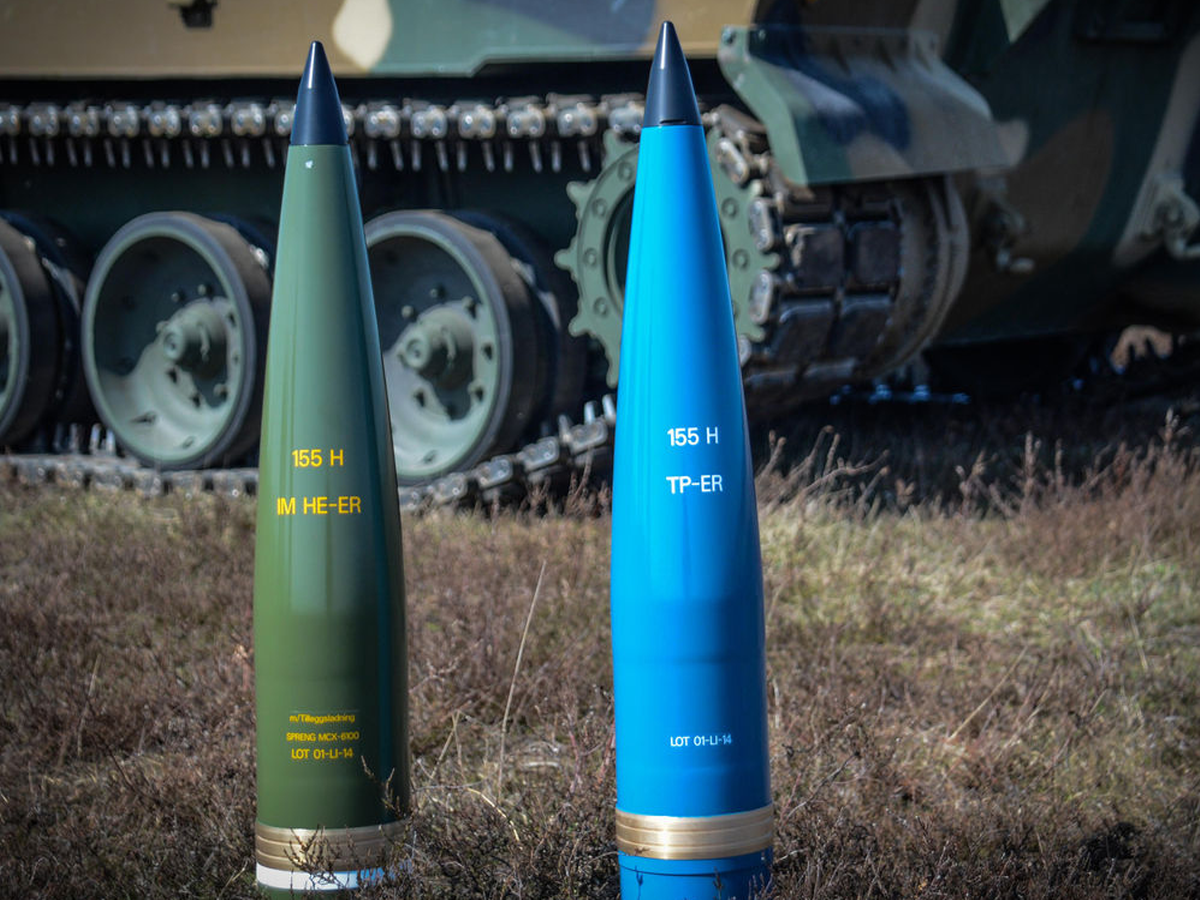
    NATO’s technology agenda is starting to look less like a long-range innovation discussion and more like an early procurement signal. For years, the Alliance treated emerging and disruptive technologies as an area of strategic concern, but the pace is now changing. What matters is not simply that NATO wants more advanced systems. What matters is that NATO is building mechanisms to move technologies from experimentation into adoption faster, with clearer demand signals for industry.

    That shift is becoming more visible through NATO’s recent innovation architecture. The Alliance’s technology track now connects strategic priorities, test environments, innovation support, and adoption tools in a way that looks increasingly relevant to defense contractors, systems integrators, and dual-use firms. In practical terms, this means the market should pay attention not only to weapons programs, but also to the supporting layers around autonomy, AI-enabled systems, data exploitation, sensing, communications, and operational integration.

    The most important development may be the move from abstract interest to structured adoption. NATO’s Rapid Adoption Action Plan, endorsed at the 2025 Summit in The Hague, is explicitly designed to speed the procurement and integration of new technological products. The plan emphasizes agile procurement, dedicated financing tools, training for procurement officials, faster doctrine development, shorter testing and evaluation timelines, and mechanisms to de-risk promising systems before wider adoption. That is a meaningful change. It tells the market that the Alliance is not just asking what is technologically possible, but how quickly useful systems can move into real forces.

    The supporting ecosystem matters just as much. NATO’s Innovation Fund was launched as a €1 billion vehicle for early-stage dual-use technologies in areas such as artificial intelligence, autonomy, quantum-enabled technologies, novel materials, energy, propulsion, and space. DIANA, meanwhile, was built to help innovators move through accelerator and test-center networks across the Alliance. Together, these initiatives create a stronger bridge between novel technology and military relevance. They also widen the field beyond incumbent prime contractors, at least in theory, by lowering some of the barriers between start-ups, scale-ups, and defense users.

    Shop strapless bras in a variety of sizes like 32AA, 34DD, and more. Find stick on bras, bras with removable straps & more to go with open back dresses.

    This is why the new race may not be only about who has the most advanced lab prototype. It may be about who can survive NATO-style testing, meet interoperability needs, attract trusted capital, and fit into a faster adoption pipeline. The winners in such an environment are likely to be firms that can move from experimentation to integration without losing time in the handoff between innovation and procurement. That makes the current NATO technology push a market signal in its own right.

    For companies across defense and dual-use sectors, the lesson is straightforward. NATO’s innovation agenda is becoming more operational, more financial, and more procurement-oriented. It is still early, but the direction is now clearer. The next procurement race may begin long before a formal contract appears, and part of that race is already being shaped by NATO’s emerging technology push.

    References
    NATO, Emerging and disruptive technologies — 2025 Hague Summit endorsement of the Rapid Adoption Action Plan; DIANA network expansion; EDT timeline.
    NATO, Summary of NATO’s Rapid Adoption Action Plan — agile procurement, financing tools, Innovation Procurement Forum, Innovation Badges, Innovation Ranges, and Task Force X.
    NATO, NATO launches Innovation Fund — €1 billion fund and priority dual-use technology areas; linkage with DIANA.
    NATO, NATO’s Digital Transformation Implementation Strategy — interoperability and digital transformation context.

    Socko/Ghost
  • The Gulf’s Drone Shield Is Being Rewritten After Iran’s Barrage

    The Gulf’s Drone Shield Is Being Rewritten After Iran’s Barrage

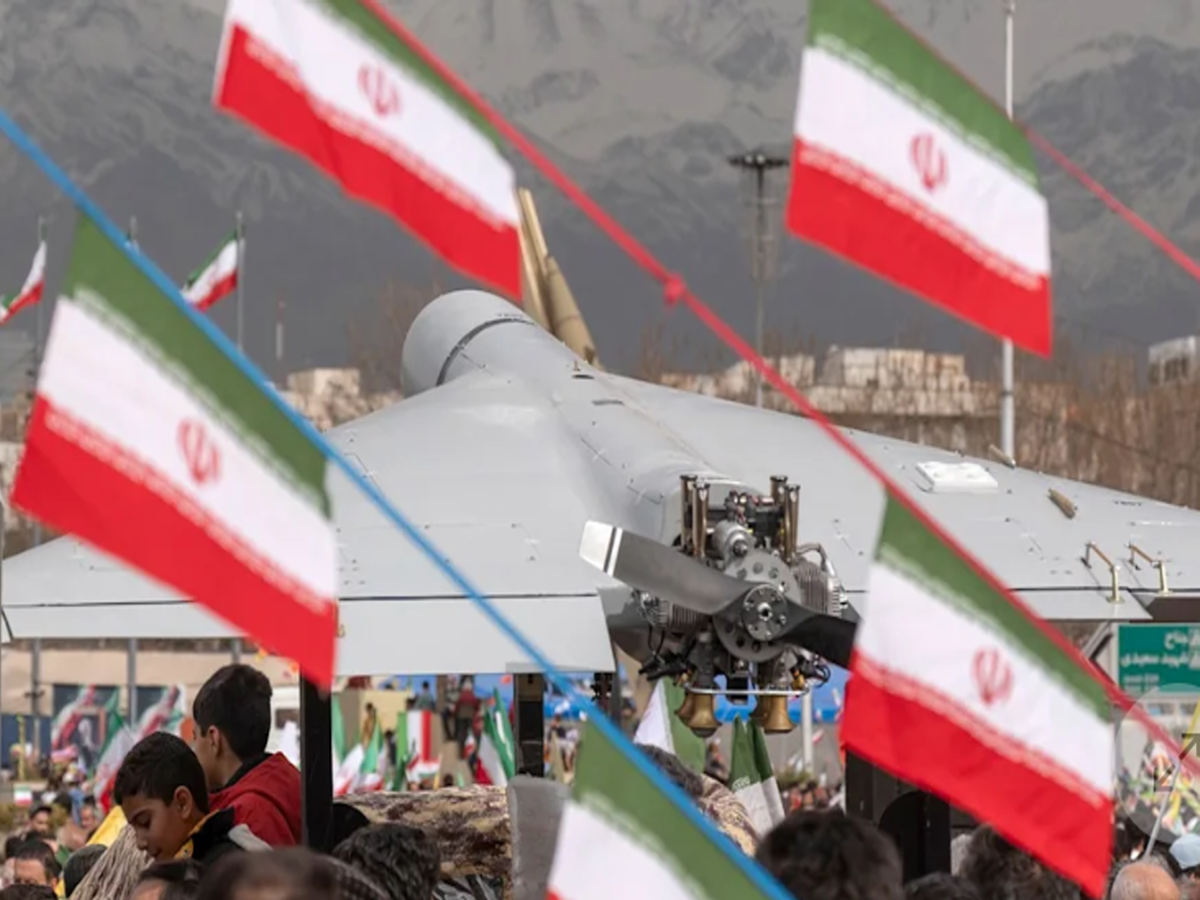
    Iran’s recent use of large drone salvos has sharpened a lesson that defense planners already suspected: traditional air-defense systems are too expensive to be the only answer to cheap, mass-produced attack drones. What matters now is not just range or prestige, but whether a country can detect, classify, and stop repeated low-cost threats without exhausting its own inventory.

    Shop strapless bras in a variety of sizes like 32AA, 34DD, and more. Find stick on bras, bras with removable straps & more to go with open back dresses.

    That is why the Gulf’s next defense cycle is likely to be shaped by layered drone defense rather than legacy missile defense alone. IISS argues that Gulf states need a broader mix of lower-cost interception, radar integration, and distributed defensive architecture, while Reuters reports that Ukrainian firms are already trying to export interceptor know-how to Gulf buyers worried about Iranian-style attacks.


    For markets, this is an early signal rather than a finished outcome. The strongest demand may not go first to the most glamorous offensive platform, but to the firms that can deliver practical drone shields: sensors, software, short-range interceptors, and systems integration. In that sense, Iran’s barrage is not just a military event. It is a procurement signal.

    References
    IISS, Defending the Skies of the Arab Gulf States.
    Reuters, Ukraine’s drone masters eye Iran war to kickstart export ambitions.
    Reuters, Ukraine and Saudi Arabia sign deal on defence cooperation.

    Socko/Ghost

  • NATO Briefing: Data Centers Have Become an Energy-Security Chokepoint

    NATO Briefing: Data Centers Have Become an Energy-Security Chokepoint

    In recent internal briefings and strategic discussions, NATO has quietly reframed a long-standing assumption:
    energy security is no longer just about pipelines, refineries, or transmission towers.
    It is now inseparable from data center resilience.

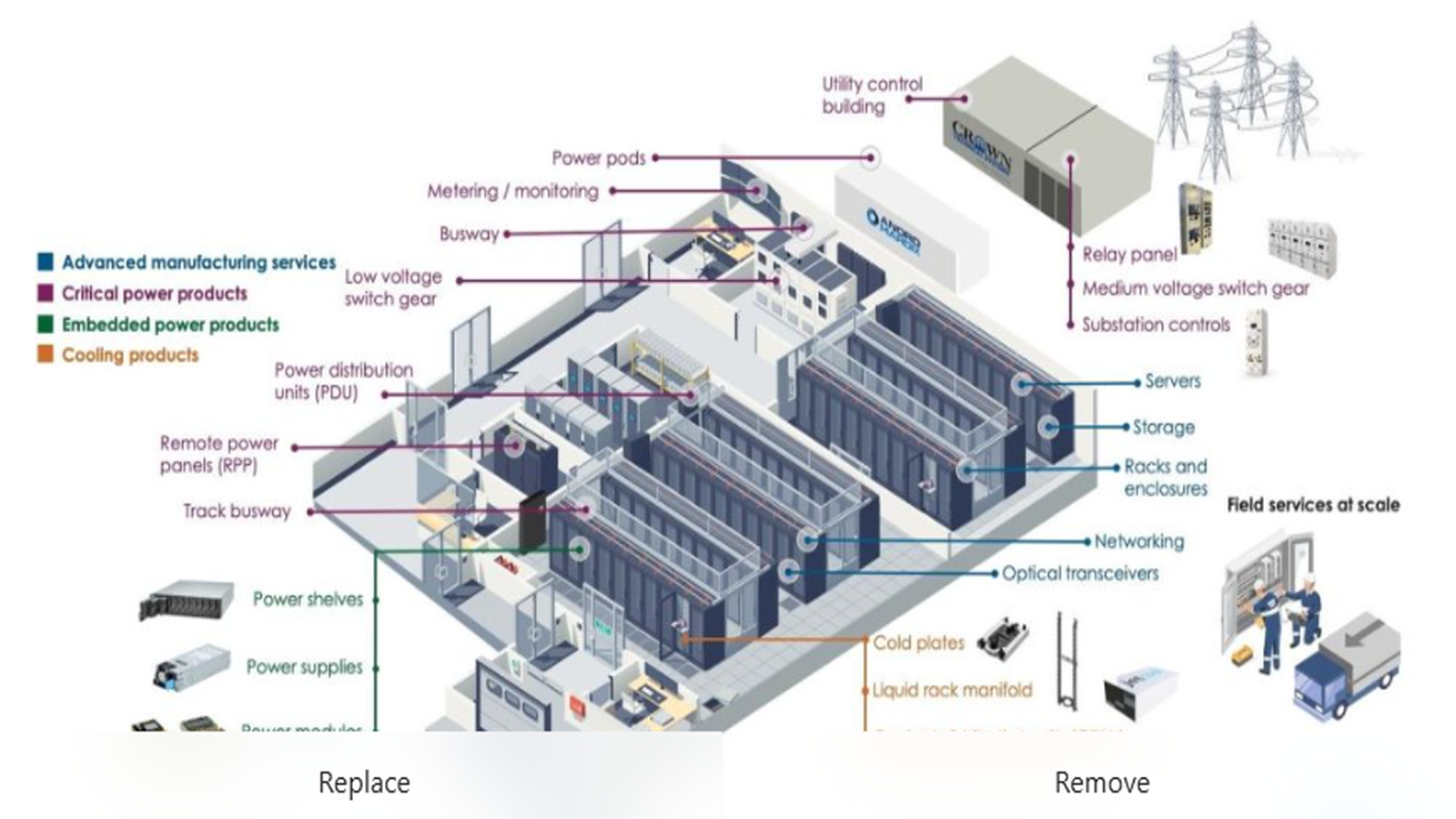
    This shift reflects a hard reality of modern warfare and statecraft—digital continuity is operational continuity. When data centers lose power, command-and-control degrades, ISR pipelines stall, AI-enabled analysis halts, and civil-military coordination fractures. Energy vulnerability, in short, has become a frontline risk.

    From Power Plants to Server Racks: A Strategic Reclassification

    For decades, alliance energy planning focused on fuel supply and grid robustness. Today, that lens has expanded. Data centers—once treated as civilian IT assets—are now understood as strategic infrastructure with military consequences.

    Three developments drove this reassessment:

    1. Explosive Power Density
      AI training, real-time analytics, and persistent surveillance workloads have dramatically increased energy intensity per rack. A brief outage now produces outsized operational damage.
    2. Civil–Military Interdependence
      Military systems increasingly rely on commercial clouds, regional colocation hubs, and civilian power grids. The boundary between “civilian blackout” and “military disruption” has effectively collapsed.
    3. Multi-Domain Attack Surface
      A single data center can be pressured simultaneously via cyber intrusion, grid manipulation, physical sabotage, or supply-chain denial. Energy is the common point of failure.

    Why Energy Vulnerability Equals Operational Risk

    In NATO assessments, data centers are no longer a passive backend. They are active enablers of:

    • Command, Control, Communications, Computers (C4)
    • ISR fusion and sensor processing
    • AI-assisted decision support
    • Logistics, targeting, and coordination across theaters

    An energy shock—whether intentional or accidental—can degrade these functions faster than kinetic strikes. Unlike hardened bases, many data centers were designed for efficiency, not prolonged denial environments.

    Threat Scenarios Now Taken Seriously

    NATO planners increasingly model scenarios that once sat outside traditional military analysis:

    • Grid-Level Disruption → Regional Data Center Collapse
      Targeted attacks on substations or control software can cascade into digital paralysis.
    • Cyber–Energy Coupling Attacks
      Malware targeting energy management systems can selectively starve data centers of power while masking intent.
    • Supply-Chain Energy Constraints
      Delays in generators, transformers, fuel delivery, or cooling components extend outage recovery timelines well beyond acceptable operational windows.

    These are not hypothetical edge cases. They are realistic pressure points in high-intensity or gray-zone conflict.

    Resilience Is the New Deterrence

    Within NATO discussions, a clear concept is emerging: resilience is deterrence.

    That translates into several strategic directions:

    • Decentralized and Redundant Power Architectures
      Microgrids, on-site generation, and diversified energy inputs reduce single-point failure risk.
    • Integrated Energy–Cyber Defense
      Power infrastructure security can no longer be separated from cyber defense planning.
    • Civil–Military Coordination Frameworks
      Data center operators, grid authorities, and defense planners must share threat models and contingency protocols.
    • Energy-Aware Siting and Design
      Location, cooling strategy, and grid dependency are now strategic variables—not just cost considerations.

    Strategic Implication: The Battlefield Runs on Electricity

    The implication is blunt but unavoidable:

    Data centers sit at the intersection of energy, digital command, and national resilience. NATO’s evolving posture signals that energy-secure computing infrastructure is no longer a technical afterthought—it is a core element of alliance readiness.

    For policymakers, defense planners, and infrastructure operators, the message is clear:
    Protect the power, or lose the fight before it begins.

    References

    Allied and open-source defense analyses on civil–military energy interdependence and grid security.

    NATO — Energy Security and Resilience Frameworks, official alliance briefings and policy overviews.

    European Parliament Research Service — Energy System Disruptions and Security Implications, policy briefings on infrastructure resilience.

    Foreign Policy Research Institute (FPRI) — Data Centers and National Power, analysis on digital infrastructure as strategic assets.

    Socko/Ghost

  • Energy Load & Data Centers as Hidden Military Infrastructure

    Energy Load & Data Centers as Hidden Military Infrastructure

    Wars are not powered by weapons alone.
    They are powered by electricity.

    As warfare becomes increasingly compute-driven, energy availability and data center capacity have emerged as silent determinants of military effectiveness.

    Energy Is the First Constraint

    Every satellite downlink, ISR fusion node, AI model, and command system depends on uninterrupted power.

    Modern military operations now face a basic but decisive question:

    Can the grid sustain the load when it matters most?

    Energy scarcity does not disable weapons directly.
    It slows decision-making, increases latency, and degrades coordination — often before a single shot is fired.

    Data Centers as Strategic Infrastructure

    Data centers are no longer commercial back-end facilities.
    They function as operational hubs for:

    • ISR data fusion
    • AI-enabled targeting analysis
    • Command-and-control redundancy
    • Coalition information sharing

    In practice, this makes data centers indirect military assets, even when privately owned and civilian-operated.

    The Fragility of Concentration

    Compute infrastructure is geographically concentrated.

    Clusters of hyperscale data centers depend on:

    • Regional power grids
    • Substations and transformers
    • Cooling water access
    • Fiber and undersea cable connectivity

    Disruption to any one of these inputs can ripple across military and civilian systems simultaneously.

    This creates a new form of vulnerability:
    infrastructure coupling risk.

    Energy as an Escalation Lever

    Energy infrastructure offers a tempting escalation tool.

    Rather than striking military targets directly, adversaries may apply pressure through:

    • Grid instability
    • Energy pricing shocks
    • Fuel supply disruption
    • Cyber operations against energy management systems

    These actions fall below traditional thresholds of armed conflict while producing strategic effects.

    Capital Builds the Battlefield

    As with compute and satellites, much of today’s energy and data center infrastructure is financed by private capital.

    Investment decisions determine:

    • Where compute capacity grows
    • Which regions gain resilience
    • Which systems receive redundancy

    In effect, capital allocation increasingly pre-configures the battlespace.

    Energy, Compute, and the Speed of War

    Energy is not simply a resource.
    It defines the tempo of conflict.

    High energy availability enables:

    • Faster ISR cycles
    • Continuous AI inference
    • Persistent command networks

    Low energy availability forces prioritization, delay, and degradation.

    Speed favors deterrence.
    Delay invites escalation.

    Signal–Capital–Chain Loop Perspective

    Energy sits at the base of the strategic loop.

    Signal — data generation requires power
    Capital — infrastructure investment shapes resilience
    Chain — fuel, grids, cooling, and logistics enable continuity

    Control the energy layer, and the rest of the system follows.

    Conclusion

    The next wars will not only be fought over territory or technology.
    They will be fought over energy stability and compute continuity.

    Data centers are no longer invisible.
    Power grids are no longer neutral.

    In space- and compute-enabled warfare,
    energy is strategy,
    and infrastructure is deterrence.

    Socko/Ghost

  • Emerging Civil–Military Technology Convergence and Its Impact on Global Power Projections

    Emerging Civil–Military Technology Convergence and Its Impact on Global Power Projections

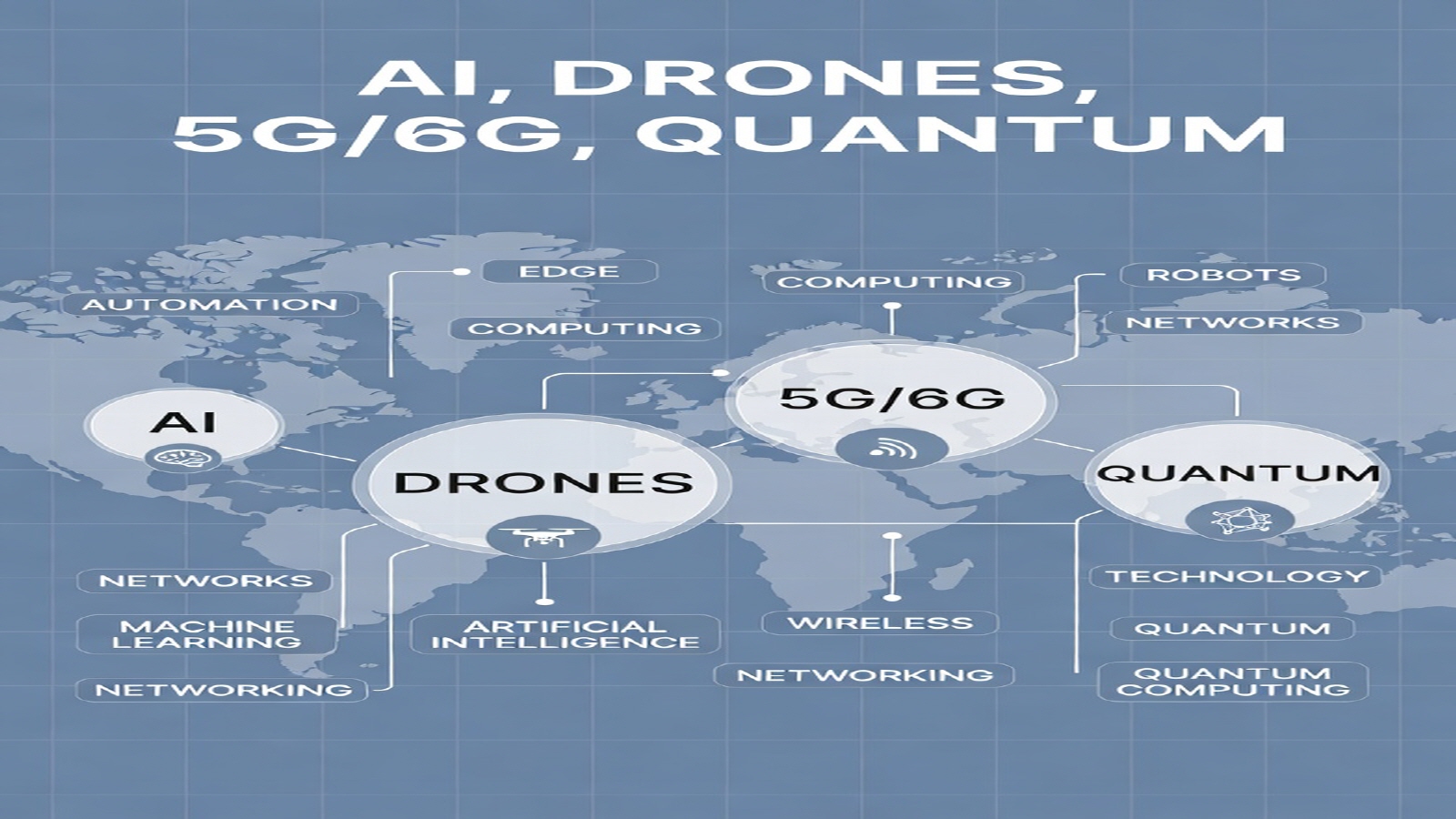
    The 21st-century battlefield is increasingly shaped not by tanks, missiles, or aircraft, but by technologies originally developed for civilian markets—AI, autonomous robotics, satellite-enabled communications, and quantum computing. What once existed as separate technological domains is converging into a single, dual-use ecosystem where civilian innovation directly fuels military capability.

    This civil–military fusion (CMF) is fundamentally reshaping global power projection, particularly among the United States, China, and Russia.
    The nations that dominate dual-use technology pipelines will shape the future of deterrence, conflict, and geopolitical hierarchy.

    1. Dual-Use Innovation Has Become the New Arms Race

    Commercial tech is now military infrastructure.

    Artificial intelligence, advanced chips, hyperscale cloud computing, and high-speed mobile networks were never designed as weapons. Yet they now form the backbone of:

    autonomous drones

    AI-enhanced ISR (intelligence, surveillance, reconnaissance)

    predictive logistics

    cyber operations

    hypersonic command systems

    multi-domain operational networks

    The line separating Silicon Valley startups from defense contractors has vanished.

    The military of the future is built on commercial innovation.

    2. AI and Autonomous Systems: The Core of Next-Generation Power Projection

    Autonomy = speed. Speed = dominance.

    AI-driven autonomous systems—from drone swarms to automated cyber defense—are redefining military decision cycles.

    United States

    DARPA’s ACE program for AI dogfighting

    Navy’s Ghost Fleet Overlord autonomous vessels

    Joint All-Domain Command and Control (JADC2) integration

    China

    Civil–military fusion doctrine accelerating dual-use AI

    Mass production of low-cost autonomous drone platforms

    Strategic AI labs built on commercial tech giants (Baidu, Alibaba, Tencent)

    Russia

    Autonomous loitering munitions

    AI-assisted artillery targeting using battlefield sensors

    Heavy reliance on civilian drones modified for warfare

    Autonomy compresses the “OODA loop”—observe, orient, decide, act—creating a new currency of military advantage: machine-speed warfare.

    3. 5G/6G and the Battle for Electromagnetic Dominance

    Connectivity itself becomes a weapon.

    Modern militaries depend on massive data throughput:

    drone swarm coordination

    satellite–ground communication

    real-time logistics

    command-and-control

    autonomous navigation

    5G enabled this shift; 6G will accelerate it to near-lightning levels.

    U.S. strategy:

    Integrate 5G/6G into secure battlefield networks, leveraging private-sector leadership.

    China’s strategy:

    Use global 5G/6G infrastructure as geopolitical leverage, embedding influence across Asia, Africa, Europe, and Latin America.

    Russia strategy:

    Focus on electronic warfare dominance rather than broad consumer networks.

    5G/6G is not just commerce—it is information dominance, the foundation of modern power projection.

    4. Quantum Computing and Secure Communications: The Coming Strategic Shock

    Quantum supremacy will rewrite cyber warfare.

    Quantum technology threatens to disrupt the core of national security:

    encryption cracking

    ultra-secure quantum communication networks

    quantum-enhanced sensing for submarine and stealth tracking

    new forms of electronic warfare

    China

    Has already deployed a quantum communication backbone between Beijing and Shanghai, and runs the world’s most aggressive national quantum program.

    United States

    Leads in private-sector quantum computing hardware and algorithms (IBM, Google, AWS), with growing DoD–industry integration.

    Russia

    Invests in quantum sensing and signals intelligence capabilities.

    Quantum capability gaps will determine strategic survivability in the next decade.

    5. The U.S.–China–Russia Triangular Tech Rivalry
    Global power is no longer measured in troops but in teraflops.

    United States: Innovation Dominance Strength: advanced semiconductors, cloud infrastructure, AI algorithms, defense integration. Vulnerability: manufacturing dependence on East Asia.

    China: Scale + State Alignment

    Strength: mass production, civil–military fusion, unified national tech strategy.
    Vulnerability: access to cutting-edge lithography and high-end chips.

    Russia: Asymmetric Tech Warfare

    Strength: electronic warfare, missile systems, cyber operations.
    Vulnerability: industrial capacity and sanctions.

    The convergence of civilian and military tech has turned this rivalry into a three-dimensional race across AI, chips, quantum, and communications.

    Conclusion — Civil–Military Technology Convergence Will Redefine Global Power

    The future of power projection will be determined not by traditional defense spending but by:

    the speed of innovation

    control of advanced chips

    access to global telecoms infrastructure

    quantum breakthroughs

    autonomous systems deployment

    Nations that dominate dual-use innovation pipelines will shape everything from deterrence to alliance structures.

    Civilian technology is now the battlefield.
    The global balance of power will be rewritten there.

    References

    CSIS. Civil–Military Fusion and Strategic Competition, 2024.

    RAND. AI-Driven Warfare and Autonomous Systems, 2023–2024.

    U.S. DoD. Emerging Technologies and National Defense Strategy, 2024.

    Chinese Academy of Sciences. Quantum Communication Progress Report, 2024.

    NATO CCDCOE. Multi-Domain Operations and 5G/6G Integration, 2024.

    Oxford Future of Humanity Institute. Dual-Use AI & Global Security, 2024.