Author: xtower

  • Iran’s Drone War Is Rewriting Defense Markets: The Real Money May Flow to Interceptors, Sensors, and Supply Chains

    Iran’s Drone War Is Rewriting Defense Markets: The Real Money May Flow to Interceptors, Sensors, and Supply Chains

    The Iran war is forcing both militaries and investors to confront a brutal new arithmetic. Cheap one-way attack drones can be launched in large numbers, impose real pressure on energy infrastructure and civilian systems, and force defenders to spend far more money on detection and interception than the attacker spends on launch. CSIS argues that Iran’s drone campaign in the Gulf relied heavily on saturation waves of Shahed-style systems, designed less for precision battlefield brilliance than for persistence, disruption, and economic asymmetry.

    That matters because the center of gravity in defense markets may be shifting. In earlier years, much of the fascination was with the offensive platform itself: range, payload, autonomy, and survivability. But recent conflict dynamics suggest the more scalable business opportunity may lie in what stops these systems. IISS notes that Gulf states face a layered UAV threat and that long-range missile defense was never meant to be the primary answer to lower-cost unmanned systems. That points to a broader demand curve for radar integration, AI-assisted tracking, electronic warfare, short-range interceptors, and lower-cost kill chains built specifically for drone-heavy environments.

    The commercial market is already reacting. Reuters reported this week that Ukrainian defense firms are trying to turn wartime know-how in drone interception into export business for Gulf customers worried about Iranian UAV attacks. The report says Ukrainian companies see growing interest from Saudi Arabia, Qatar, and the United Arab Emirates, precisely because the region is looking for more practical and affordable ways to counter mass drone raids. That is an important signal: the next wave of defense demand may favor companies that can offer fast, scalable, and comparatively cheap counter-UAS solutions rather than exquisite but expensive legacy systems alone.

    This shift also changes how investors should read “defense technology.” The winning firms may not be the ones with the most dramatic hardware demo, but the ones that connect sensors, software, interceptors, data fusion, and logistics into a repeatable operating system. In other words, the market prize is moving from standalone platforms toward integrated defense architecture. That is partly an inference, but it is strongly supported by the way CSIS frames the economic asymmetry of drone warfare and by IISS’s emphasis on layered and diversified counter-UAV options across the Gulf.

    Shop strapless bras in a variety of sizes like 32AA, 34DD, and more. Find stick on bras, bras with removable straps & more to go with open back dresses.

    References
    CSIS, Unpacking Iran’s Drone Campaign in the Gulf: Early Lessons for Future Drone Warfare.
    IISS, Defending the Skies of the Arab Gulf States.
    IISS, Uninhabited Middle East: UAVs, ISR, Deterrence and War.
    Reuters, Ukraine’s drone masters eye Iran war to kickstart export ambitions.
    SIPRI Yearbook 2025, chapter on missiles and armed uncrewed aerial vehicles.

    Socko/Ghost

  • TSMC, Foxconn & ST Engineering: How Indo-Pacific Supply Chain Diversification Is Reshaping Critical Technology Networks

    TSMC, Foxconn & ST Engineering: How Indo-Pacific Supply Chain Diversification Is Reshaping Critical Technology Networks

    In the Indo-Pacific theater, the long-running U.S.–China rivalry is no longer a diplomatic abstraction. It has become a powerful driver of corporate strategy and industrial supply chain restructuring, particularly for firms with exposure to semiconductors, electronics manufacturing, and defense technologies.

    The regional diversification of supply chains reflects more than geopolitical signaling. Companies with strategic technologies are being compelled to rebalance production footprints, secure alternative sourcing, and reduce dependencies on China-centered networks—a shift that is now influencing capital flows and competitive positioning across global markets. trendsresearch.org+1

    TSMC (Taiwan Semiconductor Manufacturing Company): From Risk Zone to Strategic Hub

    The world’s most advanced logic chips are overwhelmingly produced by Taiwan Semiconductor Manufacturing Company. A recent disruption—such as the April 2024 earthquake that briefly shuttered TSMC facilities—highlighted how concentrated semiconductor output can imperil global technology supply chains. saisreview.sais.jhu.edu

    To mitigate such systemic risk, TSMC is expanding fabrication capacity in Japan and the United States, and accelerating investments in India. These moves reflect a broader industry trend in which major chipmakers pursue a “China+1” diversification strategy—maintaining existing bases while building alternative capacity outside China. trendsresearch.org

    The strategic implication is clear:
    TSMC’s production realignment enhances its resilience but also strengthens the technological autonomy of U.S. allies and partners in the Indo-Pacific. That, in turn, embeds TSMC deeper into defense and critical infrastructure supply networks—far beyond its commercial consumer electronics market.

    Foxconn: Diversifying Electronics Manufacturing Beyond China

    Another pivotal player is Foxconn, known for assembling iPhones and other consumer devices. Foxconn has significantly shifted capacity toward India and Southeast Asia, driven by rising labor costs in China, U.S.–China trade tensions, and customer demand for supply-chain resiliency.

    This “China-plus-regionalization” strategy not only hedges geopolitical risk but also positions Foxconn as a key partner to global OEMs seeking industrial footprints aligned with Western and Indo-Pacific trade frameworks. trendsresearch.org

    For Foxconn, such diversification is not purely defensive. It offers competitive leverage with major Western customers and opens access to new markets in India, ASEAN, and beyond—turning supply-chain reform into revenue growth.

    ST Engineering: Building Defense and Tech Production in Emerging Indo-Pacific Centers

    In defense and integrated systems, Singapore’s ST Engineering exemplifies a strategic response to the evolving supply landscape. Leveraging its diversified portfolio across digital, land, air, and sea domains, ST Engineering has expanded in-country production arrangements with partners such as Kazakhstan and other Indo-Pacific states. wikipedia

    This approach reflects a broader shift away from centralized manufacturing toward regionally distributed value chains that align with political risk profiles and alliance structures. For ST Engineering, this means securing production capacity in multiple jurisdictions, reducing vulnerability to regional disruptions, and embedding itself more deeply in allied defense ecosystems.

    Rare Earths and Critical Inputs: The Case of Vulcan Elements

    Beyond final assembly, critical inputs such as rare earth magnets are increasingly in focus. Vulcan Elements, a U.S. rare earth magnet producer, recently secured a major Department of Defense-backed loan to expand domestic output—explicitly aimed at reducing dependence on foreign mineral supply chains that China dominates. wikipedia

    This illustrates how supply-chain diversification now reaches raw materials and strategic components, not just finished goods. Companies that can localize or regionalize such critical nodes gain both market and geopolitical leverage.

    The Broader Strategic Realignment

    The corporate strategies of TSMC, Foxconn, ST Engineering, and Vulcan Elements underscore a larger pattern:

    • Partial decoupling of China-centric supply chains in critical technologies is underway. Asian Journal of Peacebuilding Vol. 10 No. 2 (2022)
    • Alternative production hubs—India, Southeast Asia, Japan, and U.S./Europe partnerships—are rapidly gaining traction. trendsresearch.org
    • Indo-Pacific nations pursue multi-alignment strategies, balancing ties with the U.S., China, and other partners to extract economic benefits while managing risk. Pacific Forum

    This realignment is not merely defensive. It is reshaping capital allocation, industrial specialization, and strategic influence in global technology sectors.

    Strategic Implications

    For investors and corporate planners, the implications are profound:

    1. Future value will be concentrated among firms that operationalize diversification early.
      Firms that embed supply-chain resilience into their core business models capture both market share and strategic partnerships.
    2. Geopolitical alignment shapes technology ecosystems.
      Companies must choose where to build capacity based on alliance frameworks and regulatory environments—not just pure cost metrics.
    3. Critical technology networks will bifurcate.
      One set oriented toward U.S. and allied markets, another toward China and its partners.

    In the Indo-Pacific economic order, supply-chain strategy is a strategic asset—no less than intellectual property or brand equity.

    Socko/Ghost

    In the Indo-Pacific, supply-chain strategy has become geopolitical strategy—and the winners will be those who can localize critical tech networks faster than rivals can disrupt them.

  • RTX and Rheinmetall: How Capital Markets Are Forcing Defense Giants to Redesign Their Supply Chains

    RTX and Rheinmetall: How Capital Markets Are Forcing Defense Giants to Redesign Their Supply Chains

    The restructuring of global defense supply chains is no longer driven solely by military demand or geopolitical tension.
    It is increasingly dictated by capital markets.

    Two companies illustrate this shift with particular clarity: RTX and Rheinmetall.
    Both face surging demand from rearmament cycles, yet both are reshaping their supply chains not for production speed—but for investor compatibility.

    Capital Pressure as a Strategic Constraint

    For much of the post–Cold War era, defense supply chains optimized for cost efficiency and global sourcing. That model is breaking down.

    Institutional investors now evaluate defense firms through overlapping filters:

    • ESG exposure
    • Geopolitical alignment
    • Sanctions and export-control resilience
    • Supply-chain transparency

    RTX and Rheinmetall are responding by rewriting how defense manufacturing is organized, not merely where it is located.

    RTX: Simplifying the Supply Chain to Preserve Capital Access

    RTX’s challenge is not securing contracts—the backlog is strong across missiles, sensors, and aerospace systems.
    The challenge is maintaining investor confidence amid complexity.

    RTX has moved to:

    • Reduce deep-tier supplier opacity in electronics and propulsion
    • Prioritize sourcing from politically aligned jurisdictions
    • Consolidate critical suppliers to improve auditability and disclosure

    These decisions are not primarily about cost. They are about lowering perceived ESG and geopolitical risk so that large institutional capital—pension funds, sovereign investors, and long-duration asset managers—remains accessible.

    In effect, RTX is trading some supply-chain flexibility for capital predictability.

    Rheinmetall: Turning Geopolitics into a Capital Asset

    Rheinmetall’s transformation is more overt.

    Once viewed largely as a German land-systems producer, Rheinmetall has repositioned itself as:

    • A core European defense supplier
    • A beneficiary of NATO-aligned reindustrialization
    • A politically “safe” alternative to globally dispersed competitors

    The company is expanding production capacity within Europe while tightening control over suppliers of ammunition components, armored systems, and critical subassemblies.

    This strategy signals to capital markets that Rheinmetall’s growth is structurally protected by alliance politics, not dependent on volatile export markets.

    For investors, geopolitical alignment becomes not a risk—but a valuation support mechanism.

    What These Firms Are Really Optimizing For

    RTX and Rheinmetall are not simply responding to war demand.
    They are responding to a new reality:

    As a result:

    • Lowest-cost suppliers are losing relevance
    • Politically aligned suppliers gain pricing power
    • Tier-2 and Tier-3 firms face consolidation or exclusion
    • Vertical integration becomes a financial, not ideological, choice

    Supply chains are being rebuilt to survive capital scrutiny, not just battlefield attrition.

    Strategic Implication for the Defense Industry

    The lesson from RTX and Rheinmetall is clear:

    Those that fail this test may still win contracts—but lack the financial depth to execute them at scale.

    Socko/Ghost

    In modern defense markets, supply chains are no longer optimized for war alone—they are optimiz

  • Capital Markets Are Reshaping Defense Supply Chains: How Prime Contractors Are Redesigning Their Business Models

    Capital Markets Are Reshaping Defense Supply Chains: How Prime Contractors Are Redesigning Their Business Models

    The disruption of defense supply chains is no longer driven primarily by geopolitics or battlefield demand.
    It is increasingly shaped by capital markets.

    As investors reprice risk—placing greater weight on ESG exposure, geopolitical alignment, and supply-chain resilience—major defense contractors are being forced to restructure how and where they source, manufacture, and partner.

    This shift is not theoretical. It is already altering the business direction of companies such as RTX, Northrop Grumman, BAE Systems, and Rheinmetall.

    ESG Pressure Did Not Kill Defense—It Filtered It

    Early ESG frameworks treated defense as a blunt exclusion category. That approach is fading.

    Capital markets are no longer asking whether defense is investable, but which parts of the defense supply chain are acceptable, resilient, and alliance-aligned.

    As a result, prime contractors are redesigning their supply networks around three priorities:

    Visibility (who supplies whom, and from where)

    Political alignment (NATO / allied sourcing)

    Capital eligibility (what investors will tolerate)

    This has direct consequences for corporate strategy.

    RTX: Reducing Supply-Chain Fragility to Preserve Capital Access

    RTX’s core challenge is not demand—it is investor tolerance for complexity and exposure.

    With businesses spanning missiles, sensors, avionics, and aerospace systems, RTX has moved to:

    Shorten supplier tiers in sensitive electronics

    Reduce reliance on opaque subcontractors

    Re-anchor key components within allied jurisdictions

    These moves are not purely operational. They are designed to lower perceived ESG and geopolitical risk, stabilizing access to long-term institutional capital.

    In effect, RTX is optimizing not just for production efficiency, but for capital survivability.

    Northrop Grumman: Internalizing Critical Capabilities

    For Northrop Grumman, capital market pressure has accelerated a different response: selective internalization.

    Rather than chasing the lowest-cost suppliers, the company has prioritized:

    Vertical integration in space, missile, and strategic systems

    Control over software, propulsion, and advanced materials

    Long-term supplier relationships that meet disclosure and compliance thresholds

    The logic is straightforward:
    capital markets reward predictability, not just margin.

    By absorbing risk inside the firm, Northrop positions itself as a “cleaner” defense asset from an investor perspective—even if near-term costs rise.

    BAE Systems: Alliance-Centric Sourcing as a Financial Strategy

    BAE Systems illustrates how geopolitical alignment itself becomes a financial asset.

    Operating across the UK, US, Europe, and Indo-Pacific partners, BAE increasingly frames its supply chain as:

    NATO-compatible

    Export-regulation-resilient

    Politically interoperable

    This positioning reassures investors that revenue streams are not hostage to sudden sanctions, export bans, or regulatory shocks.

    BAE’s partnerships are no longer just industrial—they are capital market signaling devices.Rheinmetall: From National Champion to Strategic Supplier

    Rheinmetall’s transformation is the most explicit.

    Once seen primarily as a German land-systems manufacturer, Rheinmetall has repositioned itself as:

    A scalable European supplier

    A beneficiary of rearmament without overexposure to non-aligned markets

    A firm aligned with EU and NATO industrial strategies

    By anchoring growth within politically favored defense programs, Rheinmetall converts geopolitical tension into investor confidence.

    What This Means for Defense Supply Chains

    The emerging pattern is clear:

    Lowest-cost sourcing is losing priority

    Politically “safe” suppliers gain pricing power

    Tier-2 and Tier-3 firms face consolidation or exclusion

    Capital access increasingly determines industrial survival

    Defense supply chains are being rebuilt not just to survive war—but to satisfy investors underwriting long-term conflict readiness.

    Strategic Takeaway

    In today’s defense industry, the decisive constraint is no longer production capacity. It is capital compatibility.

    Firms that align supply chains with investor expectations will expand.
    Those that do not will find demand—but lack the capital to meet it.

    The defense supply chain is no longer optimized for war alone.
    It is optimized for capital that believes the war will last.

    Socko/Ghost

  • Palantir and Lockheed Martin: How Dual-Use AI Turned Commercial Analytics into Military Revenue

    Palantir and Lockheed Martin: How Dual-Use AI Turned Commercial Analytics into Military Revenue

    The most consequential dual-use AI deployment in today’s defense market did not originate inside a traditional weapons program.
    It emerged from a commercial data analytics companyPalantir Technologies—and was absorbed, system by system, into the world’s largest defense integrator, Lockheed Martin.

    This is not a story about artificial intelligence entering defense.
    It is a story about how civilian-scale software became militarily indispensable without becoming a weapon.

    From Commercial Analytics to Command Authority

    Palantir’s platforms were originally designed to solve civilian problems:
    financial fraud detection, logistics optimization, enterprise data integration, and large-scale pattern analysis. The core value proposition was not secrecy—it was scalability and decision acceleration.

    Those same attributes made the technology attractive to military users facing a different problem:
    how to integrate fragmented sensor data, ISR feeds, and operational reports into a single decision environment.

    Rather than building proprietary AI systems internally, Lockheed Martin increasingly positioned itself as a systems integrator, embedding Palantir’s analytics layer into command-and-control, ISR, missile defense, and space-domain architectures.

    What changed was not the algorithm.
    What changed was the consequence of the output.

    The Dual-Use Revenue Structure

    The Palantir–Lockheed relationship illustrates a new defense business model:

    • Civilian markets fund scale and iteration
      Commercial clients generate continuous data exposure, rapid feedback cycles, and product refinement.
    • Defense contracts fund stability and margin
      Military customers pay for long-term support, secure deployment, customization, and mission assurance.

    Palantir avoids the political and regulatory friction of being classified as a pure defense contractor, while Lockheed avoids the cost and risk of building AI capabilities from scratch. The result is a symbiotic revenue architecture—one optimized for peacetime markets and wartime relevance

    Why Lockheed Martin Did Not Build This In-House

    For traditional defense primes, AI is no longer a differentiator—it is an absorbed capability.

    Building in-house AI platforms would require:

    • Civilian data exposure they cannot legally or practically access
    • Software iteration speeds incompatible with defense procurement cycles
    • Talent competition with Silicon Valley firms operating outside classified environments

    By integrating Palantir’s platforms, Lockheed preserves its strategic position as a prime contractor while outsourcing cognitive complexity to a civilian firm whose incentives are aligned with consta

    Global Market Expansion Through Localization, Not Reinvention

    This dual-use model scales globally without replicating R&D.

    • Core analytics engines remain centralized
    • Data governance, interfaces, and compliance layers are localized
    • Allied markets receive functionally identical capability under sovereign constraints

    This allows the same AI backbone to serve:

    • Commercial clients in finance, energy, and logistics
    • Defense customers across NATO and allied Indo-Pacific states

    The technology travels.
    The liability does not.

    Strategic Implication

    The Palantir–Lockheed Martin model signals a structural shift:

    Dual-use AI is no longer a transitional phase.
    It is the default path by which civilian technology becomes military power—quietly, contractually, and profitably.

    Socko/Gho

  • NATO Briefing: Data Centers Have Become an Energy-Security Chokepoint

    NATO Briefing: Data Centers Have Become an Energy-Security Chokepoint

    In recent internal briefings and strategic discussions, NATO has quietly reframed a long-standing assumption:
    energy security is no longer just about pipelines, refineries, or transmission towers.
    It is now inseparable from data center resilience.

    This shift reflects a hard reality of modern warfare and statecraft—digital continuity is operational continuity. When data centers lose power, command-and-control degrades, ISR pipelines stall, AI-enabled analysis halts, and civil-military coordination fractures. Energy vulnerability, in short, has become a frontline risk.

    From Power Plants to Server Racks: A Strategic Reclassification

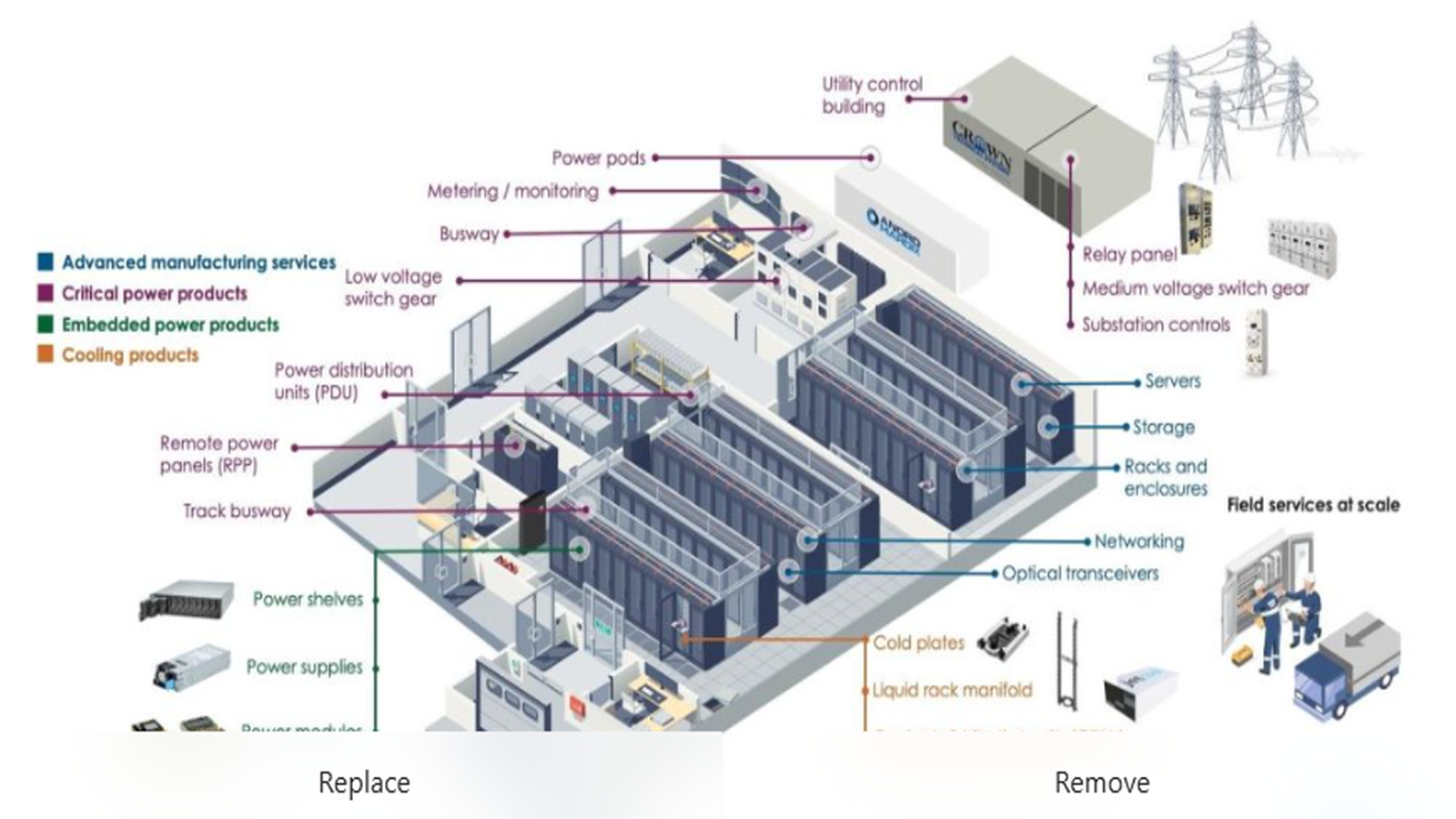
    For decades, alliance energy planning focused on fuel supply and grid robustness. Today, that lens has expanded. Data centers—once treated as civilian IT assets—are now understood as strategic infrastructure with military consequences.

    Three developments drove this reassessment:

    1. Explosive Power Density
      AI training, real-time analytics, and persistent surveillance workloads have dramatically increased energy intensity per rack. A brief outage now produces outsized operational damage.
    2. Civil–Military Interdependence
      Military systems increasingly rely on commercial clouds, regional colocation hubs, and civilian power grids. The boundary between “civilian blackout” and “military disruption” has effectively collapsed.
    3. Multi-Domain Attack Surface
      A single data center can be pressured simultaneously via cyber intrusion, grid manipulation, physical sabotage, or supply-chain denial. Energy is the common point of failure.

    Why Energy Vulnerability Equals Operational Risk

    In NATO assessments, data centers are no longer a passive backend. They are active enablers of:

    • Command, Control, Communications, Computers (C4)
    • ISR fusion and sensor processing
    • AI-assisted decision support
    • Logistics, targeting, and coordination across theaters

    An energy shock—whether intentional or accidental—can degrade these functions faster than kinetic strikes. Unlike hardened bases, many data centers were designed for efficiency, not prolonged denial environments.

    Threat Scenarios Now Taken Seriously

    NATO planners increasingly model scenarios that once sat outside traditional military analysis:

    • Grid-Level Disruption → Regional Data Center Collapse
      Targeted attacks on substations or control software can cascade into digital paralysis.
    • Cyber–Energy Coupling Attacks
      Malware targeting energy management systems can selectively starve data centers of power while masking intent.
    • Supply-Chain Energy Constraints
      Delays in generators, transformers, fuel delivery, or cooling components extend outage recovery timelines well beyond acceptable operational windows.

    These are not hypothetical edge cases. They are realistic pressure points in high-intensity or gray-zone conflict.

    Resilience Is the New Deterrence

    Within NATO discussions, a clear concept is emerging: resilience is deterrence.

    That translates into several strategic directions:

    • Decentralized and Redundant Power Architectures
      Microgrids, on-site generation, and diversified energy inputs reduce single-point failure risk.
    • Integrated Energy–Cyber Defense
      Power infrastructure security can no longer be separated from cyber defense planning.
    • Civil–Military Coordination Frameworks
      Data center operators, grid authorities, and defense planners must share threat models and contingency protocols.
    • Energy-Aware Siting and Design
      Location, cooling strategy, and grid dependency are now strategic variables—not just cost considerations.

    Strategic Implication: The Battlefield Runs on Electricity

    The implication is blunt but unavoidable:

    Data centers sit at the intersection of energy, digital command, and national resilience. NATO’s evolving posture signals that energy-secure computing infrastructure is no longer a technical afterthought—it is a core element of alliance readiness.

    For policymakers, defense planners, and infrastructure operators, the message is clear:
    Protect the power, or lose the fight before it begins.

    References

    Allied and open-source defense analyses on civil–military energy interdependence and grid security.

    NATO — Energy Security and Resilience Frameworks, official alliance briefings and policy overviews.

    European Parliament Research Service — Energy System Disruptions and Security Implications, policy briefings on infrastructure resilience.

    Foreign Policy Research Institute (FPRI) — Data Centers and National Power, analysis on digital infrastructure as strategic assets.

    Socko/Ghost

  • Supply Chains as Escalation VectorsHow Logistics, Materials, and Dependencies Shape Modern Conflict

    Supply Chains as Escalation VectorsHow Logistics, Materials, and Dependencies Shape Modern Conflict

    Modern conflicts rarely begin with a battlefield strike.
    They begin with friction.

    Delays in components.
    Restrictions in transit.
    Uncertainty in sourcing.

    Supply chains have become active escalation vectors—not passive background systems.

    From Efficiency to Vulnerability

    For decades, global supply chains were optimized for cost and efficiency.
    That optimization produced a new weakness: dependency density.

    Critical technologies now rely on narrow sets of suppliers, routes, and processing nodes.
    When these nodes are stressed, entire systems slow down.

    In modern conflict, slowdown is leverage.

    Chokepoints Without Missiles

    Escalation no longer requires kinetic strikes.

    Pressure can be applied through:

    • Export controls and licensing delays
    • Logistics bottlenecks and port congestion
    • Insurance repricing and freight denial
    • Energy and materials access restrictions

    These actions operate below traditional thresholds of war, yet they produce strategic effects.

    Semiconductors, Energy, and Dual-Use Chains

    Military capability is increasingly built on civilian supply chains.

    Advanced chips, specialty materials, cooling systems, and precision components serve both markets simultaneously.

    This dual-use reality creates a dilemma:

    Targeting the supply chain affects civilian economies and military readiness at the same time.

    The boundary between economic pressure and military escalation dissolves.

    Supply Chains as Time Weapons

    Supply disruption rarely causes immediate failure.
    Its power lies in time.

    Delays accumulate.
    Maintenance cycles slip.
    Readiness erodes quietly.

    By the time impact becomes visible, strategic options have already narrowed.

    Supply chains function as slow-acting weapons.

    Capital and Pre-Positioned Escalation

    Investment decisions determine where resilience exists—and where it does not.

    • Redundant suppliers
    • Strategic stockpiles
    • Regionalized manufacturing
    • Logistics diversification

    These choices are made years before conflict.
    When crisis arrives, capital allocation becomes escalation posture.

    The Signal–Capital–Chain Loop

    Supply chains complete the strategic loop.

    Signal generates demand for compute and energy.
    Capital finances infrastructure and capacity.
    Chain delivers—or withholds—physical reality.

    Break any link, and the loop falters.

    Conclusion

    Modern escalation is no longer defined solely by force.
    It is defined by control over continuity.

    Supply chains decide:

    • How long systems endure
    • How quickly recovery occurs
    • How credible deterrence remains

    In contemporary conflict environments,
    logistics is leverage,
    dependency is exposure,
    and resilience is power.

    Socko/Ghost

  • Energy Load & Data Centers as Hidden Military Infrastructure

    Energy Load & Data Centers as Hidden Military Infrastructure

    Wars are not powered by weapons alone.
    They are powered by electricity.

    As warfare becomes increasingly compute-driven, energy availability and data center capacity have emerged as silent determinants of military effectiveness.

    Energy Is the First Constraint

    Every satellite downlink, ISR fusion node, AI model, and command system depends on uninterrupted power.

    Modern military operations now face a basic but decisive question:

    Can the grid sustain the load when it matters most?

    Energy scarcity does not disable weapons directly.
    It slows decision-making, increases latency, and degrades coordination — often before a single shot is fired.

    Data Centers as Strategic Infrastructure

    Data centers are no longer commercial back-end facilities.
    They function as operational hubs for:

    • ISR data fusion
    • AI-enabled targeting analysis
    • Command-and-control redundancy
    • Coalition information sharing

    In practice, this makes data centers indirect military assets, even when privately owned and civilian-operated.

    The Fragility of Concentration

    Compute infrastructure is geographically concentrated.

    Clusters of hyperscale data centers depend on:

    • Regional power grids
    • Substations and transformers
    • Cooling water access
    • Fiber and undersea cable connectivity

    Disruption to any one of these inputs can ripple across military and civilian systems simultaneously.

    This creates a new form of vulnerability:
    infrastructure coupling risk.

    Energy as an Escalation Lever

    Energy infrastructure offers a tempting escalation tool.

    Rather than striking military targets directly, adversaries may apply pressure through:

    • Grid instability
    • Energy pricing shocks
    • Fuel supply disruption
    • Cyber operations against energy management systems

    These actions fall below traditional thresholds of armed conflict while producing strategic effects.

    Capital Builds the Battlefield

    As with compute and satellites, much of today’s energy and data center infrastructure is financed by private capital.

    Investment decisions determine:

    • Where compute capacity grows
    • Which regions gain resilience
    • Which systems receive redundancy

    In effect, capital allocation increasingly pre-configures the battlespace.

    Energy, Compute, and the Speed of War

    Energy is not simply a resource.
    It defines the tempo of conflict.

    High energy availability enables:

    • Faster ISR cycles
    • Continuous AI inference
    • Persistent command networks

    Low energy availability forces prioritization, delay, and degradation.

    Speed favors deterrence.
    Delay invites escalation.

    Signal–Capital–Chain Loop Perspective

    Energy sits at the base of the strategic loop.

    Signal — data generation requires power
    Capital — infrastructure investment shapes resilience
    Chain — fuel, grids, cooling, and logistics enable continuity

    Control the energy layer, and the rest of the system follows.

    Conclusion

    The next wars will not only be fought over territory or technology.
    They will be fought over energy stability and compute continuity.

    Data centers are no longer invisible.
    Power grids are no longer neutral.

    In space- and compute-enabled warfare,
    energy is strategy,
    and infrastructure is deterrence.

    Socko/Ghost

  • Semiconductors & Compute Allocation in Space-Enabled Warfare

    Semiconductors & Compute Allocation in Space-Enabled Warfare

    Modern warfare no longer begins on the battlefield.
    It begins inside data pipelines, compute queues, and semiconductor fabs.

    In space-enabled conflict environments, the decisive advantage is not the number of platforms deployed, but how fast information is processed, fused, and acted upon.

    The New Center of Gravity: Compute

    Low Earth Orbit satellites, ISR sensors, drones, and missile systems all generate massive volumes of data.
    What matters is not collection alone, but compute allocation:

    Who gets priority access to processing power?
    Which data streams are fused in real time?
    And whose decision loop closes first?

    Compute is now a strategic resource, not a background utility.

    Semiconductors as Strategic Chokepoints

    Advanced warfare systems depend on a narrow set of semiconductor capabilities:

    • Leading-edge logic chips
    • High-bandwidth memory
    • Radiation-hardened components
    • Advanced packaging and interconnects

    These are concentrated across a fragile global supply chain spanning a small number of firms, fabs, and geographic nodes.

    Disruption at any point — fabrication, packaging, logistics, or export control — directly impacts military readiness and escalation stability.

    Space + Compute = Decision-Speed Dominance

    Space-based ISR does not create advantage by itself.
    Advantage emerges only when space, compute, and command networks operate as a single system.

    This integration enables:

    • Near-continuous target refresh cycles
    • Real-time sensor-to-shooter loops
    • Distributed command resilience
    • Rapid escalation management

    The faster the loop, the higher the deterrence credibility.

    Capital Shapes the Battlespace

    Unlike legacy defense systems, much of today’s compute infrastructure is financed and operated by private capital.

    Cloud providers, chip designers, satellite operators, and data center networks are now embedded in national security architectures — often ahead of formal doctrine.

    This creates a new reality:

    Capital allocation decisions increasingly shape military capability.

    The Strategic Risk

    Compute scarcity introduces a new form of competition.

    In crisis scenarios, prioritization of compute resources may determine:

    • Which allies receive real-time intelligence
    • Which systems experience latency
    • Which decisions arrive too late

    This silent competition rarely appears in public discourse, yet it defines modern escalation dynamics.

    Signal–Capital–Chain Loop Perspective

    Space-enabled warfare is not a single-domain problem.

    It is a loop:

    Signal — continuous ISR and data generation
    Capital — private investment enabling infrastructure
    Chain — semiconductors, energy, logistics, and networks

    Control of this loop determines strategic decision velocity.

    Conclusion

    The future of warfare will not be decided solely by weapons platforms.
    It will be decided by who controls compute, semiconductors, and the speed of decision-making.

    In space-enabled conflict environments,
    compute is deterrence,
    semiconductors are leverage,
    and delay is vulnerability.

    Socko/Ghost

  • Commercial Space as a Strategic Asset Why LEO Constellations Now Shape Escalation Scenarios

    Commercial Space as a Strategic Asset Why LEO Constellations Now Shape Escalation Scenarios

    01 · Problem Statement

    Commercial space is no longer a purely civilian domain.
    Low Earth Orbit (LEO) satellite constellations have evolved from communication infrastructure into core components of military decision-making and escalation control.

    Networks such as Starlink and OneWeb are no longer auxiliary systems. They are now strategic assets explicitly factored into crisis and conflict planning.

    02 · How LEO Constellations Changed the Speed of Warfare

    Traditional military satellite architectures relied on a small number of high-value assets, vulnerable to disruption and slow to replace.
    LEO constellations introduced a fundamentally different model:

    • Hundreds to thousands of distributed satellites
    • Revisit cycles under 90 seconds
    • Real-time fusion of commercial and military data
    • Network resilience even under partial physical loss

    As a result, ISR has shifted from platform-centric dominance to network-centric superiority.

    03 · The Strategic Paradox of Commercial Satellite Militarization

    The expansion of commercial space infrastructure strengthens deterrence while simultaneously complicating escalation dynamics.

    First, the legitimacy of targeting becomes ambiguous.
    Striking commercial satellites raises legal, political, and civilian-impact dilemmas.

    Second, private platforms are drawn into interstate confrontation.
    Conflict in space increasingly involves corporations alongside states.

    Third, asymmetric responses proliferate.
    Electronic warfare, cyber operations, regulatory pressure, and spectrum denial replace direct kinetic attacks.

    04 · Why Starlink and OneWeb Became Strategic Assets

    These constellations satisfy multiple strategic requirements simultaneously:

    • Continuity of battlefield command and communications
    • Backbone connectivity for drones, missiles, and sensor networks
    • Collapse of the civilian–military boundary
    • Faster scalability than state-owned satellite systems

    LEO networks are now embedded inside deterrence architectures, not merely supporting the

    05 · Interpreting the Signal–Capital–Chain Loop

    Commercial space cannot be understood as a standalone technology sector.
    It operates within a three-layer strategic loop:

    • Signal: Continuous ISR data flows
    • Capital: Private investment constructing strategic infrastructure
    • Chain: Semiconductors, launch systems, ground stations, and data centers

    Actors who control this loop gain decision-speed dominance during crises.

    06 · Conclusion

    Space is no longer a future battlefield.
    It is already integrated into present strategic calculations.

    States that cannot secure LEO network access will lose ground in
    information velocity, deterrence credibility, and alliance interoperability.

    Commercial space is no longer a market asset.
    It is now deterrence infrastructure.

    Socko/Ghost