Category: Capital

Budgets, funding, and industrial money flow.

  • Why Strategic Tech Funding Is Moving From Venture Hype to State-Backed Discipline

    Why Strategic Tech Funding Is Moving From Venture Hype to State-Backed Discipline

    For several years, strategic technology attracted capital through a familiar narrative: back the most promising platform early, scale quickly, and let commercial momentum do the rest. That logic is no longer enough. Across Europe and the NATO ecosystem, funding is being pushed into a more disciplined model, where public money, state-backed vehicles, and procurement-linked programs increasingly shape which technologies survive, scale, and matter.

    This does not mean venture capital disappears. It means venture logic is being subordinated to strategic logic. NATO’s Innovation Fund is a €1 billion multi-sovereign fund designed to invest over a 15-year period in dual-use start-ups critical to Allied security, while DIANA now connects selected firms to accelerator sites, test centres, mentors, military end-users, and contractual funding. The signal to markets is clear: strategic technology is being financed less as pure speculation and more as a controlled pipeline from innovation to validation to adoption.

    The European Union is moving in the same direction, but at much larger industrial scale. The European Defence Fund carries a budget of nearly €7.3 billion for 2021–2027, split between collaborative defence research and capability development, while the SAFE instrument is framed as the first pillar of Readiness 2030 and is intended to help unlock more than €800 billion in defence spending across the EU. EDIP adds another €1.5 billion layer focused on industrial modernisation, production ramp-up, resilience, and steady supply. That is not venture culture. That is state-backed capital discipline.


    The policy tone matters as much as the headline numbers. In February 2026, the Commission amended the EDF Work Programme to simplify procedures for disruptive defence technologies and align the program with broader strategic technology investment tools. That suggests policymakers are no longer satisfied with merely funding innovation in principle. They are trying to reduce friction between public ambition and industrial execution. In practical terms, the question is shifting from “Which technology is exciting?” to “Which technology can move through a disciplined public financing and adoption process?”

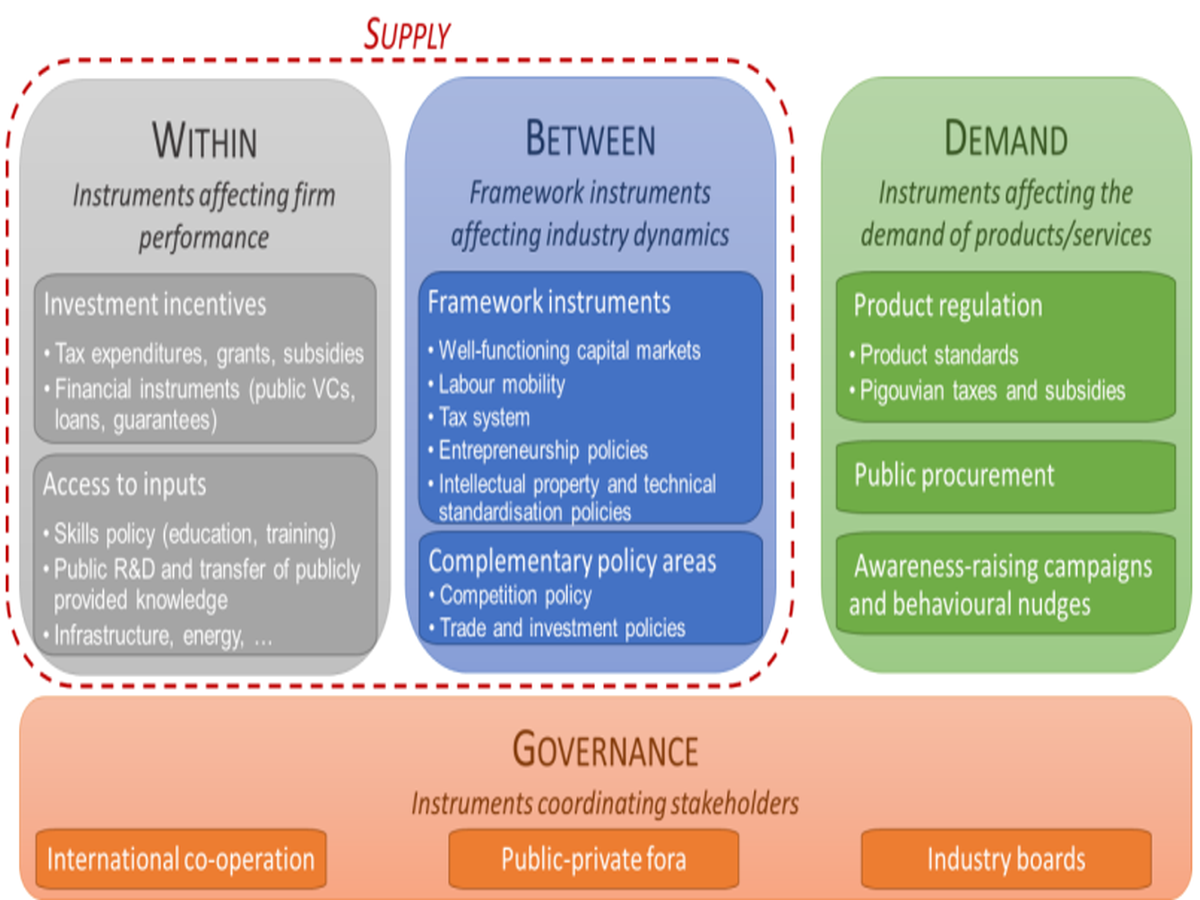
    This broader shift also fits the OECD’s framing of industrial policy. OECD materials emphasize innovation and commercialisation, investment confidence, and strategic policy support as central levers for industrial development, while its industrial-policy work focuses on measuring how governments support business through targeted expenditures, delivery channels, and beneficiary design. That is important because strategic tech is increasingly being treated not as a free-floating market theme, but as an industrial-policy domain where state support, procurement design, and scaling incentives matter directly.

    Shop strapless bras in a variety of sizes like 32AA, 34DD, and more. Find stick on bras, bras with removable straps & more to go with open back dresses.

    The market implication is straightforward. Capital is becoming less democratic and more directional. The winners may not be the firms with the loudest narratives or the biggest prototype hype. They may be the firms that can fit into public financing architecture, meet interoperability and compliance requirements, survive structured testing, and align with resilience goals in defense, energy, semiconductors, logistics, and dual-use manufacturing. That is partly an inference, but it follows directly from the way NATO, the EU, and OECD-linked policy frameworks are now organizing support.

    For investors and operators, this changes the reading of “smart money.” In the previous cycle, smart money often meant private capital getting in before the crowd. In the next cycle, it may mean understanding where public money is building durable lanes for procurement, testing, production, and scale. State-backed discipline may sound less glamorous than venture hype, but it is more likely to determine which strategic technologies become institutions rather than headlines.

    References
    NATO, Defence Innovation Accelerator for the North Atlantic (DIANA).
    NATO, Emerging and disruptive technologies.
    NATO, NATO DIANA announces largest-ever cohort of 150 innovators for 2026.
    European Commission, European Defence Fund (EDF) – Official webpage.
    European Commission, SAFE | Security Action for Europe.
    European Commission, EDIP | Forging Europe’s Defence.
    European Commission, Changes to the EDF Work Programme for simpler procedures and expanded investment areas.
    European Commission, Commission approves first wave of defence funding under SAFE.
    European Commission, Commission approves second wave of SAFE defence funding.
    OECD, Industrial policy.
    OECD, Industrial policy for the future.

    Socko/Ghost
  • Defense Budgets Are Becoming Industrial Policy, Not Just Security Policy

    Defense Budgets Are Becoming Industrial Policy, Not Just Security Policy

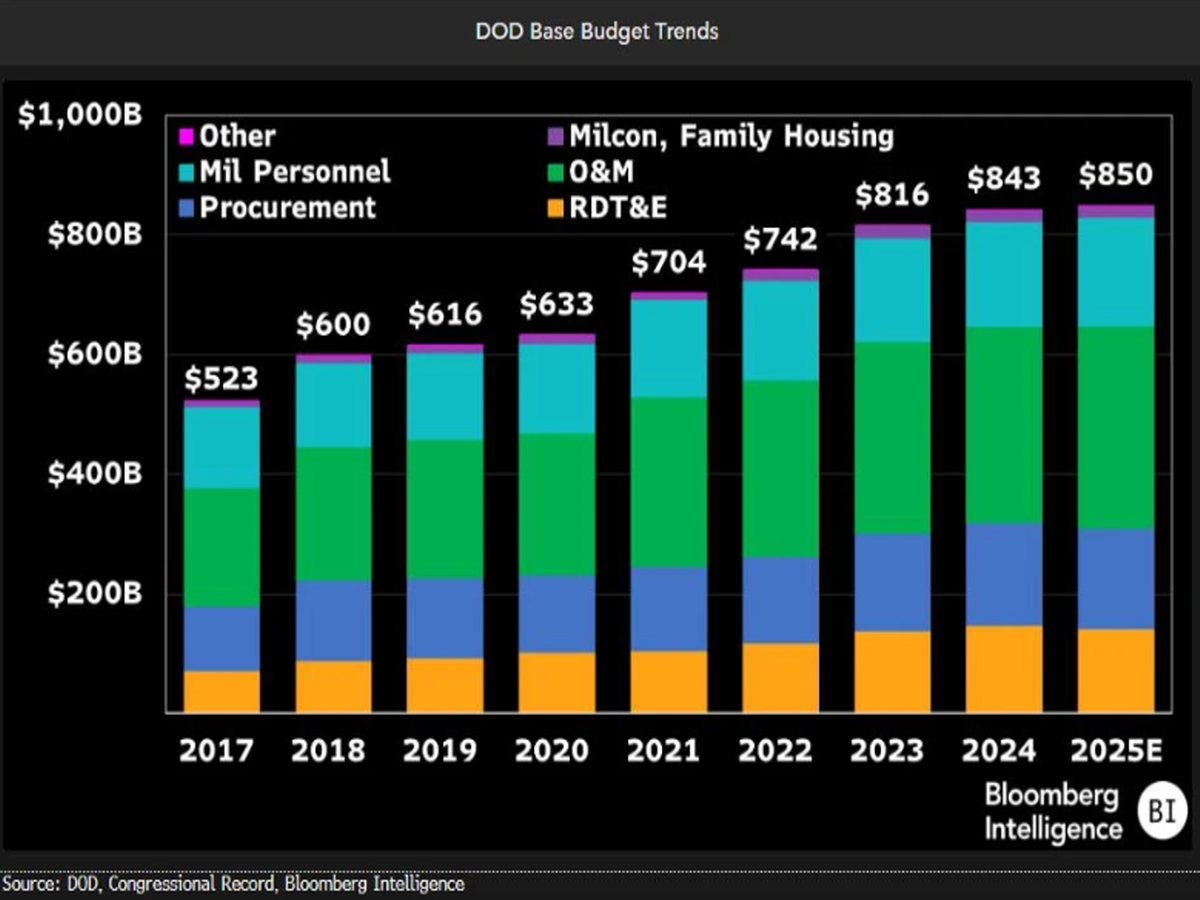
    A new budget cycle is taking shape across advanced economies, and defense is moving closer to the center of industrial policy. The OECD’s recent work argues that higher defense spending has meaningful macroeconomic and fiscal effects, while its March 2026 interim outlook also suggests stronger defense spending could support growth in parts of Europe even as energy prices weigh on activity.

    Shop strapless bras in a variety of sizes like 32AA, 34DD, and more. Find stick on bras, bras with removable straps & more to go with open back dresses.

    That does not mean the story is simple. The OECD also warns that governments financing rearmament with debt may face tighter fiscal choices later, and the IMF says the Middle East war is already disrupting trade and economic activity while pushing up energy prices and financial volatility. In other words, capital is moving toward resilience and rearmament, but under conditions that can still strain the broader economy.


    References
    OECD, Fiscal and Macroeconomic Impacts of Defence Spending.
    OECD, Economic Outlook, Interim Report, March 2026.
    IMF, Statement on the Middle East.
    IMF Press Briefing, March 19, 2026.

    Socko/Ghost

  • Iran’s Drone War Is Rewriting Defense Markets: The Real Money May Flow to Interceptors, Sensors, and Supply Chains

    Iran’s Drone War Is Rewriting Defense Markets: The Real Money May Flow to Interceptors, Sensors, and Supply Chains

    The Iran war is forcing both militaries and investors to confront a brutal new arithmetic. Cheap one-way attack drones can be launched in large numbers, impose real pressure on energy infrastructure and civilian systems, and force defenders to spend far more money on detection and interception than the attacker spends on launch. CSIS argues that Iran’s drone campaign in the Gulf relied heavily on saturation waves of Shahed-style systems, designed less for precision battlefield brilliance than for persistence, disruption, and economic asymmetry.

    That matters because the center of gravity in defense markets may be shifting. In earlier years, much of the fascination was with the offensive platform itself: range, payload, autonomy, and survivability. But recent conflict dynamics suggest the more scalable business opportunity may lie in what stops these systems. IISS notes that Gulf states face a layered UAV threat and that long-range missile defense was never meant to be the primary answer to lower-cost unmanned systems. That points to a broader demand curve for radar integration, AI-assisted tracking, electronic warfare, short-range interceptors, and lower-cost kill chains built specifically for drone-heavy environments.

    The commercial market is already reacting. Reuters reported this week that Ukrainian defense firms are trying to turn wartime know-how in drone interception into export business for Gulf customers worried about Iranian UAV attacks. The report says Ukrainian companies see growing interest from Saudi Arabia, Qatar, and the United Arab Emirates, precisely because the region is looking for more practical and affordable ways to counter mass drone raids. That is an important signal: the next wave of defense demand may favor companies that can offer fast, scalable, and comparatively cheap counter-UAS solutions rather than exquisite but expensive legacy systems alone.

    This shift also changes how investors should read “defense technology.” The winning firms may not be the ones with the most dramatic hardware demo, but the ones that connect sensors, software, interceptors, data fusion, and logistics into a repeatable operating system. In other words, the market prize is moving from standalone platforms toward integrated defense architecture. That is partly an inference, but it is strongly supported by the way CSIS frames the economic asymmetry of drone warfare and by IISS’s emphasis on layered and diversified counter-UAV options across the Gulf.

    Shop strapless bras in a variety of sizes like 32AA, 34DD, and more. Find stick on bras, bras with removable straps & more to go with open back dresses.

    References
    CSIS, Unpacking Iran’s Drone Campaign in the Gulf: Early Lessons for Future Drone Warfare.
    IISS, Defending the Skies of the Arab Gulf States.
    IISS, Uninhabited Middle East: UAVs, ISR, Deterrence and War.
    Reuters, Ukraine’s drone masters eye Iran war to kickstart export ambitions.
    SIPRI Yearbook 2025, chapter on missiles and armed uncrewed aerial vehicles.

    Socko/Ghost

  • Capital Market Flows as Indicators of Strategic Supply Chain Realignments

    Capital Market Flows as Indicators of Strategic Supply Chain Realignments

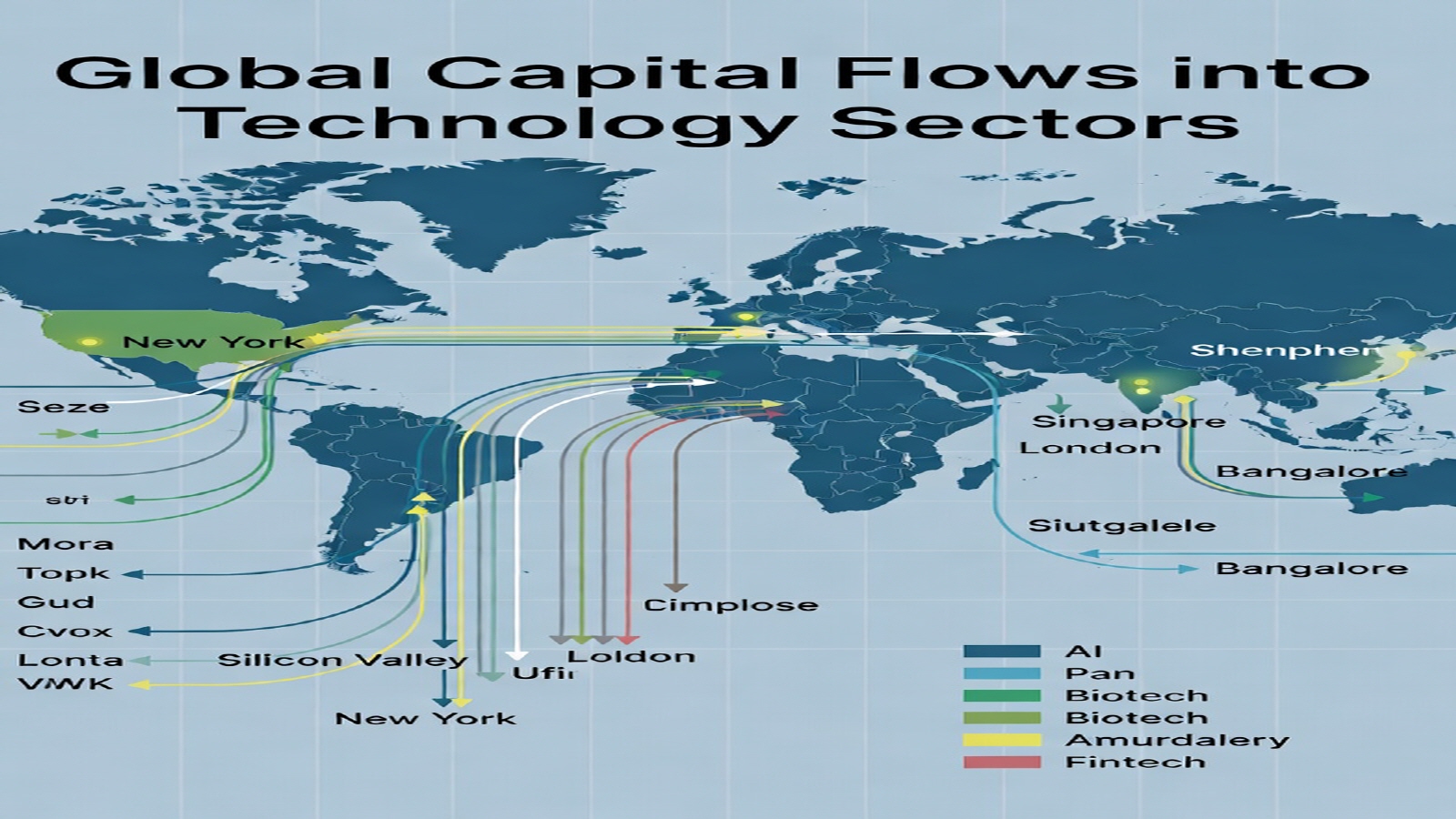
    Capital markets are no longer passive reflections of corporate performance—they have become real-time sensors of geopolitical strategy, especially in critical industries such as semiconductors, rare earth elements, defense manufacturing, and energy-transition materials. Shifts in cross-border capital flows now reveal where nations are tightening alliances, hedging against rivals, or preparing for supply chain decoupling. In a multipolar global economy, money moves first—policy follows, and industrial transformation comes last.

    1. Global Investment Flows as Strategic Early-Warning Signals

    Why capital moves before governments announce policy

    Fund flows, sovereign investment decisions, and private equity positioning are increasingly synchronized with geopolitical fault lines.
    Key global signals:

    Massive U.S. venture and defense-capital inflows into domestic semiconductor fabs

    Overall decline in Western capital exposure to China’s tech manufacturing

    India and Vietnam absorbing capital originally destined for Shenzhen, Suzhou, and Dongguan

    Energy-transition critical material funds shifting to Australia, Canada, and Latin America

    Sovereign wealth funds (GCC, Norway) reallocating from fossil-heavy portfolios to rare earths and advanced materials

    These flows collectively reveal a simple truth:

    Capital is repositioning itself in anticipation of a new global production architecture—not reacting to it.

    2. Semiconductors: The Leading Indicator of Geopolitical Alignment Investment flows prove that supply chain decoupling is real, not theoretical.

    Semiconductors represent the most telling alignment pattern:

    U.S. & Allies: Record-breaking investments in Arizona, Texas, Japan, South Korea

    China: State-driven capital expansion in domestic lithography, memory, and packaging

    Europe: Funding Germany, the Netherlands, and Eastern Europe as strategic redundancy hubs

    Private capital, sovereign funds, and government subsidies move together—identical direction, identical timing.

    This creates a triangular power structure:

    U.S.-led advanced-node coalition (TSMC/Japan/Korea)

    China’s self-reliant mass production ecosystem

    Europe’s resilience buffer

    The flow of money confirms that each bloc is building its own secure semiconductor orbit.

    3. Rare Earths & Energy Materials: Capital Flees Concentration Risk Diversification away from China is now irreversible.

    China still dominates rare earth processing, but global investment patterns show accelerating diversification:

    Australia: lithium, nickel, rare earth extraction

    Canada: critical minerals + independent refining capacity

    Chile & Argentina: lithium triangle surging investment

    Africa (Namibia, Tanzania): new rare earth mining hubs

    U.S. & EU: building refining capacity from scratch

    Western capital is no longer willing to tolerate single-point geopolitical fragility.

    These moves reveal a deliberate strategy:

    Break China’s chokehold without triggering direct confrontation.

    4. Energy Transition Capital: A New Geoeconomic Axis Battery supply chains are reshaping alliances.

    Follow the investment flows in batteries and energy materials, and you see the emerging geopolitical blocs:

    U.S.–Korea–Japan Battery Alliance grows rapidly

    Europe shifts toward domestic gigafactories

    China ramps up Belt-and-Road battery mineral control

    India emerges as a balancing force via massive cell and pack investments

    These flows define the 21st-century balance of power more than troop deployments or naval tonnage.

    Battery supply chain alliances are, effectively, political alliances in disguise.

    5. Decoupling, De-risking, and the Capital Geometry of Multipolarity
    Capital markets reveal the truth beneath diplomatic language.

    Governments publicly promise “de-risking, not decoupling.” But capital flows tell a different story: **capital is already decoupling**, especially in:

    critical tech

    data infrastructure

    rare earth refining

    semiconductor manufacturing equipment

    battery minerals

    This is silent decoupling, executed not by politicians but by investors.

    Money exposes geopolitical reality more clearly than diplomacy does.

    6. What Capital Flows Reveal About Emerging Power Structures

    A new configuration of global blocs is taking shape.

    Block A — U.S.-Aligned Industrial Coalition: Semiconductors, batteries, defense tech, critical minerals.
    Block B — China-Led Production Sovereignty Bloc 

    Mass-production ecosystem + mineral dominance + Belt-and-Road logistics.

    Block C — Strategic Middle Zone

    India, Vietnam, Indonesia, GCC:
    Not aligned to either side; leverage both.

    Block D — Resource Hubs

    Australia, Latin America, Africa:
    Become power brokers via mineral supply.

    Capital flows across these blocs show power is shifting from factories to minerals,
    from manufacturing hubs to capital allocators,
    from trade routes to investment routes.

    Conclusion — Capital Markets Are the New Geopolitical Map

    Capital flows are no longer background noise; they are the **master signal** of strategic realignment.

    They reveal where critical supply chains are migrating

    They expose emerging alliances long before treaties are signed

    They warn of decoupling before sanctions hit

    They show which countries will gain strategic leverage in the next decade

    If supply chains are the arteries of global power,
    ? capital markets are the heartbeat.

    Anyone tracking geopolitics without tracking capital flows is already behind the curve.
    SockoPower follows both.

    References

    • IMF. Cross-Border Capital Flows and Geoeconomic Fragmentation, 2024.
    • BIS. Financial Stability Review: Strategic Tech-Sector Capital Trends, 2024.
    • U.S. Department of Commerce. Semiconductor Investment Tracker, 2023–2025.
    • European Commission. Critical Raw Materials and Capital Allocation Report, 2024.
    • McKinsey Global Institute. Global Capital Rebalancing Amid Supply Chain Redesign, 2023.
    • CSIS. Strategic Decoupling and Industrial Capital Flows, 2024.
  • Capital Market Mobilization Behind Defense Innovation

    Capital Market Mobilization Behind Defense Innovation

    Capital markets have become an increasingly decisive battlefield in the race for technological superiority. Defense innovation is no longer driven solely by government budgets; instead, venture capital, sovereign wealth funds, and specialized defense-tech investment vehicles are now fueling advancements traditionally associated with national laboratories and military research agencies.

    In the U.S., venture funding for defense startups has surged as geopolitical instability and AI-driven military modernization expand commercial opportunity. Companies developing autonomous systems, cybersecurity platforms, secure chips, and space-based sensors are attracting record private capital.

    Sovereign wealth funds in the Middle East and Asia are also repositioning portfolios toward emerging military and dual-use technologies. Their long investment horizons make them uniquely suited to support capital-intensive innovations such as hypersonics, quantum communications, and next-generation energy systems.

    This mobilization of private and public capital introduces new competitive dynamics:

    Startups can now outperform legacy defense contractors in speed and adaptability.

    States with deeper capital pools can accelerate technological adoption faster than rivals.

    Financial flows themselves act as geopolitical instruments, shaping alliances and technology-sharing frameworks.

    As capital markets increasingly converge with defense strategy, the world is entering an era where financial influence directly shapes military power.

    References

    SIPRI Defense Economics Report

    PitchBook DefenseTech Funding Data

    CSIS Defense Industrial Base Analysis

    NATO DIANA Innovation Framework

  • Weaponization of Capital Markets in Emerging Tech Competition

    Weaponization of Capital Markets in Emerging Tech Competition

    Introduction: When Finance Becomes Statecraft

    Capital markets have quietly become one of the most powerful tools of geopolitical influence.
    As emerging technologies define national power, financial flows are increasingly regulated, weaponized, and strategically directed by states.

    1. Outbound Investment Controls: Blocking Technology Transfer

    The U.S. leads the trend with restrictions on outbound investment into Chinese:

    • AI
    • Quantum computing
    • Semiconductors
    • Military-relevant biotech

    The EU and Japan are evaluating similar frameworks.
    This is a fundamental shift: capital movements now carry national security implications.

    2. Sovereign Wealth Funds as Global Tech Gatekeepers

    Middle Eastern sovereign wealth funds (SWFs)—PIF, Mubadala, ADIA, QIA—are reshaping emerging technology sectors through:

    • Massive AI and robotics investments
    • Space and satellite tech funding
    • EV, energy storage, and hydrogen ecosystems
    • Advanced materials and aerospace manufacturing

    These funds operate simultaneously as commercial investors and geopolitical actors.

    3. Market Access as a Tool of Political Leverage

    China exercises financial influence through:

    • Venture capital gating
    • IPO approvals and delistings
    • Domestic listing policies
    • State-directed funding into strategic sectors

    Foreign firms often face a trade-off: access to China’s market vs. alignment with Western strategic norms

    4. The Financialization of the Battlefield

    Defense modernization increasingly relies on:

    • Private equity funding missile and drone manufacturers
    • Venture capital scaling dual-use startups
    • SPACs and tech IPOs in commercial space and ISR sectors
    • Investment rerouted through “friendly” jurisdictions

    Financial ecosystems have become part of the military-industrial landscape.

    5. Consequences: A Fragmenting Financial Order

    We now see:

    • Competing capital blocs
    • Conflicting regulatory regimes
    • Politicization of investment flows
    • Techno-financial spheres of influence

    Markets are no longer neutral—they are geopolitical terrain.

    Conclusion

    The weaponization of finance is transforming global capital markets into strategic instruments.
    States that can mobilize financial power alongside technological leadership will dominate the emerging world order.