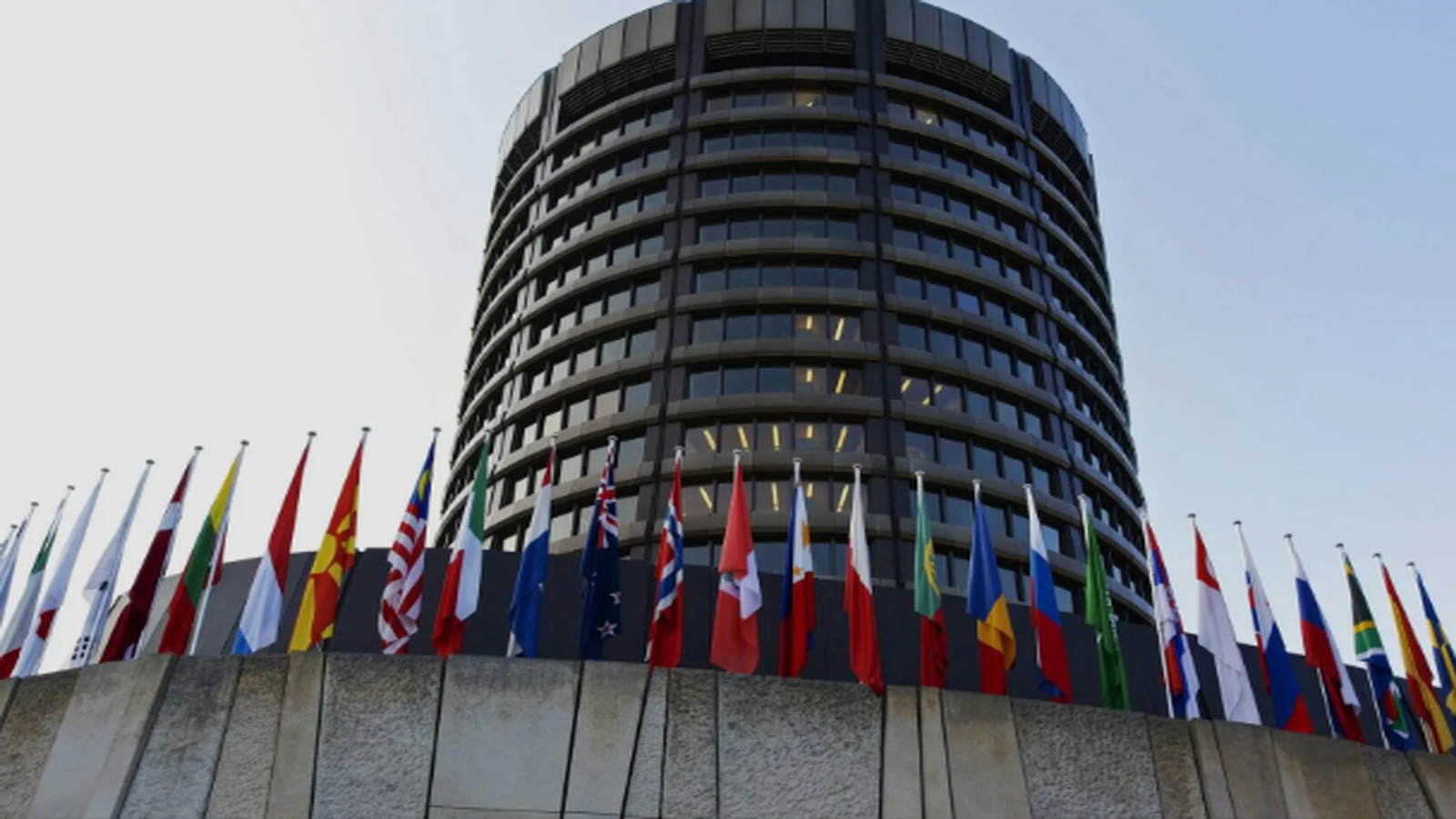
The Basel Committee’s May 2026 meeting shows that bank regulation is moving deeper into the digital operating layer of finance. The Committee agreed to publish a report on information and communication technology risk management, progressed its targeted review of the prudential standard for banks’ cryptoasset exposures, and considered whether its liquidity risk principles need targeted updates. For SockoPower’s Capital category, the signal is clear: operational resilience, cyber risk, cryptoasset exposures, and liquidity governance are becoming part of the same supervisory map.
The Basel Committee met in Basel on May 19–20, 2026 to discuss a range of initiatives. Its financial stability discussion noted that the global banking system remains resilient, supported by robust capital and liquidity positions, but also warned that heightened tensions, including conflict in the Middle East, could create second- and third-order effects through inflationary pressure, supply chain disruptions, and sector-specific impacts such as energy and agriculture.
That matters because bank resilience is no longer judged only by capital ratios. Banks now depend on digital infrastructure, cyber defenses, third-party systems, cloud services, data flows, payment rails, market connections, and operational continuity. A bank can meet capital requirements and still face serious risk if its ICT systems fail, if cyber incidents scale quickly, or if digital dependencies are not properly governed.
The Committee’s digitalisation section is the core of this item. BIS says the Basel Committee approved a report describing observed ICT risk management practices across jurisdictions for addressing non-malicious ICT incidents. The report is expected to be published next month. BIS also states that ICT plays a vital role in operational risk management and broader operational resilience.

This is a strong Capital signal. ICT risk is not only an IT department issue. It is a financial stability issue. If bank systems, market interfaces, payment functions, or data infrastructure are disrupted, the effect can move from operational inconvenience to liquidity stress, customer confidence risk, settlement delay, and supervisory concern.
The AI angle makes the signal sharper. BIS notes that the Committee discussed recent developments in artificial intelligence models and their implications for banks’ cybersecurity. Frontier AI models may help banks and supervisors identify vulnerabilities and strengthen defenses, but their malicious use may materially change the speed and scale of cyber incidents.
That sentence matters for strategic finance. AI is now entering both sides of the cyber-risk equation. Banks can use AI to strengthen security, but attackers can also use AI to accelerate reconnaissance, phishing, malware adaptation, vulnerability discovery, and attack scaling. For capital markets, this means cyber risk is becoming faster, more automated, and harder to separate from operational resilience.
The cryptoasset section is also important. BIS says the Committee has expedited a targeted review of elements of its prudential standard for banks’ cryptoasset exposures and that an update will be provided later this year. The signal is not that banks are being pushed aggressively into crypto. The signal is that cryptoasset exposures are being brought further into the prudential risk perimeter.
For Capital, that matters because crypto markets increasingly intersect with banks through custody, settlement services, tokenized assets, stablecoins, client exposure, indirect instruments, and market infrastructure experiments. Even when banks’ direct exposures are limited, prudential standards shape whether regulated banks participate, avoid, or restrict activity in digital-asset markets.
Liquidity risk is the third major watchpoint. The Committee agreed to consider whether targeted updates to its Principles for Sound Liquidity Risk Management and Supervision are needed. Those principles were published in September 2008, and BIS notes that regulatory, supervisory, and structural developments since then may justify a review of whether the principles remain fit for purpose.
That is not a small signal. Liquidity risk has changed since 2008. Digital banking, faster information flows, social-media-driven depositor behavior, non-bank financial intermediation, private credit links, central bank balance sheet shifts, and real-time market stress can all affect how quickly liquidity pressure moves through the system. If Basel updates liquidity risk principles, it could influence supervisory expectations for banks worldwide.
The Committee also discussed non-bank financial intermediation, including private credit. BIS states that banks’ direct exposures to private credit appear contained in aggregate, but indirect exposures and interconnections remain a watchpoint. That fits the broader message: risk is increasingly found in connections, not only in balance-sheet line items.
The narrow takeaway is this: Basel supervision is shifting toward connected risk. ICT incidents, AI-enabled cyber threats, cryptoasset exposures, liquidity principles, private credit links, and extreme weather impacts are separate topics on paper, but they all point to the same underlying issue. Modern banking risk is increasingly operational, digital, cross-sector, and fast-moving.
For SockoPower, this belongs in Capital because it affects the operating environment for banks, funding, pricing, supervision, digital finance, and market confidence. The headline is not a new capital rule. The headline is that the regulatory agenda is moving toward the infrastructure and risk channels that can transmit stress before traditional ratios show damage.
Why It Matters
This item may affect capital allocation because digital resilience, cryptoasset prudential rules, and liquidity risk principles shape how banks manage risk, allocate balance-sheet capacity, and participate in emerging financial infrastructure. The Basel Committee’s agenda shows that operational resilience and digital risk are becoming core supervisory issues, not side topics.
SockoPower Takeaway
The Basel Committee is not only watching capital ratios. It is watching the systems that allow banks to function. ICT risk, AI-enabled cyber threats, cryptoasset exposure, liquidity governance, and private-credit interconnections all point to a banking system where resilience depends on digital infrastructure as much as balance-sheet strength.
What to Watch Next
Watch the Basel Committee’s forthcoming ICT risk management report and whether it creates a stronger benchmark for bank operational resilience practices.
Watch the targeted review of banks’ cryptoasset exposure standard and whether it changes the cost or feasibility of regulated bank participation in digital-asset markets.
Watch whether the Committee moves from considering liquidity principle updates to formal consultation or revised guidance.
Watch how AI-related cybersecurity risks appear in future supervisory statements.
Watch whether private credit interconnections become a larger focus of bank supervision.
References
BIS, “Basel Committee agrees to publish report on information and communication technology risk management, progresses cryptoasset targeted review, considers targeted updates on liquidity risk principles,” May 20, 2026.
Socko/Ghost
Leave a Reply