
Tag: Liquidity Risk

  • CPMI-IOSCO Targets Initial Margin Transparency in Centrally Cleared Markets

    CPMI-IOSCO Targets Initial Margin Transparency in Centrally Cleared Markets

    CPMI-IOSCO’s May 2026 consultation on initial margin transparency is not a technical footnote for clearing houses. It is a capital-market stability issue. The consultation targets updated guidance for central counterparties, or CCPs, and public quantitative disclosures that could make margin practices in centrally cleared markets more transparent, comparable, and easier to assess during periods of stress.

    The BIS Committee on Payments and Market Infrastructures and IOSCO published the consultation on May 6, 2026. They are seeking comments on proposed amendments to the 2017 CPMI-IOSCO CCP resilience guidance and the 2015 public quantitative disclosure standards for central counterparties. The consultation is intended to implement relevant proposals from the January 2025 BCBS-CPMI-IOSCO final report on transparency and responsiveness of initial margin in centrally cleared markets. Comments are due by June 30, 2026.

    For SockoPower’s Capital category, the key issue is simple: margin calls can become liquidity shocks. When market volatility rises, central counterparties may increase initial margin requirements. That can protect the clearing system, but it can also force clearing members and clients to find additional cash or collateral at exactly the moment when liquidity is already under pressure.

    That is why initial margin transparency matters. Market participants need to understand how CCP margin models behave, how responsive they are to volatility, and how changes in margin requirements could affect funding needs. If margin models are opaque, firms may be surprised by sudden calls for collateral. If disclosures are inconsistent, participants may find it difficult to compare risk across CCPs and clearing services.

    Shop strapless bras in a variety of sizes like 32AA, 34DD, and more. Find stick on bras, bras with removable straps \& more to go with open back dresses.

    The consultation is rooted in the market stress of March 2020. The CPMI-IOSCO cover note states that the earlier margining-practices review followed the Covid-19 market turmoil, which it described as the most significant test of financial market resilience since the 2007–09 Great Financial Crisis. That work examined whether margin calls in centrally and non-centrally cleared derivatives and securities markets were unexpectedly large and considered issues such as margin transparency, predictability, clearing member-client dynamics, and volatility.

    The proposed amendments focus on targeted additions rather than a new regulatory framework. CPMI-IOSCO states that the proposals are not intended to create additional standards beyond the Principles for Financial Market Infrastructures. Instead, they provide clarity on acceptable approaches to observing the PFMI, especially through updates to CCP resilience guidance and public quantitative disclosures.

    The core subjects include simulation tools, measurement of initial margin responsiveness, margin model governance frameworks, margin model overrides, and CCP public disclosures. These are not abstract details. They shape how market participants understand potential margin changes, how CCPs explain model behavior, and how supervisors evaluate the resilience of cleared markets.

    The public disclosure side is especially important for indexing and market transparency. The proposed amendments to the public quantitative disclosure standards would require more structured information around margin. The consultation material states that public quantitative disclosures are meant to help evaluate and compare CCPs, and it expects CCPs to publish disclosures in a common template, with reports available on the CCP’s website in an accessible format.

    Under the margin section, the proposed disclosure updates would require CCPs to report initial margin required at least at the level of each clearing service. They would also include different types of margin, such as baseline initial margin, add-ons, and retained mark-to-market or variation margin where relevant. Add-ons may reflect risks such as liquidity risk, concentration risk, correlation risk, wrong-way risk, or non-routine ad hoc intraday calls.

    That matters because not all margin is the same. A simple headline figure can hide whether margin pressure comes from routine baseline requirements, additional risk add-ons, intraday calls, or retained variation margin. Better disclosure helps participants understand the source of margin pressure and whether it is structural, episodic, or stress-related.

    The proposal also points to the need for more comparable margin information. CPMI-IOSCO acknowledges that margining practices vary across CCPs, which is precisely why standardized public disclosures matter. In a stress event, market participants and supervisors need to know not only that margin has increased, but why it increased, which clearing services were affected, and whether the data are representative of normal or stressed conditions.

    For capital markets, the signal is clear. CCPs are designed to reduce counterparty risk, but they can also concentrate liquidity demands. Initial margin is one of the places where risk protection and liquidity pressure meet. If disclosures improve, market participants may be better able to plan funding, manage collateral, compare clearing exposures, and anticipate stress-period liquidity needs.

    For SockoPower, this belongs in Capital because it sits directly inside the financial plumbing of markets. It affects derivatives clearing, collateral demand, liquidity planning, margin governance, and the transparency of institutions that stand between buyers and sellers in centrally cleared markets.

    The narrow takeaway is this: CPMI-IOSCO is trying to make initial margin practices more transparent before the next stress event, not after it. That is exactly the kind of capital-market infrastructure signal worth tracking.

    Original source

    Why It Matters

    This item may affect capital allocation because initial margin requirements influence collateral demand, clearing costs, funding pressure, and market liquidity. CPMI-IOSCO’s consultation on CCP resilience guidance and public quantitative disclosures aims to make centrally cleared initial margin practices more transparent and comparable, which matters when market stress increases margin calls.

    SockoPower Takeaway

    Initial margin is not just a clearing-house calculation. It is a liquidity transmission channel. When CCPs raise margin requirements during volatile markets, the effect can move through clearing members, clients, collateral markets, and funding conditions. The CPMI-IOSCO consultation matters because it targets the transparency layer behind that process.

    What to Watch Next

    Watch whether CPMI-IOSCO finalizes the amendments after the June 30, 2026 comment deadline.

    Watch how CCPs respond to expanded margin-related public quantitative disclosures.

    Watch whether market participants use the proposed disclosures to compare margin responsiveness across CCPs and clearing services.

    Watch whether future stress events show more predictable margin calls and fewer liquidity surprises.

    Watch how supervisors incorporate simulation tools, margin model governance, and margin model overrides into CCP resilience expectations.

    References

    BIS, “CPMI-IOSCO publishes for consultation updated guidance and public disclosures to support the implementation of initial margin proposals,” May 6, 2026.
    BIS CPMI, “CPMI-IOSCO consultation on updated guidance and public disclosures to implement initial margin proposals,” May 6, 2026.
    CPMI-IOSCO, “Consultation on updated guidance and public disclosures to implement initial margin proposals — cover note,” May 6, 2026.
    CPMI-IOSCO, “Public quantitative disclosure standards for central counterparties with proposed amendments,” May 2026.

    Socko/Ghost
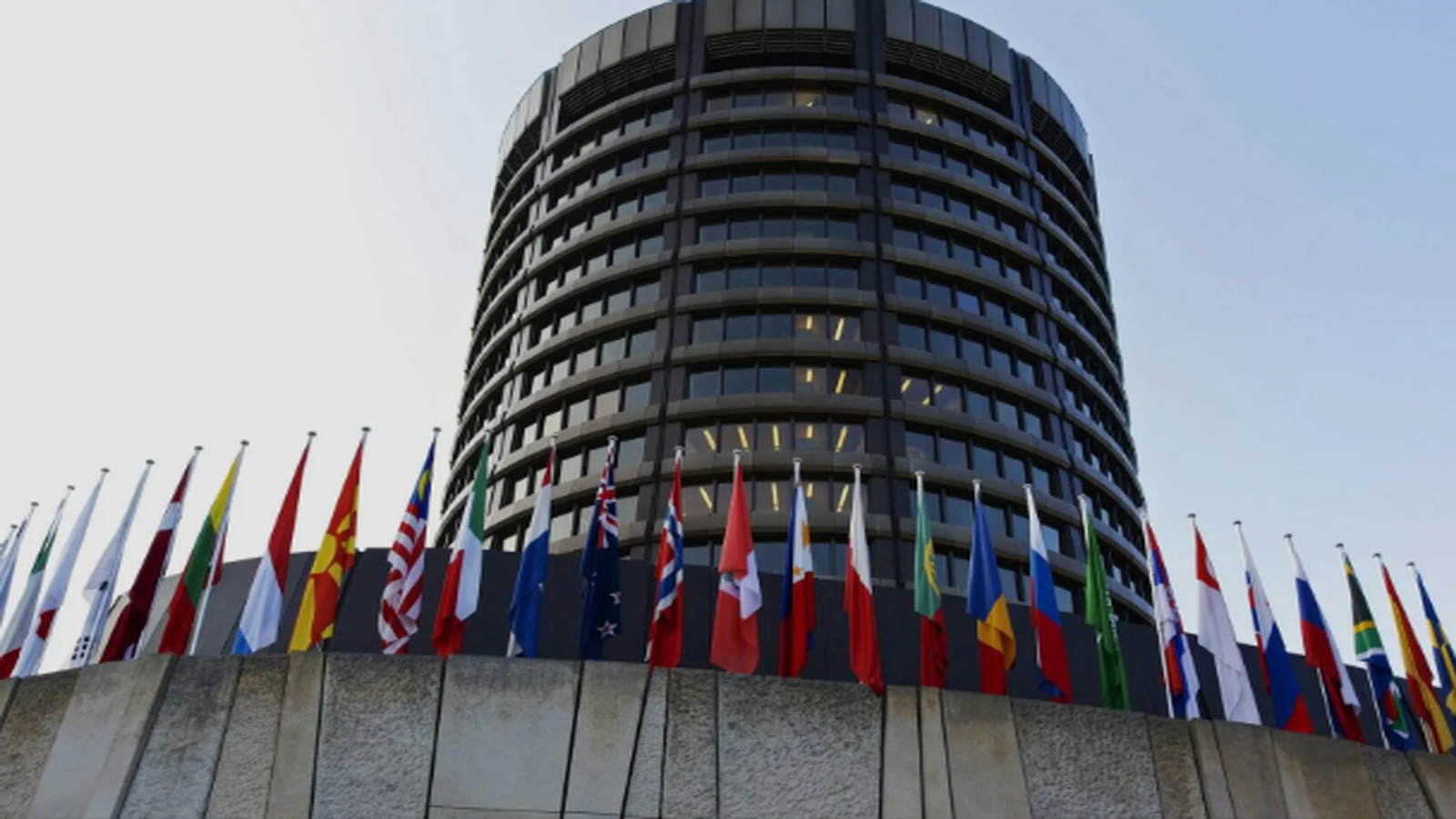
  • Basel Committee Moves Digital Risk, Cryptoassets, and Liquidity Back Into the Banking Spotlight

    Basel Committee Moves Digital Risk, Cryptoassets, and Liquidity Back Into the Banking Spotlight

    The Basel Committee’s May 2026 meeting shows that bank regulation is moving deeper into the digital operating layer of finance. The Committee agreed to publish a report on information and communication technology risk management, progressed its targeted review of the prudential standard for banks’ cryptoasset exposures, and considered whether its liquidity risk principles need targeted updates. For SockoPower’s Capital category, the signal is clear: operational resilience, cyber risk, cryptoasset exposures, and liquidity governance are becoming part of the same supervisory map.

    The Basel Committee met in Basel on May 19–20, 2026 to discuss a range of initiatives. Its financial stability discussion noted that the global banking system remains resilient, supported by robust capital and liquidity positions, but also warned that heightened tensions, including conflict in the Middle East, could create second- and third-order effects through inflationary pressure, supply chain disruptions, and sector-specific impacts such as energy and agriculture.

    That matters because bank resilience is no longer judged only by capital ratios. Banks now depend on digital infrastructure, cyber defenses, third-party systems, cloud services, data flows, payment rails, market connections, and operational continuity. A bank can meet capital requirements and still face serious risk if its ICT systems fail, if cyber incidents scale quickly, or if digital dependencies are not properly governed.

    The Committee’s digitalisation section is the core of this item. BIS says the Basel Committee approved a report describing observed ICT risk management practices across jurisdictions for addressing non-malicious ICT incidents. The report is expected to be published next month. BIS also states that ICT plays a vital role in operational risk management and broader operational resilience.

    Shop strapless bras in a variety of sizes like 32AA, 34DD, and more. Find stick on bras, bras with removable straps \& more to go with open back dresses.

    This is a strong Capital signal. ICT risk is not only an IT department issue. It is a financial stability issue. If bank systems, market interfaces, payment functions, or data infrastructure are disrupted, the effect can move from operational inconvenience to liquidity stress, customer confidence risk, settlement delay, and supervisory concern.

    The AI angle makes the signal sharper. BIS notes that the Committee discussed recent developments in artificial intelligence models and their implications for banks’ cybersecurity. Frontier AI models may help banks and supervisors identify vulnerabilities and strengthen defenses, but their malicious use may materially change the speed and scale of cyber incidents.

    That sentence matters for strategic finance. AI is now entering both sides of the cyber-risk equation. Banks can use AI to strengthen security, but attackers can also use AI to accelerate reconnaissance, phishing, malware adaptation, vulnerability discovery, and attack scaling. For capital markets, this means cyber risk is becoming faster, more automated, and harder to separate from operational resilience.

    The cryptoasset section is also important. BIS says the Committee has expedited a targeted review of elements of its prudential standard for banks’ cryptoasset exposures and that an update will be provided later this year. The signal is not that banks are being pushed aggressively into crypto. The signal is that cryptoasset exposures are being brought further into the prudential risk perimeter.

    For Capital, that matters because crypto markets increasingly intersect with banks through custody, settlement services, tokenized assets, stablecoins, client exposure, indirect instruments, and market infrastructure experiments. Even when banks’ direct exposures are limited, prudential standards shape whether regulated banks participate, avoid, or restrict activity in digital-asset markets.

    Liquidity risk is the third major watchpoint. The Committee agreed to consider whether targeted updates to its Principles for Sound Liquidity Risk Management and Supervision are needed. Those principles were published in September 2008, and BIS notes that regulatory, supervisory, and structural developments since then may justify a review of whether the principles remain fit for purpose.

    That is not a small signal. Liquidity risk has changed since 2008. Digital banking, faster information flows, social-media-driven depositor behavior, non-bank financial intermediation, private credit links, central bank balance sheet shifts, and real-time market stress can all affect how quickly liquidity pressure moves through the system. If Basel updates liquidity risk principles, it could influence supervisory expectations for banks worldwide.

    The Committee also discussed non-bank financial intermediation, including private credit. BIS states that banks’ direct exposures to private credit appear contained in aggregate, but indirect exposures and interconnections remain a watchpoint. That fits the broader message: risk is increasingly found in connections, not only in balance-sheet line items.

    The narrow takeaway is this: Basel supervision is shifting toward connected risk. ICT incidents, AI-enabled cyber threats, cryptoasset exposures, liquidity principles, private credit links, and extreme weather impacts are separate topics on paper, but they all point to the same underlying issue. Modern banking risk is increasingly operational, digital, cross-sector, and fast-moving.

    For SockoPower, this belongs in Capital because it affects the operating environment for banks, funding, pricing, supervision, digital finance, and market confidence. The headline is not a new capital rule. The headline is that the regulatory agenda is moving toward the infrastructure and risk channels that can transmit stress before traditional ratios show damage.

    Original source

    Why It Matters

    This item may affect capital allocation because digital resilience, cryptoasset prudential rules, and liquidity risk principles shape how banks manage risk, allocate balance-sheet capacity, and participate in emerging financial infrastructure. The Basel Committee’s agenda shows that operational resilience and digital risk are becoming core supervisory issues, not side topics.

    SockoPower Takeaway

    The Basel Committee is not only watching capital ratios. It is watching the systems that allow banks to function. ICT risk, AI-enabled cyber threats, cryptoasset exposure, liquidity governance, and private-credit interconnections all point to a banking system where resilience depends on digital infrastructure as much as balance-sheet strength.

    What to Watch Next

    Watch the Basel Committee’s forthcoming ICT risk management report and whether it creates a stronger benchmark for bank operational resilience practices.

    Watch the targeted review of banks’ cryptoasset exposure standard and whether it changes the cost or feasibility of regulated bank participation in digital-asset markets.

    Watch whether the Committee moves from considering liquidity principle updates to formal consultation or revised guidance.

    Watch how AI-related cybersecurity risks appear in future supervisory statements.

    Watch whether private credit interconnections become a larger focus of bank supervision.

    References

    BIS, “Basel Committee agrees to publish report on information and communication technology risk management, progresses cryptoasset targeted review, considers targeted updates on liquidity risk principles,” May 20, 2026.

    Socko/Ghost