Tag: nato

  • NATO’s Emerging Technology Push Is Quietly Signaling the Next Procurement Race

    NATO’s Emerging Technology Push Is Quietly Signaling the Next Procurement Race

    NATO’s technology agenda is starting to look less like a long-range innovation discussion and more like an early procurement signal. For years, the Alliance treated emerging and disruptive technologies as an area of strategic concern, but the pace is now changing. What matters is not simply that NATO wants more advanced systems. What matters is that NATO is building mechanisms to move technologies from experimentation into adoption faster, with clearer demand signals for industry.

    That shift is becoming more visible through NATO’s recent innovation architecture. The Alliance’s technology track now connects strategic priorities, test environments, innovation support, and adoption tools in a way that looks increasingly relevant to defense contractors, systems integrators, and dual-use firms. In practical terms, this means the market should pay attention not only to weapons programs, but also to the supporting layers around autonomy, AI-enabled systems, data exploitation, sensing, communications, and operational integration.

    The most important development may be the move from abstract interest to structured adoption. NATO’s Rapid Adoption Action Plan, endorsed at the 2025 Summit in The Hague, is explicitly designed to speed the procurement and integration of new technological products. The plan emphasizes agile procurement, dedicated financing tools, training for procurement officials, faster doctrine development, shorter testing and evaluation timelines, and mechanisms to de-risk promising systems before wider adoption. That is a meaningful change. It tells the market that the Alliance is not just asking what is technologically possible, but how quickly useful systems can move into real forces.

    The supporting ecosystem matters just as much. NATO’s Innovation Fund was launched as a €1 billion vehicle for early-stage dual-use technologies in areas such as artificial intelligence, autonomy, quantum-enabled technologies, novel materials, energy, propulsion, and space. DIANA, meanwhile, was built to help innovators move through accelerator and test-center networks across the Alliance. Together, these initiatives create a stronger bridge between novel technology and military relevance. They also widen the field beyond incumbent prime contractors, at least in theory, by lowering some of the barriers between start-ups, scale-ups, and defense users.

    Shop strapless bras in a variety of sizes like 32AA, 34DD, and more. Find stick on bras, bras with removable straps & more to go with open back dresses.

    This is why the new race may not be only about who has the most advanced lab prototype. It may be about who can survive NATO-style testing, meet interoperability needs, attract trusted capital, and fit into a faster adoption pipeline. The winners in such an environment are likely to be firms that can move from experimentation to integration without losing time in the handoff between innovation and procurement. That makes the current NATO technology push a market signal in its own right.

    For companies across defense and dual-use sectors, the lesson is straightforward. NATO’s innovation agenda is becoming more operational, more financial, and more procurement-oriented. It is still early, but the direction is now clearer. The next procurement race may begin long before a formal contract appears, and part of that race is already being shaped by NATO’s emerging technology push.

    References
    NATO, Emerging and disruptive technologies — 2025 Hague Summit endorsement of the Rapid Adoption Action Plan; DIANA network expansion; EDT timeline.
    NATO, Summary of NATO’s Rapid Adoption Action Plan — agile procurement, financing tools, Innovation Procurement Forum, Innovation Badges, Innovation Ranges, and Task Force X.
    NATO, NATO launches Innovation Fund — €1 billion fund and priority dual-use technology areas; linkage with DIANA.
    NATO, NATO’s Digital Transformation Implementation Strategy — interoperability and digital transformation context.

    Socko/Ghost
  • NATO Briefing: Data Centers Have Become an Energy-Security Chokepoint

    NATO Briefing: Data Centers Have Become an Energy-Security Chokepoint

    In recent internal briefings and strategic discussions, NATO has quietly reframed a long-standing assumption:
    energy security is no longer just about pipelines, refineries, or transmission towers.
    It is now inseparable from data center resilience.

    This shift reflects a hard reality of modern warfare and statecraft—digital continuity is operational continuity. When data centers lose power, command-and-control degrades, ISR pipelines stall, AI-enabled analysis halts, and civil-military coordination fractures. Energy vulnerability, in short, has become a frontline risk.

    From Power Plants to Server Racks: A Strategic Reclassification

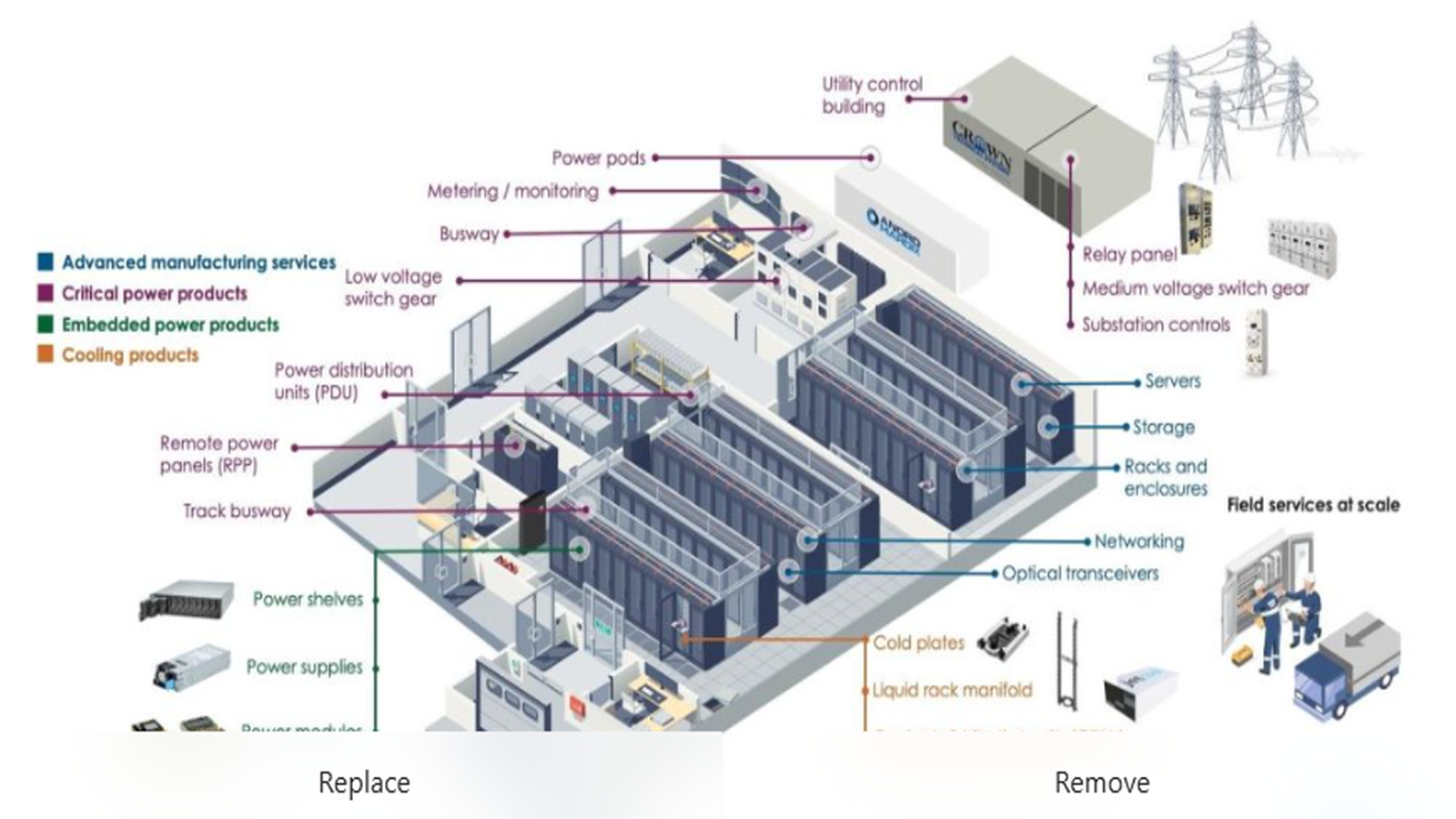
    For decades, alliance energy planning focused on fuel supply and grid robustness. Today, that lens has expanded. Data centers—once treated as civilian IT assets—are now understood as strategic infrastructure with military consequences.

    Three developments drove this reassessment:

    1. Explosive Power Density
      AI training, real-time analytics, and persistent surveillance workloads have dramatically increased energy intensity per rack. A brief outage now produces outsized operational damage.
    2. Civil–Military Interdependence
      Military systems increasingly rely on commercial clouds, regional colocation hubs, and civilian power grids. The boundary between “civilian blackout” and “military disruption” has effectively collapsed.
    3. Multi-Domain Attack Surface
      A single data center can be pressured simultaneously via cyber intrusion, grid manipulation, physical sabotage, or supply-chain denial. Energy is the common point of failure.

    Why Energy Vulnerability Equals Operational Risk

    In NATO assessments, data centers are no longer a passive backend. They are active enablers of:

    • Command, Control, Communications, Computers (C4)
    • ISR fusion and sensor processing
    • AI-assisted decision support
    • Logistics, targeting, and coordination across theaters

    An energy shock—whether intentional or accidental—can degrade these functions faster than kinetic strikes. Unlike hardened bases, many data centers were designed for efficiency, not prolonged denial environments.

    Threat Scenarios Now Taken Seriously

    NATO planners increasingly model scenarios that once sat outside traditional military analysis:

    • Grid-Level Disruption → Regional Data Center Collapse
      Targeted attacks on substations or control software can cascade into digital paralysis.
    • Cyber–Energy Coupling Attacks
      Malware targeting energy management systems can selectively starve data centers of power while masking intent.
    • Supply-Chain Energy Constraints
      Delays in generators, transformers, fuel delivery, or cooling components extend outage recovery timelines well beyond acceptable operational windows.

    These are not hypothetical edge cases. They are realistic pressure points in high-intensity or gray-zone conflict.

    Resilience Is the New Deterrence

    Within NATO discussions, a clear concept is emerging: resilience is deterrence.

    That translates into several strategic directions:

    • Decentralized and Redundant Power Architectures
      Microgrids, on-site generation, and diversified energy inputs reduce single-point failure risk.
    • Integrated Energy–Cyber Defense
      Power infrastructure security can no longer be separated from cyber defense planning.
    • Civil–Military Coordination Frameworks
      Data center operators, grid authorities, and defense planners must share threat models and contingency protocols.
    • Energy-Aware Siting and Design
      Location, cooling strategy, and grid dependency are now strategic variables—not just cost considerations.

    Strategic Implication: The Battlefield Runs on Electricity

    The implication is blunt but unavoidable:

    Data centers sit at the intersection of energy, digital command, and national resilience. NATO’s evolving posture signals that energy-secure computing infrastructure is no longer a technical afterthought—it is a core element of alliance readiness.

    For policymakers, defense planners, and infrastructure operators, the message is clear:
    Protect the power, or lose the fight before it begins.

    References

    Allied and open-source defense analyses on civil–military energy interdependence and grid security.

    NATO — Energy Security and Resilience Frameworks, official alliance briefings and policy overviews.

    European Parliament Research Service — Energy System Disruptions and Security Implications, policy briefings on infrastructure resilience.

    Foreign Policy Research Institute (FPRI) — Data Centers and National Power, analysis on digital infrastructure as strategic assets.

    Socko/Ghost

  • 3D-Printed Military Boats: The Next Breakthrough in Defense Logistics & Rapid Maritime Operations

    3D-Printed Military Boats: The Next Breakthrough in Defense Logistics & Rapid Maritime Operations

    Executive Summary

    A Dutch 3D-printing breakthrough—originally designed to automate civilian boatbuilding—is now rapidly entering military logistics, special-forces operations, and Indo-Pacific maritime support.
    With Navy-grade hulls printed in six weeks (vs years), and deployable shipyard-in-a-container modules, this new manufacturing model could reshape naval defense economics and enable on-demand tactical deployments in forward bases from Guam to the Red Sea.

    1. The Technology Breakthrough: Navy-Grade 3D Boats

    CEAD’s Delft-based Marine Application Center has finally solved the materials challenge:

    • thermoplastic + fiberglass blend
    • UV-resistant
    • marine-grade fouling resistance
    • extremely high impact tolerance (sledgehammer test succeeded)

    Traditional fiberglass hulls require:

    • complex molds
    • heavy labor
    • slow curing
    • high waste
    • heavy shipping
    • multi-month timelines

    3D hulls require:

    • digital design
    • base material flow
    • robotic arm printer
    • 4-day print cycle
    • minimal labor
    • instant redesign capability

    This means the “shipyard” becomes software + a containerized robotic printer.

    2. Direct Military Impact: NATO Already Testing It

    Prototype 12-meter naval boat — built for the Dutch Navy in 6 weeks

    NATO special forces have also run exercises with:

    • unmanned surface vessels (USVs)
    • mission-specific drone boats
    • on-site 3D-printed assets built within hours
    • design changes uploaded instantly during operations

    This is not theoretical — it is already field-tested.

    Why defense forces care:

    • Navy procurement cycles = years
    • 3D printing cycles = days to weeks
    • Adaptability → mission-specific hulls
    • Recyclable materials → reuse older boats
    • Rapid forward deployment → no shipyard required

    3. Strategic Advantage in Indo-Pacific & European Theaters

    The tech allows deployable micro-shipyards, redefining maritime logistics:

    Indo-Pacific Use Cases

    • dispersed island operations (Guam, Saipan, Okinawa)
    • drone-swarm naval decoys
    • amphibious logistics under contested zones
    • rapid replacement of damaged small craft

    European/NATO Use Cases

    • Baltic Sea and North Sea mine-avoidance drones
    • anti-smuggling autonomous patrol vessels
    • Black Sea operational resupply (Ukraine maritime drone model)

    4. Logistics Revolution: “Shipyard as a Container”

    CEAD’s 40-meter printers (or mini-units) can be:

    • flown in by cargo aircraft
    • moved via flatbed truck
    • packed into shipping containers
    • deployed near conflict zones

    The only thing to transport is raw filament in big bags.
    Not finished boats.

    This collapses the entire supply chain:

    Traditional3D-Printed
    Shipyard → Factory → Port → TransportDesign → Printer → Mission
    Months–YearsHours–Weeks
    High laborMinimal labor
    Fixed facilityMobile facility
    Shipping constraintsLocal production

    This is a Navy procurement disruption.

    5. Dual-Use Market: Commercial + Defense Acceleration

    The civilian side — electric ferries, workboats, RIBs — drives scale.
    Defense side benefits from:

    • lower cost
    • multi-mission flexibility
    • instant repair/replace capability
    • modular payload integration
    • covert manufacturing in remote theaters

    This is classic dual-use innovation:
    commercial adoption → military advantage.

    6. Strategic Outlook:

    3D Printing Will Become a Core Component of Maritime Power Projection

    Within 5–10 years:

    • forward-deployed micro-shipyards become standard
    • special-forces teams carry portable printers
    • navies replace USVs monthly, not yearly
    • supply-chain shocks no longer paralyze maritime operations
    • additive-manufactured fleets appear in Indo-Pacific flashpoints

    The manufacturing model itself becomes a force multiplier.