Tag: indo-pacific security

  • 3D-Printed Military Boats: The Next Breakthrough in Defense Logistics & Rapid Maritime Operations

    3D-Printed Military Boats: The Next Breakthrough in Defense Logistics & Rapid Maritime Operations

    Executive Summary

    A Dutch 3D-printing breakthrough—originally designed to automate civilian boatbuilding—is now rapidly entering military logistics, special-forces operations, and Indo-Pacific maritime support.
    With Navy-grade hulls printed in six weeks (vs years), and deployable shipyard-in-a-container modules, this new manufacturing model could reshape naval defense economics and enable on-demand tactical deployments in forward bases from Guam to the Red Sea.

    1. The Technology Breakthrough: Navy-Grade 3D Boats

    CEAD’s Delft-based Marine Application Center has finally solved the materials challenge:

    • thermoplastic + fiberglass blend
    • UV-resistant
    • marine-grade fouling resistance
    • extremely high impact tolerance (sledgehammer test succeeded)

    Traditional fiberglass hulls require:

    • complex molds
    • heavy labor
    • slow curing
    • high waste
    • heavy shipping
    • multi-month timelines

    3D hulls require:

    • digital design
    • base material flow
    • robotic arm printer
    • 4-day print cycle
    • minimal labor
    • instant redesign capability

    This means the “shipyard” becomes software + a containerized robotic printer.

    2. Direct Military Impact: NATO Already Testing It

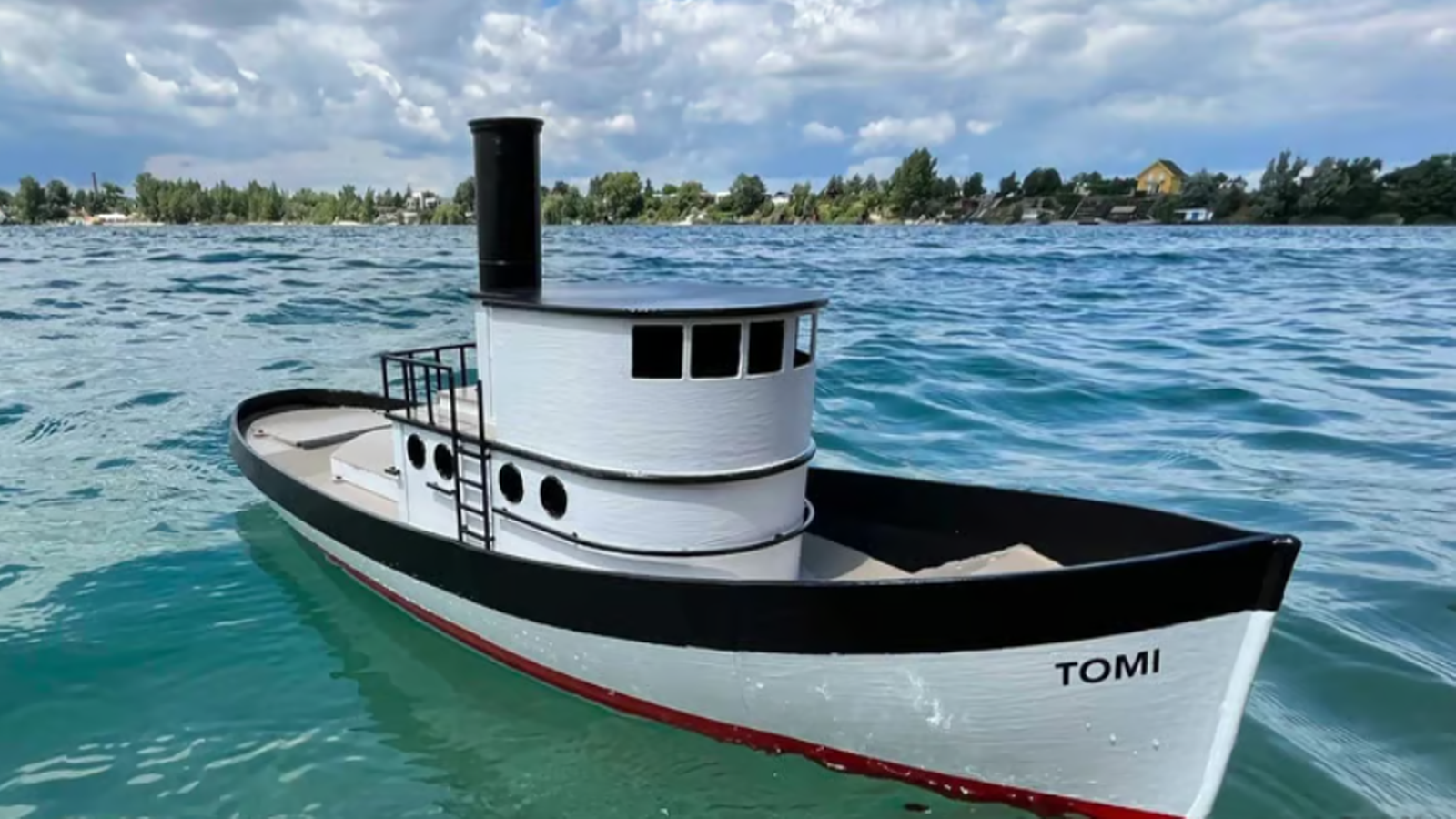
    Prototype 12-meter naval boat — built for the Dutch Navy in 6 weeks

    NATO special forces have also run exercises with:

    • unmanned surface vessels (USVs)
    • mission-specific drone boats
    • on-site 3D-printed assets built within hours
    • design changes uploaded instantly during operations

    This is not theoretical — it is already field-tested.

    Why defense forces care:

    • Navy procurement cycles = years
    • 3D printing cycles = days to weeks
    • Adaptability → mission-specific hulls
    • Recyclable materials → reuse older boats
    • Rapid forward deployment → no shipyard required

    3. Strategic Advantage in Indo-Pacific & European Theaters

    The tech allows deployable micro-shipyards, redefining maritime logistics:

    Indo-Pacific Use Cases

    • dispersed island operations (Guam, Saipan, Okinawa)
    • drone-swarm naval decoys
    • amphibious logistics under contested zones
    • rapid replacement of damaged small craft

    European/NATO Use Cases

    • Baltic Sea and North Sea mine-avoidance drones
    • anti-smuggling autonomous patrol vessels
    • Black Sea operational resupply (Ukraine maritime drone model)

    4. Logistics Revolution: “Shipyard as a Container”

    CEAD’s 40-meter printers (or mini-units) can be:

    • flown in by cargo aircraft
    • moved via flatbed truck
    • packed into shipping containers
    • deployed near conflict zones

    The only thing to transport is raw filament in big bags.
    Not finished boats.

    This collapses the entire supply chain:

    Traditional3D-Printed
    Shipyard → Factory → Port → TransportDesign → Printer → Mission
    Months–YearsHours–Weeks
    High laborMinimal labor
    Fixed facilityMobile facility
    Shipping constraintsLocal production

    This is a Navy procurement disruption.

    5. Dual-Use Market: Commercial + Defense Acceleration

    The civilian side — electric ferries, workboats, RIBs — drives scale.
    Defense side benefits from:

    • lower cost
    • multi-mission flexibility
    • instant repair/replace capability
    • modular payload integration
    • covert manufacturing in remote theaters

    This is classic dual-use innovation:
    commercial adoption → military advantage.

    6. Strategic Outlook:

    3D Printing Will Become a Core Component of Maritime Power Projection

    Within 5–10 years:

    • forward-deployed micro-shipyards become standard
    • special-forces teams carry portable printers
    • navies replace USVs monthly, not yearly
    • supply-chain shocks no longer paralyze maritime operations
    • additive-manufactured fleets appear in Indo-Pacific flashpoints

    The manufacturing model itself becomes a force multiplier.
  • AI-Driven ISR Fusion: Autonomous Sensor–Targeting Networks Expanding Across Indo-Pacific and European Theaters

    AI-Driven ISR Fusion: Autonomous Sensor–Targeting Networks Expanding Across Indo-Pacific and European Theaters

    1. The New Battlespace: Where Sensors, AI, and Kill-Chains Converge

    Defense markets in 2025 are being reorganized around one dominant theme:
    AI-Driven ISR Fusion — the ability to merge satellite, aerial, maritime, cyber, and ground-sensor intelligence into a single autonomous targeting picture.

    As great-power competition intensifies, both the Indo-Pacific and Europe are shifting their procurement priorities toward systems that compress the sensor-to-shooter timeline from minutes to seconds.
    AI is no longer an “assistive tool”; it is the core orchestrator of the next-generation kill chain.

    2. Indo-Pacific: Countering China’s A2/AD With Distributed Autonomy

    China’s expanding A2/AD belts — from the South China Sea to Taiwan and the First Island Chain — are accelerating demand for:

    • Autonomous maritime ISR drones (USV/UUV swarms)
    • AI-enhanced SIGINT/ELINT processors
    • Multi-domain sensor fusion hubs linking naval, air, and space assets
    • Low-latency tactical cloud networks resilient to jamming
    • Long-range precision fires guided by machine-generated targeting

    The U.S., Japan, Australia, and South Korea are now co-developing architectures that combine real-time ISR streams + autonomous cueing to penetrate contested environments without exposing manned platforms.

    The doctrine is simple:
    Small, cheap, numerous, and AI-coordinated beats big, slow, centralized.

    3. Europe: AI ISR as the Backbone of a Post-Ukraine Defense Posture

    The Russia-Ukraine war permanently altered Europe’s procurement strategy.
    NATO now prioritizes:

    • Counter-battery AI sensors (locating artillery in seconds)
    • AI-accelerated battlefield awareness for armored formations
    • Drone-counter-drone autonomy engines
    • Satellite–drone–ground fusion centers for 24/7 targeting
    • Stand-off weapons guided by synthetic-aperture AI models

    The result is a shift away from legacy heavy platforms toward digital-first lethality where ISR accuracy determines firepower, not the size of the weapon.

    4. Key Industry Players Driving the AI-ISR Revolution

    USA

    • Palantir – real-time fusion & autonomous tasking engines
    • Anduril – Lattice OS, AI kill-chain networking, autonomous drones
    • Lockheed Martin – AI-enabled missile guidance + space ISR integration
    • Raytheon – counter-drone and AI radar suites

    Europe

    • BAE Systems – multi-domain ISR cloud architecture
    • Thales – AI radar + integrated electronic warfare
    • Airbus Defence – satellite-drone fusion ecosystems

    Asia-Pacific

    • Hanwha, LIG Nex1 (Korea) – AI-guided artillery, ISR drones, autonomous fire-control systems
    • Mitsubishi Heavy (Japan) – maritime ISR AI and next-gen Aegis integration

    The competitive frontier is no longer hardware—it is AI orchestration.

    5. Market Outlook: The Rise of Autonomous Targeting Ecosystems

    According to 2025 analyst projections:

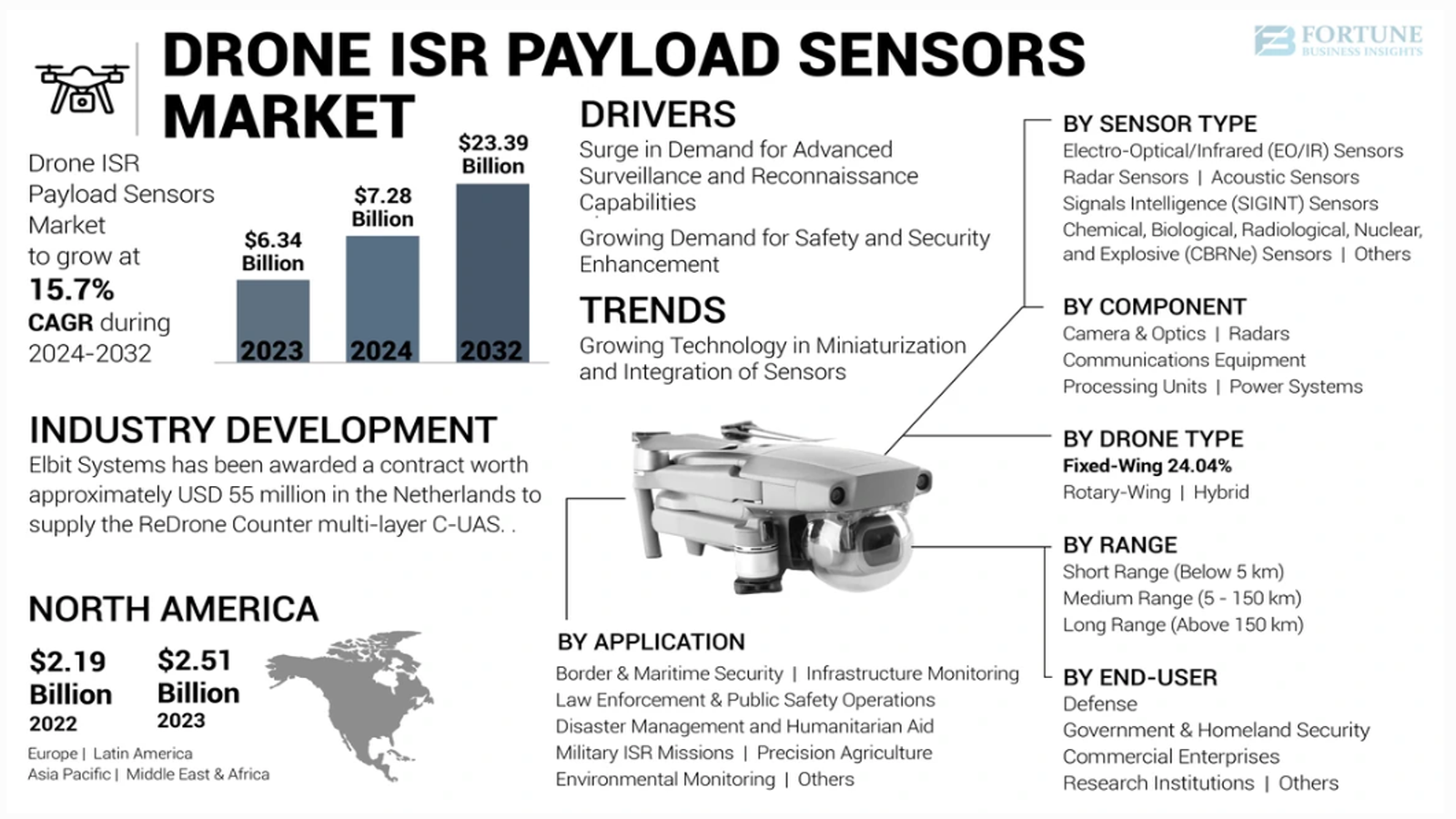
    • Global ISR/AI fusion market: ~$72B by 2030
    • Autonomous targeting & sensor networks: CAGR 14–18%
    • Defense cloud & edge AI: fastest-growing segment (over 20% CAGR)

    Three factors drive this acceleration:

    1. Long-range precision warfare becoming standard
    2. Drones & counter-drone races escalating
    3. Multi-domain command requiring machine-speed decision cycles

    Simply put:
    Whoever fuses sensors fastest dominates the battlespace.

    6. Strategic Implication: The Kill Chain Becomes the Platform

    The era of standalone platforms is ending.
    The new battlefield is a mesh of autonomous nodes where:

    • Satellites spot
    • Edge AI classifies
    • Swarms track
    • Ground batteries shoot
    • Cloud AI re-targets
    • Everything updates in seconds

    In both Indo-Pacific flashpoints and the European front, the nation that perfects AI-driven ISR fusion secures the decisive advantage.

    References

    U.S. Department of Defense (DoD). “Joint All-Domain Command and Control (JADC2) Strategy.” 2024.

    NATO ACT. “Multi-Domain Operations and AI-Enabled ISR Integration.” NATO Allied Command Transformation Report, 2024–2025.

    RAND Corporation. “AI-Enabled ISR Fusion and Future Kill-Chain Acceleration.” RAND Defense Analysis Series, 2023–2024.

    CSIS (Center for Strategic & International Studies). “Indo-Pacific A2/AD Trends and Autonomous Systems.” CSIS Strategic Technologies Program, 2024.

    European Defence Agency (EDA). “AI for Defense, ISR, and Targeting Networks in Europe.” EDA Technical Paper, 2024.

    Air Force Research Laboratory (AFRL). “Autonomous Sensor Integration and Machine-Speed Targeting.” AFRL MDO Research Brief, 2025.

    Jane’s Defence Weekly. “Global ISR Market Outlook 2025: Satellite–Drone Fusion and Tactical Edge AI.”

    Anduril Industries. Lattice OS Technical Overview. Corporate Whitepaper, 2024.

    Palantir Technologies. “Meta-Constellation & Autonomous Tasking Architecture.” ISR Fusion Product Guide, 2024.

    BAE Systems. “Digital Battlespace ISR & AI Sensor Networks.” Technology Insights, 2024–2025.