Category: Insights

Public-sector signals translated into market-facing intelligence.

  • Defense Budgets Are Becoming Industrial Policy, Not Just Security Policy

    Defense Budgets Are Becoming Industrial Policy, Not Just Security Policy

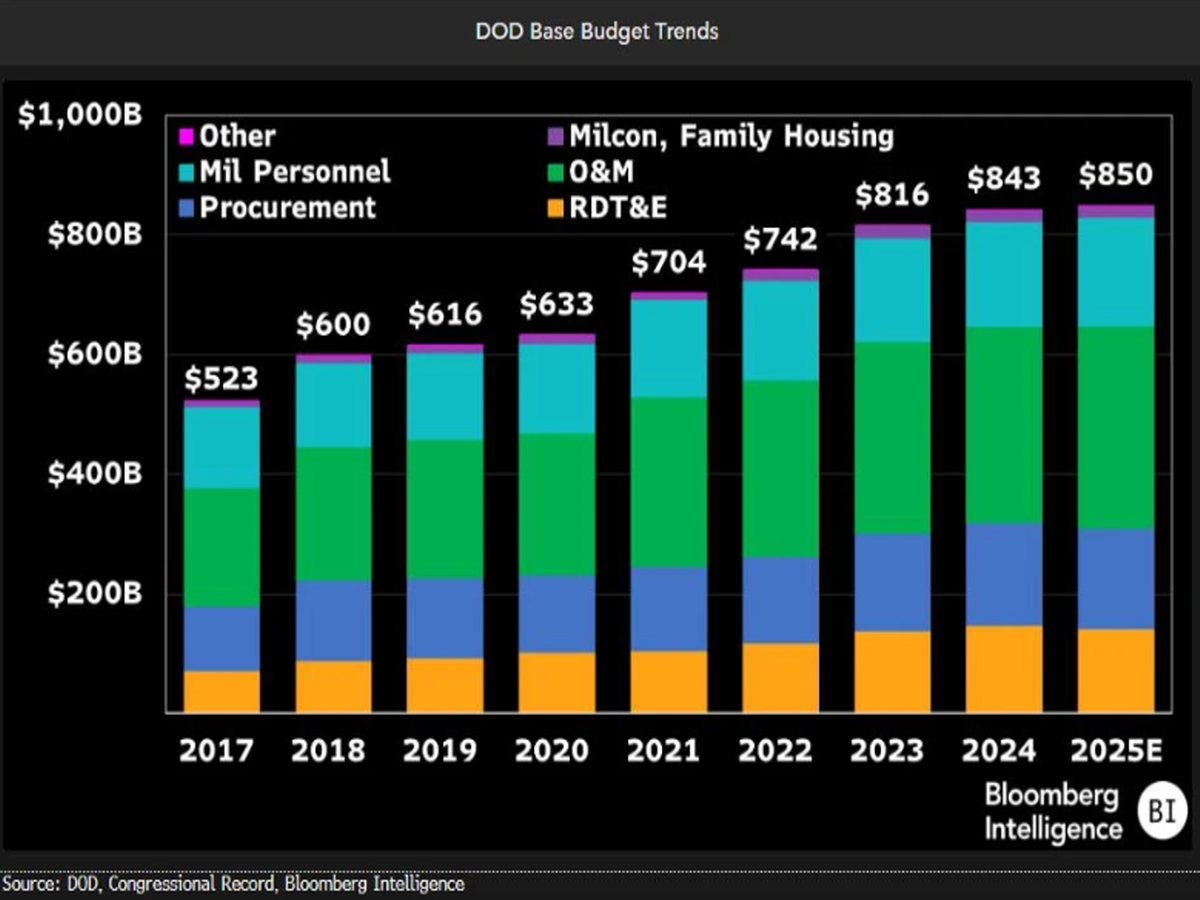
    A new budget cycle is taking shape across advanced economies, and defense is moving closer to the center of industrial policy. The OECD’s recent work argues that higher defense spending has meaningful macroeconomic and fiscal effects, while its March 2026 interim outlook also suggests stronger defense spending could support growth in parts of Europe even as energy prices weigh on activity.

    Shop strapless bras in a variety of sizes like 32AA, 34DD, and more. Find stick on bras, bras with removable straps & more to go with open back dresses.

    That does not mean the story is simple. The OECD also warns that governments financing rearmament with debt may face tighter fiscal choices later, and the IMF says the Middle East war is already disrupting trade and economic activity while pushing up energy prices and financial volatility. In other words, capital is moving toward resilience and rearmament, but under conditions that can still strain the broader economy.


    References
    OECD, Fiscal and Macroeconomic Impacts of Defence Spending.
    OECD, Economic Outlook, Interim Report, March 2026.
    IMF, Statement on the Middle East.
    IMF Press Briefing, March 19, 2026.

    Socko/Ghost

  • The Gulf’s Drone Shield Is Being Rewritten After Iran’s Barrage

    The Gulf’s Drone Shield Is Being Rewritten After Iran’s Barrage

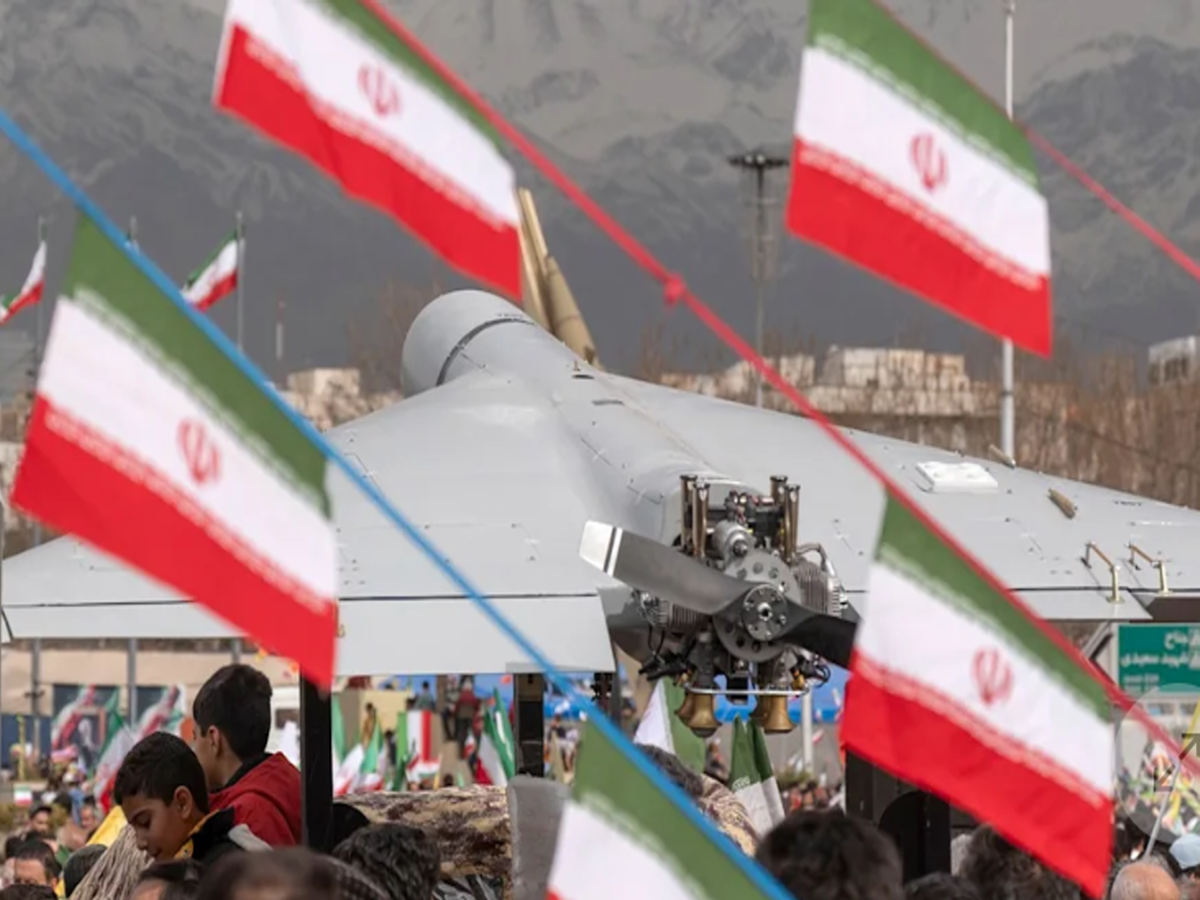
    Iran’s recent use of large drone salvos has sharpened a lesson that defense planners already suspected: traditional air-defense systems are too expensive to be the only answer to cheap, mass-produced attack drones. What matters now is not just range or prestige, but whether a country can detect, classify, and stop repeated low-cost threats without exhausting its own inventory.

    Shop strapless bras in a variety of sizes like 32AA, 34DD, and more. Find stick on bras, bras with removable straps & more to go with open back dresses.

    That is why the Gulf’s next defense cycle is likely to be shaped by layered drone defense rather than legacy missile defense alone. IISS argues that Gulf states need a broader mix of lower-cost interception, radar integration, and distributed defensive architecture, while Reuters reports that Ukrainian firms are already trying to export interceptor know-how to Gulf buyers worried about Iranian-style attacks.


    For markets, this is an early signal rather than a finished outcome. The strongest demand may not go first to the most glamorous offensive platform, but to the firms that can deliver practical drone shields: sensors, software, short-range interceptors, and systems integration. In that sense, Iran’s barrage is not just a military event. It is a procurement signal.

    References
    IISS, Defending the Skies of the Arab Gulf States.
    Reuters, Ukraine’s drone masters eye Iran war to kickstart export ambitions.
    Reuters, Ukraine and Saudi Arabia sign deal on defence cooperation.

    Socko/Ghost

  • Iran’s Drone War Is Rewriting Defense Markets: The Real Money May Flow to Interceptors, Sensors, and Supply Chains

    Iran’s Drone War Is Rewriting Defense Markets: The Real Money May Flow to Interceptors, Sensors, and Supply Chains

    The Iran war is forcing both militaries and investors to confront a brutal new arithmetic. Cheap one-way attack drones can be launched in large numbers, impose real pressure on energy infrastructure and civilian systems, and force defenders to spend far more money on detection and interception than the attacker spends on launch. CSIS argues that Iran’s drone campaign in the Gulf relied heavily on saturation waves of Shahed-style systems, designed less for precision battlefield brilliance than for persistence, disruption, and economic asymmetry.

    That matters because the center of gravity in defense markets may be shifting. In earlier years, much of the fascination was with the offensive platform itself: range, payload, autonomy, and survivability. But recent conflict dynamics suggest the more scalable business opportunity may lie in what stops these systems. IISS notes that Gulf states face a layered UAV threat and that long-range missile defense was never meant to be the primary answer to lower-cost unmanned systems. That points to a broader demand curve for radar integration, AI-assisted tracking, electronic warfare, short-range interceptors, and lower-cost kill chains built specifically for drone-heavy environments.

    The commercial market is already reacting. Reuters reported this week that Ukrainian defense firms are trying to turn wartime know-how in drone interception into export business for Gulf customers worried about Iranian UAV attacks. The report says Ukrainian companies see growing interest from Saudi Arabia, Qatar, and the United Arab Emirates, precisely because the region is looking for more practical and affordable ways to counter mass drone raids. That is an important signal: the next wave of defense demand may favor companies that can offer fast, scalable, and comparatively cheap counter-UAS solutions rather than exquisite but expensive legacy systems alone.

    This shift also changes how investors should read “defense technology.” The winning firms may not be the ones with the most dramatic hardware demo, but the ones that connect sensors, software, interceptors, data fusion, and logistics into a repeatable operating system. In other words, the market prize is moving from standalone platforms toward integrated defense architecture. That is partly an inference, but it is strongly supported by the way CSIS frames the economic asymmetry of drone warfare and by IISS’s emphasis on layered and diversified counter-UAV options across the Gulf.

    Shop strapless bras in a variety of sizes like 32AA, 34DD, and more. Find stick on bras, bras with removable straps & more to go with open back dresses.

    References
    CSIS, Unpacking Iran’s Drone Campaign in the Gulf: Early Lessons for Future Drone Warfare.
    IISS, Defending the Skies of the Arab Gulf States.
    IISS, Uninhabited Middle East: UAVs, ISR, Deterrence and War.
    Reuters, Ukraine’s drone masters eye Iran war to kickstart export ambitions.
    SIPRI Yearbook 2025, chapter on missiles and armed uncrewed aerial vehicles.

    Socko/Ghost

  • BIS Keeps John Williams at the Markets Committee as Central Banks Watch Market Functioning

    BIS Keeps John Williams at the Markets Committee as Central Banks Watch Market Functioning

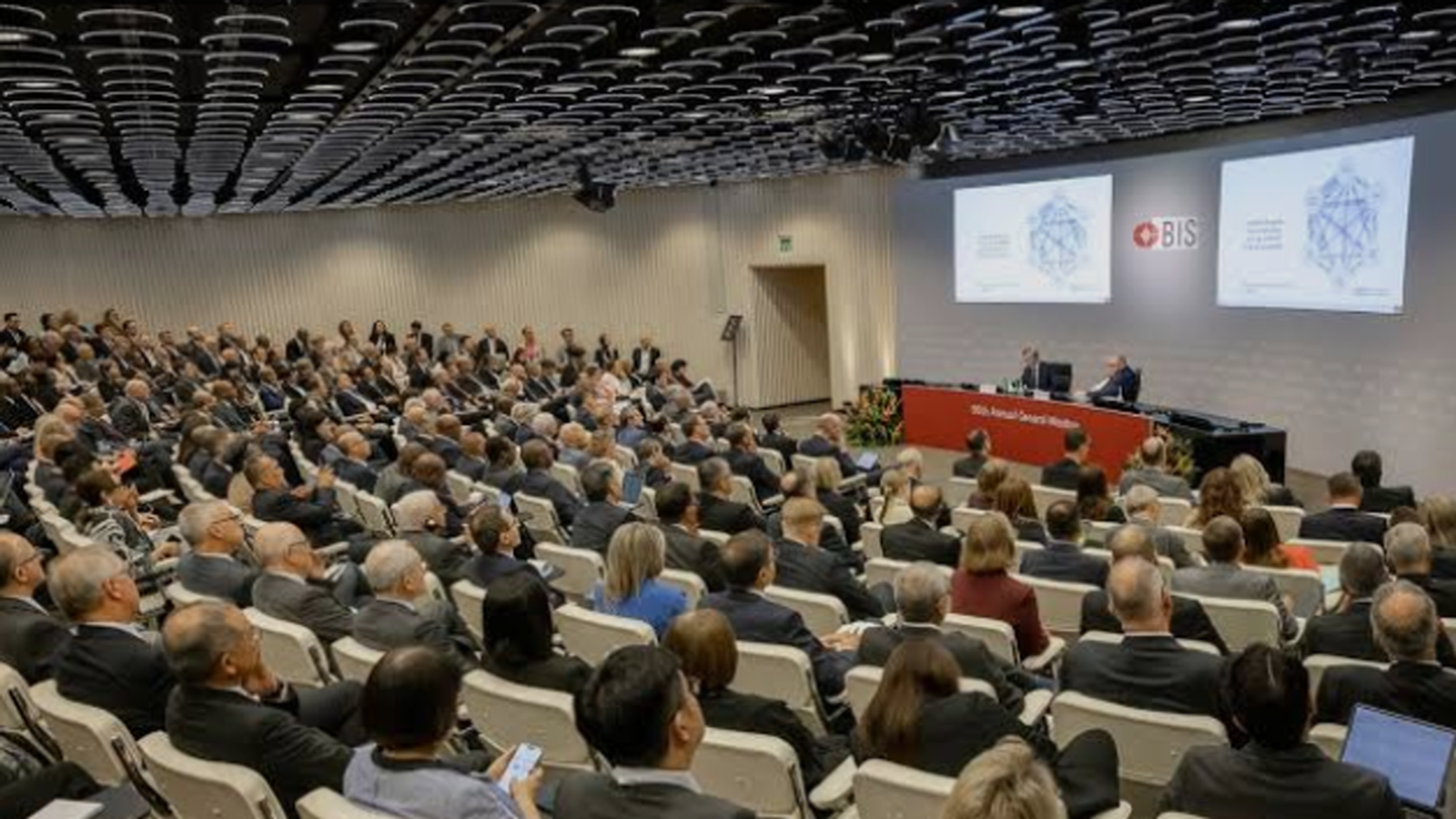
    BIS announced on March 27, 2026 that John C. Williams, President and Chief Executive Officer of the Federal Reserve Bank of New York, will continue as Chair of the Bank for International Settlements’ Markets Committee. The appointment gives Williams a second three-year term after his first appointment in January 2023. For SockoPower’s Capital category, the point is not personal biography. It is continuity in a central-bank forum that discusses current market conditions, market functioning, and central bank operations.

    The Markets Committee is one of the quieter but important pieces of the global financial system. BIS describes it as a forum where central bank officials discuss market conditions, market functioning, and central bank operations. The committee includes senior officials from 27 central banks and was established in 1962, making it the longest-standing BIS committee.

    That matters because capital markets do not move only through headline interest-rate decisions. They also depend on the operating layer beneath monetary policy: liquidity conditions, market functioning, settlement confidence, central bank operations, and communication among monetary authorities. A committee like this does not set national policy by itself, but it helps shape how central banks observe and discuss the market environment.

    Williams’ extended term therefore signals institutional continuity rather than a dramatic new policy direction. In a period when markets remain sensitive to inflation paths, liquidity conditions, currency movements, and central bank balance-sheet policy, continuity in this kind of forum can matter. It keeps an experienced Federal Reserve official at the center of BIS market discussions while global central banks continue to monitor how monetary policy decisions pass through financial markets.

    The signal should not be overstated. This is not a new rate decision, a new liquidity facility, or a change in the Federal Reserve’s policy stance. It is a governance and coordination item. But for Capital, governance items can still matter because the stability of market infrastructure and the coordination of central bank operations influence how investors assess liquidity, pricing, and risk.

    Shop strapless bras in a variety of sizes like 32AA, 34DD, and more. Find stick on bras, bras with removable straps \& more to go with open back dresses.

    The narrow takeaway is simple: BIS is maintaining leadership continuity at the Markets Committee at a time when market functioning remains a central concern for monetary authorities. The appointment does not change the market by itself, but it reinforces the institutional channel through which central banks compare signals, discuss operations, and monitor financial conditions.

    Original source

    Why It Matters

    This item may affect capital allocation indirectly because the BIS Markets Committee sits within the central-bank coordination layer of global finance. Its work focuses on market conditions, market functioning, and central bank operations, all of which influence liquidity, pricing, and risk perception across capital markets.

    SockoPower Takeaway

    John Williams’ extended BIS role is not a policy shock. It is a continuity signal. In capital markets, continuity in central-bank coordination can matter because the credibility of monetary operations depends not only on rate decisions, but also on how central banks understand and manage market functioning.

    What to Watch Next

    Watch whether the BIS Markets Committee places more emphasis on liquidity conditions, market functioning, balance-sheet operations, and cross-border market stress in future communications.

    Watch how the Federal Reserve Bank of New York’s market-operations role intersects with Williams’ continued leadership of the BIS Markets Committee.

    Watch whether central-bank forums become more visible as markets adjust to inflation uncertainty, rate-path expectations, and global liquidity shifts.

    References

    BIS, “BIS extends term for John Williams as Chair of the Markets Committee,” March 27, 2026.

    Socko/Ghost

  • Basel III Monitor Shows Stronger Liquidity, Stable Capital at Global Banks

    Basel III Monitor Shows Stronger Liquidity, Stable Capital at Global Banks

    The Basel Committee’s latest Basel III monitoring exercise gives a measured but important signal about the condition of large internationally active banks. According to BIS, banks’ Liquidity Coverage Ratios and Net Stable Funding Ratios increased slightly in the first half of 2025, while Basel III risk-based capital and leverage ratios remained stable. The report is based on data as of June 30, 2025, and tracks both current bank ratios and the impact of the fully phased-in Basel III framework.

    For SockoPower’s Capital category, the importance is not that the numbers point to a dramatic shift. They do not. The signal is that the global banking system’s regulatory buffers, at least across the reporting sample, remained broadly steady while liquidity indicators improved slightly. In capital markets, stability in these ratios matters because bank balance sheets affect funding conditions, credit availability, liquidity pricing, and the broader cost of risk.

    The Basel III framework is designed to strengthen bank resilience by setting standards for capital, leverage, liquidity, and risk measurement. In this monitoring exercise, BIS notes that the average impact of the Basel III framework on the Tier 1 minimum required capital of Group 1 banks decreased, driven by implementation progress. That detail matters because it suggests that as implementation advances, the gap between current requirements and the fully phased-in Basel III framework is becoming less severe for large banks.

    The report covers both large internationally active banks and smaller banks. BIS states that the sample includes 150 banks: 101 large internationally active Group 1 banks, including 29 global systemically important banks, and 49 Group 2 banks. Group 1 banks are defined as internationally active banks with Tier 1 capital of more than €3 billion.

    This distinction is central to the Capital signal. Group 1 banks are the institutions most closely tied to global funding markets, cross-border credit, market-making, derivatives activity, and systemic financial conditions. When their capital and leverage ratios remain stable, it supports confidence in the banking system’s ability to absorb shocks. When their liquidity indicators improve, even slightly, it suggests a better short-term and stable-funding position against stress scenarios.

    Shop strapless bras in a variety of sizes like 32AA, 34DD, and more. Find stick on bras, bras with removable straps \& more to go with open back dresses.

    The timing also matters. BIS notes that implementation of the final elements of the Basel III minimum requirements began on January 1, 2023. The monitoring report also evaluates the impact of the fully phased-in framework, including the December 2017 finalisation of Basel III reforms and the January 2019 finalisation of the market risk framework.

    That means the report should not be read as a one-time health check. It is part of a continuing transition from agreed standards into jurisdictional implementation. BIS also cautions that “current Basel III framework” results reflect the standards applying to reporting banks as of June 30, 2025, and that jurisdictions are at different stages of implementing the reforms.

    The cryptoasset exposure component is also worth noting. BIS says the report is accompanied by a newly expanded cryptoasset exposures dashboard showing how banks classify their cryptoasset exposures. This does not mean crypto exposures dominate bank balance sheets. The point is more specific: regulators are making cryptoasset classification more visible inside the Basel III monitoring process.

    For capital allocation, the message is restrained but useful. The latest monitoring exercise does not suggest a broad weakening in large banks’ regulatory position. It points instead to incremental liquidity improvement, stable capital and leverage ratios, and continued Basel III implementation progress. That combination supports the view that the banking system’s regulatory base remains broadly intact, even as market participants continue to watch funding costs, credit conditions, and balance-sheet constraints.

    The narrow takeaway is this: Basel III implementation is moving from reform design into system measurement. The headline is not a crisis signal. It is a stability signal. But in banking, stability signals matter because they shape confidence in credit creation, market liquidity, and the cost of capital.

    Original source

    Why It Matters

    This item may affect capital allocation because bank capital, leverage, and liquidity ratios sit behind credit supply, market liquidity, funding conditions, and systemic risk perception. Slightly stronger liquidity indicators and stable capital ratios suggest that large internationally active banks are not showing broad regulatory-buffer deterioration in the first half of 2025.

    SockoPower Takeaway

    The Basel III monitoring result is not a dramatic market event. It is a balance-sheet signal. Large global banks appear to be maintaining stable capital and leverage positions while liquidity indicators improve slightly. For Capital, that matters because financial markets depend on the quiet strength of bank funding, capital buffers, and regulatory implementation.

    What to Watch Next

    Watch whether future Basel III monitoring reports continue to show stable capital and leverage ratios as the framework moves closer to full implementation.

    Watch whether liquidity indicators keep improving or reverse under changing funding conditions.

    Watch how banks classify and manage cryptoasset exposures under the expanded Basel monitoring dashboard.

    Watch whether implementation differences across jurisdictions create uneven effects on bank capital requirements, lending capacity, or market pricing.

    References

    BIS, “Basel III liquidity indicators increase slightly while risk-based capital and leverage ratios are stable for large internationally active banks, latest Basel III monitoring exercise shows,” March 24, 2026.
    Basel Committee on Banking Supervision, “Basel III monitoring report,” March 24, 2026.

    Socko/Ghost

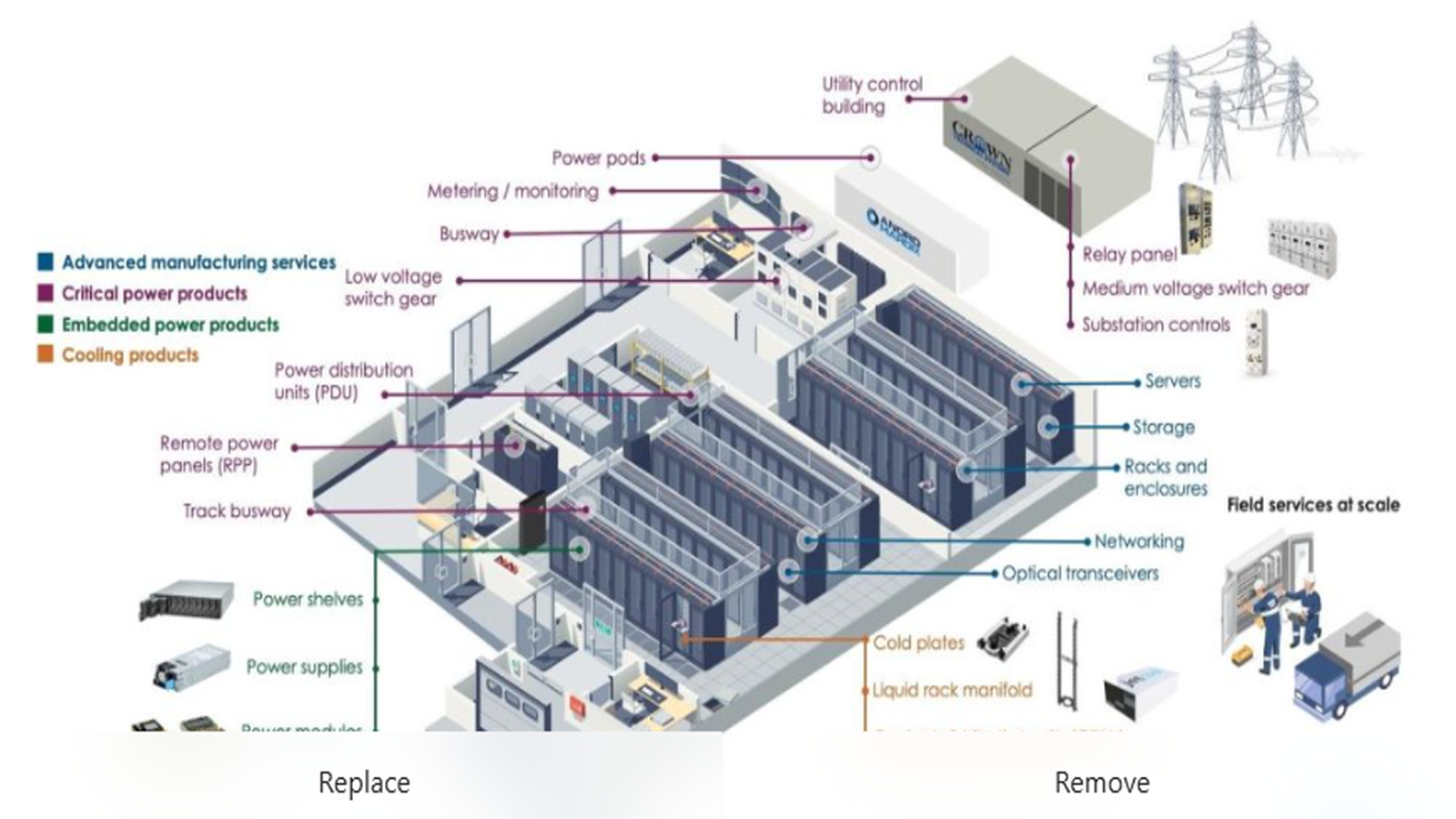
  • NATO Briefing: Data Centers Have Become an Energy-Security Chokepoint

    NATO Briefing: Data Centers Have Become an Energy-Security Chokepoint

    In recent internal briefings and strategic discussions, NATO has quietly reframed a long-standing assumption:
    energy security is no longer just about pipelines, refineries, or transmission towers.
    It is now inseparable from data center resilience.

    This shift reflects a hard reality of modern warfare and statecraft—digital continuity is operational continuity. When data centers lose power, command-and-control degrades, ISR pipelines stall, AI-enabled analysis halts, and civil-military coordination fractures. Energy vulnerability, in short, has become a frontline risk.

    From Power Plants to Server Racks: A Strategic Reclassification

    For decades, alliance energy planning focused on fuel supply and grid robustness. Today, that lens has expanded. Data centers—once treated as civilian IT assets—are now understood as strategic infrastructure with military consequences.

    Three developments drove this reassessment:

    1. Explosive Power Density
      AI training, real-time analytics, and persistent surveillance workloads have dramatically increased energy intensity per rack. A brief outage now produces outsized operational damage.
    2. Civil–Military Interdependence
      Military systems increasingly rely on commercial clouds, regional colocation hubs, and civilian power grids. The boundary between “civilian blackout” and “military disruption” has effectively collapsed.
    3. Multi-Domain Attack Surface
      A single data center can be pressured simultaneously via cyber intrusion, grid manipulation, physical sabotage, or supply-chain denial. Energy is the common point of failure.

    Why Energy Vulnerability Equals Operational Risk

    In NATO assessments, data centers are no longer a passive backend. They are active enablers of:

    • Command, Control, Communications, Computers (C4)
    • ISR fusion and sensor processing
    • AI-assisted decision support
    • Logistics, targeting, and coordination across theaters

    An energy shock—whether intentional or accidental—can degrade these functions faster than kinetic strikes. Unlike hardened bases, many data centers were designed for efficiency, not prolonged denial environments.

    Threat Scenarios Now Taken Seriously

    NATO planners increasingly model scenarios that once sat outside traditional military analysis:

    • Grid-Level Disruption → Regional Data Center Collapse
      Targeted attacks on substations or control software can cascade into digital paralysis.
    • Cyber–Energy Coupling Attacks
      Malware targeting energy management systems can selectively starve data centers of power while masking intent.
    • Supply-Chain Energy Constraints
      Delays in generators, transformers, fuel delivery, or cooling components extend outage recovery timelines well beyond acceptable operational windows.

    These are not hypothetical edge cases. They are realistic pressure points in high-intensity or gray-zone conflict.

    Resilience Is the New Deterrence

    Within NATO discussions, a clear concept is emerging: resilience is deterrence.

    That translates into several strategic directions:

    • Decentralized and Redundant Power Architectures
      Microgrids, on-site generation, and diversified energy inputs reduce single-point failure risk.
    • Integrated Energy–Cyber Defense
      Power infrastructure security can no longer be separated from cyber defense planning.
    • Civil–Military Coordination Frameworks
      Data center operators, grid authorities, and defense planners must share threat models and contingency protocols.
    • Energy-Aware Siting and Design
      Location, cooling strategy, and grid dependency are now strategic variables—not just cost considerations.

    Strategic Implication: The Battlefield Runs on Electricity

    The implication is blunt but unavoidable:

    Data centers sit at the intersection of energy, digital command, and national resilience. NATO’s evolving posture signals that energy-secure computing infrastructure is no longer a technical afterthought—it is a core element of alliance readiness.

    For policymakers, defense planners, and infrastructure operators, the message is clear:
    Protect the power, or lose the fight before it begins.

    References

    Allied and open-source defense analyses on civil–military energy interdependence and grid security.

    NATO — Energy Security and Resilience Frameworks, official alliance briefings and policy overviews.

    European Parliament Research Service — Energy System Disruptions and Security Implications, policy briefings on infrastructure resilience.

    Foreign Policy Research Institute (FPRI) — Data Centers and National Power, analysis on digital infrastructure as strategic assets.

    Socko/Ghost

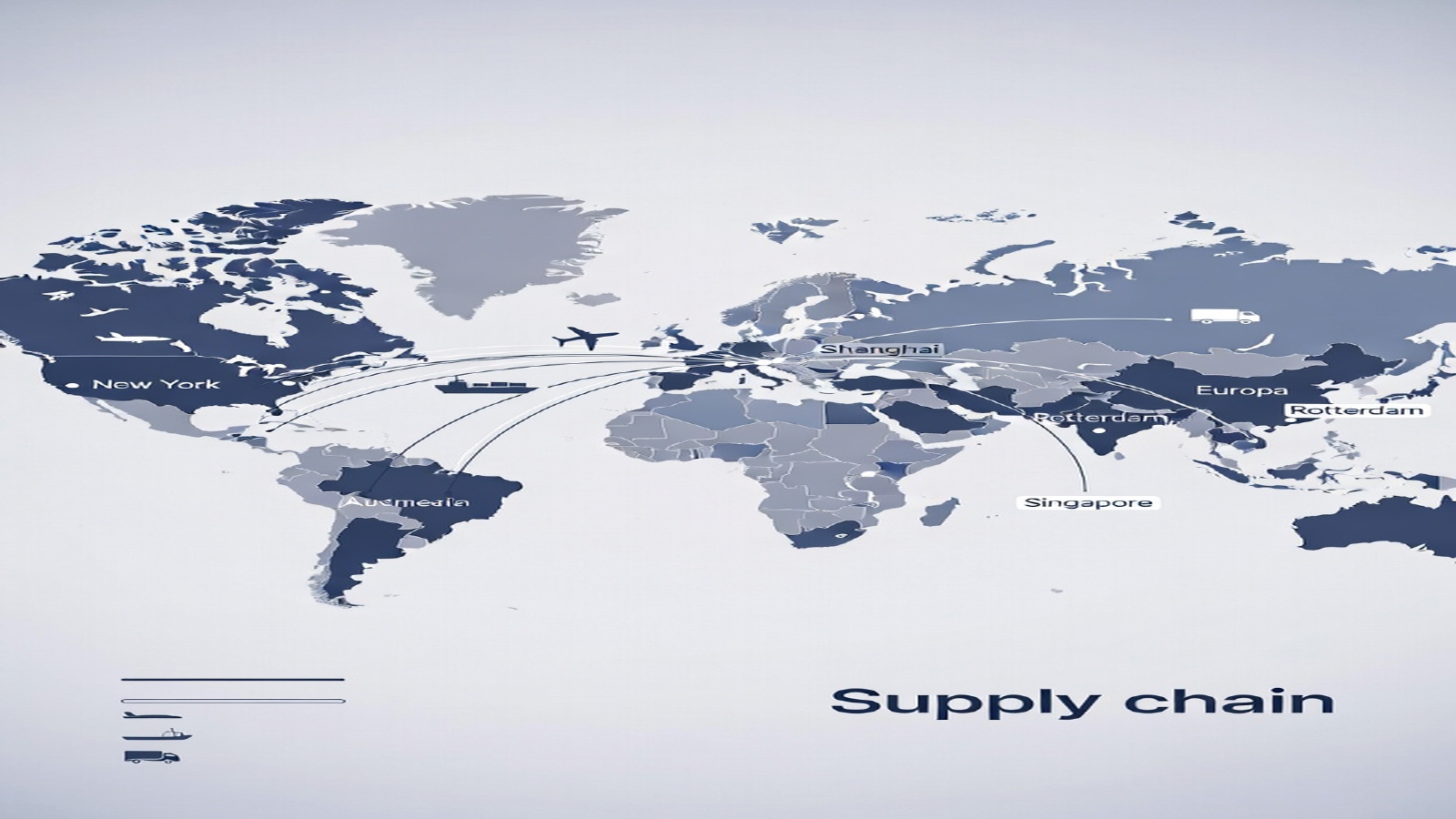
  • Supply Chains as Escalation VectorsHow Logistics, Materials, and Dependencies Shape Modern Conflict

    Supply Chains as Escalation VectorsHow Logistics, Materials, and Dependencies Shape Modern Conflict

    Modern conflicts rarely begin with a battlefield strike.
    They begin with friction.

    Delays in components.
    Restrictions in transit.
    Uncertainty in sourcing.

    Supply chains have become active escalation vectors—not passive background systems.

    From Efficiency to Vulnerability

    For decades, global supply chains were optimized for cost and efficiency.
    That optimization produced a new weakness: dependency density.

    Critical technologies now rely on narrow sets of suppliers, routes, and processing nodes.
    When these nodes are stressed, entire systems slow down.

    In modern conflict, slowdown is leverage.

    Chokepoints Without Missiles

    Escalation no longer requires kinetic strikes.

    Pressure can be applied through:

    • Export controls and licensing delays
    • Logistics bottlenecks and port congestion
    • Insurance repricing and freight denial
    • Energy and materials access restrictions

    These actions operate below traditional thresholds of war, yet they produce strategic effects.

    Semiconductors, Energy, and Dual-Use Chains

    Military capability is increasingly built on civilian supply chains.

    Advanced chips, specialty materials, cooling systems, and precision components serve both markets simultaneously.

    This dual-use reality creates a dilemma:

    Targeting the supply chain affects civilian economies and military readiness at the same time.

    The boundary between economic pressure and military escalation dissolves.

    Supply Chains as Time Weapons

    Supply disruption rarely causes immediate failure.
    Its power lies in time.

    Delays accumulate.
    Maintenance cycles slip.
    Readiness erodes quietly.

    By the time impact becomes visible, strategic options have already narrowed.

    Supply chains function as slow-acting weapons.

    Capital and Pre-Positioned Escalation

    Investment decisions determine where resilience exists—and where it does not.

    • Redundant suppliers
    • Strategic stockpiles
    • Regionalized manufacturing
    • Logistics diversification

    These choices are made years before conflict.
    When crisis arrives, capital allocation becomes escalation posture.

    The Signal–Capital–Chain Loop

    Supply chains complete the strategic loop.

    Signal generates demand for compute and energy.
    Capital finances infrastructure and capacity.
    Chain delivers—or withholds—physical reality.

    Break any link, and the loop falters.

    Conclusion

    Modern escalation is no longer defined solely by force.
    It is defined by control over continuity.

    Supply chains decide:

    • How long systems endure
    • How quickly recovery occurs
    • How credible deterrence remains

    In contemporary conflict environments,
    logistics is leverage,
    dependency is exposure,
    and resilience is power.

    Socko/Ghost

  • Energy Load & Data Centers as Hidden Military Infrastructure

    Energy Load & Data Centers as Hidden Military Infrastructure

    Wars are not powered by weapons alone.
    They are powered by electricity.

    As warfare becomes increasingly compute-driven, energy availability and data center capacity have emerged as silent determinants of military effectiveness.

    Energy Is the First Constraint

    Every satellite downlink, ISR fusion node, AI model, and command system depends on uninterrupted power.

    Modern military operations now face a basic but decisive question:

    Can the grid sustain the load when it matters most?

    Energy scarcity does not disable weapons directly.
    It slows decision-making, increases latency, and degrades coordination — often before a single shot is fired.

    Data Centers as Strategic Infrastructure

    Data centers are no longer commercial back-end facilities.
    They function as operational hubs for:

    • ISR data fusion
    • AI-enabled targeting analysis
    • Command-and-control redundancy
    • Coalition information sharing

    In practice, this makes data centers indirect military assets, even when privately owned and civilian-operated.

    The Fragility of Concentration

    Compute infrastructure is geographically concentrated.

    Clusters of hyperscale data centers depend on:

    • Regional power grids
    • Substations and transformers
    • Cooling water access
    • Fiber and undersea cable connectivity

    Disruption to any one of these inputs can ripple across military and civilian systems simultaneously.

    This creates a new form of vulnerability:
    infrastructure coupling risk.

    Energy as an Escalation Lever

    Energy infrastructure offers a tempting escalation tool.

    Rather than striking military targets directly, adversaries may apply pressure through:

    • Grid instability
    • Energy pricing shocks
    • Fuel supply disruption
    • Cyber operations against energy management systems

    These actions fall below traditional thresholds of armed conflict while producing strategic effects.

    Capital Builds the Battlefield

    As with compute and satellites, much of today’s energy and data center infrastructure is financed by private capital.

    Investment decisions determine:

    • Where compute capacity grows
    • Which regions gain resilience
    • Which systems receive redundancy

    In effect, capital allocation increasingly pre-configures the battlespace.

    Energy, Compute, and the Speed of War

    Energy is not simply a resource.
    It defines the tempo of conflict.

    High energy availability enables:

    • Faster ISR cycles
    • Continuous AI inference
    • Persistent command networks

    Low energy availability forces prioritization, delay, and degradation.

    Speed favors deterrence.
    Delay invites escalation.

    Signal–Capital–Chain Loop Perspective

    Energy sits at the base of the strategic loop.

    Signal — data generation requires power
    Capital — infrastructure investment shapes resilience
    Chain — fuel, grids, cooling, and logistics enable continuity

    Control the energy layer, and the rest of the system follows.

    Conclusion

    The next wars will not only be fought over territory or technology.
    They will be fought over energy stability and compute continuity.

    Data centers are no longer invisible.
    Power grids are no longer neutral.

    In space- and compute-enabled warfare,
    energy is strategy,
    and infrastructure is deterrence.

    Socko/Ghost

  • Emerging Civil-Military Dual-Use Technologies Driving Strategic Autonomy in Indo-Pacific Supply Chains

    Emerging Civil-Military Dual-Use Technologies Driving Strategic Autonomy in Indo-Pacific Supply Chains

    The Indo-Pacific has become the world’s most contested technological theater, where military innovation and civilian industry are now inseparable. The region’s pursuit of strategic autonomy—the ability to secure economic value chains without dependence on geopolitical rivals—is increasingly driven by dual-use technologies originally developed for defense: AI-enabled sensing, quantum-secure communications, autonomous systems, resilient robotics and advanced semiconductor architectures.

    The convergence of defense and civilian innovation is not a future scenario. It is already rewriting the rules of supply-chain security, investment behavior and industrial strategy across the Indo-Pacific.

    1. AI: From Battlefield Decision Systems to Industrial Optimization

    AI began as a force-multiplier for ISR (intelligence, surveillance, reconnaissance) and autonomous targeting. Today, its dual-use expansion is transforming:

    maritime logistics and port automation,

    energy grid forecasting and resilience,

    aviation maintenance and predictive safety,

    financial risk modeling tied to supply-chain disruptions.

    Indo-Pacific governments increasingly view AI as a strategic asset, not merely a commercial tool. Nations such as South Korea, Japan, Australia and Singapore are integrating military-grade AI frameworks into commercial logistics networks to ensure continuity during geopolitical shocks—a concern heightened by Taiwan Strait tensions and the weaponization of trade routes.

    2. Quantum Computing: The Backbone of Future Supply-Chain Integrity

    Quantum technologies—particularly post-quantum cryptography and quantum key distribution (QKD)—were initially classified defense research.
    Now they are being rapidly deployed into civilian telecommunications and financial clearance systems across the region.

    Quantum integration enables:

    tamper-proof supply-chain authentication,

    secure semiconductor design collaboration,

    encrypted energy-grid command systems,

    high-fidelity modeling of rare-earth mineral extraction.

    As the U.S., Japan and Australia deepen quantum cooperation under AUKUS Pillar II, capital flows to quantum startups have surged, signaling a regional hedge against Chinese technological overreach.

    3. Autonomous Systems: Civilian Infrastructure Built on Military Logic

    Autonomous platforms—UAVs, maritime drones, robotic logistics vehicles—originated as battlefield tools. Today, they shape civilian sectors:

    offshore wind maintenance

    agricultural automation in Australia and Indonesia

    autonomous port operations in Singapore and Busan

    undersea mapping critical for submarine cables and energy pipelines

    These systems reduce vulnerability to chokepoints such as the South China Sea, enabling Indo-Pacific states to maintain operational continuity without foreign intervention.

    4. Supply-Chain Resilience: Dual-Use Technologies Become Strategic Shields

    The Indo-Pacific’s semiconductor reliance, rare-earth vulnerabilities and maritime exposure demand resilience that only dual-use technology can provide.

    New standards emerging include:

    defense-grade cybersecurity in private logistics,

    parallelized “critical tech corridors” bypassing conflict zones,

    AI-managed redundancy frameworks for semiconductor production,

    autonomous monitoring of submarine cable security.

    This shift is pulling institutional capital toward firms specializing in defense-grade AI, robotics, and quantum technologies—blurring the line between commercial and national-security sectors.

    5. Markets Respond: Capital Reallocates to Defense-Tech Innovators

    Regional capital markets—from Tokyo to Sydney to Seoul—are reweighting portfolios toward technology-driven defense firms.
    Drivers include:

    the need for supply-chain sovereignty,

    defense procurement modernization,

    public-private co-investment programs,

    and the recognition that civil-military convergence is irreversible.

    Companies able to demonstrate dual-use scalability—military-origin technology with commercial deployment potential—are becoming prime targets for global funds seeking exposure to Indo-Pacific resilience themes.

    Conclusion: The Indo-Pacific Is Building a New Industrial Doctrine

    Civil-military dual-use technologies are no longer supplementary components of national strategy—they are the central infrastructure of Indo-Pacific security and economic competitiveness.

    AI, quantum and autonomous systems will define which nations can maintain sovereignty, protect value chains and attract long-term capital.
    The region’s future will belong to states and companies that can deploy military-born innovations at industrial scale, constructing supply chains that are self-reliant, intelligent and geopolitically resilient.

    SockoPower | Defense-Tech & Strategic Intelligence
    High-end analysis for a world entering techno-geopolitical competition.

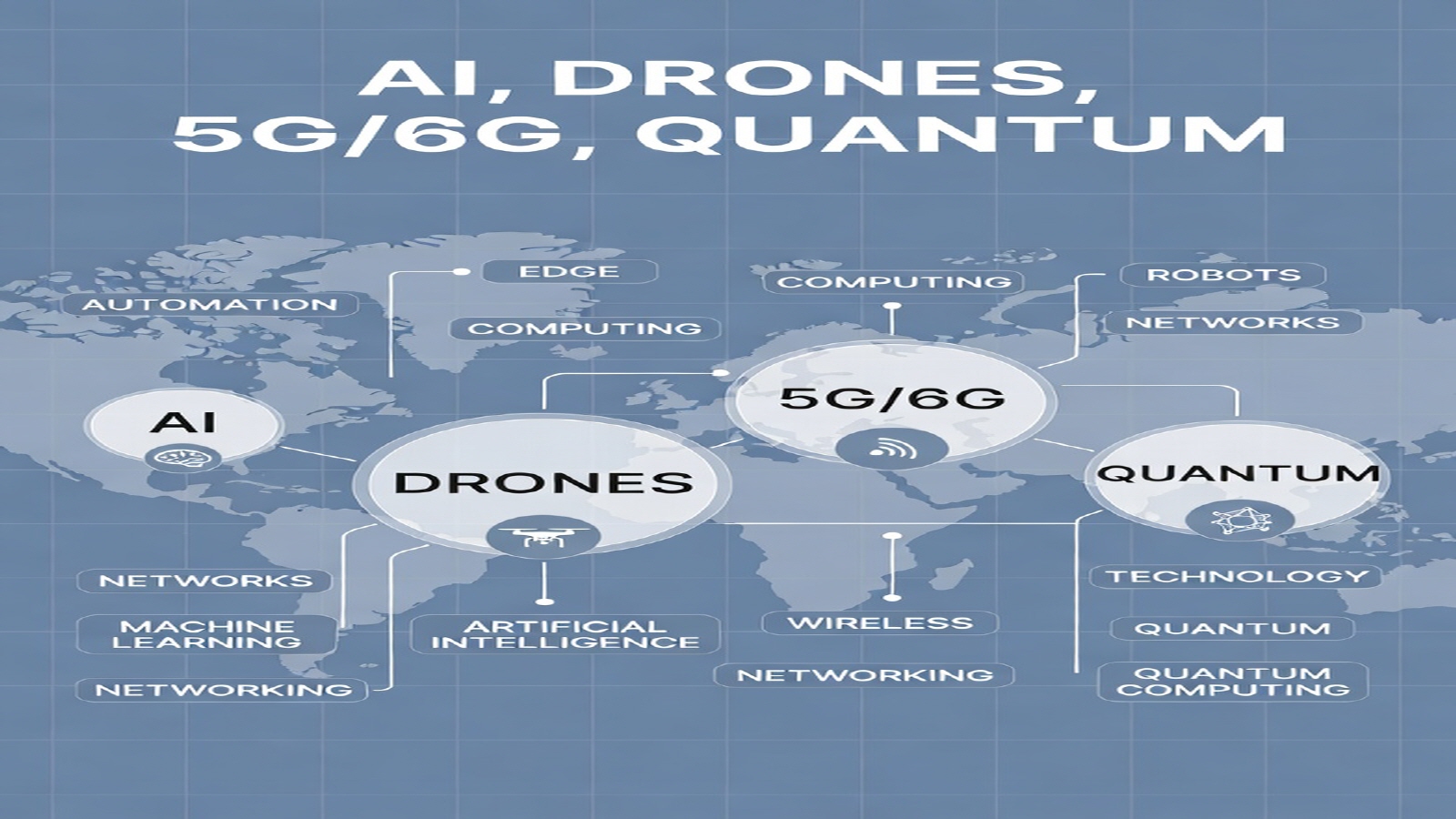
  • Emerging Civil–Military Technology Convergence and Its Impact on Global Power Projections

    Emerging Civil–Military Technology Convergence and Its Impact on Global Power Projections

    The 21st-century battlefield is increasingly shaped not by tanks, missiles, or aircraft, but by technologies originally developed for civilian markets—AI, autonomous robotics, satellite-enabled communications, and quantum computing. What once existed as separate technological domains is converging into a single, dual-use ecosystem where civilian innovation directly fuels military capability.

    This civil–military fusion (CMF) is fundamentally reshaping global power projection, particularly among the United States, China, and Russia.
    The nations that dominate dual-use technology pipelines will shape the future of deterrence, conflict, and geopolitical hierarchy.

    1. Dual-Use Innovation Has Become the New Arms Race

    Commercial tech is now military infrastructure.

    Artificial intelligence, advanced chips, hyperscale cloud computing, and high-speed mobile networks were never designed as weapons. Yet they now form the backbone of:

    autonomous drones

    AI-enhanced ISR (intelligence, surveillance, reconnaissance)

    predictive logistics

    cyber operations

    hypersonic command systems

    multi-domain operational networks

    The line separating Silicon Valley startups from defense contractors has vanished.

    The military of the future is built on commercial innovation.

    2. AI and Autonomous Systems: The Core of Next-Generation Power Projection

    Autonomy = speed. Speed = dominance.

    AI-driven autonomous systems—from drone swarms to automated cyber defense—are redefining military decision cycles.

    United States

    DARPA’s ACE program for AI dogfighting

    Navy’s Ghost Fleet Overlord autonomous vessels

    Joint All-Domain Command and Control (JADC2) integration

    China

    Civil–military fusion doctrine accelerating dual-use AI

    Mass production of low-cost autonomous drone platforms

    Strategic AI labs built on commercial tech giants (Baidu, Alibaba, Tencent)

    Russia

    Autonomous loitering munitions

    AI-assisted artillery targeting using battlefield sensors

    Heavy reliance on civilian drones modified for warfare

    Autonomy compresses the “OODA loop”—observe, orient, decide, act—creating a new currency of military advantage: machine-speed warfare.

    3. 5G/6G and the Battle for Electromagnetic Dominance

    Connectivity itself becomes a weapon.

    Modern militaries depend on massive data throughput:

    drone swarm coordination

    satellite–ground communication

    real-time logistics

    command-and-control

    autonomous navigation

    5G enabled this shift; 6G will accelerate it to near-lightning levels.

    U.S. strategy:

    Integrate 5G/6G into secure battlefield networks, leveraging private-sector leadership.

    China’s strategy:

    Use global 5G/6G infrastructure as geopolitical leverage, embedding influence across Asia, Africa, Europe, and Latin America.

    Russia strategy:

    Focus on electronic warfare dominance rather than broad consumer networks.

    5G/6G is not just commerce—it is information dominance, the foundation of modern power projection.

    4. Quantum Computing and Secure Communications: The Coming Strategic Shock

    Quantum supremacy will rewrite cyber warfare.

    Quantum technology threatens to disrupt the core of national security:

    encryption cracking

    ultra-secure quantum communication networks

    quantum-enhanced sensing for submarine and stealth tracking

    new forms of electronic warfare

    China

    Has already deployed a quantum communication backbone between Beijing and Shanghai, and runs the world’s most aggressive national quantum program.

    United States

    Leads in private-sector quantum computing hardware and algorithms (IBM, Google, AWS), with growing DoD–industry integration.

    Russia

    Invests in quantum sensing and signals intelligence capabilities.

    Quantum capability gaps will determine strategic survivability in the next decade.

    5. The U.S.–China–Russia Triangular Tech Rivalry
    Global power is no longer measured in troops but in teraflops.

    United States: Innovation Dominance Strength: advanced semiconductors, cloud infrastructure, AI algorithms, defense integration. Vulnerability: manufacturing dependence on East Asia.

    China: Scale + State Alignment

    Strength: mass production, civil–military fusion, unified national tech strategy.
    Vulnerability: access to cutting-edge lithography and high-end chips.

    Russia: Asymmetric Tech Warfare

    Strength: electronic warfare, missile systems, cyber operations.
    Vulnerability: industrial capacity and sanctions.

    The convergence of civilian and military tech has turned this rivalry into a three-dimensional race across AI, chips, quantum, and communications.

    Conclusion — Civil–Military Technology Convergence Will Redefine Global Power

    The future of power projection will be determined not by traditional defense spending but by:

    the speed of innovation

    control of advanced chips

    access to global telecoms infrastructure

    quantum breakthroughs

    autonomous systems deployment

    Nations that dominate dual-use innovation pipelines will shape everything from deterrence to alliance structures.

    Civilian technology is now the battlefield.
    The global balance of power will be rewritten there.

    References

    CSIS. Civil–Military Fusion and Strategic Competition, 2024.

    RAND. AI-Driven Warfare and Autonomous Systems, 2023–2024.

    U.S. DoD. Emerging Technologies and National Defense Strategy, 2024.

    Chinese Academy of Sciences. Quantum Communication Progress Report, 2024.

    NATO CCDCOE. Multi-Domain Operations and 5G/6G Integration, 2024.

    Oxford Future of Humanity Institute. Dual-Use AI & Global Security, 2024.