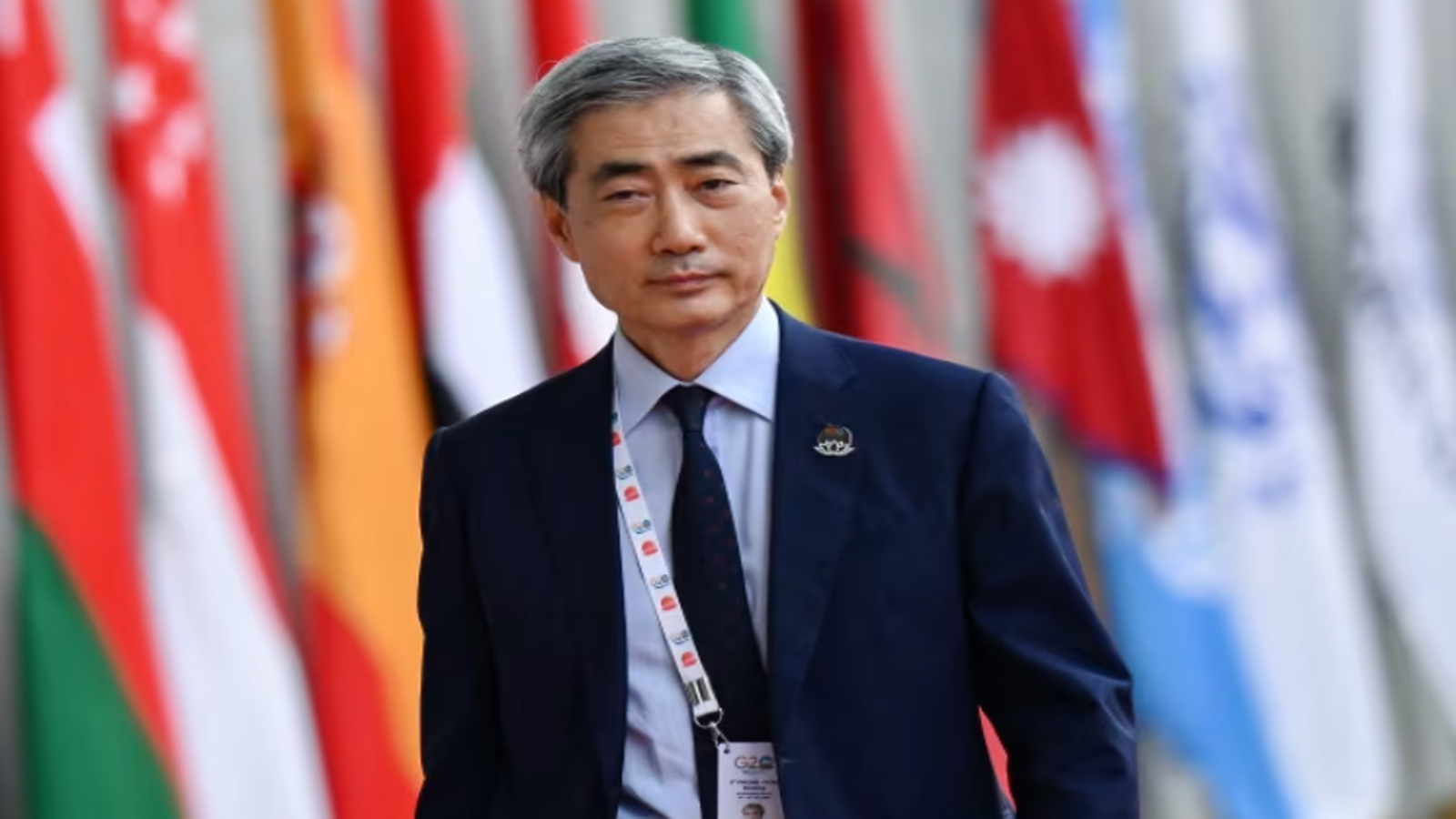
The appointment of Hyun Song Shin as Governor of the Bank of Korea is not just another central-bank personnel change. It is a signal about the kind of monetary leadership South Korea may need in an age when inflation, currency pressure, household debt, global liquidity, digital payments, and financial stability can no longer be treated as separate problems.
The Bank for International Settlements issued its statement on April 20, 2026, congratulating Shin on his appointment as Governor of the Bank of Korea. BIS General Manager Pablo Hernández de Cos praised Shin’s role since joining the BIS in 2014, describing his contribution as intellectual leadership and strategic direction in research and analysis for the central banking community.
That matters because Shin arrives at the Bank of Korea not merely as a domestic monetary-policy figure, but as someone shaped by the global central-bank network. At the BIS, his work sat close to the questions that now define the pressure points of modern finance: how leverage builds, how liquidity moves, how global dollar conditions affect domestic markets, and how financial stability can be threatened even when headline policy rates appear orderly.
For SockoPower’s Capital bucket, the importance is direct. This appointment may influence the way Korea prices risk, manages credit conditions, frames the won, and balances inflation control against growth weakness. Capital allocation is not only about government budgets or corporate investment. It is also about the central bank’s judgment: where money becomes cheaper, where credit becomes tighter, and where financial risk is allowed to accumulate.
The timing is especially important. The Bank of Korea’s English homepage around this period showed the base rate at 2.50% and the inflation target at 2.0%, while also highlighting the April 2026 monetary-policy decision and new BOK materials on structural changes in Korea’s external sector. This is not a quiet macroeconomic backdrop. Korea is facing the familiar but difficult triangle of inflation management, growth uncertainty, and financial stability.
Reuters reported that in his inauguration remarks, Shin called for cautious and flexible monetary policy amid heightened uncertainty over inflation and growth, while also pointing to financial-market volatility and risks to financial stability. Reuters also reported that Shin emphasized a three-way balance involving won internationalization, digital payment innovation, and macroprudential mechanisms.
That last phrase is the key. A conventional central banker watches inflation and rates. A systemic-risk central banker watches the plumbing: payments, balance sheets, liquidity, exchange rates, leverage, and the feedback loop between asset prices and credit. Shin’s BIS background suggests that the Bank of Korea may put greater weight on this broader financial architecture.
This does not mean Korea will suddenly abandon rate caution or move aggressively in one direction. The more likely shift is subtler: monetary policy may become more explicitly tied to financial-stability judgment. A rate cut will not be judged only by whether it supports growth. It will also be judged by whether it reignites housing leverage, weakens the currency, or encourages fragile forms of borrowing. A rate hold will not be judged only by inflation discipline. It will also be judged by whether it deepens stress in households, small firms, or vulnerable industries.
This is where Shin’s appointment becomes a capital signal. In a highly connected economy, the central bank’s language can move expectations before policy itself moves. Banks, exporters, importers, bond investors, property buyers, insurers, pension funds, and foreign capital all listen for the same thing: where the Bank of Korea believes the system is fragile.
There is also a global credibility dimension. The BIS had already announced after Shin’s nomination that he would step back from his duties immediately, with Frank Smets serving as Acting Head of the Monetary and Economic Department, and noted that the BOK governor appointment process included National Assembly confirmation hearings before formal presidential appointment. The April 20 appointment statement closed that transition and turned a nomination into a policy reality.
For Korea, the question is not whether Shin is hawkish or dovish in the simple market-label sense. The more important question is whether he is institutionally conservative about risk. His profile points toward a central bank that may be reluctant to treat cheap liquidity as a painless growth tool. In an economy where household debt, property prices, currency pressure, export cycles, and global energy shocks can collide, that caution may become central to policy.
The appointment also comes at a time when the international role of the Korean won is becoming more strategically relevant. If Korea wants deeper financial-market influence, more resilient settlement systems, and a stronger position in regional capital flows, the Bank of Korea cannot limit itself to domestic inflation targeting alone. It must also think about trust in money, payment infrastructure, and the conditions under which global investors hold Korean assets.
That is why this BIS statement belongs in the Capital bucket. It is not simply an institutional congratulations note. It is a marker of personnel moving from the global central-bank research core into Korea’s monetary command seat. In a normal cycle, such a move might be read as prestigious. In the present cycle, it should be read as strategic.
Shin inherits a difficult policy map: inflation that cannot be ignored, growth that cannot be taken for granted, household debt that cannot be wished away, and a currency environment that depends heavily on global liquidity. The Bank of Korea under Shin may therefore become less of a narrow rate-setting institution in public perception and more of a capital-risk manager for the Korean economy.
The signal is clear. Korea’s next monetary phase will not be decided only by whether the base rate rises or falls. It will be decided by how the central bank manages the entire capital chain — from household credit to bank liquidity, from payment systems to the won, from domestic prices to global financial stress.
Why It Matters
Hyun Song Shin’s appointment may affect funding costs, credit conditions, currency expectations, capital allocation, and financial-stability policy in Korea. His BIS background gives the appointment international weight and suggests a broader policy focus beyond the headline base rate.
References
Bank for International Settlements, “Statement on the appointment of Hyun Song Shin as Governor of the Bank of Korea.”
Bank for International Settlements, “Statement on the nomination of Hyun Song Shin as Governor of the Bank of Korea.”
Bank of Korea, English homepage and policy materials, April–May 2026.
Reuters, “Bank of Korea’s new chief vows cautious, flexible policy amid Iran risks.”
Socko/Ghost
Leave a Reply