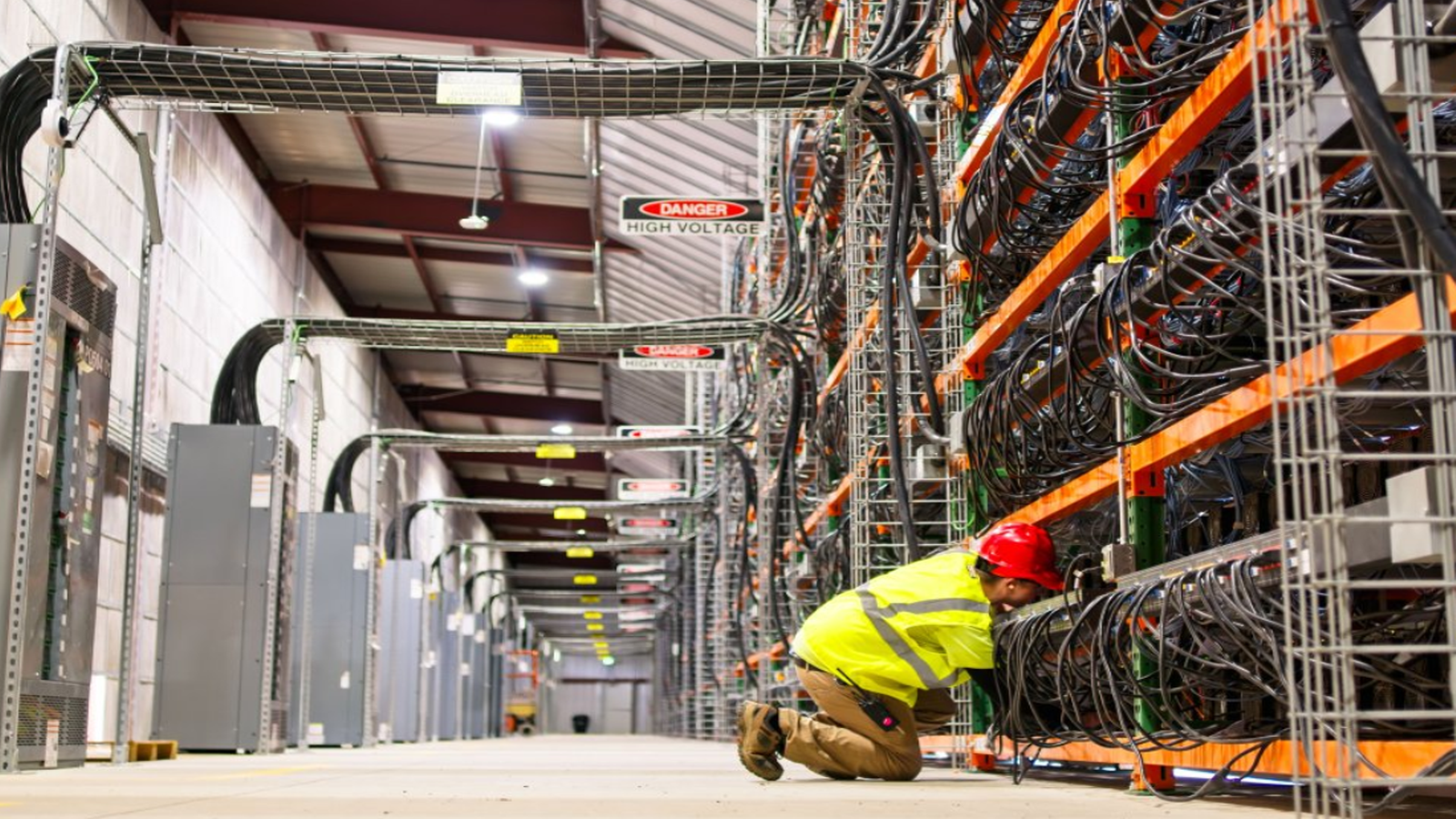
A new CSIS brief on tariffs and AI data centers points to one of the central contradictions in U.S. technology policy: Washington wants to accelerate domestic AI infrastructure while also using tariffs to reduce dependence on foreign semiconductor and metal supply chains. The problem is that AI data centers are built from the very components most exposed to that tariff agenda.
The CSIS brief, “The Impact of Tariffs on the AI Data Center Buildout: Balancing Supply Chain Security and AI Infrastructure Leadership,” argues that the United States is on track to invest more than $2.7 trillion in data center infrastructure by 2030. It also estimates that semiconductors account for approximately 54 cents of every dollar spent on data center infrastructure. That makes chip policy not a peripheral issue, but a direct cost variable in the AI infrastructure race.
For SockoPower, this is not just a trade-policy story. It is a strategic infrastructure story. AI leadership is often discussed as a contest over models, talent, chips, and software. But CSIS brings the issue down to the physical layer: data centers, servers, storage, networking equipment, power systems, cooling infrastructure, and the semiconductors embedded across that buildout.
The central policy tension is clear. Supply chain security pushes governments to reduce exposure to foreign inputs. AI infrastructure leadership requires fast, large-scale access to semiconductors, data center hardware, metals, power equipment, and construction materials. If tariff policy raises the cost of these inputs too broadly, it can function less like a national security tool and more like a tax on the infrastructure needed to compete in AI.

CSIS highlights the scale of that risk. The brief states that a 100 percent tariff on all semiconductors and products containing them would likely impose an additional $1.4 trillion burden on the U.S. AI data center buildout. CSIS also notes that such a maximalist tariff approach is not the expected policy path, but even more moderate scenarios could still raise costs and slow deployment.
The cost structure of data centers explains why the issue is so sensitive. Modern data centers require both non-IT physical infrastructure and IT hardware. CSIS cites estimates that non-IT construction costs, including cooling, building, and power infrastructure, can amount to about $10 million per megawatt. Advanced hyperscale data centers can support hundreds of megawatts, making the physical shell itself extremely capital-intensive.
But the larger cost pressure sits in IT hardware. CSIS cites McKinsey estimates that servers, storage, and networking equipment represent major shares of data center capital expenditure, with servers alone making up the largest single cost component. Within servers, semiconductors account for roughly 81 percent of value in traditional data centers and up to 87 percent in AI-optimized facilities. That means semiconductor tariffs move directly through the cost base of AI infrastructure.
This is where the issue becomes relevant to both Chain and Capital. On the Chain side, AI data centers depend on semiconductor supply, memory chips, networking hardware, servers, cooling systems, power equipment, and construction inputs. On the Capital side, tariff-driven cost increases can affect financing needs, project economics, return expectations, and deployment timelines.
The strategic lesson is not that supply chain security should be abandoned. CSIS does not argue for simply leaving critical supply chains exposed. The more precise point is that tariff design matters. A broad tariff regime can raise the cost of AI infrastructure before domestic supply chains are able to replace imported inputs. A more targeted approach could support domestic production without undermining the buildout itself.
That distinction matters for strategic technology commercialization. AI is not commercialized only through algorithms. It is commercialized through compute capacity, energy access, chip availability, data center financing, hardware supply chains, and regulatory cost structures. If those layers become too expensive, the market slows before the technology reaches scale.
For SockoPower, the key signal is that AI infrastructure is becoming a tariff-sensitive industrial system. Semiconductors are no longer just components inside devices. They are the cost core of data center expansion, and data centers are the operating base of advanced AI. That makes tariff policy a direct factor in national AI capacity.
The narrow takeaway is this: the United States cannot treat AI infrastructure leadership and semiconductor tariff policy as separate tracks. They collide inside the data center. Every tariff on chips, servers, power equipment, metals, or semiconductor-containing products eventually becomes part of the cost of compute.
Why It Matters
This item matters because AI leadership depends on physical infrastructure, not only software and models. CSIS shows that semiconductors represent roughly 54 cents of every dollar spent on data center infrastructure, meaning tariffs on chips and semiconductor-containing products can directly raise the cost of AI deployment. For SockoPower, the signal is that supply chain security policy can become a capital cost issue for strategic AI infrastructure.
SockoPower Takeaway
AI infrastructure is now a strategic supply chain. Tariffs designed to strengthen national security can weaken AI leadership if they raise the cost of the data centers, chips, servers, storage, networking systems, and power infrastructure required to scale advanced AI. The policy challenge is not whether supply chains should be secure, but whether tariff tools are precise enough to avoid taxing the buildout they are meant to protect.
What to Watch Next
Watch whether U.S. tariff policy provides exemptions or relief for data center construction and AI infrastructure inputs.
Watch how Section 232 semiconductor measures are designed, especially whether they target narrow risk areas or broad product categories.
Watch whether cloud providers, chip designers, server manufacturers, and data center developers shift investment timelines in response to tariff uncertainty.
Watch how tariff-driven cost increases affect the financing of hyperscale AI data centers.
Watch whether U.S. policymakers tie tariff relief to domestic investment milestones, as CSIS suggests, rather than applying broad import penalties across the AI infrastructure stack.
References
CSIS, “The Impact of Tariffs on the AI Data Center Buildout: Balancing Supply Chain Security and AI Infrastructure Leadership,” May 14, 2026.
CSIS Artificial Intelligence Research & Analysis page, listing the brief and summarizing its argument that blanket semiconductor and metal tariffs can harm the American data center buildout.
Socko/Ghost
Leave a Reply