CSIS’s podcast episode “Unpacking Russian Military AI with Kateryna Bondar” should be read as more than an interview about artificial intelligence. It is a direct window into how military AI becomes operational capability under wartime pressure.
The episode brings together two recent CSIS reports by Kateryna Bondar: “How Russia Is Building a Sovereign Drone Ecosystem for AI-Driven Autonomy” and “How Russia Is Reshaping Command and Control for AI-Enabled Warfare.” The discussion covers the role of technological innovation in the war in Ukraine, why AI capabilities in warfare “cannot be built, can only be grown,” and the report’s claim that Russia has likely fielded a fully autonomous unmanned system in combat.
For SockoPower, the strategic value is clear. This is not a general AI policy discussion. It is about the industrial, organizational, and battlefield conditions that allow AI-enabled military systems to emerge. The most important point is that Russia’s military AI development appears less like a clean laboratory program and more like an adaptive wartime ecosystem.
Bondar’s CSIS report on Russia’s drone ecosystem argues that Russia is developing military AI and moving incrementally toward autonomous decisionmaking, especially at the tactical edge. The report says Russia has identified unmanned systems and AI as strategic priorities and that, under wartime economic conditions, civilian and dual-use investment is highly likely to translate into military capability.
The report’s most striking claim is that Russia has likely fielded a fully autonomous unmanned system in combat. CSIS cites Ukrainian technical analysis of intercepted V2U drones, noting the absence of communication components required for operator control and onboard computing sufficient for AI-enabled perception and decisionmaking. The observed behavior described by the report includes autonomous flight in denied environments and independent target selection, which CSIS treats as a qualitative shift from remotely piloted expendable drones toward AI-driven systems.

The lesson is not that Russia has achieved frontier AI superiority. CSIS’s analysis is more precise: Russia is pursuing applied military AI, especially where narrow machine-learning functions can be embedded into drones, battlefield software, and tactical workflows. The result is not comprehensive autonomy, but functional independence at the tactical edge.
That distinction matters. Modern military AI does not need to look like a general-purpose superintelligence to change combat. A limited computer-vision model, a target-recognition function, a drone navigation tool, or a battlefield software layer can become operationally significant if it shortens the loop between detection, decision, and strike.
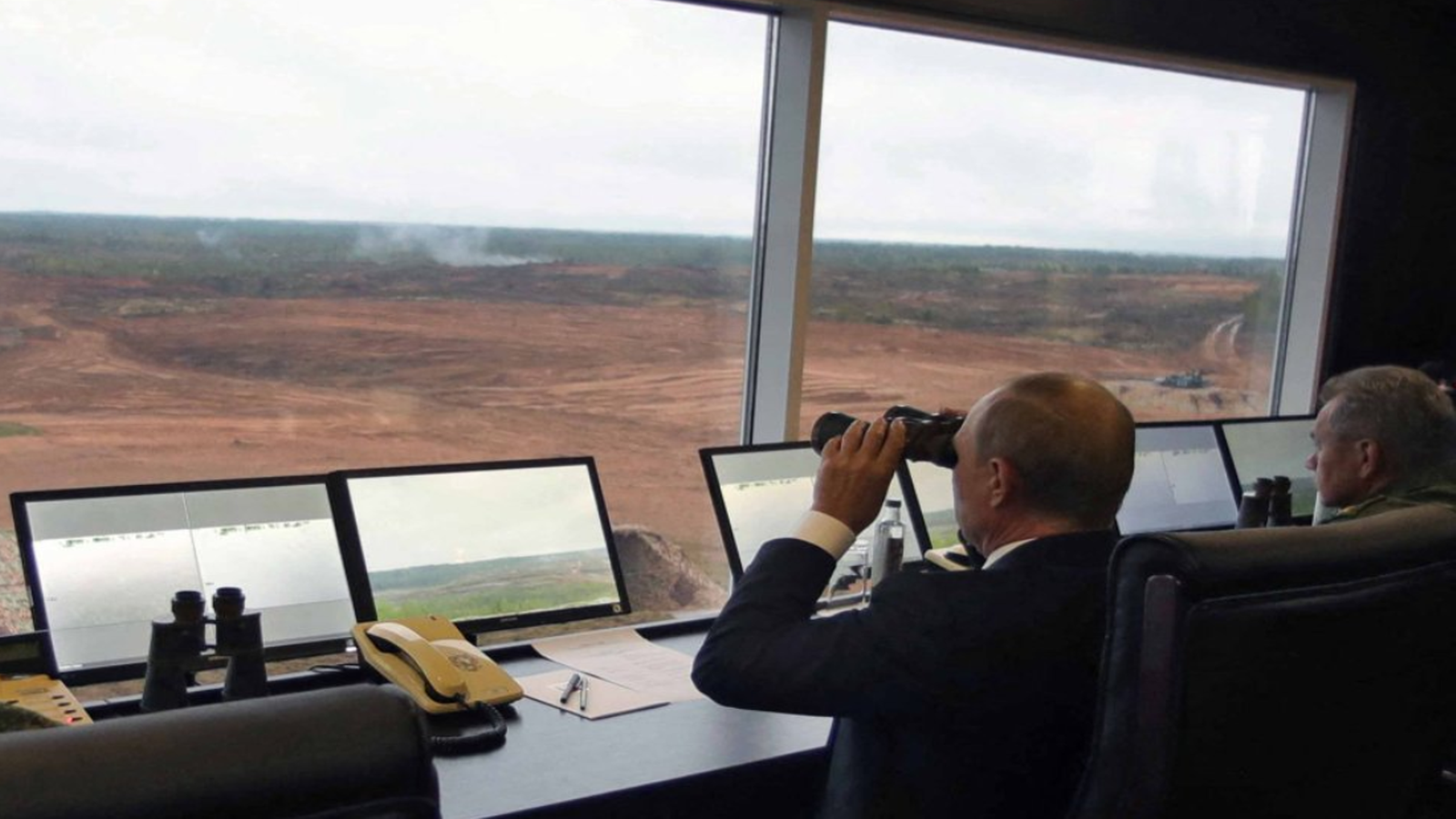
The CSIS command-and-control report adds the second layer. It argues that Russia is reshaping its C2 architecture under wartime pressure and is shifting from a broad ambition for comprehensive automated command systems toward tactical, task-specific software. CSIS identifies systems and workflows designed to manage unmanned platforms, integrate drone data with artillery and fire units, and accelerate the kill chain.
The key institutional point is that unmanned systems now drive Russian C2 innovation. CSIS states that unmanned systems conduct up to 80 percent of Russian fire missions, making software for drone management, situational awareness, fire correction, and direct linkage between UAS operators and firing units central to battlefield adaptation.
This is where the private-sector and civilian-engineer angle becomes crucial. The Russian drone ecosystem described by CSIS is not a simple top-down procurement model. It includes civilian engineers, volunteer developers, private drone schools, battlefield validation, rapid iteration, and selective state intervention after a system proves operationally useful. In other words, military AI capability is being grown through feedback loops among users, trainers, developers, and state institutions.
For SockoPower’s core focus, this is exactly the point: strategic military technology becomes powerful when it is commercialized, trained, tested, adapted, and scaled through an ecosystem. The battlefield becomes a brutal validation environment. The state does not always invent the capability from scratch; it captures and scales what works.
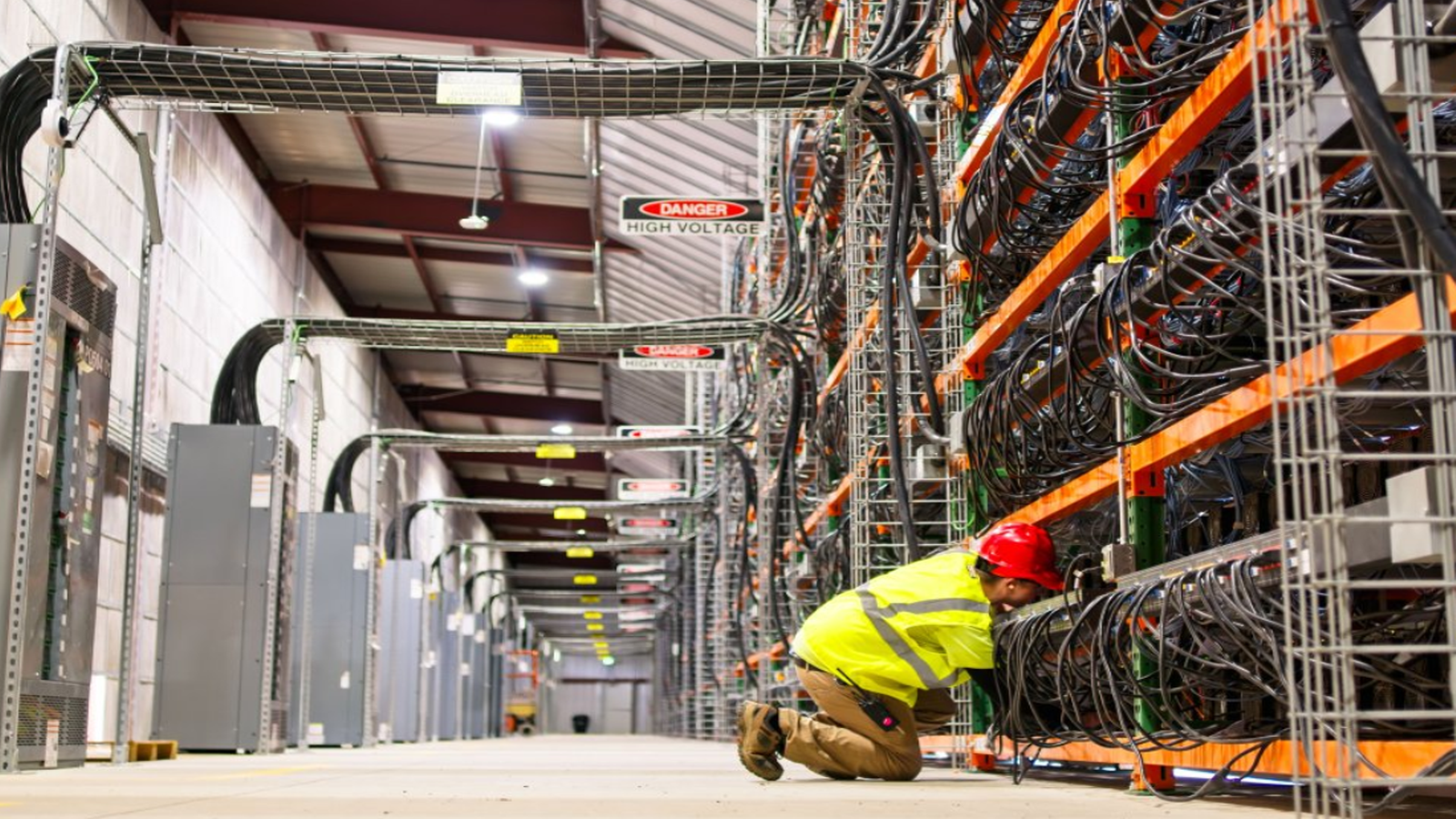
The supply-chain dimension is equally important. CSIS reports that more than 50 percent of AI-enabling components recovered from Russian unmanned systems originate from companies headquartered in the United States and consist primarily of commercial-grade, dual-use electronics. Across 705 identified AI-relevant components, U.S. firms accounted for the largest national share in memory hardware, processors, and sensors.
That finding is a major Chain signal. Russia’s battlefield autonomy is not isolated from global semiconductor and electronics markets. Even under sanctions and export controls, commercial dual-use components remain embedded in the technical backbone of unmanned systems. This means military AI cannot be analyzed only through defense budgets or doctrine. It must also be analyzed through processors, memory, sensors, open-weight models, training pipelines, drone schools, procurement channels, and component leakage.
CSIS also notes that Russia is not primarily trying to compete in frontier foundational AI. Instead, it adapts existing open-weight models from Western and Chinese ecosystems, including model families such as Llama, Mistral, Qwen, and DeepSeek, into military and government-specific applications.
That is a critical commercialization lesson. The military value is not always in owning the frontier model. It can be in adaptation: taking existing models, narrowing the task, embedding them in controlled systems, pairing them with sensor data, and validating them under battlefield conditions. This is the logic of applied military AI.
For defense companies and policymakers, the warning is direct. Future military AI competition will not be decided only by who publishes the best model. It will be shaped by who can integrate models into drones, collect operational data, train operators, harden software under electronic warfare, secure components, and turn battlefield lessons into procurement decisions.
The CSIS podcast and reports therefore belong in Strategic Reports, not merely Signal. They show the architecture of a military AI market under war conditions: state priorities, civilian innovation, drone production, training systems, dual-use components, open-weight models, and command-and-control adaptation.
The narrow takeaway is this: Russian military AI is not emerging as a single program. It is emerging as an ecosystem. That ecosystem is messy, improvised, and constrained, but it is also adaptive. For SockoPower, that makes it one of the most important defense-technology signals to track.
Why It Matters
This item matters because it shows how military AI becomes operational capability through an ecosystem rather than a single procurement program. CSIS’s work points to drones, tactical C2 software, civilian engineers, training pipelines, dual-use components, open-weight AI models, and battlefield validation as the real machinery behind Russia’s AI-enabled warfare.
SockoPower Takeaway
Russian military AI should not be understood as a clean laboratory breakthrough. It is a wartime industrial process. The capability grows through drones, data, training, software, components, combat feedback, and state scaling. The strategic lesson is that battlefield AI is not only built; it is cultivated through an operating ecosystem.
What to Watch Next
Watch whether Russia expands the use of autonomous unmanned systems beyond isolated cases into repeatable battlefield workflows.
Watch how Russian C2 software evolves around drone management, fire correction, situational awareness, and sensor-to-shooter integration.
Watch whether sanctions and export controls reduce the flow of AI-enabling commercial components into Russian unmanned systems.
Watch how open-weight AI models continue to be adapted for military use in controlled or on-premise environments.
Watch whether private drone schools, volunteer engineers, and battlefield training pipelines remain central to Russian military AI scaling.
References
CSIS, “Unpacking Russian Military AI with Kateryna Bondar,” The AI Policy Podcast, April 14, 2026.
CSIS, Kateryna Bondar, “How Russia Is Building a Sovereign Drone Ecosystem for AI-Driven Autonomy,” April 13, 2026.
CSIS, Kateryna Bondar, “How Russia Is Reshaping Command and Control for AI-Enabled Warfare,” February 10, 2026.
Socko/Ghost