Category: Strategic Reports

Strategic Reports translates public signals into private-sector opportunity, company positioning, and procurement-linked market relevance.

  • Taiwan’s Home-Built Satellite Launch Taiwan’s First Home-Built Satellite Marks a Turning Point in the Global Civil-Military High-Tech Race

    Taiwan’s Home-Built Satellite Launch Taiwan’s First Home-Built Satellite Marks a Turning Point in the Global Civil-Military High-Tech Race

    Taiwan’s successful launch of its first fully home-built satellite—carried to orbit by SpaceX’s Falcon 9—signals far more than a technological achievement. It represents a strategic shift in the global civil-military innovation race at a moment when supply chain security, dual-use technology, and geopolitical resilience are becoming unavoidable priorities for governments worldwide.

    Named Chi Po-lin, the Formosat-8 satellite is the first in a planned constellation of eight Earth-observation platforms designed and manufactured domestically. While many countries still rely on external suppliers or lease commercial imaging services, Taiwan’s program demonstrates a decisive move toward indigenous high-tech autonomy. The satellite will orbit at 561 kilometers, collecting high-resolution data not only for environmental and urban-planning purposes but also for disaster response, climate monitoring, and national security applications.

    Leveraging local innovation pipelines, Taiwan’s space agency (TASA) reports that 84–86% of the satellite’s components were domestically manufactured—a milestone that dramatically reduces foreign dependency in an era of widening geopolitical uncertainty.

    But the deeper significance lies not in the technical details alone. Rather, Formosat-8 illustrates how small and mid-sized states are increasingly turning to dual-use space technologies to strengthen deterrence, upgrade national digital infrastructure, and build strategic resilience against external coercion. This shift echoes broader trends throughout the Indo-Pacific, where satellites, drones, AI-enabled sensing, and secure communications systems are reshaping both civil and military capabilities.

    Taiwan’s decision to build and deploy one satellite per year until 2031 will eventually create a sovereign, persistent surveillance network—allowing real-time environmental mapping, maritime domain awareness, and early warning capabilities. In practice, this means that critical information such as disaster zones, illegal fishing, covert military deployments, and gray-zone activities can be monitored without relying on foreign satellite windows.

    For an island under continuous geopolitical pressure, reducing vulnerability in the information supply chain is no longer optional—it is survival strategy.

    The launch also underscores the rise of commercial space actors as indispensable global partners. SpaceX, with its reliable and cost-efficient launch cadence, has effectively become the universal logistics backbone for emerging space nations. If a satellite fits in the payload bay, SpaceX will put it into orbit with unprecedented speed, allowing countries like Taiwan to compress development cycles and enter strategic orbits years ahead of schedule.

    This dynamic is accelerating a more fragmented yet innovative global space ecosystem. Nations with advanced semiconductor, manufacturing, and AI sectors—like Taiwan—are now using these strengths to enter the aerospace and defense space at a lower barrier of entry than in the past. Meanwhile, dual-use technologies are blurring the lines between civilian industry and strategic capabilities. A constellation designed for climate science can instantly become a national security asset; a commercial launch provider becomes a critical defense enabler.

    Taiwan’s achievement also fits into a larger Indo-Pacific trend: the rapid militarization of high-tech industries under democratic industrial policy. Japan, South Korea, Australia, and India are simultaneously expanding space reconnaissance programs, low-orbit communication networks, hypersonic research pipelines, and autonomous defense platforms. The region is heading toward a future where civilian innovation clusters—semiconductors, composites, robotics, photonics—power the next generation of deterrence architectures.

    China and Russia, meanwhile, are escalating counter-space programs, testing ASAT technologies, and integrating space-based ISR into joint operational planning. The United States continues to expand its Space Force and commercial launch ecosystem while encouraging allies to build capacity rather than depend on Washington alone.

    Against this backdrop, Taiwan’s satellite is more than a scientific tool; it is a sovereign digital shield.

    The Formosat-8 launch also demonstrates a strategic industrial truth: nations that build and control their own data infrastructure will dominate the next geopolitical era. Countries reliant on foreign satellite imagery, foreign cloud servers, or foreign supply chains will lack autonomy in crises. Taiwan’s approach—DIY innovation, domestic component manufacturing, and multi-year constellation planning—offers a roadmap for other small states seeking to build resilience in a contested world.

    In the realm of supply chains, Taiwan’s move strengthens its position as a high-tech manufacturing hub capable of integrating electronics, advanced materials, sensors, optics, and AI. The satellite program complements its semiconductor ecosystem, creating a vertically integrated dual-use industrial base aligned with U.S., European, and Indo-Pacific security interests.

    For global defense markets, this development is another indicator that the next decade will belong not only to superpowers but also to agile, technologically capable democracies building localized high-tech ecosystems. In space, as on Earth, speed, autonomy, and resilience increasingly outweigh sheer size.

    Taiwan’s new constellation is a warning shot to adversaries and a signal to allies: the era of small-state innovation powering big-state deterrence has arrived.
  • Counter-Drone Warfare at Scale — Why NATO’s New Multi-Layer Kill-Web Marks the Beginning of Cost-Dominant Air Defense.

    Counter-Drone Warfare at Scale — Why NATO’s New Multi-Layer Kill-Web Marks the Beginning of Cost-Dominant Air Defense.

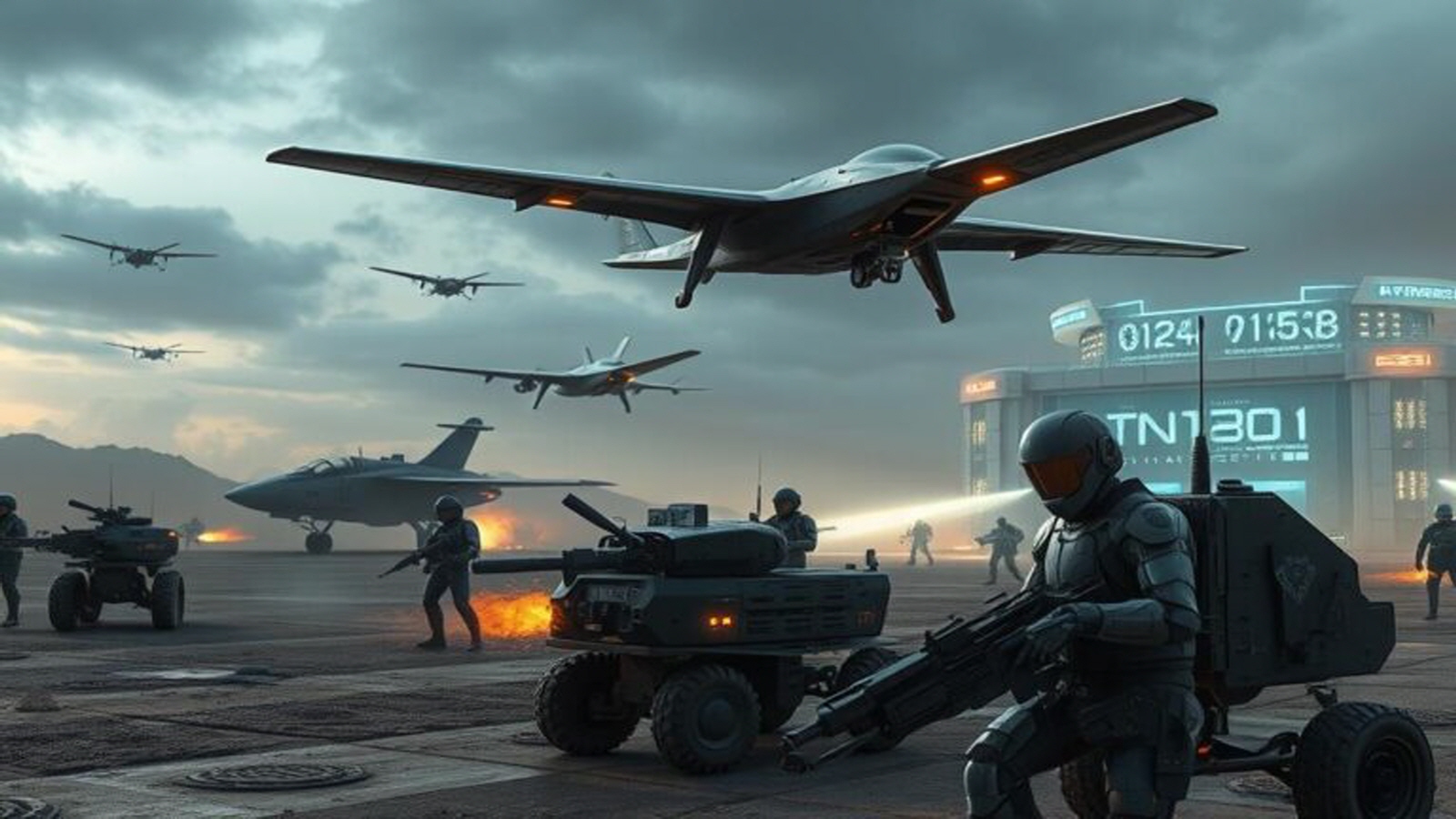
    The future of air defense is no longer about billion-dollar systems shooting million-dollar missiles at improvised threats. Across NATO’s northern flank, militaries are rapidly shifting from platform-centric defense to sensor-centric kill-webs—distributed networks that merge commercial, military, and AI-enabled technologies into a single responsive grid.

    A major demonstration in northern Germany revealed something critical:
    ? NATO can now stand up a fully integrated counter-UAS ecosystem in days, not years.

    This shift signals a massive transformation in procurement, doctrine, and industrial supply chains—one that will define both battlefield survivability and defense sector investment priorities through 2030.

    1. A New Model: Low-Cost Kill Chains That Out-Scale the Threat

    Instead of shooting down $20k drones with $4M interceptors, NATO partners are adopting a layered approach:

    • AI-guided small arms with smart aiming modules

    Turns every soldier into an anti-drone node—effective against close-range FPV drones.

    • Net-launching interceptor drones

    Critical for urban environments and civilian areas where explosives are unacceptable.

    • Medium-caliber gun systems with automated tracking

    Bridges the gap between rifle-range and missile-range threats.

    • Open-architecture fusion of passive + active sensors

    A breakthrough:
    Passive radar that reads distortions in FM radio waves merged with active radar and EO/IR sensors—creating a resilient mesh that doesn’t depend on GPS or continuous emissions.

    Why this matters:
    Russia, Iran, and China are producing drones at industrial scale. Western militaries must counter mass with even cheaper mass, reinforced by real-time data.

    2. 3D Printing at the Tactical Edge — The Next Military Logistics Superpower

    One of the most strategically important demonstrations: a deployable 3D-printing tent producing operational drone frames within hours.

    Military impact:

    Enables on-demand replacement of attrited drones

    Supports custom drone geometries for local missions

    Removes bottlenecks from long-distance supply chains

    Allows rapid adaptation to evolving threat profiles

    This is not just convenience—it is logistics overmatch.

    In a future where drone attrition rates exceed 60–70% per mission, the side that can print faster and deploy faster wins.

    3. The Real Breakthrough: Sensor Fusion With Zero Latency

    For the first time, NATO demonstrated:

    • Seamless data-sharing across classification levels

    Classified → sensitive but unclassified → unclassified
    All in real time, with no latency penalties.

    • Multi-level dissemination

    Snipers

    FPV drone operators

    Mobile air-defense teams

    Unit commanders

    This is equivalent to taking the “JADC2 vision” and building a deployable version in a field in Germany.

    Strategic implication:
    NATO is building a kill-web that can function even without U.S. satellite or AWACS support—critical if American force posture shifts due to political or resource constraints.

    4. Europe Prepares for a Post-Assurance Era

    European officers attending the demo were interested in a simple question:

    “Can this stop Russian drone saturation attacks?”

    The answer—while not explicit—was implied:

    NATO is preparing Europe to defend itself even if U.S. support fluctuates.

    The technologies showcased are affordable at scale. They reduce  dependency on high-end U.S. platforms. They can be produced in Europe with COTS components. They operate without deep logistics chains

    This fits a broader trend:
    Strategic autonomy through distributed lethality.

    5. Economic and Industrial Implications for 2025–2030 Defense  manufacturers

    → Must pivot to modular open-systems architectures
    → Compete on cost-per-kill, not high-end specs

    AI companies

    → Battlefield sensor fusion is becoming a multi-billion-dollar market
    → Real-time edge compute for drone detection is critical

    3D-printing and advanced manufacturing sectors

    → Enter a new era as NATO tactically deploys additive manufacturing Investors.

    → Counter-UAS tech, AI-guided targeting, autonomous defense drones
    → Will outperform traditional aerospace segments in CAGR through 2030

    Geopolitics

    → Russia, China, and Iran accelerating low-cost drone proliferation
    → NATO racing to maintain defensive cost-dominance
    → Countries with strong electronics + additive manufacturing capacity gain leverage

    Bottom Line

    The Germany demonstration wasn’t a product expo. It was a strategic signal:

    NATO is shifting from legacy air defense to scalable, distributed, AI-enabled counter-drone ecosystems.

    This transition will define the next arms race — one centered on cost  efficiency, manufacturing agility, and information dominance.

    It’s not the end of traditional air defense. But it is the beginning of a new era where kill-web scale > platform power.

  • AI-Driven ISR Fusion: Autonomous Sensor–Targeting Networks Expanding Across Indo-Pacific and European Theaters

    AI-Driven ISR Fusion: Autonomous Sensor–Targeting Networks Expanding Across Indo-Pacific and European Theaters

    1. The New Battlespace: Where Sensors, AI, and Kill-Chains Converge

    Defense markets in 2025 are being reorganized around one dominant theme:
    AI-Driven ISR Fusion — the ability to merge satellite, aerial, maritime, cyber, and ground-sensor intelligence into a single autonomous targeting picture.

    As great-power competition intensifies, both the Indo-Pacific and Europe are shifting their procurement priorities toward systems that compress the sensor-to-shooter timeline from minutes to seconds.
    AI is no longer an “assistive tool”; it is the core orchestrator of the next-generation kill chain.

    2. Indo-Pacific: Countering China’s A2/AD With Distributed Autonomy

    China’s expanding A2/AD belts — from the South China Sea to Taiwan and the First Island Chain — are accelerating demand for:

    • Autonomous maritime ISR drones (USV/UUV swarms)
    • AI-enhanced SIGINT/ELINT processors
    • Multi-domain sensor fusion hubs linking naval, air, and space assets
    • Low-latency tactical cloud networks resilient to jamming
    • Long-range precision fires guided by machine-generated targeting

    The U.S., Japan, Australia, and South Korea are now co-developing architectures that combine real-time ISR streams + autonomous cueing to penetrate contested environments without exposing manned platforms.

    The doctrine is simple:
    Small, cheap, numerous, and AI-coordinated beats big, slow, centralized.

    3. Europe: AI ISR as the Backbone of a Post-Ukraine Defense Posture

    The Russia-Ukraine war permanently altered Europe’s procurement strategy.
    NATO now prioritizes:

    • Counter-battery AI sensors (locating artillery in seconds)
    • AI-accelerated battlefield awareness for armored formations
    • Drone-counter-drone autonomy engines
    • Satellite–drone–ground fusion centers for 24/7 targeting
    • Stand-off weapons guided by synthetic-aperture AI models

    The result is a shift away from legacy heavy platforms toward digital-first lethality where ISR accuracy determines firepower, not the size of the weapon.

    4. Key Industry Players Driving the AI-ISR Revolution

    USA

    • Palantir – real-time fusion & autonomous tasking engines
    • Anduril – Lattice OS, AI kill-chain networking, autonomous drones
    • Lockheed Martin – AI-enabled missile guidance + space ISR integration
    • Raytheon – counter-drone and AI radar suites

    Europe

    • BAE Systems – multi-domain ISR cloud architecture
    • Thales – AI radar + integrated electronic warfare
    • Airbus Defence – satellite-drone fusion ecosystems

    Asia-Pacific

    • Hanwha, LIG Nex1 (Korea) – AI-guided artillery, ISR drones, autonomous fire-control systems
    • Mitsubishi Heavy (Japan) – maritime ISR AI and next-gen Aegis integration

    The competitive frontier is no longer hardware—it is AI orchestration.

    5. Market Outlook: The Rise of Autonomous Targeting Ecosystems

    According to 2025 analyst projections:

    • Global ISR/AI fusion market: ~$72B by 2030
    • Autonomous targeting & sensor networks: CAGR 14–18%
    • Defense cloud & edge AI: fastest-growing segment (over 20% CAGR)

    Three factors drive this acceleration:

    1. Long-range precision warfare becoming standard
    2. Drones & counter-drone races escalating
    3. Multi-domain command requiring machine-speed decision cycles

    Simply put:
    Whoever fuses sensors fastest dominates the battlespace.

    6. Strategic Implication: The Kill Chain Becomes the Platform

    The era of standalone platforms is ending.
    The new battlefield is a mesh of autonomous nodes where:

    • Satellites spot
    • Edge AI classifies
    • Swarms track
    • Ground batteries shoot
    • Cloud AI re-targets
    • Everything updates in seconds

    In both Indo-Pacific flashpoints and the European front, the nation that perfects AI-driven ISR fusion secures the decisive advantage.

    References

    U.S. Department of Defense (DoD). “Joint All-Domain Command and Control (JADC2) Strategy.” 2024.

    NATO ACT. “Multi-Domain Operations and AI-Enabled ISR Integration.” NATO Allied Command Transformation Report, 2024–2025.

    RAND Corporation. “AI-Enabled ISR Fusion and Future Kill-Chain Acceleration.” RAND Defense Analysis Series, 2023–2024.

    CSIS (Center for Strategic & International Studies). “Indo-Pacific A2/AD Trends and Autonomous Systems.” CSIS Strategic Technologies Program, 2024.

    European Defence Agency (EDA). “AI for Defense, ISR, and Targeting Networks in Europe.” EDA Technical Paper, 2024.

    Air Force Research Laboratory (AFRL). “Autonomous Sensor Integration and Machine-Speed Targeting.” AFRL MDO Research Brief, 2025.

    Jane’s Defence Weekly. “Global ISR Market Outlook 2025: Satellite–Drone Fusion and Tactical Edge AI.”

    Anduril Industries. Lattice OS Technical Overview. Corporate Whitepaper, 2024.

    Palantir Technologies. “Meta-Constellation & Autonomous Tasking Architecture.” ISR Fusion Product Guide, 2024.

    BAE Systems. “Digital Battlespace ISR & AI Sensor Networks.” Technology Insights, 2024–2025.

  • How Dual-Use Technologies Are Reshaping Defense and Global Markets

    How Dual-Use Technologies Are Reshaping Defense and Global Markets

    Introduction: The Blur Between Silicon Valley and the Military-Industrial Base

    Across the world, the boundary between civilian innovation and military modernization is collapsing.
    AI laboratories, cloud hyperscalers, semiconductor fabs, and aerospace startups are now critical players in national defense—not because governments invited them in, but because commercial technologies have surpassed traditional defense R&D in scale, speed, and capability.

    Dual-use technologies—AI, quantum computing, hypersonics, robotics, biotech, and space systems—are reshaping both defense architectures and commercial capital markets.

    1. AI as the Central Nervous System of Dual-Use Transformation

    Commercial AI firms now generate innovations far faster than government labs:

    • Large-scale models accelerating ISR fusion
    • Autonomous navigation for logistics and weapons
    • Predictive maintenance & supply forecasting
    • Commercial cloud replacing government data centers

    The shift is so dramatic that defense planners increasingly build strategies around what the commercial sector will produce next—not what military R&D will develop internally.

    2. Quantum Computing and Encryption: Offensive and Defensive Stakes

    Qantum technologies represent one of the most strategically sensitive dual-use domains:

    • Civilian use: chemistry, materials, pharmaceuticals, finance
    • Military use: codebreaking (“Q-Day”), secure comms, navigation without GPS

    States are racing to secure intellectual property, leading to new forms of export control, investment screening, and talent restrictions.

    3. Hypersonics and the Acceleration of Aerospace Commercialization

    Hypersonic propulsion—once exclusive to defense—is now being pursued by commercial space and transportation firms.
    This creates three strategic consequences:

    1. Commercial capital reduces R&D costs for militaries
    2. Supply chains become harder to regulate
    3. Rival states exploit gray zones to acquire sensitive tech

    The dual-use nature makes non-proliferation regimes nearly impossible to enforce.

    4. Capital Markets Become the Battlefield

    Dual-use tech attracts massive venture investment, which becomes a national security factor:

    • U.S. Outbound Investment Controls (EO 14105)
    • Europe’s tightening FDI screening
    • China’s tech funds supporting AI, drones, and materials
    • Gulf sovereign wealth funds investing strategically in dual-use startups

    The global map of “who funds what” now shapes geopolitical alliances.

    5. Regulatory, Ethical, and IP Conflicts Intensify

    As civilian firms hold core strategic IP, governments confront new challenges:

    • Who owns battlefield algorithms?
    • Can commercial AI companies refuse military contracts?
    • How do states secure IP without crippling innovation?

    The result is a world where technology governance = national strategy.


    Conclusion

    The rise of dual-use civil–military innovation is not a trend—it is a structural transformation.
    It will define future military power, economic competitiveness, and geopolitical stability.

  • Quantum Defense 4.0 — How Dual-Use Tech Is Redefining Security and Markets

    Quantum Defense 4.0 — How Dual-Use Tech Is Redefining Security and Markets

    The next great power competition will not be fought by tanks or missiles, but by algorithms.
    Quantum-resistant encryption, quantum radar, drone swarm optimization, and nuclear detection modeling
    are no longer isolated defense projects—they are the backbone of a new dual-use economy where security and markets converge.

    1. Quantum-Resistant Encryption — Securing the Post-Quantum Economy

    As quantum computing threatens to break classical cryptography, global enterprises are shifting toward
    Post-Quantum Cryptography (PQC). Algorithms such as CRYSTALS-Kyber and CRYSTALS-Dilithium,
    standardized by NIST, are already being tested in NATO’s defense communication networks.
    Beyond military use, PQC is quietly becoming the infrastructure for financial systems, cloud networks, and the IoT ecosystem.

    Market Applications

    • Finance: PQC-based digital signature frameworks for transaction security
    • Cloud: Quantum-safe key management services from AWS and Azure
    • IoT: Secure sensor networks derived from defense-grade modules

    2. Quantum Radar Simulation — The New Optics of Detection

    Quantum radar leverages photon entanglement to detect stealth objects that evade traditional radar systems.
    AI-based simulations can now reconstruct target signatures from quantum noise patterns, offering detection capabilities
    once considered impossible. What began as a military project is now influencing civilian aerospace,
    space surveillance, and next-gen navigation sensors.

    Market Applications

    • Aviation Security: Transparent material scanners based on quantum interference
    • Satellite Systems: Hybrid radar-photon phase sensors for orbital tracking
    • Autonomous Mobility: Quantum-enhanced distance mapping for autonomous vehicles

    3. Drone Swarm Optimization — Collective Intelligence as a Force Multiplier

    AI-driven drone swarms form self-organizing networks that execute missions autonomously.
    DARPA’s OFFSET program is pioneering urban-combat swarm protocols that can adapt to dynamic environments.
    These same algorithms are migrating into the civilian sector, powering logistics, precision agriculture,
    and disaster-response networks.

    Market Applications

    • Logistics: Route optimization for delivery drones
    • Disaster Response: Autonomous search-and-rescue formations
    • Agritech: AI-based crop monitoring and pest control swarms

    4. Nuclear Material Detection Modeling — AI for Invisible Threats

    Detecting illicit nuclear material relies increasingly on AI-based neutron scattering models
    that identify unique particle-interaction patterns. MIT Lincoln Laboratory and the IAEA are developing
    simulation platforms that reduce detection errors by over 30%.
    Defense applications aside, this technology is now entering the domains of energy,
    medical radiation safety, and industrial monitoring.

    Market Applications

    • Port Security: Automated container scanning for radiological materials
    • Healthcare: AI-driven radiation diagnostics and safety analytics
    • Energy: Smart monitoring for nuclear fuel management

    Conclusion — From Defense Tech to Market Intelligence

    The frontier between national defense and commercial innovation has disappeared.
    Each of these technologies—quantum, AI, swarm systems, nuclear modeling—serves both as a weapon
    and as a market platform. Defense technology has become the invisible engine of
    the 21st-century economy: the line between security and profit no longer exists.


    SockoPower | Defense & Market Intelligence Series, Vol. 1

    References

    • NIST PQC Standardization Project — CRYSTALS-Kyber / Dilithium (2024)
    • DARPA OFFSET Program Overview (2023)
    • MIT Lincoln Laboratory — AI-Based Nuclear Detection Models (2024)
    • China NUDT — Quantum Radar Simulation Reports (2023)
    • IAEA Technical Paper — Radiation Pattern Recognition for Security (2024)
  • Unlocking Quantum Potential with NVIDIA CUDA

    Unlocking Quantum Potential with NVIDIA CUDA

    NVIDIA CUDA and the Quantum Frontier:

    How GPU Acceleration Is Shaping the Next Era of Computing: Insights & Market Intelligence Feature Analysis

    1. Introduction: A New Computational Threshold

    For nearly two decades, NVIDIA’s CUDA architecture has been the silent engine powering breakthroughs—from deep learning models and autonomous systems to real-time simulation and robotics.
    But in 2025, CUDA’s role is expanding beyond GPU acceleration alone.
    It is becoming the on-ramp to quantum computing.

    The convergence of GPU-accelerated classical systems and quantum processors is no longer theoretical; it is emerging through NVIDIA’s CUDA-Quantum platform, formerly known as QODA.

    This hybrid model is redefining what “computing power” means.

    2. Why CUDA Matters in the Quantum Era

    CUDA’s continued dominance stems from three pillars:

    1) Unified Developer Environment

    Developers who already write CUDA kernels can now extend workflows into quantum circuits without learning an entirely new paradigm.

    2) Hybrid Execution (GPU + QPU)

    Quantum Processing Units (QPUs) excel at superposition and entanglement tasks,
    while GPUs dominate linear algebra and large-scale simulation.

    CUDA-Quantum orchestrates both.

    3) Scalable Simulation Before Hardware Matures

    Because quantum hardware is still noisy and limited,
    GPU-accelerated simulation becomes essential—allowing enterprises to build quantum algorithms before QPUs reach scale.

    3. Key Technical Advantages

    3.1 CUDA-Quantum Programming Model

    Developers can:

    • Write quantum kernels in C++ or Python
    • Run them on simulators (NVIDIA GPUs)
    • Deploy the same code on real quantum hardware (IonQ, Quantinuum, Rigetti, etc.)

    This bridges the gap between R&D and production.

    3.2 GPU-Accelerated Quantum Simulation

    Quantum systems grow exponentially in complexity.
    A 40-qubit system requires more than 1 trillion complex amplitudes.

    NVIDIA’s cuQuantum libraries allow:

    • Dense and sparse matrix simulation
    • Tensor-network simulation
    • State vector evolution
    • Quantum error correction modeling

    This gives companies production-grade quantum R&D today, instead of waiting for hardware

    4. Real-World Applications: Where Business Meets Quantum

    1) Drug Discovery & Molecular Dynamics

    GPUs handle molecular modeling,
    QPUs explore quantum energy states.

    Outcome: faster protein-folding, material discovery, and docking analysis.

    2) Financial Risk Modeling

    Hybrid Monte Carlo + quantum optimization unlocks:

    • Portfolio optimization
    • Derivative pricing
    • Risk scenario generation
    • Cryptographic resilience testing

    3) Defense & Secure Communications

    Relevant for SockoPower’s Defense Insights segment:

    • Quantum-resistant encryption
    • Quantum radar simulation
    • Drone swarm optimization
    • Nuclear material detection modeling

    NVIDIA’s simulation architecture accelerat

    4) AI Acceleration Itself

    Ironically, quantum computing won’t replace AI—
    it will accelerate the accelerators.

    Quantum-inspired algorithms improve:

    • Transformer efficiency
    • Sparse modeling
    • Reinforcement learning search
    • Multi-agent simulation

    CUDA makes AI-Quantum integration natural.

    5. Market Intelligence: Strategic Outlook for 2025–2030

    5.1 Winners in the Hybrid Era

    NVIDIA

    Controls the unified development stack (CUDA).
    This effectively locks in the next decade of AI + quantum software.

    IonQ / Quantinuum / Rigetti

    Quantum hardware vendors benefit from CUDA-Quantum compatibility.

    Defense & Aerospace Integrators

    Raytheon, Lockheed Martin, and DARPA programs are accelerating hybrid quantum simulations.

    5.2 Enterprise Adoption Timeline

    YearDevelopment StageIndustry Activities
    2025Early Hybrid R&DSimulation-first workflows
    2027Applied QuantumOptimization & logistics use cases
    2030Quantum AdvantageSector-specific deployment

    By 2030, hybrid AI+Quantum systems will replace 5–15% of HPC workloads.

    5.3 Risks & Bottlenecks

    • QPU hardware still noisy
    • High energy costs for GPU clusters
    • Talent shortage in quantum engineering
    • Standardization fragmentation
    • Security concerns around post-quantum cryptography

    These are manageable but real.

    6. Ethical & Humanistic Considerations

    NVIDIA’s roadmap raises a critical question:

    Does more computational power automatically empower humanity?

    Not necessarily.

    Quantum-accelerated AI must be governed with:

    Transparency
    Safety alignment
    Energy responsibility
    Defense ethics

    A system powerful enough to design new materials can also design new threats.
    SockoPower’s mission—linking power with purpose—becomes essential here.

    7. Conclusion: CUDA as the Bridge to the Quantum Future

    Quantum computing will not replace classical systems.

    Instead: CUDA becomes the bridge.

    GPU clusters become the “training wheels” for quantum acceleration.
    Enterprises that adopt hybrid workflows early gain:

    • faster simulation
    • lower R&D risk
    • better optimization
    • long-term computational independence

    This is not just a hardware revolution—
    it is a paradigm shift in how intelligence is computed.

  • Visible Light Communication (VLC)

    Visible Light Communication (VLC)

    Li-Fi (Light Fidelity) is a bidirectional, high-speed wireless communication technology that uses Visible Light Communication (VLC), or infrared light, instead of radio frequency (RF) waves for data transmission.1

    Here are the high-tech specifications and an overview of its business prospectus and markets:

    High-Tech Specifications

    FeatureLi-Fi Specification / CharacteristicComparison to Wi-Fi
    MediumVisible light (LEDs, up to $\sim 400$ to $800$ THz) and near-infrared light.Radio Frequency (RF) waves (typically $2.4$ GHz, $5$ GHz, and $6$ GHz).
    Speed (Theoretical)Can reach up to 224 Gbps (Gigabits per second) in lab conditions.Up to $\sim 9.6$ Gbps (Wi-Fi 6/6E).
    Speed (Real-World)Demonstrations often show $\sim 1$ Gbps or higher.Varies greatly, often much lower than theoretical peak.
    BandwidthVisible light spectrum is 10,000 times larger than the entire radio spectrum.Limited and increasingly congested RF spectrum.
    SecurityHighly secure because light cannot penetrate opaque walls, confining the signal to a physical space.RF signals penetrate walls, making them susceptible to interception outside the space.
    RangeShorter range ($\sim 10$ meters) and generally requires line-of-sight (though reflections can work).Longer range ($\sim 32$ meters or more).
    InterferenceInterference-free from RF, making it suitable for sensitive environments.Susceptible to interference from other electronic devices and Wi-Fi networks.
    InfrastructureIntegrates with existing LED lighting infrastructure.Requires dedicated Wi-Fi access points and routers.
    StandardOfficially recognized by the IEEE 802.11bb standard, promoting interoperability.Governed by various IEEE 802.11 standards.

    Business Prospectus and Markets

    Li-Fi is not typically seen as a complete replacement for Wi-Fi but as a complementary technology that offers advantages in specific, demanding environments.2 The market is projected for significant growth, with some forecasts showing a Compound Annual Growth Rate (CAGR) of over 40-50% through the forecast period (ending around 2030-2034).3

    Key Market Drivers:

    • Growing demand for high-speed, high-bandwidth wireless communication.4
    • Increasing RF spectrum congestion and the need for alternative, unlicensed spectrum.5
    • Need for highly secure wireless connections in sensitive sectors.
    • Expansion of smart cities and the ubiquity of LED lighting infrastructure.

    Target Markets and Applications:

    Market SegmentLi-Fi Value Proposition
    Defense & GovernmentMilitary-grade security and anti-jamming capabilities, as light is contained and has a near-zero electromagnetic (EM) signature.
    Aviation & AerospaceInterference-free high-speed passenger and avionics data, as light doesn’t disrupt sensitive RF systems.
    HealthcareSecure, interference-free networking for operating rooms and medical equipment (e.g., MRI machines) where RF is restricted.
    Industrial/ManufacturingReliable, low-latency communication for Industrial IoT (IIoT), automation, and real-time data transmission in factory floors.
    Retail & Indoor NetworkingHigh-speed internet access and location-based services (e.g., product information, promotions) through smart in-store lighting.
    Underwater CommunicationLight waves travel better through water than radio waves, enabling high-speed data transfer for divers and submarines.
    Smart Cities & TransportationVehicle-to-Vehicle (V2V) and Vehicle-to-Infrastructure (V2I) communication using headlights, streetlights, and traffic signals.

    Challenges:

    • Line-of-Sight Requirement: While reflections can work, direct light or reflected light is generally required, limiting mobility outside the light cone.
    • Inability to penetrate walls: This is a security advantage but a coverage disadvantage for whole-building mobility.
    • High Initial Implementation Cost compared to existing Wi-Fi infrastructure.10
    • Limited User Awareness and Compatibility: Most current devices require a Li-Fi dongle or integrated receiver.

    (Source)

      1. ResearchGate/www.researchgate.net/Review on Li-Fi: The Next Generation Wi-Fi – ResearchGate: On the other side of the spectrum, there lies LiFi. LiFi, which means Light Fidelity, is an emerging piece of technology that makes. use of Visible Light …

      2. Lingaya’s Vidyapeeth/www.lingayasvidyapeeth.edu.in/Li-Fi Technology – The Revolutionary Wi-Fi – Lingaya’s Vidyapeeth/Aviation and Underwater Communication: In environments where radio frequency communication faces challenges, such as aircraft cabins and underwater operations, …

      3. Mordor Intelligence/www.mordorintelligence.com/Light Fidelity (Li-Fi) Market Size, Share, Forecast & Analysis – Mordor Intelligence/Study Period. 2019 – 2030. Market Size (2025) USD 1.25 Billion. Market Size (2030) USD 7.73 Billion. Growth Rate (2025 – 2030) 43.96% CAGR. Fastest Growing …

      4. Data Bridge Market Research/www.databridgemarketresearch.com/Global Li-Fi Market Size, Share, and Trends Analysis Report – Industry Overview and Forecast to 2032/The market growth is largely fuelled by the increasing demand for high-speed wireless communication, rising concerns regarding radio frequency spectrum …

      5. Emergen Research/www.emergenresearch.com/Li-Fi Market – Emergen Research/Li-Fi is an advanced Wi-Fi-like system with a bandwidth of 224 gigabytes per second, which is relatively faster than Wi-Fi. Growing demand for highly secure …

      Socko/Ghost

    1. High-tech military robotics market – UAVs/drones, UGVs, UMVs/UUVs

      High-tech military robotics market – UAVs/drones, UGVs, UMVs/UUVs

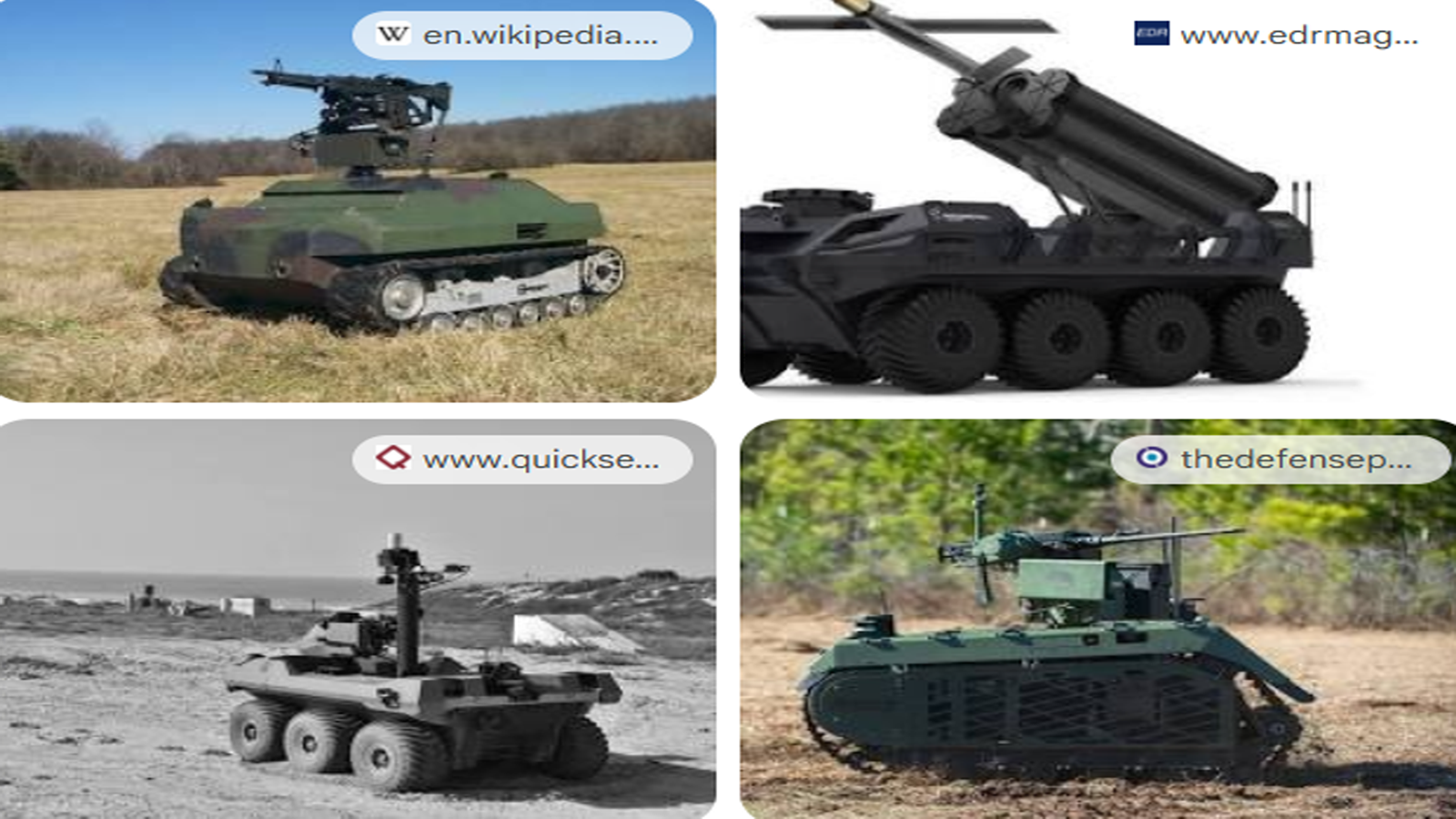
      The military robotics market is a high-growth sector focused on advanced unmanned systems to support, augment, or replace soldiers in various defense roles. This includes Unmanned Aerial Vehicles (UAVs/drones), Unmanned Ground Vehicles (UGVs), and Unmanned Marine Vehicles (UMVs/UUVs).

      The high-tech specifications revolve around autonomy, ruggedization, advanced sensor integration, and human-machine collaboration. The business prospectus is defined by significant market growth, rising defense budgets, and key segments like Intelligence, Surveillance, and Reconnaissance (ISR).

      High-Tech Specifications of Military Robotics

      Advanced military robots are defined by a convergence of cutting-edge technologies that enable operation in complex and contested environments.

      Specification CategoryKey High-Tech FeaturesExamples of Performance/Capability
      Autonomy & ControlAI-Driven Autonomy: Mission planning, real-time threat detection, and target recognition without continuous human input.Semi-autonomous: Human operators maintain decision authority while the robot handles navigation, obstacle avoidance, and task execution. Fully Autonomous (LAWS): Still heavily debated, but aims to select and engage targets independently.
      Sensor & Data FusionAdvanced Sensor Suites: High-resolution cameras, multi-spectral imaging (IR, thermal), LiDAR, and Chemical, Biological, Radiological, and Nuclear (CBRN) detectors.Real-Time Situational Awareness: Fusing data from multiple sensors to provide a comprehensive, 360° view of the battlespace to the operator or command center.
      Mobility & EnduranceAll-Terrain Capability: Ruggedized chassis, advanced track systems, or complex legged mechanisms (e.g., quadrupeds) for traversing stairs, slopes, and debris.Endurance: UAVs like the MQ-9 Reaper offer long-endurance flight (20+ hours). UGVs can have 7+ hour battery runtime or use hybrid propulsion for extended operational range.
      Communication & LinkSecure, Resilient Data Links: Encrypted, high-bandwidth communication for real-time video and control signals, with anti-jamming and Electronic Warfare (EW) shielding.LOS/NLOS Range: Line-of-sight (LOS) ranges often exceed 1000+ meters, with Non-Line-of-Sight (NLOS) capabilities using mesh networks or tethered fiber-optics.
      Payload & ManipulationHigh Lift Capacity & Dexterity: Robotic arms (manipulators) with human-like precision, haptic feedback, and significant lift strength.EOD/HAZMAT: Manipulator arms can lift over 100 lbs (45+ kg) near the chassis and perform delicate tasks like unzipping bags or handling explosive disruptors.
      SurvivabilityRuggedization & Environmental Sealing: Designed to operate in extreme temperatures and conditions (e.g., -20°C to +60°C) and be sealed against dust and water (e.g., IP66/IP67 rating).Self-Righting/Recovery: Ability for ground vehicles to autonomously self-right after a tip-over or for UAVs to manage system failures.

      Business Prospectus for Military Robotics

      The military robotics market is experiencing robust growth driven by the imperative to reduce risk to human personnel, modernize armed forces, and enhance operational efficiency.

      Market Size and Growth Forecast

      The global military robots market is a multi-billion dollar industry projected for substantial growth.

      • Market Size (2024/2025): The market size is estimated to be between USD 19.68 billion and USD 29.06 billion.
      • Projected Growth (CAGR): The market is forecast to grow at a Compound Annual Growth Rate (CAGR) of approximately 8.2% to 8.7% from 2025 through 2030 or 2032.
      • Forecasted Market Value (by 2030-2032): Projections anticipate the market will reach a value of USD 32.50 billion to USD 48.08 billion by the end of the forecast period.

      Key Market Drivers

      1. Force Protection and Casualty Reduction: The primary driver is the growing demand for unmanned systems to perform high-risk missions such as Explosive Ordnance Disposal (EOD), surveillance, and operations in CBRN-affected areas, thereby reducing human risk.
      2. Technological Advancements: Rapid advancements in Artificial Intelligence (AI), Machine Learning (ML), and sensor technologies are leading to more capable and autonomous systems.
      3. Military Modernization: Increased defense budgets globally, particularly in North America and the Asia-Pacific (APAC) region, are funding the procurement of cutting-edge robotic solutions.
      4. Enhanced Operational Efficiency: Robots provide greater speed, precision, and endurance for tasks like ISR (Intelligence, Surveillance, and Reconnaissance) and logistics.

      Segmentation and Opportunities

      SegmentDominant/Fastest Growing AreaKey Application
      By PlatformAirborne Robots (UAVs): Holds the largest market share (over 50%) due to versatile application in surveillance and precision strikes.Intelligence, Surveillance, Reconnaissance (ISR)
      By ApplicationCombat Support and ISR: ISR is currently the largest segment, while combat support is expected to witness the fastest growth.Logistics, Target Acquisition, Fire Support, EOD
      By RegionNorth America: Dominates the market share due to large defense spending and a mature industrial base. Asia-Pacific: Expected to be the fastest-growing region, driven by countries like China and India’s increasing defense investments.Strategic R&D and Procurement
      By OperationSemi-Autonomous: Holds a significant share as it balances advanced autonomous functions with necessary human oversight for critical decision-making.Complex missions requiring human-in-the-loop control.

      Major Industry Players

      The market is dominated by large defense contractors and specialized robotics companies, including Lockheed Martin Corporation, Northrop Grumman Corporation, BAE Systems, Thales Group, Elbit Systems, and specialized firms like and L3Harris Technologies.

      (Source)

      1. Market Research & Industry Reports (for Business Prospectus)

      • Grand View Research: Provided market size (USD 19.68 billion in 2024, CAGR 8.7% to USD 32.50 billion by 2030), regional analysis (North America dominance, APAC fastest growth), and segment analysis (Airborne highest share, ISR highest application share).
      • Fortune Business Insights: Referenced a market size projection (USD 64.13 billion by 2032 at 12.50% CAGR) and analysis of market drivers (AI integration, human augmentation).
      • MarketsandMarkets / Kings Research / Spherical Insights: Provided corroborating market figures (e.g., $18.20 billion in 2024, CAGR around 7.20% to 7.8%) and detailed segmentation by platform (UGV, UAV, UUV), application (EOD, ISR, Combat Support), and mode of operation (Semi-Autonomous, Autonomous).
      • Mordor Intelligence / Research Nester: Reinforced CAGR forecasts and provided detailed segment trends, such as the fastest-growing sub-segments (e.g., legged/bionic platforms, logistics, and EOD applications).

      2. Defense Contractor and Product Specifications (for High-Tech Specifications)

      • L3Harris Technologies: Provided technical data and operational specifications for advanced Explosive Ordnance Disposal (EOD) Unmanned Ground Vehicles (UGVs), such as the T4 and T7 systems (e.g., haptic feedback, lift capacity, battery runtime, IP ratings, and radio range).
      • Ghost Robotics / Standard Bots (as mentioned in the search results): Provided examples of specific robot specifications, such as all-weather operation, endurance, payload capacity, and mobility features of quadrupeds (e.g., Vision 60).
      • Defense News and Government Publications (e.g., DoD ManTech, Defence Equipment & Support): Cited information on real-world military deployments, strategic R&D focus (AI, sensor integration), and the overall strategic direction of military robotics.

      3. Academic and Strategic Analysis (for Autonomy and Trends)

      ResearchGate / Defense Policy Papers: Discussed the evolution towards autonomy, the role of AI and machine learning, and the conceptual frameworks for managing advanced unmanned systems. These provided the context for features like “AI-Driven Autonomy” and “Human-Machine Teaming.”

      Socko/Ghost

    2. NVIDIA DGX-1

      NVIDIA DGX-1

      The NVIDIA DGX-1 was a purpose-built system for deep learning and AI research, released in 2016 (Pascal-based) and later updated (Volta-based).1 It was essentially the world’s first “deep learning supercomputer in a box.”2

      1. NVIDIA DGX-1 Key Specifications

      The DGX-1 came in two main variants based on the GPU architecture: the initial Pascal (Tesla P100) version and the later, more powerful Volta (Tesla V100) version.3

      FeatureDGX-1 (Pascal – Tesla P100)DGX-1 (Volta – Tesla V100)
      GPUs8x NVIDIA Tesla P1008x NVIDIA Tesla V100
      Total Peak Performance (FP16)170 teraFLOPS1 petaFLOPS (1,000 teraFLOPS)
      Total GPU Memory (HBM2)128 GB (16 GB per GPU)128 GB or 256 GB (16 GB or 32 GB per GPU)
      GPU InterconnectNVIDIA NVLink (hybrid cube-mesh network)NVIDIA NVLink (300 GB/s inter-GPU bandwidth)
      CPUDual 20-Core Intel Xeon E5-2698 v4 2.2 GHzDual 20-Core Intel Xeon E5-2698 v4 2.2 GHz
      System Memory (RAM)512 GB DDR4 LRDIMM512 GB DDR4 LRDIMM
      Storage4x 1.92 TB SSD RAID 04x 1.92 TB SSD RAID 0
      NetworkDual 10 GbE, 4 IB EDRDual 10 GbE, 4 IB EDR
      Form Factor3U Rackmount Chassis3U Rackmount Chassis
      SoftwarePre-integrated Deep Learning Software Stack (CUDA, cuDNN, major frameworks, NVIDIA DIGITS, NVIDIA Docker)Same pre-integrated stack, optimized for V100 Tensor Cores

      2. Business Prospectus and Target Market

      The DGX-1’s business strategy was to provide a turnkey, high-performance platform specifically optimized for the demanding computational needs of Deep Learning (DL) and Artificial Intelligence (AI) training, shifting the focus from custom server building to immediate productivity.

      Core Value Proposition

      The DGX-1 was marketed as the fastest path to deep learning, offering:

      • Revolutionary Performance: Delivering the computational power of many racks of conventional servers in a single box, dramatically accelerating model training time (up to 96X faster in some benchmarks compared to CPU-only servers).4
      • Effortless Deployment: It was a fully integrated system with hardware, deep learning software, and development tools pre-installed and optimized. This “plug-and-play” simplicity was a significant selling point, saving data scientists months of integration and configuration effort.
      • End-to-End AI Solution: It included the NVIDIA Deep Learning Software Stack (frameworks, libraries like cuDNN and NCCL, and tools like NVIDIA Docker), ensuring the hardware was utilized to its maximum potential.5
      • Enterprise Support: NVIDIA offered an enterprise-grade support model (DGXperts) to help customers maximize productivity and resolve critical issues, appealing to large companies and research institutions.6

      Target Market

      The primary customers for the DGX-1 were organizations leading the charge in AI and deep learning:

      • AI and Data Science Research Institutions: Universities and government labs requiring immense compute power for cutting-edge research.7
      • Enterprise AI Development: Fortune 1000 companies across various sectors (tech, automotive, healthcare, finance, consumer internet) that were building, training, and deploying their own production-grade AI models.
      • Cloud Service Providers (CSPs): Companies offering GPU-accelerated cloud instances for AI workloads.
      • High-Performance Computing (HPC): Organizations needing fast computation for accelerated analytics, scientific visualization, and large-scale simulation.8

      In essence, the DGX-1 established NVIDIA’s brand as the leader in providing AI Infrastructure for the Enterpr

      (Source)

      en.wikipedia.org/Nvidia DGX – Wikipedia: The product line is intended to bridge the gap between GPUs and AI accelerators using specific features for deep learning workloads.

      2. NVIDIA Newsroom/nvidianews.nvidia.com: NVIDIA Launches World’s First Deep Learning Supercomputer; NVIDIA DGX-1 Delivers Deep Learning Throughput of 250 Servers to Meet Massive Computing Demands of Artificial Intelligence. April 5, 2016.

      3. en.wikipedia.org/Nvidia DGX – Wikipedia: # Accelerators Model | Architecture | Memory clock — | — | — P100 | Pascal | 1.4 Gbit/s HBM2 V100 16GB | Volta | 1.75 Gbit/s HBM2 V100 32GB | Volta

      4. xyserver.cn/NVIDIA DGX-1: With the computing capacity of 25 racks of conventional servers in a single system that integrates the latest NVIDIA GPU technology with the world’s most

      5. xyserver.cn/NVIDIA DGX-1: It includes access to today’s most popular deep learning frameworks, NVIDIA DIGITS ™ deep learning training application, third-party accelerated solutions,

      6. xyserver.cn/NVIDIA DGX-1: With today’s rapidly evolving open source software and the complexity of libraries, drivers, and hardware, it’s good to know that NVIDIA’s enterprise grade …

      7. Engadget/www.engadget.com: NVIDIA’s insane DGX-1 is a computer tailor-made for deep learning – Engadget

      As for who might be buying these computers, NVIDIA is positioning this machine for serious research purposes — the first machines off of NVIDIA’s assembly …

      8. ResearchGate/www.researchgate.net: Nvidia DGX-1 GPU interconnect [1]. – ResearchGate; High-Performance Computing (HPC) workloads generate large volumes of data at high-frequency during their execution, which needs to be captured concurrently at …

      Socko/Ghost

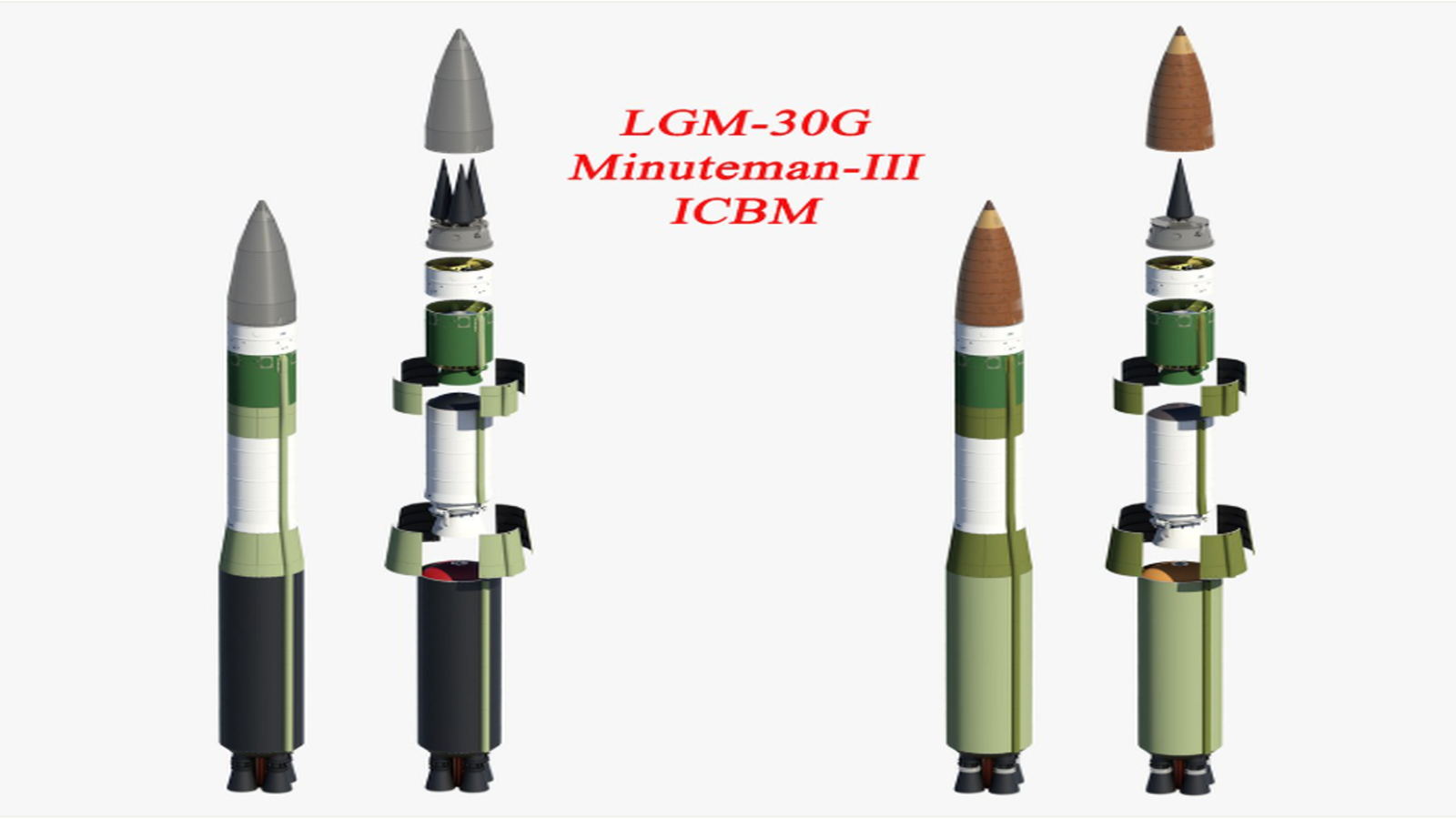
    3. LGM-30G Minuteman III – Civil Tech

      LGM-30G Minuteman III – Civil Tech

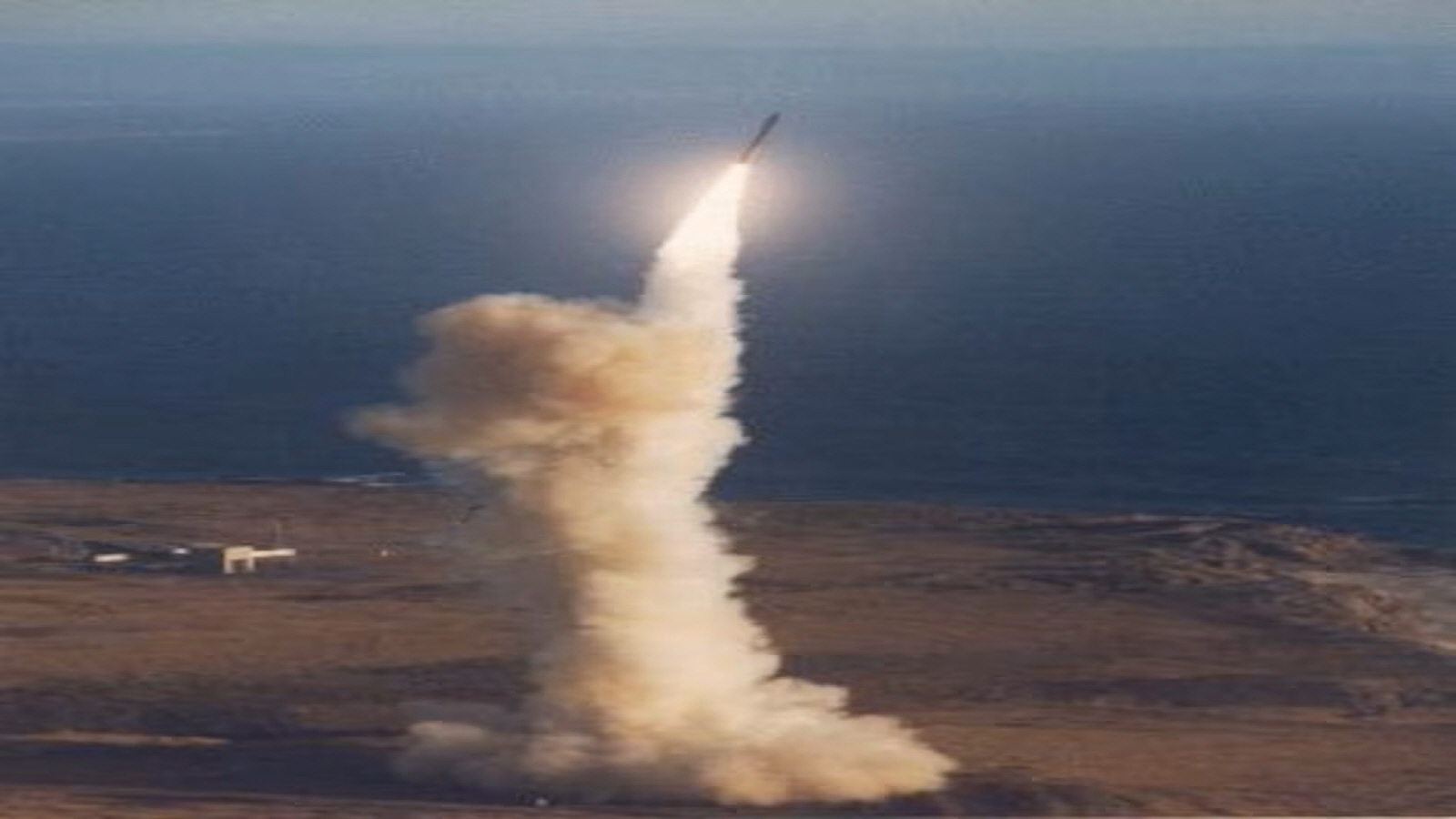
      The LGM-30G Minuteman III is a three-stage, silo-launched, solid-propellant intercontinental ballistic missile that has been continually modernized since first deployed around 1970. It uses a hardened silo/command network, multi-stage solid propulsion, an onboard inertial guidance/computer system, and robust telemetry/command interfaces. Afghanistan Military+1

      Key subsystems

      The specs are framed for civil uses (satellite launch, sounding rockets, resilient infrastructure, precision navigation, industrial composites, and secure telemetry).

      1) Inertial guidance / guidance computer (onboard navigation & control)

      What it is (concept): self-contained navigation using high-precision accelerometers/gyros and an onboard computer to compute position/attitude without external references. Used in Minuteman for accurate long-range guidance. airandspace.si.edu+1

      Civil applications:

      • spacecraft/launcher stage guidance, sounding rockets, and small satellite attitude control.
      • high-reliability inertial units for aircraft, maritime navigation, and autonomous heavy-equipment where GNSS may be denied.
      • precision surveying and geodesy as an INS supplement to GNSS (dead-reckoning bridging).

      Example civilian spec template (safe, non-weapon):

      • Performance class: tactical INS (drift < 0.1°/hr) vs navigation INS (drift < 1°/hr) vs MEMS grade (drift measured in °/hr or m/s²).
      • Position drift (dead-reckoning): target < 1 km over 1 hour (MEMS) down to < 10 m over 1 hour (high-end tactical).
      • Update interfaces: standard serial/CAN/ARINC/SpaceWire + NMEA/ROS bridging.
      • Environmental: operate −40°C to +70°C, shock to 300 g (packaged), vibration 5–2000 Hz.
      • Reliability: MTBF >10,000 hours; ECC/CRC checked navigation logs.
      • Certification targets: DO-178/ED-12 compatible software practices for safety-critical avionics; DO-160 environmental categories for hardware.

      2) Rugged / radiation-hardened embedded computing & control (guidance computer concept)

      What it is: hardened realtime computer(s) and flight software that run guidance, stage sequencing, health monitoring and telemetry.

      Civil applications:

      • small satellite flight computers, high-reliability industrial controllers (nuclear, mining), and edge controllers for remote/hardened infrastructure (underground data centers, remote launch sites).
      • fault-tolerant control systems for unmanned ships/aircraft.

      Example civilian spec template:

      • CPU class: space-qualified or rad-tolerant single board computer (or COTS with fault-tolerance).
      • RTOS with determinism: 10 ms worst-case latency (as design target).
      • Interfaces: MIL-STD-1553 / CAN / UART / Ethernet (GigE/IP) for telemetry and command.
      • Watchdog/failover: hardware watchdog, dual-redundant power domains, cyclic health logs.
      • Software assurance: versioned firmware, signed updates, rollback protection.

      3) Solid-propellant motor & advanced composite motor cases (materials / manufacturing)

      What it is (concept): high-strength, lightweight motor casings and solid propellant technology historically pushed materials and filament-wound composites.

      Civil applications:

      • sounding rockets and small orbital launch vehicles (first/second stage casings and structural components).
      • composite pressure vessels, high-strength tubes and industrial rocket-motor casings for civil aerospace.
      • high-temperature composite structures in turbomachinery and manufacturing.

      Example civilian spec template (safe):

      • Structural materials: filament-wound carbon-fiber/epoxy composite pressure vessels; design ultimate strength > design pressure × safety factor 2–3.
      • Dimensional/weight targets: optimize for high stiffness-to-mass for aerospace fairings or stage structures.
      • Manufacturing controls: autoclave curing records, NDT (ultrasound/thermography), traceable resin/fiber batches.
      • Certification: meet relevant aerospace structural standards (e.g., ECSS / NASA / ASME for pressure vessels where applicable).

      4) Telemetry, command & secure hardened communications

      What it is: resilient command & control links and telemetry for status monitoring and remote control from hardened command centers.

      Civil applications:

      • secure remote monitoring of critical infrastructure (power grids, remote facilities).
      • telemetry chains for launch ranges, spaceports, and long-duration unmanned platforms.
      • resilient emergency communications for disaster response.

      Example civilian spec template:

      • Bandwidth: scalable telemetry (telemetry heartbeat at 1–10 Hz; burst telemetry up to several Mbps depending on link).
      • Security: mutual authentication, signed command messages, encrypted telemetry (AES-GCM or similar), role-based access.
      • Redundancy: primary + backup comm links (fiber, satellite, radio).
      • Hardened routing: physically separated cabling, redundant power, EMP filtering where required for critical infrastructure.

      5) Hardened silo / hardened infrastructure concepts

      What it is: hardened, protected facilities and distributed remote control centers designed for survivability and long-term readiness.

      Civil applications:

      • underground data centers, disaster-resilient storage sites, emergency operations centers, or secure archives.
      • design of resilient facilities for utilities and emergency response.

      Example civilian spec template:

      • Physical protection: blast-resistant design principles where relevant, redundant power (N+1 UPS + generator), independent cooling loops.
      • Connectivity: dual independent fiber routes; local caching and air-gapped backups for critical data.
      • Environmental controls: HVAC design to maintain 18–27°C, humidity 40–60% with filtration.
      • Accessibility: secure but maintainable access for authorized personnel.

      6) Systems engineering, lifecycle modernization & sustainment

      What it is: long-term engineering programs to upgrade avionics, power, and facilities over decades.

      Civil applications:

      • large technical programs (spaceport modernization, public transport control centers, national infrastructure projects) benefit from modular upgrade paths and obsolescence management.

      Example civilian spec template:

      • Modular avionics/software architecture (plug-and-play replaceable LRUs).
      • Obsolescence plan: 10-year part sourcing, COTS refresh windows every 3–5 years, formal configuration management.
      • Cybersecurity baseline: continuous monitoring, CVE process, periodic pen tests.
      • Practical example civilian projects that can responsibly reuse the concepts
      • Small launch vehicle program: use composite motor cases, high-reliability INS guidance, and rugged flight computer standards to build a sounding-rocket or small orbital launch vehicle under aerospace regulations and payload safety rules.
      • Resilient subterranean data center: apply hardened-facility design, redundant comms, and environmental controls for disaster-resilient hosting.
      • GNSS-denied navigation system: combine a high-grade INS with sensor fusion (odometry, lidar, imaging) for mining/autonomous vehicles.
      • Secure telemetry network for remote science stations: hardened comms, signed telemetry, redundant links.

      Practical example civilian projects that can responsibly reuse the concepts

      • Small launch vehicle program: use composite motor cases, high-reliability INS guidance, and rugged flight computer standards to build a sounding-rocket or small orbital launch vehicle under aerospace regulations and payload safety rules.
      • Resilient subterranean data center: apply hardened-facility design, redundant comms, and environmental controls for disaster-resilient hosting.
      • GNSS-denied navigation system: combine a high-grade INS with sensor fusion (odometry, lidar, imaging) for mining/autonomous vehicles.
      • Secure telemetry network for remote science stations: hardened comms, signed telemetry, redundant links.

      Sources & further reading (public & non-actionable)

      • USAF fact sheet, LGM-30G Minuteman III (overview). Afghanistan Military
      • CSIS / Missile Threat summary (public high-level specs like length, mass, propulsion class). Missile Threat
      • Smithsonian / Air & Space Museum descriptions of the Minuteman guidance and motor artifacts (guidance / avionics concept). airandspace.si.edu+1
      • Industry paper on composite rocket motor cases (materials, manufacturing trends) for civilian composites background. gd-ots.com

      Socko/Ghost