Tag: Space Economy

  • NASA’s JPL Contract Competition Signals a Shift in Space Research Management

    NASA’s JPL Contract Competition Signals a Shift in Space Research Management

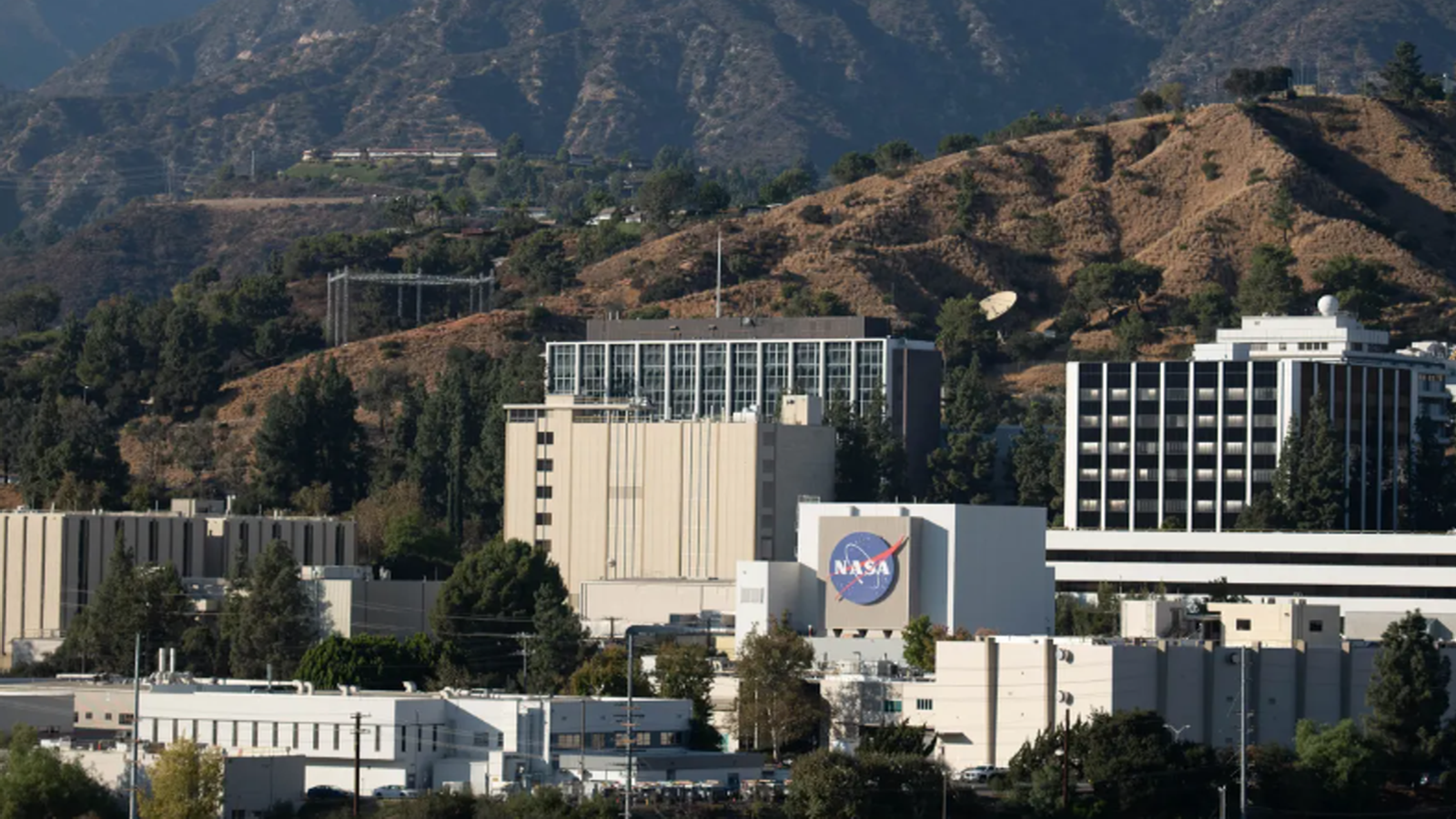
    NASA’s decision to compete the next contract for managing and operating the Jet Propulsion Laboratory is more than an administrative procurement notice. It is a signal that even America’s most iconic space research institutions are being pulled into a new era of competition, efficiency pressure, and space-economy governance.

    NASA announced on May 22, 2026 that it plans to compete the next management and operations contract for the Jet Propulsion Laboratory in Southern California. JPL is a federally funded research and development center, or FFRDC, and NASA said the competition is intended to ensure accountability and strong value for U.S. taxpayers.

    The institutional history makes the decision significant. Caltech has managed JPL since the laboratory’s inception in the 1930s, and NASA states that previous management and operations contracts have been awarded sole source to Caltech since the facility was transferred from the U.S. Army to NASA in 1958.

    For SockoPower, the signal is not that JPL’s scientific role is suddenly in doubt. The signal is that NASA is testing whether the management model for a major space research center should remain insulated from competition or be opened to alternative operating approaches.

    Shop strapless bras in a variety of sizes like 32AA, 34DD, and more. Find stick on bras, bras with removable straps \& more to go with open back dresses.

    NASA’s own language points to the larger shift. The agency said the rapid growth of the U.S. space economy indicates there may now be a viable competitive market for programmatic and institutional elements of FFRDC operations. That is the core industrial signal: the private and institutional space ecosystem may now be deep enough to challenge long-standing management assumptions.

    This matters because JPL is not a small support office. It is one of the central institutions in U.S. robotic space exploration, mission engineering, planetary science, deep-space systems, and advanced technical execution. A competition for its management structure is therefore also a test of how NASA thinks about mission performance, cost control, innovation, and operational governance.

    The current Caltech contract began on October 1, 2018 and runs through September 30, 2028. NASA says the contract has a potential maximum value of $30 billion if all options are exercised. Starting the procurement process now gives the agency time to run a full competition and award cycle while maintaining continuity for ongoing missions and laboratory operations.

    That continuity point is important. NASA is not describing this as a shutdown, a mission cancellation, or a sudden break with JPL’s scientific legacy. It is presenting the move as a procurement and governance decision aimed at evaluating alternative management approaches, mission performance, innovation, cost efficiency, and operational efficiency.

    The broader space-economy implication is clear. NASA’s legacy research centers and FFRDCs are now operating in an environment where commercial space companies, universities, systems integrators, and technical service providers have expanded significantly. That does not mean any alternative manager can easily replace Caltech’s institutional knowledge. It does mean NASA wants to test the market rather than assume the old structure remains the only viable model.

    For Strategic Reports, this is a governance story with industrial consequences. Mission outcomes depend not only on spacecraft design, launch windows, scientific instruments, and engineering talent. They also depend on contract structures, management incentives, procurement rules, cost discipline, institutional culture, and the ability to execute complex programs without losing technical depth.

    The decision also fits a larger trend in space policy. Public space agencies are increasingly under pressure to move faster, operate more efficiently, and draw more value from a commercial ecosystem that did not exist at today’s scale when older management models were created. NASA’s JPL decision puts that pressure directly on one of the agency’s most prestigious institutions.

    The narrow takeaway is this: NASA is not merely recompeting a contract. It is testing whether the management of elite space research infrastructure should evolve with the commercial space economy. If the competition results in a new management model, it could become a precedent for how government science and engineering centers are governed in a more competitive space-industrial environment.

    Original source

    Why It Matters

    This item matters because JPL’s management contract sits at the intersection of space science, procurement, institutional governance, and the commercial space economy. NASA’s decision to compete the next JPL contract suggests that even long-standing research-center management models may be reassessed for mission performance, innovation, cost efficiency, and operational accountability.

    SockoPower Takeaway

    The JPL contract competition is not just a Caltech story. It is a space-industrial governance signal. As the U.S. space economy expands, NASA appears more willing to test whether legacy operating models still deliver the best mix of technical depth, speed, accountability, and cost performance.

    What to Watch Next

    Watch whether Caltech retains the JPL management contract or whether a new institutional or industry-led team emerges.

    Watch how NASA defines the competition criteria for mission performance, innovation, cost efficiency, and operational continuity.

    Watch whether private aerospace firms, universities, or consortia position themselves for parts of the FFRDC management opportunity.

    Watch how the competition affects JPL’s ongoing mission portfolio, workforce continuity, and long-term technical culture.

    Watch whether NASA applies similar competitive logic to other major research, engineering, or mission-support institutions.

    References

    NASA, “NASA to Compete Contract for Jet Propulsion Laboratory Management,” May 22, 2026.

    Socko/Ghost
  • From Robotic Grippers to Space Welding: NASA’s SBIR/STTR Awards Map the Next Technology Chain

    From Robotic Grippers to Space Welding: NASA’s SBIR/STTR Awards Map the Next Technology Chain

    Source Record

    NASA’s April 21, 2026 SBIR/STTR announcement shows how space supply chains are built long before they appear as finished spacecraft, lunar systems, or mission hardware. By backing more than 30 small businesses working on in-space manufacturing, advanced batteries, propulsion, robotic gripping, in-space repair, storm tracking, and AI-enabled health monitoring, NASA is not simply funding isolated prototypes. It is cultivating the early technical nodes that can later feed into mission integration, commercial space services, and Earth-facing industrial applications.

    NASA’s April 21 announcement is not simply a small-business funding notice. It is a snapshot of how the space technology supply chain is formed before it becomes visible as a major mission, spacecraft, or industrial program.

    The agency announced the selection of more than 30 companies through its Small Business Innovation Research and Small Business Technology Transfer program, investing approximately $16.3 million in seed funding for technology solutions intended to support NASA missions and the broader space economy. NASA described the awards as part of its longstanding support for American industry.

    For SockoPower’s Chain category, the key point is the structure behind the awards. These are not finished systems. They are early-stage technologies that may later become parts of larger aerospace production chains: materials, sensors, robotics, software, propulsion tools, health-monitoring systems, and mission-support capabilities. The industrial value lies in how NASA uses small firms and research partnerships to mature technologies before they reach full-scale deployment.

    The awards come through two paths. NASA’s SBIR Ignite initiative focuses on commercialization and gives small businesses a path to market their technologies beyond potential NASA use. In this round, 15 firms from 10 states were selected for SBIR Ignite Phase I contracts of up to $150,000 each. NASA also announced STTR Phase II awards, involving small businesses partnered with research institutions, with 17 contracts valued at up to $850,000 each.

    That distinction matters. SBIR Ignite points toward commercial pull. STTR points toward research transfer between companies and institutions. Together, they show a supply-chain model in which NASA does not only buy mature systems from prime contractors. It helps cultivate technical nodes that may later feed into missions, defense-adjacent aerospace markets, commercial space services, and Earth-facing applications.

    Shop strapless bras in a variety of sizes like 32AA, 34DD, and more. Find stick on bras, bras with removable straps \& more to go with open back dresses.

    The selected technology areas are especially relevant to industrial depth. NASA identified award areas including in-space manufacturing, advanced battery technologies, lunar landings, and advanced propulsion for air and spacecraft. These are not isolated science topics. They are enabling layers for long-cycle aerospace production, mission integration, and future operations beyond low Earth orbit.

    The examples in NASA’s announcement make the chain visible. Nanoscale Labs received an SBIR Ignite Phase I award for bio-inspired adhesive materials that could help robots grip objects in space, where traditional vacuum grippers fail and debris or spacecraft components have irregular shapes. QuesTek Innovations received an SBIR Ignite Phase I award for a simulation toolkit designed to predict how welded materials behave in space, a challenge tied to future in-space repair and replacement work.

    NASA also highlighted ASTER Labs, which received an STTR Phase II award for the STORM Module, a software system intended to identify, track, and predict lightning-storm movement in real time from low Earth orbit. NASA noted that the technology may also be adapted to track wildfires or floods. That example connects space-based sensing directly to Earth applications, including severe-weather forecasting, disaster response, and risk monitoring.

    Another example is Tietronix Software, which is developing a portable monitoring platform with sensors, smartphone apps, AI, and extended reality tools to support astronaut health. NASA said the system could eventually support medical assistance for patients in remote environments on Earth. This is a classic dual-use pattern in space technology: a tool developed for extreme mission conditions can later migrate into terrestrial healthcare, remote operations, or field-support systems.

    The broader program shift is also important. NASA’s SBIR/STTR program is moving to a Broad Agency Announcement framework for 2026, replacing a more traditional annual solicitation cycle with phased appendix releases throughout the year. NASA says the shift is intended to make the program more flexible and responsive to changing mission priorities and commercial-market developments.

    That change is highly relevant to the supply chain. A more flexible solicitation structure allows NASA to seek technologies as needs emerge, rather than only through a fixed annual window. In practical terms, this can make small-business participation more continuous and better aligned with mission timing, technology gaps, and market movement.

    The narrow strategic meaning of this NASA item is therefore clear. This is not a story about one grant round. It is a story about how aerospace supply chains are seeded. Before a technology becomes a subsystem, before a subsystem becomes part of a mission, and before a mission becomes a market, early funding programs like SBIR and STTR help determine which technical pathways survive.

    For SockoPower, the signal is not the $16.3 million alone. The signal is the portfolio: robotic gripping, space welding, storm tracking, AI-enabled health monitoring, in-space manufacturing, advanced batteries, lunar landing systems, and propulsion. These are small technical pieces, but they point to the larger industrial architecture NASA is trying to build around future space and Earth applications.

    Original source

    Why It Matters

    This item highlights how NASA uses small-business funding to seed the industrial layers required for future aerospace systems. The awards point to technologies that support robotic operations, in-space repair, sensing, medical monitoring, advanced propulsion, lunar operations, and Earth-facing disaster intelligence. For the Chain category, the importance lies in how early-stage companies become technical nodes in the broader space supply chain.


    SockoPower Takeaway

    NASA’s SBIR/STTR awards show that space supply chains are not built only by large prime contractors. They begin earlier, through small firms, research partnerships, seed funding, prototypes, and mission-specific technical gaps. The companies selected in this round represent the lower layers of a future industrial stack: materials, software, sensors, robotics, health systems, and operational tools.


    What to Watch Next

    Watch which SBIR Ignite Phase I projects move toward commercialization beyond NASA missions.

    Watch which STTR Phase II technologies demonstrate enough maturity to enter larger mission or commercial pipelines.

    Watch how NASA’s new Broad Agency Announcement framework changes the rhythm of small-business participation in space technology development.

    Watch whether technologies in robotics, in-space repair, Earth sensing, and AI-enabled monitoring attract follow-on investment from defense, commercial space, healthcare, or disaster-response markets.

    References

    NASA, “NASA Invests in Small Businesses Innovating for Space and Earth,” April 21, 2026.
    NASA, “Small Business Innovation Research / Small Business Technology Transfer Program.”
    NASA, “NASA SBIR/STTR Program — Program Year 2026 Information Hub.”

    Socko/Ghost