Tag: signal-feed

  • Supply Chains as Escalation VectorsHow Logistics, Materials, and Dependencies Shape Modern Conflict

    Supply Chains as Escalation VectorsHow Logistics, Materials, and Dependencies Shape Modern Conflict

    Modern conflicts rarely begin with a battlefield strike.
    They begin with friction.

    Delays in components.
    Restrictions in transit.
    Uncertainty in sourcing.

    Supply chains have become active escalation vectors—not passive background systems.

    From Efficiency to Vulnerability

    For decades, global supply chains were optimized for cost and efficiency.
    That optimization produced a new weakness: dependency density.

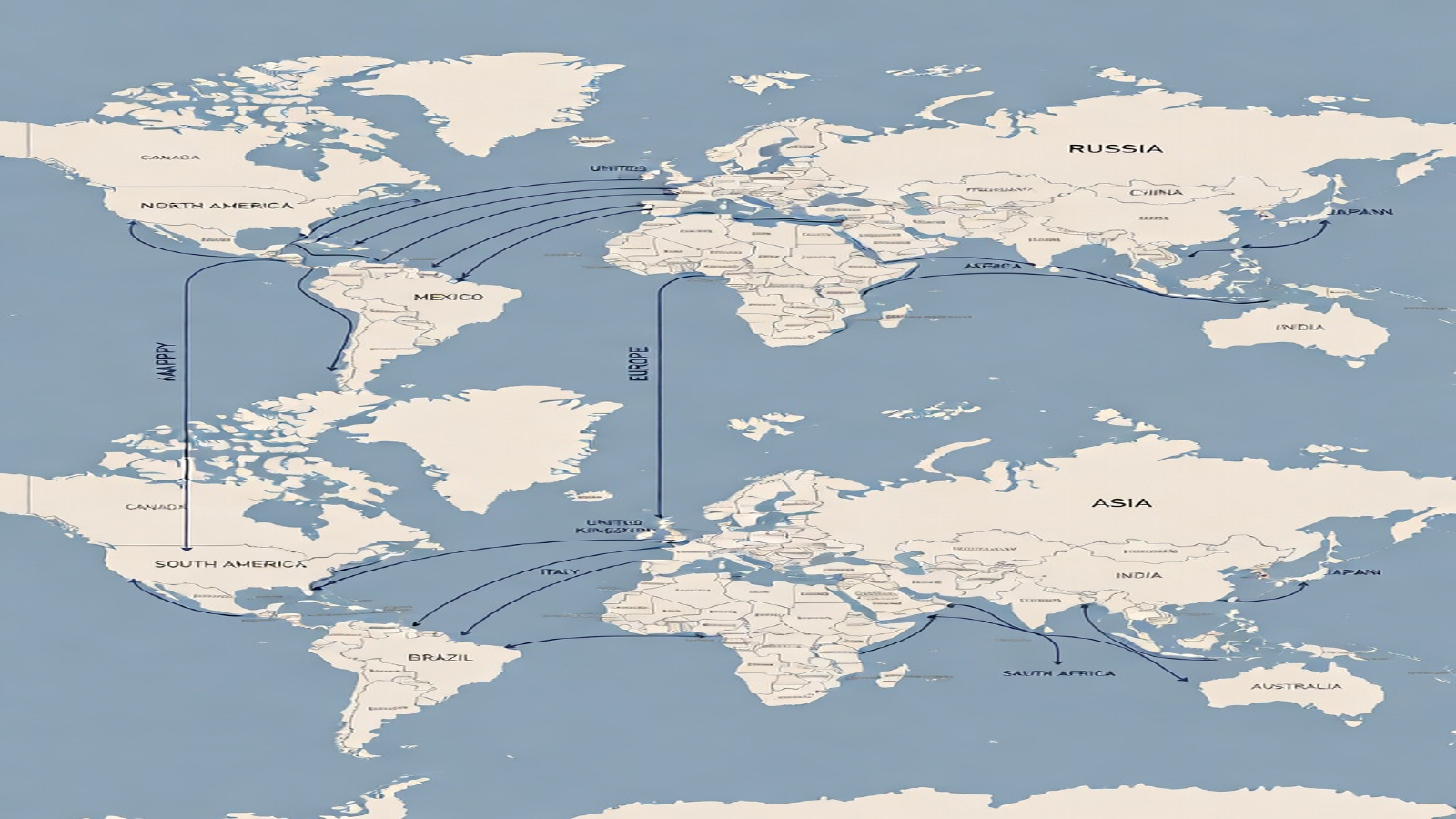
    Critical technologies now rely on narrow sets of suppliers, routes, and processing nodes.
    When these nodes are stressed, entire systems slow down.

    In modern conflict, slowdown is leverage.

    Chokepoints Without Missiles

    Escalation no longer requires kinetic strikes.

    Pressure can be applied through:

    • Export controls and licensing delays
    • Logistics bottlenecks and port congestion
    • Insurance repricing and freight denial
    • Energy and materials access restrictions

    These actions operate below traditional thresholds of war, yet they produce strategic effects.

    Semiconductors, Energy, and Dual-Use Chains

    Military capability is increasingly built on civilian supply chains.

    Advanced chips, specialty materials, cooling systems, and precision components serve both markets simultaneously.

    This dual-use reality creates a dilemma:

    Targeting the supply chain affects civilian economies and military readiness at the same time.

    The boundary between economic pressure and military escalation dissolves.

    Supply Chains as Time Weapons

    Supply disruption rarely causes immediate failure.
    Its power lies in time.

    Delays accumulate.
    Maintenance cycles slip.
    Readiness erodes quietly.

    By the time impact becomes visible, strategic options have already narrowed.

    Supply chains function as slow-acting weapons.

    Capital and Pre-Positioned Escalation

    Investment decisions determine where resilience exists—and where it does not.

    • Redundant suppliers
    • Strategic stockpiles
    • Regionalized manufacturing
    • Logistics diversification

    These choices are made years before conflict.
    When crisis arrives, capital allocation becomes escalation posture.

    The Signal–Capital–Chain Loop

    Supply chains complete the strategic loop.

    Signal generates demand for compute and energy.
    Capital finances infrastructure and capacity.
    Chain delivers—or withholds—physical reality.

    Break any link, and the loop falters.

    Conclusion

    Modern escalation is no longer defined solely by force.
    It is defined by control over continuity.

    Supply chains decide:

    • How long systems endure
    • How quickly recovery occurs
    • How credible deterrence remains

    In contemporary conflict environments,
    logistics is leverage,
    dependency is exposure,
    and resilience is power.

    Socko/Ghost
  • Energy Load & Data Centers as Hidden Military Infrastructure

    Energy Load & Data Centers as Hidden Military Infrastructure

    Wars are not powered by weapons alone.
    They are powered by electricity.

    As warfare becomes increasingly compute-driven, energy availability and data center capacity have emerged as silent determinants of military effectiveness.

    Energy Is the First Constraint

    Every satellite downlink, ISR fusion node, AI model, and command system depends on uninterrupted power.

    Modern military operations now face a basic but decisive question:

    Can the grid sustain the load when it matters most?

    Energy scarcity does not disable weapons directly.
    It slows decision-making, increases latency, and degrades coordination — often before a single shot is fired.

    Data Centers as Strategic Infrastructure

    Data centers are no longer commercial back-end facilities.
    They function as operational hubs for:

    • ISR data fusion
    • AI-enabled targeting analysis
    • Command-and-control redundancy
    • Coalition information sharing

    In practice, this makes data centers indirect military assets, even when privately owned and civilian-operated.

    The Fragility of Concentration

    Compute infrastructure is geographically concentrated.

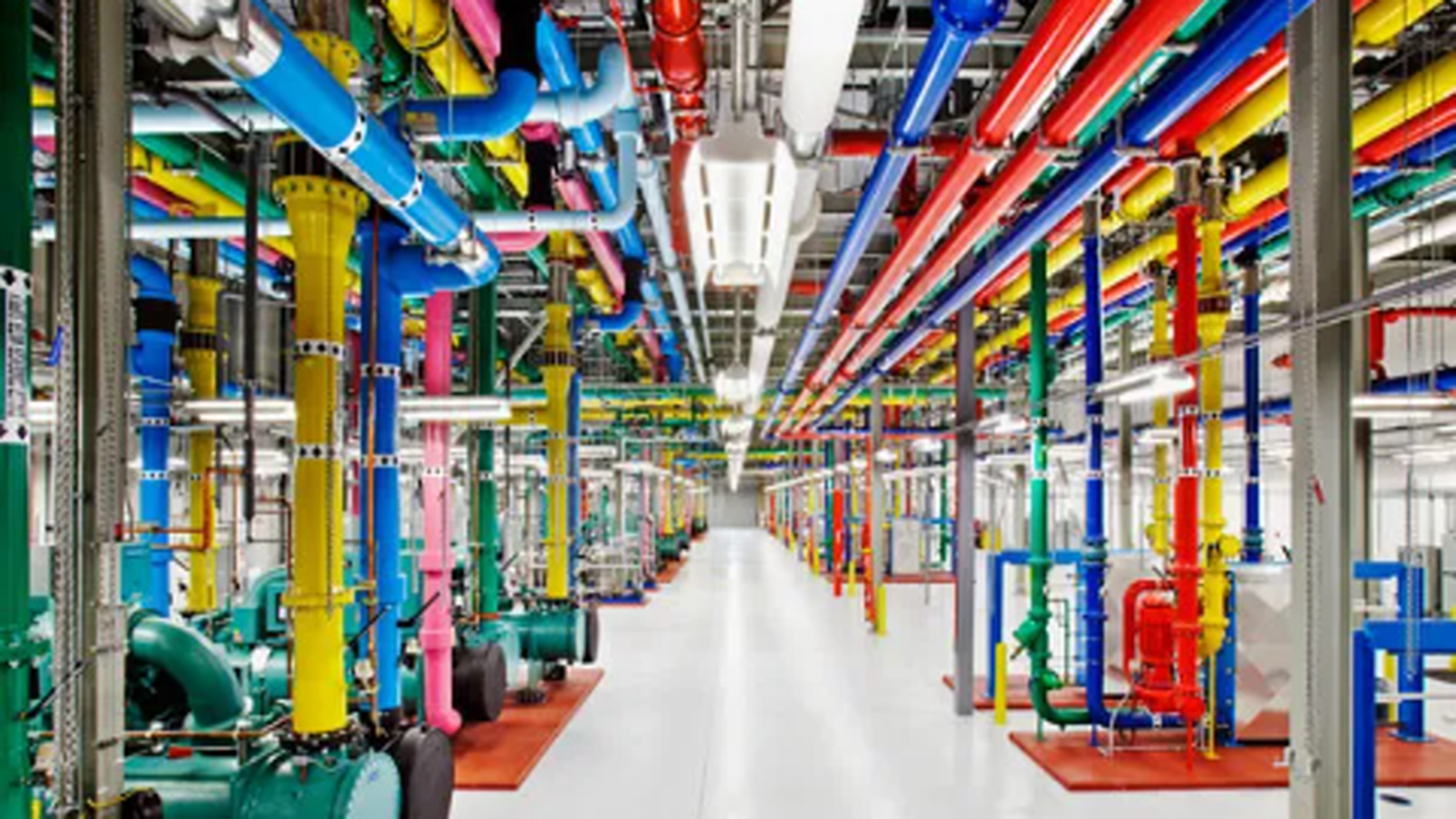
    Clusters of hyperscale data centers depend on:

    • Regional power grids
    • Substations and transformers
    • Cooling water access
    • Fiber and undersea cable connectivity

    Disruption to any one of these inputs can ripple across military and civilian systems simultaneously.

    This creates a new form of vulnerability:
    infrastructure coupling risk.

    Energy as an Escalation Lever

    Energy infrastructure offers a tempting escalation tool.

    Rather than striking military targets directly, adversaries may apply pressure through:

    • Grid instability
    • Energy pricing shocks
    • Fuel supply disruption
    • Cyber operations against energy management systems

    These actions fall below traditional thresholds of armed conflict while producing strategic effects.

    Capital Builds the Battlefield

    As with compute and satellites, much of today’s energy and data center infrastructure is financed by private capital.

    Investment decisions determine:

    • Where compute capacity grows
    • Which regions gain resilience
    • Which systems receive redundancy

    In effect, capital allocation increasingly pre-configures the battlespace.

    Energy, Compute, and the Speed of War

    Energy is not simply a resource.
    It defines the tempo of conflict.

    High energy availability enables:

    • Faster ISR cycles
    • Continuous AI inference
    • Persistent command networks

    Low energy availability forces prioritization, delay, and degradation.

    Speed favors deterrence.
    Delay invites escalation.

    Signal–Capital–Chain Loop Perspective

    Energy sits at the base of the strategic loop.

    Signal — data generation requires power
    Capital — infrastructure investment shapes resilience
    Chain — fuel, grids, cooling, and logistics enable continuity

    Control the energy layer, and the rest of the system follows.

    Conclusion

    The next wars will not only be fought over territory or technology.
    They will be fought over energy stability and compute continuity.

    Data centers are no longer invisible.
    Power grids are no longer neutral.

    In space- and compute-enabled warfare,
    energy is strategy,
    and infrastructure is deterrence.

    Socko/Ghost

  • Semiconductors & Compute Allocation in Space-Enabled Warfare

    Semiconductors & Compute Allocation in Space-Enabled Warfare

    Modern warfare no longer begins on the battlefield.
    It begins inside data pipelines, compute queues, and semiconductor fabs.

    In space-enabled conflict environments, the decisive advantage is not the number of platforms deployed, but how fast information is processed, fused, and acted upon.

    The New Center of Gravity: Compute

    Low Earth Orbit satellites, ISR sensors, drones, and missile systems all generate massive volumes of data.
    What matters is not collection alone, but compute allocation:

    Who gets priority access to processing power?
    Which data streams are fused in real time?
    And whose decision loop closes first?

    Compute is now a strategic resource, not a background utility.

    Semiconductors as Strategic Chokepoints

    Advanced warfare systems depend on a narrow set of semiconductor capabilities:

    • Leading-edge logic chips
    • High-bandwidth memory
    • Radiation-hardened components
    • Advanced packaging and interconnects

    These are concentrated across a fragile global supply chain spanning a small number of firms, fabs, and geographic nodes.

    Disruption at any point — fabrication, packaging, logistics, or export control — directly impacts military readiness and escalation stability.

    Space + Compute = Decision-Speed Dominance

    Space-based ISR does not create advantage by itself.
    Advantage emerges only when space, compute, and command networks operate as a single system.

    This integration enables:

    • Near-continuous target refresh cycles
    • Real-time sensor-to-shooter loops
    • Distributed command resilience
    • Rapid escalation management

    The faster the loop, the higher the deterrence credibility.

    Capital Shapes the Battlespace

    Unlike legacy defense systems, much of today’s compute infrastructure is financed and operated by private capital.

    Cloud providers, chip designers, satellite operators, and data center networks are now embedded in national security architectures — often ahead of formal doctrine.

    This creates a new reality:

    Capital allocation decisions increasingly shape military capability.

    The Strategic Risk

    Compute scarcity introduces a new form of competition.

    In crisis scenarios, prioritization of compute resources may determine:

    • Which allies receive real-time intelligence
    • Which systems experience latency
    • Which decisions arrive too late

    This silent competition rarely appears in public discourse, yet it defines modern escalation dynamics.

    Signal–Capital–Chain Loop Perspective

    Space-enabled warfare is not a single-domain problem.

    It is a loop:

    Signal — continuous ISR and data generation
    Capital — private investment enabling infrastructure
    Chain — semiconductors, energy, logistics, and networks

    Control of this loop determines strategic decision velocity.

    Conclusion

    The future of warfare will not be decided solely by weapons platforms.
    It will be decided by who controls compute, semiconductors, and the speed of decision-making.

    In space-enabled conflict environments,
    compute is deterrence,
    semiconductors are leverage,
    and delay is vulnerability.

    Socko/Ghost

  • Commercial Space as a Strategic Asset Why LEO Constellations Now Shape Escalation Scenarios

    Commercial Space as a Strategic Asset Why LEO Constellations Now Shape Escalation Scenarios

    01 · Problem Statement

    Commercial space is no longer a purely civilian domain.
    Low Earth Orbit (LEO) satellite constellations have evolved from communication infrastructure into core components of military decision-making and escalation control.

    Networks such as Starlink and OneWeb are no longer auxiliary systems. They are now strategic assets explicitly factored into crisis and conflict planning.

    02 · How LEO Constellations Changed the Speed of Warfare

    Traditional military satellite architectures relied on a small number of high-value assets, vulnerable to disruption and slow to replace.
    LEO constellations introduced a fundamentally different model:

    • Hundreds to thousands of distributed satellites
    • Revisit cycles under 90 seconds
    • Real-time fusion of commercial and military data
    • Network resilience even under partial physical loss

    As a result, ISR has shifted from platform-centric dominance to network-centric superiority.

    03 · The Strategic Paradox of Commercial Satellite Militarization

    The expansion of commercial space infrastructure strengthens deterrence while simultaneously complicating escalation dynamics.

    First, the legitimacy of targeting becomes ambiguous.
    Striking commercial satellites raises legal, political, and civilian-impact dilemmas.

    Second, private platforms are drawn into interstate confrontation.
    Conflict in space increasingly involves corporations alongside states.

    Third, asymmetric responses proliferate.
    Electronic warfare, cyber operations, regulatory pressure, and spectrum denial replace direct kinetic attacks.

    04 · Why Starlink and OneWeb Became Strategic Assets

    These constellations satisfy multiple strategic requirements simultaneously:

    • Continuity of battlefield command and communications
    • Backbone connectivity for drones, missiles, and sensor networks
    • Collapse of the civilian–military boundary
    • Faster scalability than state-owned satellite systems

    LEO networks are now embedded inside deterrence architectures, not merely supporting the

    05 · Interpreting the Signal–Capital–Chain Loop

    Commercial space cannot be understood as a standalone technology sector.
    It operates within a three-layer strategic loop:

    • Signal: Continuous ISR data flows
    • Capital: Private investment constructing strategic infrastructure
    • Chain: Semiconductors, launch systems, ground stations, and data centers

    Actors who control this loop gain decision-speed dominance during crises.

    06 · Conclusion

    Space is no longer a future battlefield.
    It is already integrated into present strategic calculations.

    States that cannot secure LEO network access will lose ground in
    information velocity, deterrence credibility, and alliance interoperability.

    Commercial space is no longer a market asset.
    It is now deterrence infrastructure.

    Socko/Ghost