Tag: lockheed martin

  • Palantir and Lockheed Martin: How Dual-Use AI Turned Commercial Analytics into Military Revenue

    Palantir and Lockheed Martin: How Dual-Use AI Turned Commercial Analytics into Military Revenue

    The most consequential dual-use AI deployment in today’s defense market did not originate inside a traditional weapons program.
    It emerged from a commercial data analytics companyPalantir Technologies—and was absorbed, system by system, into the world’s largest defense integrator, Lockheed Martin.

    This is not a story about artificial intelligence entering defense.
    It is a story about how civilian-scale software became militarily indispensable without becoming a weapon.

    From Commercial Analytics to Command Authority

    Palantir’s platforms were originally designed to solve civilian problems:
    financial fraud detection, logistics optimization, enterprise data integration, and large-scale pattern analysis. The core value proposition was not secrecy—it was scalability and decision acceleration.

    Those same attributes made the technology attractive to military users facing a different problem:
    how to integrate fragmented sensor data, ISR feeds, and operational reports into a single decision environment.

    Rather than building proprietary AI systems internally, Lockheed Martin increasingly positioned itself as a systems integrator, embedding Palantir’s analytics layer into command-and-control, ISR, missile defense, and space-domain architectures.

    What changed was not the algorithm.
    What changed was the consequence of the output.

    The Dual-Use Revenue Structure

    The Palantir–Lockheed relationship illustrates a new defense business model:

    • Civilian markets fund scale and iteration
      Commercial clients generate continuous data exposure, rapid feedback cycles, and product refinement.
    • Defense contracts fund stability and margin
      Military customers pay for long-term support, secure deployment, customization, and mission assurance.

    Palantir avoids the political and regulatory friction of being classified as a pure defense contractor, while Lockheed avoids the cost and risk of building AI capabilities from scratch. The result is a symbiotic revenue architecture—one optimized for peacetime markets and wartime relevance

    Why Lockheed Martin Did Not Build This In-House

    For traditional defense primes, AI is no longer a differentiator—it is an absorbed capability.

    Building in-house AI platforms would require:

    • Civilian data exposure they cannot legally or practically access
    • Software iteration speeds incompatible with defense procurement cycles
    • Talent competition with Silicon Valley firms operating outside classified environments

    By integrating Palantir’s platforms, Lockheed preserves its strategic position as a prime contractor while outsourcing cognitive complexity to a civilian firm whose incentives are aligned with consta

    Global Market Expansion Through Localization, Not Reinvention

    This dual-use model scales globally without replicating R&D.

    • Core analytics engines remain centralized
    • Data governance, interfaces, and compliance layers are localized
    • Allied markets receive functionally identical capability under sovereign constraints

    This allows the same AI backbone to serve:

    • Commercial clients in finance, energy, and logistics
    • Defense customers across NATO and allied Indo-Pacific states

    The technology travels.
    The liability does not.

    Strategic Implication

    The Palantir–Lockheed Martin model signals a structural shift:

    Dual-use AI is no longer a transitional phase.
    It is the default path by which civilian technology becomes military power—quietly, contractually, and profitably.

    Socko/Gho
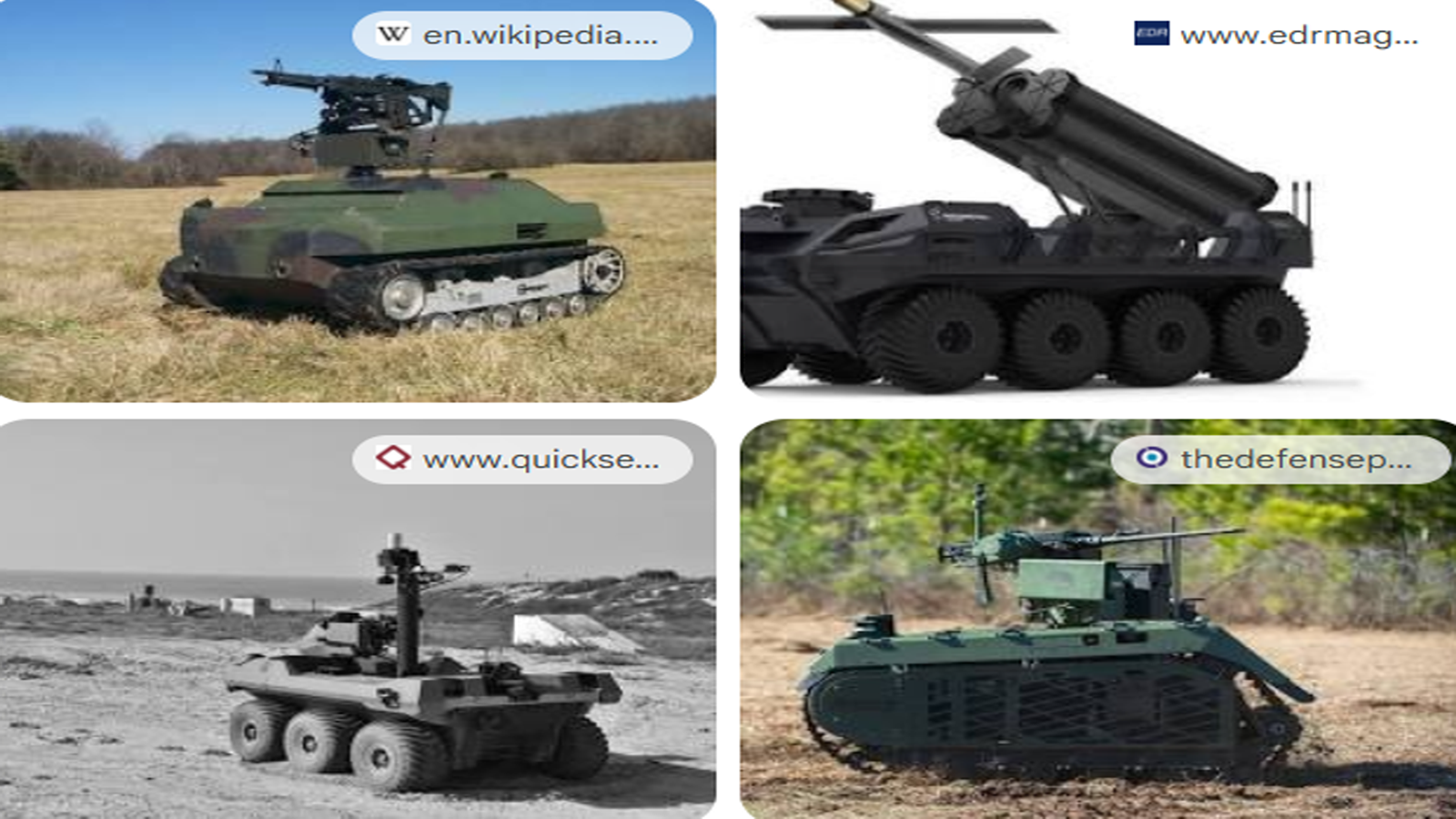
  • High-tech military robotics market – UAVs/drones, UGVs, UMVs/UUVs

    High-tech military robotics market – UAVs/drones, UGVs, UMVs/UUVs

    The military robotics market is a high-growth sector focused on advanced unmanned systems to support, augment, or replace soldiers in various defense roles. This includes Unmanned Aerial Vehicles (UAVs/drones), Unmanned Ground Vehicles (UGVs), and Unmanned Marine Vehicles (UMVs/UUVs).

    The high-tech specifications revolve around autonomy, ruggedization, advanced sensor integration, and human-machine collaboration. The business prospectus is defined by significant market growth, rising defense budgets, and key segments like Intelligence, Surveillance, and Reconnaissance (ISR).

    High-Tech Specifications of Military Robotics

    Advanced military robots are defined by a convergence of cutting-edge technologies that enable operation in complex and contested environments.

    Specification CategoryKey High-Tech FeaturesExamples of Performance/Capability
    Autonomy & ControlAI-Driven Autonomy: Mission planning, real-time threat detection, and target recognition without continuous human input.Semi-autonomous: Human operators maintain decision authority while the robot handles navigation, obstacle avoidance, and task execution. Fully Autonomous (LAWS): Still heavily debated, but aims to select and engage targets independently.
    Sensor & Data FusionAdvanced Sensor Suites: High-resolution cameras, multi-spectral imaging (IR, thermal), LiDAR, and Chemical, Biological, Radiological, and Nuclear (CBRN) detectors.Real-Time Situational Awareness: Fusing data from multiple sensors to provide a comprehensive, 360° view of the battlespace to the operator or command center.
    Mobility & EnduranceAll-Terrain Capability: Ruggedized chassis, advanced track systems, or complex legged mechanisms (e.g., quadrupeds) for traversing stairs, slopes, and debris.Endurance: UAVs like the MQ-9 Reaper offer long-endurance flight (20+ hours). UGVs can have 7+ hour battery runtime or use hybrid propulsion for extended operational range.
    Communication & LinkSecure, Resilient Data Links: Encrypted, high-bandwidth communication for real-time video and control signals, with anti-jamming and Electronic Warfare (EW) shielding.LOS/NLOS Range: Line-of-sight (LOS) ranges often exceed 1000+ meters, with Non-Line-of-Sight (NLOS) capabilities using mesh networks or tethered fiber-optics.
    Payload & ManipulationHigh Lift Capacity & Dexterity: Robotic arms (manipulators) with human-like precision, haptic feedback, and significant lift strength.EOD/HAZMAT: Manipulator arms can lift over 100 lbs (45+ kg) near the chassis and perform delicate tasks like unzipping bags or handling explosive disruptors.
    SurvivabilityRuggedization & Environmental Sealing: Designed to operate in extreme temperatures and conditions (e.g., -20°C to +60°C) and be sealed against dust and water (e.g., IP66/IP67 rating).Self-Righting/Recovery: Ability for ground vehicles to autonomously self-right after a tip-over or for UAVs to manage system failures.

    Business Prospectus for Military Robotics

    The military robotics market is experiencing robust growth driven by the imperative to reduce risk to human personnel, modernize armed forces, and enhance operational efficiency.

    Market Size and Growth Forecast

    The global military robots market is a multi-billion dollar industry projected for substantial growth.

    • Market Size (2024/2025): The market size is estimated to be between USD 19.68 billion and USD 29.06 billion.
    • Projected Growth (CAGR): The market is forecast to grow at a Compound Annual Growth Rate (CAGR) of approximately 8.2% to 8.7% from 2025 through 2030 or 2032.
    • Forecasted Market Value (by 2030-2032): Projections anticipate the market will reach a value of USD 32.50 billion to USD 48.08 billion by the end of the forecast period.

    Key Market Drivers

    1. Force Protection and Casualty Reduction: The primary driver is the growing demand for unmanned systems to perform high-risk missions such as Explosive Ordnance Disposal (EOD), surveillance, and operations in CBRN-affected areas, thereby reducing human risk.
    2. Technological Advancements: Rapid advancements in Artificial Intelligence (AI), Machine Learning (ML), and sensor technologies are leading to more capable and autonomous systems.
    3. Military Modernization: Increased defense budgets globally, particularly in North America and the Asia-Pacific (APAC) region, are funding the procurement of cutting-edge robotic solutions.
    4. Enhanced Operational Efficiency: Robots provide greater speed, precision, and endurance for tasks like ISR (Intelligence, Surveillance, and Reconnaissance) and logistics.

    Segmentation and Opportunities

    SegmentDominant/Fastest Growing AreaKey Application
    By PlatformAirborne Robots (UAVs): Holds the largest market share (over 50%) due to versatile application in surveillance and precision strikes.Intelligence, Surveillance, Reconnaissance (ISR)
    By ApplicationCombat Support and ISR: ISR is currently the largest segment, while combat support is expected to witness the fastest growth.Logistics, Target Acquisition, Fire Support, EOD
    By RegionNorth America: Dominates the market share due to large defense spending and a mature industrial base. Asia-Pacific: Expected to be the fastest-growing region, driven by countries like China and India’s increasing defense investments.Strategic R&D and Procurement
    By OperationSemi-Autonomous: Holds a significant share as it balances advanced autonomous functions with necessary human oversight for critical decision-making.Complex missions requiring human-in-the-loop control.

    Major Industry Players

    The market is dominated by large defense contractors and specialized robotics companies, including Lockheed Martin Corporation, Northrop Grumman Corporation, BAE Systems, Thales Group, Elbit Systems, and specialized firms like and L3Harris Technologies.

    (Source)

    1. Market Research & Industry Reports (for Business Prospectus)

    • Grand View Research: Provided market size (USD 19.68 billion in 2024, CAGR 8.7% to USD 32.50 billion by 2030), regional analysis (North America dominance, APAC fastest growth), and segment analysis (Airborne highest share, ISR highest application share).
    • Fortune Business Insights: Referenced a market size projection (USD 64.13 billion by 2032 at 12.50% CAGR) and analysis of market drivers (AI integration, human augmentation).
    • MarketsandMarkets / Kings Research / Spherical Insights: Provided corroborating market figures (e.g., $18.20 billion in 2024, CAGR around 7.20% to 7.8%) and detailed segmentation by platform (UGV, UAV, UUV), application (EOD, ISR, Combat Support), and mode of operation (Semi-Autonomous, Autonomous).
    • Mordor Intelligence / Research Nester: Reinforced CAGR forecasts and provided detailed segment trends, such as the fastest-growing sub-segments (e.g., legged/bionic platforms, logistics, and EOD applications).

    2. Defense Contractor and Product Specifications (for High-Tech Specifications)

    • L3Harris Technologies: Provided technical data and operational specifications for advanced Explosive Ordnance Disposal (EOD) Unmanned Ground Vehicles (UGVs), such as the T4 and T7 systems (e.g., haptic feedback, lift capacity, battery runtime, IP ratings, and radio range).
    • Ghost Robotics / Standard Bots (as mentioned in the search results): Provided examples of specific robot specifications, such as all-weather operation, endurance, payload capacity, and mobility features of quadrupeds (e.g., Vision 60).
    • Defense News and Government Publications (e.g., DoD ManTech, Defence Equipment & Support): Cited information on real-world military deployments, strategic R&D focus (AI, sensor integration), and the overall strategic direction of military robotics.

    3. Academic and Strategic Analysis (for Autonomy and Trends)

    ResearchGate / Defense Policy Papers: Discussed the evolution towards autonomy, the role of AI and machine learning, and the conceptual frameworks for managing advanced unmanned systems. These provided the context for features like “AI-Driven Autonomy” and “Human-Machine Teaming.”

    Socko/Ghost