Tag: gpu technology

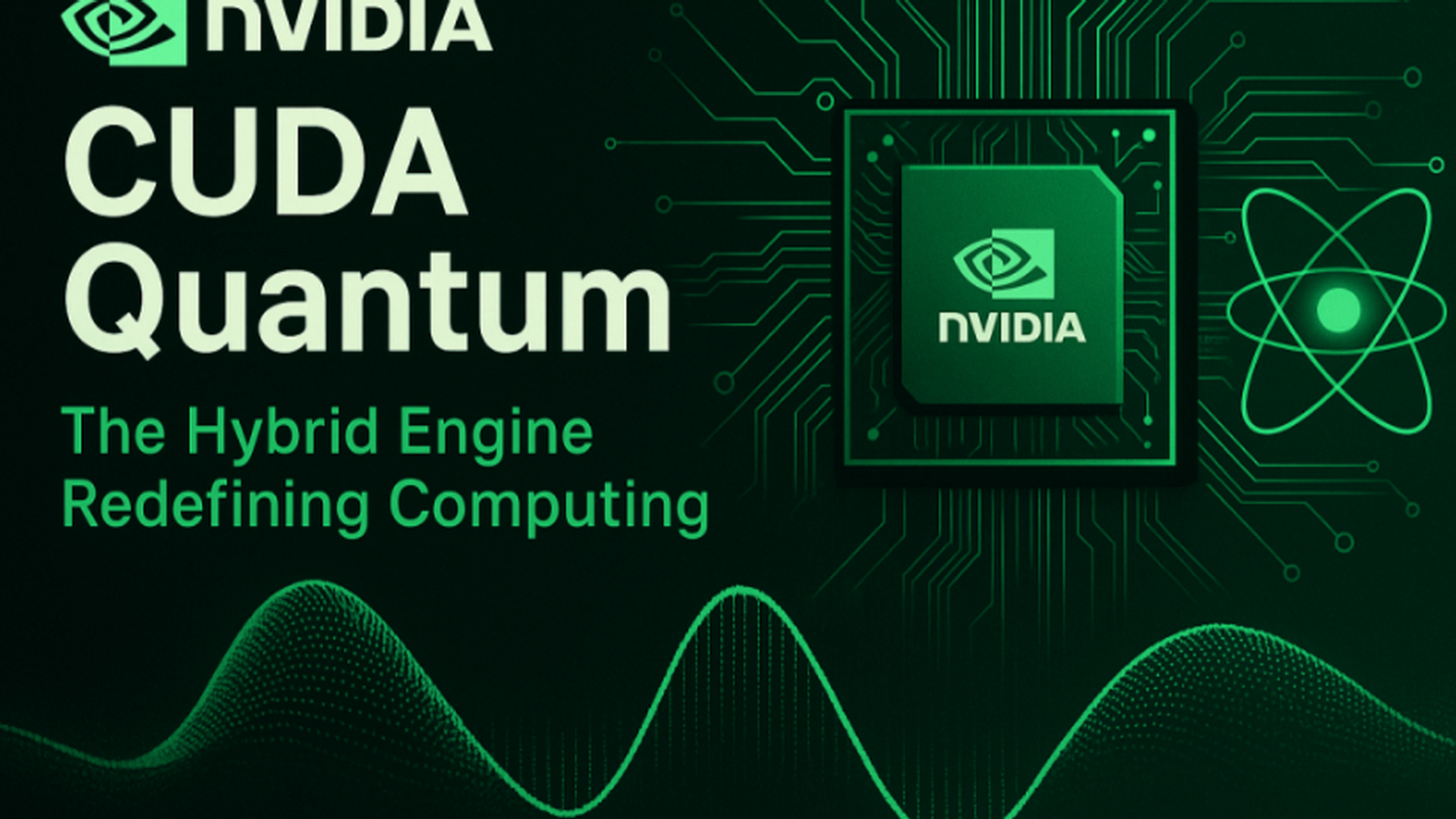
  • Unlocking Quantum Potential with NVIDIA CUDA

    Unlocking Quantum Potential with NVIDIA CUDA

    NVIDIA CUDA and the Quantum Frontier:

    How GPU Acceleration Is Shaping the Next Era of Computing: Insights & Market Intelligence Feature Analysis

    1. Introduction: A New Computational Threshold

    For nearly two decades, NVIDIA’s CUDA architecture has been the silent engine powering breakthroughs—from deep learning models and autonomous systems to real-time simulation and robotics.
    But in 2025, CUDA’s role is expanding beyond GPU acceleration alone.
    It is becoming the on-ramp to quantum computing.

    The convergence of GPU-accelerated classical systems and quantum processors is no longer theoretical; it is emerging through NVIDIA’s CUDA-Quantum platform, formerly known as QODA.

    This hybrid model is redefining what “computing power” means.

    2. Why CUDA Matters in the Quantum Era

    CUDA’s continued dominance stems from three pillars:

    1) Unified Developer Environment

    Developers who already write CUDA kernels can now extend workflows into quantum circuits without learning an entirely new paradigm.

    2) Hybrid Execution (GPU + QPU)

    Quantum Processing Units (QPUs) excel at superposition and entanglement tasks,
    while GPUs dominate linear algebra and large-scale simulation.

    CUDA-Quantum orchestrates both.

    3) Scalable Simulation Before Hardware Matures

    Because quantum hardware is still noisy and limited,
    GPU-accelerated simulation becomes essential—allowing enterprises to build quantum algorithms before QPUs reach scale.

    3. Key Technical Advantages

    3.1 CUDA-Quantum Programming Model

    Developers can:

    • Write quantum kernels in C++ or Python
    • Run them on simulators (NVIDIA GPUs)
    • Deploy the same code on real quantum hardware (IonQ, Quantinuum, Rigetti, etc.)

    This bridges the gap between R&D and production.

    3.2 GPU-Accelerated Quantum Simulation

    Quantum systems grow exponentially in complexity.
    A 40-qubit system requires more than 1 trillion complex amplitudes.

    NVIDIA’s cuQuantum libraries allow:

    • Dense and sparse matrix simulation
    • Tensor-network simulation
    • State vector evolution
    • Quantum error correction modeling

    This gives companies production-grade quantum R&D today, instead of waiting for hardware

    4. Real-World Applications: Where Business Meets Quantum

    1) Drug Discovery & Molecular Dynamics

    GPUs handle molecular modeling,
    QPUs explore quantum energy states.

    Outcome: faster protein-folding, material discovery, and docking analysis.

    2) Financial Risk Modeling

    Hybrid Monte Carlo + quantum optimization unlocks:

    • Portfolio optimization
    • Derivative pricing
    • Risk scenario generation
    • Cryptographic resilience testing

    3) Defense & Secure Communications

    Relevant for SockoPower’s Defense Insights segment:

    • Quantum-resistant encryption
    • Quantum radar simulation
    • Drone swarm optimization
    • Nuclear material detection modeling

    NVIDIA’s simulation architecture accelerat

    4) AI Acceleration Itself

    Ironically, quantum computing won’t replace AI—
    it will accelerate the accelerators.

    Quantum-inspired algorithms improve:

    • Transformer efficiency
    • Sparse modeling
    • Reinforcement learning search
    • Multi-agent simulation

    CUDA makes AI-Quantum integration natural.

    5. Market Intelligence: Strategic Outlook for 2025–2030

    5.1 Winners in the Hybrid Era

    NVIDIA

    Controls the unified development stack (CUDA).
    This effectively locks in the next decade of AI + quantum software.

    IonQ / Quantinuum / Rigetti

    Quantum hardware vendors benefit from CUDA-Quantum compatibility.

    Defense & Aerospace Integrators

    Raytheon, Lockheed Martin, and DARPA programs are accelerating hybrid quantum simulations.

    5.2 Enterprise Adoption Timeline

    YearDevelopment StageIndustry Activities
    2025Early Hybrid R&DSimulation-first workflows
    2027Applied QuantumOptimization & logistics use cases
    2030Quantum AdvantageSector-specific deployment

    By 2030, hybrid AI+Quantum systems will replace 5–15% of HPC workloads.

    5.3 Risks & Bottlenecks

    • QPU hardware still noisy
    • High energy costs for GPU clusters
    • Talent shortage in quantum engineering
    • Standardization fragmentation
    • Security concerns around post-quantum cryptography

    These are manageable but real.

    6. Ethical & Humanistic Considerations

    NVIDIA’s roadmap raises a critical question:

    Does more computational power automatically empower humanity?

    Not necessarily.

    Quantum-accelerated AI must be governed with:

    Transparency
    Safety alignment
    Energy responsibility
    Defense ethics

    A system powerful enough to design new materials can also design new threats.
    SockoPower’s mission—linking power with purpose—becomes essential here.

    7. Conclusion: CUDA as the Bridge to the Quantum Future

    Quantum computing will not replace classical systems.

    Instead: CUDA becomes the bridge.

    GPU clusters become the “training wheels” for quantum acceleration.
    Enterprises that adopt hybrid workflows early gain:

    • faster simulation
    • lower R&D risk
    • better optimization
    • long-term computational independence

    This is not just a hardware revolution—
    it is a paradigm shift in how intelligence is computed.
  • NVIDIA DGX-1

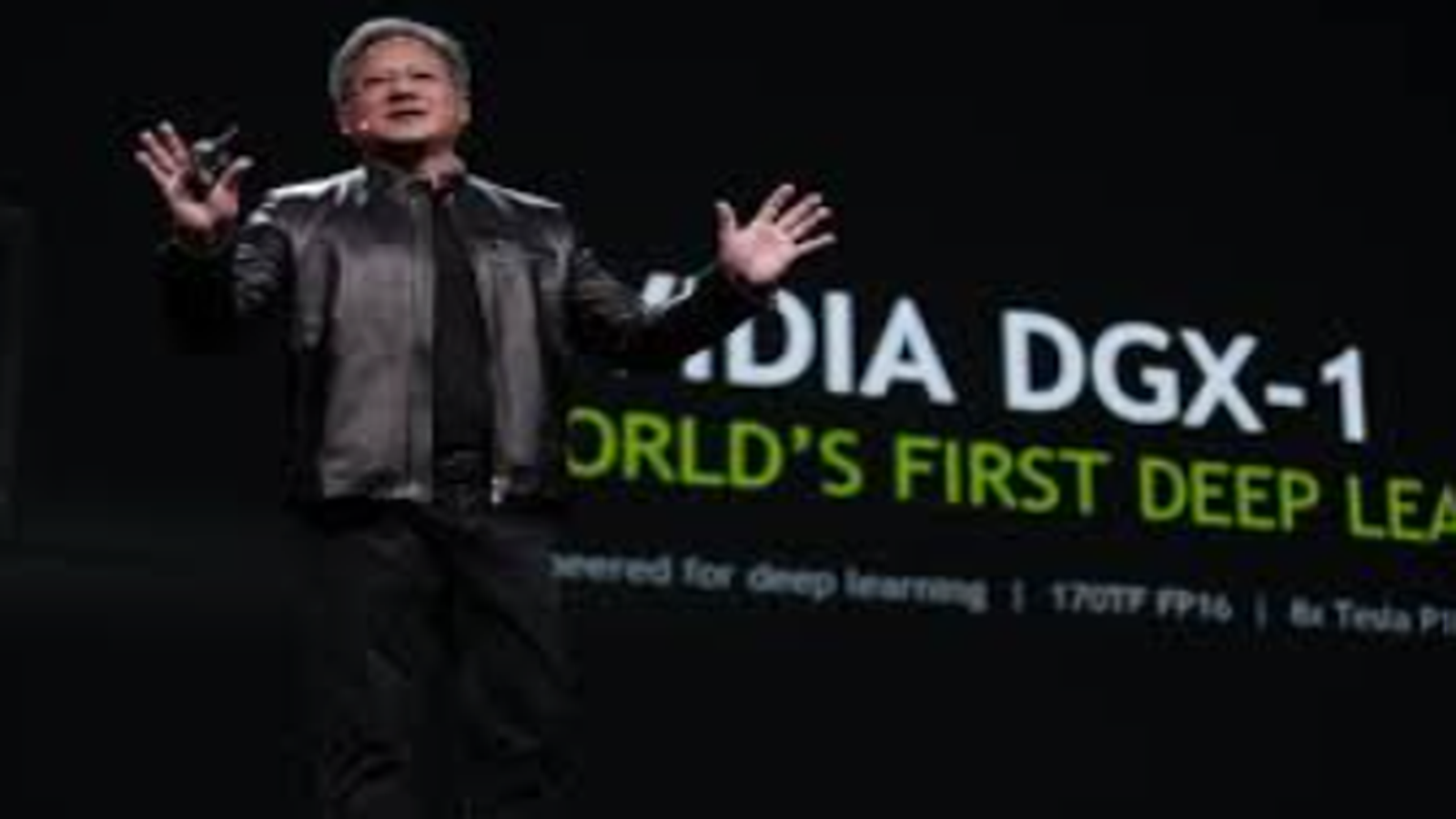
    NVIDIA DGX-1

    The NVIDIA DGX-1 was a purpose-built system for deep learning and AI research, released in 2016 (Pascal-based) and later updated (Volta-based).1 It was essentially the world’s first “deep learning supercomputer in a box.”2

    1. NVIDIA DGX-1 Key Specifications

    The DGX-1 came in two main variants based on the GPU architecture: the initial Pascal (Tesla P100) version and the later, more powerful Volta (Tesla V100) version.3

    FeatureDGX-1 (Pascal – Tesla P100)DGX-1 (Volta – Tesla V100)
    GPUs8x NVIDIA Tesla P1008x NVIDIA Tesla V100
    Total Peak Performance (FP16)170 teraFLOPS1 petaFLOPS (1,000 teraFLOPS)
    Total GPU Memory (HBM2)128 GB (16 GB per GPU)128 GB or 256 GB (16 GB or 32 GB per GPU)
    GPU InterconnectNVIDIA NVLink (hybrid cube-mesh network)NVIDIA NVLink (300 GB/s inter-GPU bandwidth)
    CPUDual 20-Core Intel Xeon E5-2698 v4 2.2 GHzDual 20-Core Intel Xeon E5-2698 v4 2.2 GHz
    System Memory (RAM)512 GB DDR4 LRDIMM512 GB DDR4 LRDIMM
    Storage4x 1.92 TB SSD RAID 04x 1.92 TB SSD RAID 0
    NetworkDual 10 GbE, 4 IB EDRDual 10 GbE, 4 IB EDR
    Form Factor3U Rackmount Chassis3U Rackmount Chassis
    SoftwarePre-integrated Deep Learning Software Stack (CUDA, cuDNN, major frameworks, NVIDIA DIGITS, NVIDIA Docker)Same pre-integrated stack, optimized for V100 Tensor Cores

    2. Business Prospectus and Target Market

    The DGX-1’s business strategy was to provide a turnkey, high-performance platform specifically optimized for the demanding computational needs of Deep Learning (DL) and Artificial Intelligence (AI) training, shifting the focus from custom server building to immediate productivity.

    Core Value Proposition

    The DGX-1 was marketed as the fastest path to deep learning, offering:

    • Revolutionary Performance: Delivering the computational power of many racks of conventional servers in a single box, dramatically accelerating model training time (up to 96X faster in some benchmarks compared to CPU-only servers).4
    • Effortless Deployment: It was a fully integrated system with hardware, deep learning software, and development tools pre-installed and optimized. This “plug-and-play” simplicity was a significant selling point, saving data scientists months of integration and configuration effort.
    • End-to-End AI Solution: It included the NVIDIA Deep Learning Software Stack (frameworks, libraries like cuDNN and NCCL, and tools like NVIDIA Docker), ensuring the hardware was utilized to its maximum potential.5
    • Enterprise Support: NVIDIA offered an enterprise-grade support model (DGXperts) to help customers maximize productivity and resolve critical issues, appealing to large companies and research institutions.6

    Target Market

    The primary customers for the DGX-1 were organizations leading the charge in AI and deep learning:

    • AI and Data Science Research Institutions: Universities and government labs requiring immense compute power for cutting-edge research.7
    • Enterprise AI Development: Fortune 1000 companies across various sectors (tech, automotive, healthcare, finance, consumer internet) that were building, training, and deploying their own production-grade AI models.
    • Cloud Service Providers (CSPs): Companies offering GPU-accelerated cloud instances for AI workloads.
    • High-Performance Computing (HPC): Organizations needing fast computation for accelerated analytics, scientific visualization, and large-scale simulation.8

    In essence, the DGX-1 established NVIDIA’s brand as the leader in providing AI Infrastructure for the Enterpr

    (Source)

    en.wikipedia.org/Nvidia DGX – Wikipedia: The product line is intended to bridge the gap between GPUs and AI accelerators using specific features for deep learning workloads.

    2. NVIDIA Newsroom/nvidianews.nvidia.com: NVIDIA Launches World’s First Deep Learning Supercomputer; NVIDIA DGX-1 Delivers Deep Learning Throughput of 250 Servers to Meet Massive Computing Demands of Artificial Intelligence. April 5, 2016.

    3. en.wikipedia.org/Nvidia DGX – Wikipedia: # Accelerators Model | Architecture | Memory clock — | — | — P100 | Pascal | 1.4 Gbit/s HBM2 V100 16GB | Volta | 1.75 Gbit/s HBM2 V100 32GB | Volta

    4. xyserver.cn/NVIDIA DGX-1: With the computing capacity of 25 racks of conventional servers in a single system that integrates the latest NVIDIA GPU technology with the world’s most

    5. xyserver.cn/NVIDIA DGX-1: It includes access to today’s most popular deep learning frameworks, NVIDIA DIGITS ™ deep learning training application, third-party accelerated solutions,

    6. xyserver.cn/NVIDIA DGX-1: With today’s rapidly evolving open source software and the complexity of libraries, drivers, and hardware, it’s good to know that NVIDIA’s enterprise grade …

    7. Engadget/www.engadget.com: NVIDIA’s insane DGX-1 is a computer tailor-made for deep learning – Engadget

    As for who might be buying these computers, NVIDIA is positioning this machine for serious research purposes — the first machines off of NVIDIA’s assembly …

    8. ResearchGate/www.researchgate.net: Nvidia DGX-1 GPU interconnect [1]. – ResearchGate; High-Performance Computing (HPC) workloads generate large volumes of data at high-frequency during their execution, which needs to be captured concurrently at …

    Socko/Ghost

  • Unlock Unprecedented Speed and Efficiency in Deep Learning with CUDA Graph Optimization

    Unlock Unprecedented Speed and Efficiency in Deep Learning with CUDA Graph Optimization

    Introduction:

    In the realm of deep learning, where every second counts and model complexity knows no bounds, the pursuit of speed and efficiency has never been more critical. Enter CUDA Graph Optimization, a cutting-edge solution that promises to reshape the way Python code runs for deep learning tasks. In this introductory article, we’ll embark on a journey to uncover the true potential of CUDA Graph Optimization while candidly examining its pros and cons.

    Pros:

    1. Lightning-Fast Computation: CUDA Graph Optimization is a game-changer in the world of deep learning. By harnessing the power of NVIDIA GPUs, it turbocharges Python code execution, delivering significant reductions in training times for even the most intricate deep learning models. Say goodbye to the days of watching progress bars inch along.
    2. Effortless Integration: One of the standout features of CUDA Graph Optimization is its seamless integration into popular deep learning frameworks like TensorFlow and PyTorch. With minimal adjustments to your code, you can tap into the immense potential of CUDA Graphs, enhancing your workflows with ease.
    3. Resource Efficiency: CUDA Graph Optimization isn’t just about speed; it’s also about smarter resource utilization. By optimizing GPU resources, it not only accelerates your deep learning tasks but also helps you save on cloud computing costs, a boon for both individual developers and enterprises.
    4. Multi-GPU Prowess: For those working with multiple GPUs, CUDA Graph Optimization is a true gem. It maximizes GPU utilization across multiple devices, further slashing training times for large-scale, data-hungry models.
    5. Tailored to Your Needs: CUDA Graph Optimization doesn’t come in a one-size-fits-all package. It’s highly customizable, allowing you to fine-tune the graph construction process and adapt it to your project’s specific requirements.

    Cons:

    1. Learning Curve: While CUDA Graph Optimization promises remarkable speed gains, it does come with a learning curve. Users, especially those new to GPU optimization techniques, may need to invest time in understanding the intricacies of graph construction and optimization.
    2. Compatibility Checks: Although CUDA Graph Optimization plays well with popular deep learning frameworks, it’s important to verify compatibility with your specific framework version. Ensuring alignment may require some diligence on your part.
    3. Hardware Prerequisites: To fully embrace CUDA Graph Optimization’s power, you’ll need a compatible NVIDIA GPU. Users with older hardware may need to consider upgrading to unlock its full potential.

    Conclusion:

    In the dynamic landscape of deep learning, CUDA Graph Optimization emerges as a transformative force. Its ability to accelerate Python code execution opens the door to faster, more efficient deep learning workflows. While there’s a learning curve and compatibility considerations, the advantages far outweigh the drawbacks.

    Are you ready to revolutionize your deep learning projects and experience unmatched speed and efficiency? Dive into the world of CUDA Graph Optimization today.

    Learn more about CUDA Graph Optimization and supercharge your deep learning endeavors.

    Disclaimer: This article is based on information available up to September 2021. Verify the latest updates and compatibility with your specific deep learning environment before making a decision.

    Socko/Ghost