Tag: defense technology

  • Iran’s Drone War Is Rewriting Defense Markets: The Real Money May Flow to Interceptors, Sensors, and Supply Chains

    Iran’s Drone War Is Rewriting Defense Markets: The Real Money May Flow to Interceptors, Sensors, and Supply Chains

    The Iran war is forcing both militaries and investors to confront a brutal new arithmetic. Cheap one-way attack drones can be launched in large numbers, impose real pressure on energy infrastructure and civilian systems, and force defenders to spend far more money on detection and interception than the attacker spends on launch. CSIS argues that Iran’s drone campaign in the Gulf relied heavily on saturation waves of Shahed-style systems, designed less for precision battlefield brilliance than for persistence, disruption, and economic asymmetry.

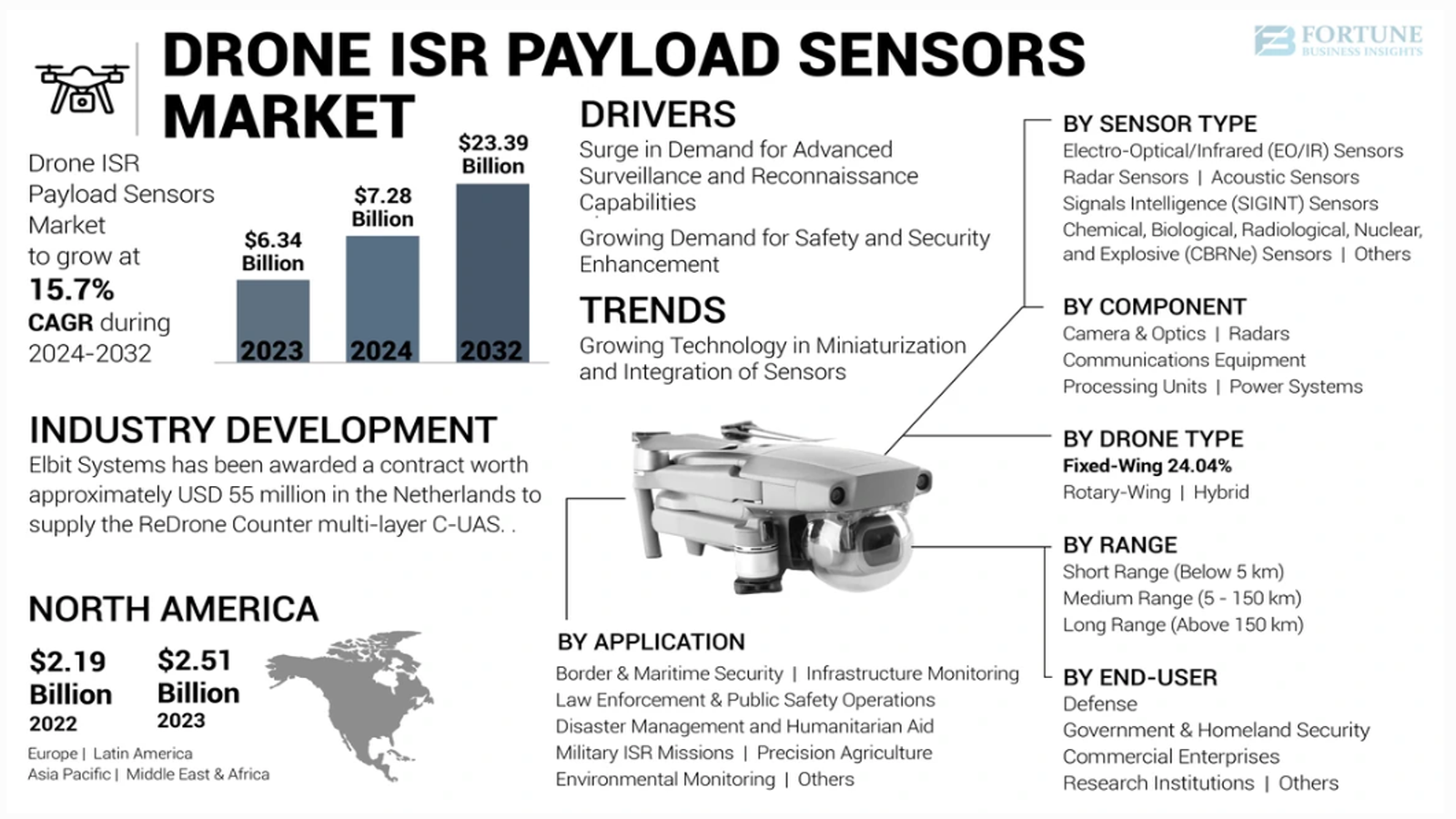
    That matters because the center of gravity in defense markets may be shifting. In earlier years, much of the fascination was with the offensive platform itself: range, payload, autonomy, and survivability. But recent conflict dynamics suggest the more scalable business opportunity may lie in what stops these systems. IISS notes that Gulf states face a layered UAV threat and that long-range missile defense was never meant to be the primary answer to lower-cost unmanned systems. That points to a broader demand curve for radar integration, AI-assisted tracking, electronic warfare, short-range interceptors, and lower-cost kill chains built specifically for drone-heavy environments.

    The commercial market is already reacting. Reuters reported this week that Ukrainian defense firms are trying to turn wartime know-how in drone interception into export business for Gulf customers worried about Iranian UAV attacks. The report says Ukrainian companies see growing interest from Saudi Arabia, Qatar, and the United Arab Emirates, precisely because the region is looking for more practical and affordable ways to counter mass drone raids. That is an important signal: the next wave of defense demand may favor companies that can offer fast, scalable, and comparatively cheap counter-UAS solutions rather than exquisite but expensive legacy systems alone.

    This shift also changes how investors should read “defense technology.” The winning firms may not be the ones with the most dramatic hardware demo, but the ones that connect sensors, software, interceptors, data fusion, and logistics into a repeatable operating system. In other words, the market prize is moving from standalone platforms toward integrated defense architecture. That is partly an inference, but it is strongly supported by the way CSIS frames the economic asymmetry of drone warfare and by IISS’s emphasis on layered and diversified counter-UAV options across the Gulf.

    Shop strapless bras in a variety of sizes like 32AA, 34DD, and more. Find stick on bras, bras with removable straps & more to go with open back dresses.

    References
    CSIS, Unpacking Iran’s Drone Campaign in the Gulf: Early Lessons for Future Drone Warfare.
    IISS, Defending the Skies of the Arab Gulf States.
    IISS, Uninhabited Middle East: UAVs, ISR, Deterrence and War.
    Reuters, Ukraine’s drone masters eye Iran war to kickstart export ambitions.
    SIPRI Yearbook 2025, chapter on missiles and armed uncrewed aerial vehicles.

    Socko/Ghost

  • Palantir and Lockheed Martin: How Dual-Use AI Turned Commercial Analytics into Military Revenue

    Palantir and Lockheed Martin: How Dual-Use AI Turned Commercial Analytics into Military Revenue

    The most consequential dual-use AI deployment in today’s defense market did not originate inside a traditional weapons program.
    It emerged from a commercial data analytics companyPalantir Technologies—and was absorbed, system by system, into the world’s largest defense integrator, Lockheed Martin.

    This is not a story about artificial intelligence entering defense.
    It is a story about how civilian-scale software became militarily indispensable without becoming a weapon.

    From Commercial Analytics to Command Authority

    Palantir’s platforms were originally designed to solve civilian problems:
    financial fraud detection, logistics optimization, enterprise data integration, and large-scale pattern analysis. The core value proposition was not secrecy—it was scalability and decision acceleration.

    Those same attributes made the technology attractive to military users facing a different problem:
    how to integrate fragmented sensor data, ISR feeds, and operational reports into a single decision environment.

    Rather than building proprietary AI systems internally, Lockheed Martin increasingly positioned itself as a systems integrator, embedding Palantir’s analytics layer into command-and-control, ISR, missile defense, and space-domain architectures.

    What changed was not the algorithm.
    What changed was the consequence of the output.

    The Dual-Use Revenue Structure

    The Palantir–Lockheed relationship illustrates a new defense business model:

    • Civilian markets fund scale and iteration
      Commercial clients generate continuous data exposure, rapid feedback cycles, and product refinement.
    • Defense contracts fund stability and margin
      Military customers pay for long-term support, secure deployment, customization, and mission assurance.

    Palantir avoids the political and regulatory friction of being classified as a pure defense contractor, while Lockheed avoids the cost and risk of building AI capabilities from scratch. The result is a symbiotic revenue architecture—one optimized for peacetime markets and wartime relevance

    Why Lockheed Martin Did Not Build This In-House

    For traditional defense primes, AI is no longer a differentiator—it is an absorbed capability.

    Building in-house AI platforms would require:

    • Civilian data exposure they cannot legally or practically access
    • Software iteration speeds incompatible with defense procurement cycles
    • Talent competition with Silicon Valley firms operating outside classified environments

    By integrating Palantir’s platforms, Lockheed preserves its strategic position as a prime contractor while outsourcing cognitive complexity to a civilian firm whose incentives are aligned with consta

    Global Market Expansion Through Localization, Not Reinvention

    This dual-use model scales globally without replicating R&D.

    • Core analytics engines remain centralized
    • Data governance, interfaces, and compliance layers are localized
    • Allied markets receive functionally identical capability under sovereign constraints

    This allows the same AI backbone to serve:

    • Commercial clients in finance, energy, and logistics
    • Defense customers across NATO and allied Indo-Pacific states

    The technology travels.
    The liability does not.

    Strategic Implication

    The Palantir–Lockheed Martin model signals a structural shift:

    Dual-use AI is no longer a transitional phase.
    It is the default path by which civilian technology becomes military power—quietly, contractually, and profitably.

    Socko/Gho

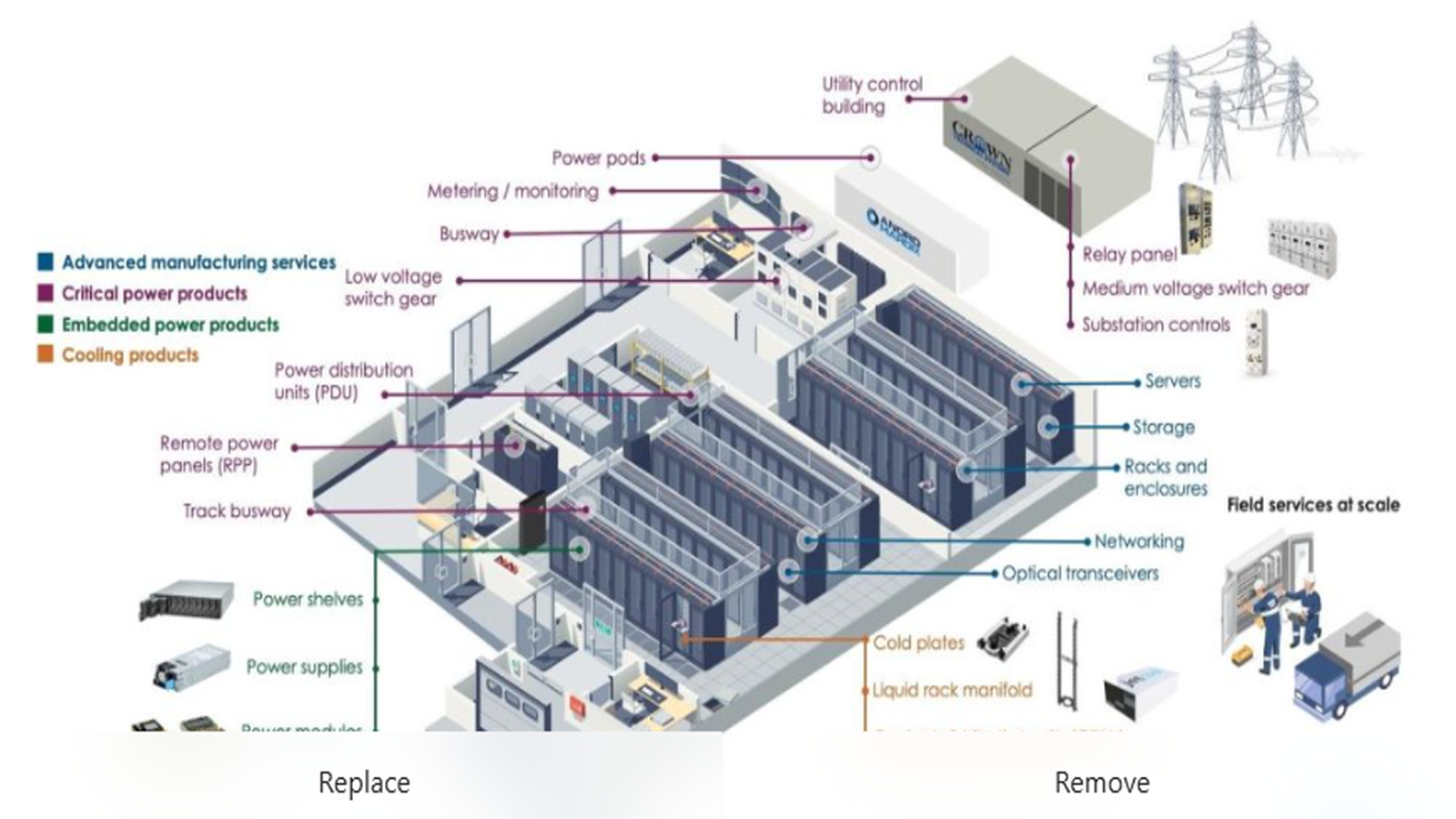
  • NATO Briefing: Data Centers Have Become an Energy-Security Chokepoint

    NATO Briefing: Data Centers Have Become an Energy-Security Chokepoint

    In recent internal briefings and strategic discussions, NATO has quietly reframed a long-standing assumption:
    energy security is no longer just about pipelines, refineries, or transmission towers.
    It is now inseparable from data center resilience.

    This shift reflects a hard reality of modern warfare and statecraft—digital continuity is operational continuity. When data centers lose power, command-and-control degrades, ISR pipelines stall, AI-enabled analysis halts, and civil-military coordination fractures. Energy vulnerability, in short, has become a frontline risk.

    From Power Plants to Server Racks: A Strategic Reclassification

    For decades, alliance energy planning focused on fuel supply and grid robustness. Today, that lens has expanded. Data centers—once treated as civilian IT assets—are now understood as strategic infrastructure with military consequences.

    Three developments drove this reassessment:

    1. Explosive Power Density
      AI training, real-time analytics, and persistent surveillance workloads have dramatically increased energy intensity per rack. A brief outage now produces outsized operational damage.
    2. Civil–Military Interdependence
      Military systems increasingly rely on commercial clouds, regional colocation hubs, and civilian power grids. The boundary between “civilian blackout” and “military disruption” has effectively collapsed.
    3. Multi-Domain Attack Surface
      A single data center can be pressured simultaneously via cyber intrusion, grid manipulation, physical sabotage, or supply-chain denial. Energy is the common point of failure.

    Why Energy Vulnerability Equals Operational Risk

    In NATO assessments, data centers are no longer a passive backend. They are active enablers of:

    • Command, Control, Communications, Computers (C4)
    • ISR fusion and sensor processing
    • AI-assisted decision support
    • Logistics, targeting, and coordination across theaters

    An energy shock—whether intentional or accidental—can degrade these functions faster than kinetic strikes. Unlike hardened bases, many data centers were designed for efficiency, not prolonged denial environments.

    Threat Scenarios Now Taken Seriously

    NATO planners increasingly model scenarios that once sat outside traditional military analysis:

    • Grid-Level Disruption → Regional Data Center Collapse
      Targeted attacks on substations or control software can cascade into digital paralysis.
    • Cyber–Energy Coupling Attacks
      Malware targeting energy management systems can selectively starve data centers of power while masking intent.
    • Supply-Chain Energy Constraints
      Delays in generators, transformers, fuel delivery, or cooling components extend outage recovery timelines well beyond acceptable operational windows.

    These are not hypothetical edge cases. They are realistic pressure points in high-intensity or gray-zone conflict.

    Resilience Is the New Deterrence

    Within NATO discussions, a clear concept is emerging: resilience is deterrence.

    That translates into several strategic directions:

    • Decentralized and Redundant Power Architectures
      Microgrids, on-site generation, and diversified energy inputs reduce single-point failure risk.
    • Integrated Energy–Cyber Defense
      Power infrastructure security can no longer be separated from cyber defense planning.
    • Civil–Military Coordination Frameworks
      Data center operators, grid authorities, and defense planners must share threat models and contingency protocols.
    • Energy-Aware Siting and Design
      Location, cooling strategy, and grid dependency are now strategic variables—not just cost considerations.

    Strategic Implication: The Battlefield Runs on Electricity

    The implication is blunt but unavoidable:

    Data centers sit at the intersection of energy, digital command, and national resilience. NATO’s evolving posture signals that energy-secure computing infrastructure is no longer a technical afterthought—it is a core element of alliance readiness.

    For policymakers, defense planners, and infrastructure operators, the message is clear:
    Protect the power, or lose the fight before it begins.

    References

    Allied and open-source defense analyses on civil–military energy interdependence and grid security.

    NATO — Energy Security and Resilience Frameworks, official alliance briefings and policy overviews.

    European Parliament Research Service — Energy System Disruptions and Security Implications, policy briefings on infrastructure resilience.

    Foreign Policy Research Institute (FPRI) — Data Centers and National Power, analysis on digital infrastructure as strategic assets.

    Socko/Ghost

  • Emerging Civil–Military Technology Convergence and Its Impact on Global Power Projections

    Emerging Civil–Military Technology Convergence and Its Impact on Global Power Projections

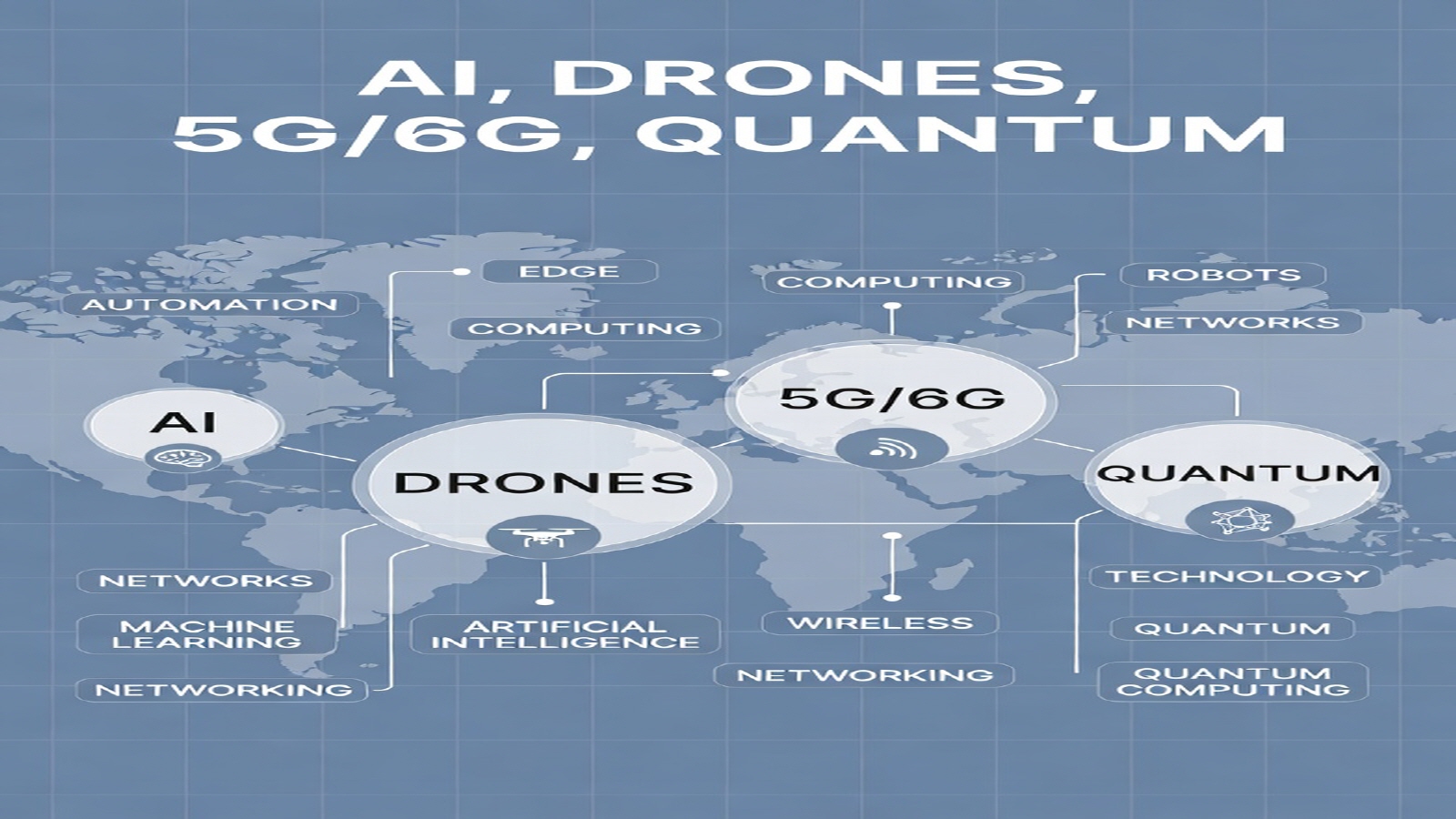
    The 21st-century battlefield is increasingly shaped not by tanks, missiles, or aircraft, but by technologies originally developed for civilian markets—AI, autonomous robotics, satellite-enabled communications, and quantum computing. What once existed as separate technological domains is converging into a single, dual-use ecosystem where civilian innovation directly fuels military capability.

    This civil–military fusion (CMF) is fundamentally reshaping global power projection, particularly among the United States, China, and Russia.
    The nations that dominate dual-use technology pipelines will shape the future of deterrence, conflict, and geopolitical hierarchy.

    1. Dual-Use Innovation Has Become the New Arms Race

    Commercial tech is now military infrastructure.

    Artificial intelligence, advanced chips, hyperscale cloud computing, and high-speed mobile networks were never designed as weapons. Yet they now form the backbone of:

    autonomous drones

    AI-enhanced ISR (intelligence, surveillance, reconnaissance)

    predictive logistics

    cyber operations

    hypersonic command systems

    multi-domain operational networks

    The line separating Silicon Valley startups from defense contractors has vanished.

    The military of the future is built on commercial innovation.

    2. AI and Autonomous Systems: The Core of Next-Generation Power Projection

    Autonomy = speed. Speed = dominance.

    AI-driven autonomous systems—from drone swarms to automated cyber defense—are redefining military decision cycles.

    United States

    DARPA’s ACE program for AI dogfighting

    Navy’s Ghost Fleet Overlord autonomous vessels

    Joint All-Domain Command and Control (JADC2) integration

    China

    Civil–military fusion doctrine accelerating dual-use AI

    Mass production of low-cost autonomous drone platforms

    Strategic AI labs built on commercial tech giants (Baidu, Alibaba, Tencent)

    Russia

    Autonomous loitering munitions

    AI-assisted artillery targeting using battlefield sensors

    Heavy reliance on civilian drones modified for warfare

    Autonomy compresses the “OODA loop”—observe, orient, decide, act—creating a new currency of military advantage: machine-speed warfare.

    3. 5G/6G and the Battle for Electromagnetic Dominance

    Connectivity itself becomes a weapon.

    Modern militaries depend on massive data throughput:

    drone swarm coordination

    satellite–ground communication

    real-time logistics

    command-and-control

    autonomous navigation

    5G enabled this shift; 6G will accelerate it to near-lightning levels.

    U.S. strategy:

    Integrate 5G/6G into secure battlefield networks, leveraging private-sector leadership.

    China’s strategy:

    Use global 5G/6G infrastructure as geopolitical leverage, embedding influence across Asia, Africa, Europe, and Latin America.

    Russia strategy:

    Focus on electronic warfare dominance rather than broad consumer networks.

    5G/6G is not just commerce—it is information dominance, the foundation of modern power projection.

    4. Quantum Computing and Secure Communications: The Coming Strategic Shock

    Quantum supremacy will rewrite cyber warfare.

    Quantum technology threatens to disrupt the core of national security:

    encryption cracking

    ultra-secure quantum communication networks

    quantum-enhanced sensing for submarine and stealth tracking

    new forms of electronic warfare

    China

    Has already deployed a quantum communication backbone between Beijing and Shanghai, and runs the world’s most aggressive national quantum program.

    United States

    Leads in private-sector quantum computing hardware and algorithms (IBM, Google, AWS), with growing DoD–industry integration.

    Russia

    Invests in quantum sensing and signals intelligence capabilities.

    Quantum capability gaps will determine strategic survivability in the next decade.

    5. The U.S.–China–Russia Triangular Tech Rivalry
    Global power is no longer measured in troops but in teraflops.

    United States: Innovation Dominance Strength: advanced semiconductors, cloud infrastructure, AI algorithms, defense integration. Vulnerability: manufacturing dependence on East Asia.

    China: Scale + State Alignment

    Strength: mass production, civil–military fusion, unified national tech strategy.
    Vulnerability: access to cutting-edge lithography and high-end chips.

    Russia: Asymmetric Tech Warfare

    Strength: electronic warfare, missile systems, cyber operations.
    Vulnerability: industrial capacity and sanctions.

    The convergence of civilian and military tech has turned this rivalry into a three-dimensional race across AI, chips, quantum, and communications.

    Conclusion — Civil–Military Technology Convergence Will Redefine Global Power

    The future of power projection will be determined not by traditional defense spending but by:

    the speed of innovation

    control of advanced chips

    access to global telecoms infrastructure

    quantum breakthroughs

    autonomous systems deployment

    Nations that dominate dual-use innovation pipelines will shape everything from deterrence to alliance structures.

    Civilian technology is now the battlefield.
    The global balance of power will be rewritten there.

    References

    CSIS. Civil–Military Fusion and Strategic Competition, 2024.

    RAND. AI-Driven Warfare and Autonomous Systems, 2023–2024.

    U.S. DoD. Emerging Technologies and National Defense Strategy, 2024.

    Chinese Academy of Sciences. Quantum Communication Progress Report, 2024.

    NATO CCDCOE. Multi-Domain Operations and 5G/6G Integration, 2024.

    Oxford Future of Humanity Institute. Dual-Use AI & Global Security, 2024.

  • AI-Driven ISR Fusion: Autonomous Sensor–Targeting Networks Expanding Across Indo-Pacific and European Theaters

    AI-Driven ISR Fusion: Autonomous Sensor–Targeting Networks Expanding Across Indo-Pacific and European Theaters

    1. The New Battlespace: Where Sensors, AI, and Kill-Chains Converge

    Defense markets in 2025 are being reorganized around one dominant theme:
    AI-Driven ISR Fusion — the ability to merge satellite, aerial, maritime, cyber, and ground-sensor intelligence into a single autonomous targeting picture.

    As great-power competition intensifies, both the Indo-Pacific and Europe are shifting their procurement priorities toward systems that compress the sensor-to-shooter timeline from minutes to seconds.
    AI is no longer an “assistive tool”; it is the core orchestrator of the next-generation kill chain.

    2. Indo-Pacific: Countering China’s A2/AD With Distributed Autonomy

    China’s expanding A2/AD belts — from the South China Sea to Taiwan and the First Island Chain — are accelerating demand for:

    • Autonomous maritime ISR drones (USV/UUV swarms)
    • AI-enhanced SIGINT/ELINT processors
    • Multi-domain sensor fusion hubs linking naval, air, and space assets
    • Low-latency tactical cloud networks resilient to jamming
    • Long-range precision fires guided by machine-generated targeting

    The U.S., Japan, Australia, and South Korea are now co-developing architectures that combine real-time ISR streams + autonomous cueing to penetrate contested environments without exposing manned platforms.

    The doctrine is simple:
    Small, cheap, numerous, and AI-coordinated beats big, slow, centralized.

    3. Europe: AI ISR as the Backbone of a Post-Ukraine Defense Posture

    The Russia-Ukraine war permanently altered Europe’s procurement strategy.
    NATO now prioritizes:

    • Counter-battery AI sensors (locating artillery in seconds)
    • AI-accelerated battlefield awareness for armored formations
    • Drone-counter-drone autonomy engines
    • Satellite–drone–ground fusion centers for 24/7 targeting
    • Stand-off weapons guided by synthetic-aperture AI models

    The result is a shift away from legacy heavy platforms toward digital-first lethality where ISR accuracy determines firepower, not the size of the weapon.

    4. Key Industry Players Driving the AI-ISR Revolution

    USA

    • Palantir – real-time fusion & autonomous tasking engines
    • Anduril – Lattice OS, AI kill-chain networking, autonomous drones
    • Lockheed Martin – AI-enabled missile guidance + space ISR integration
    • Raytheon – counter-drone and AI radar suites

    Europe

    • BAE Systems – multi-domain ISR cloud architecture
    • Thales – AI radar + integrated electronic warfare
    • Airbus Defence – satellite-drone fusion ecosystems

    Asia-Pacific

    • Hanwha, LIG Nex1 (Korea) – AI-guided artillery, ISR drones, autonomous fire-control systems
    • Mitsubishi Heavy (Japan) – maritime ISR AI and next-gen Aegis integration

    The competitive frontier is no longer hardware—it is AI orchestration.

    5. Market Outlook: The Rise of Autonomous Targeting Ecosystems

    According to 2025 analyst projections:

    • Global ISR/AI fusion market: ~$72B by 2030
    • Autonomous targeting & sensor networks: CAGR 14–18%
    • Defense cloud & edge AI: fastest-growing segment (over 20% CAGR)

    Three factors drive this acceleration:

    1. Long-range precision warfare becoming standard
    2. Drones & counter-drone races escalating
    3. Multi-domain command requiring machine-speed decision cycles

    Simply put:
    Whoever fuses sensors fastest dominates the battlespace.

    6. Strategic Implication: The Kill Chain Becomes the Platform

    The era of standalone platforms is ending.
    The new battlefield is a mesh of autonomous nodes where:

    • Satellites spot
    • Edge AI classifies
    • Swarms track
    • Ground batteries shoot
    • Cloud AI re-targets
    • Everything updates in seconds

    In both Indo-Pacific flashpoints and the European front, the nation that perfects AI-driven ISR fusion secures the decisive advantage.

    References

    U.S. Department of Defense (DoD). “Joint All-Domain Command and Control (JADC2) Strategy.” 2024.

    NATO ACT. “Multi-Domain Operations and AI-Enabled ISR Integration.” NATO Allied Command Transformation Report, 2024–2025.

    RAND Corporation. “AI-Enabled ISR Fusion and Future Kill-Chain Acceleration.” RAND Defense Analysis Series, 2023–2024.

    CSIS (Center for Strategic & International Studies). “Indo-Pacific A2/AD Trends and Autonomous Systems.” CSIS Strategic Technologies Program, 2024.

    European Defence Agency (EDA). “AI for Defense, ISR, and Targeting Networks in Europe.” EDA Technical Paper, 2024.

    Air Force Research Laboratory (AFRL). “Autonomous Sensor Integration and Machine-Speed Targeting.” AFRL MDO Research Brief, 2025.

    Jane’s Defence Weekly. “Global ISR Market Outlook 2025: Satellite–Drone Fusion and Tactical Edge AI.”

    Anduril Industries. Lattice OS Technical Overview. Corporate Whitepaper, 2024.

    Palantir Technologies. “Meta-Constellation & Autonomous Tasking Architecture.” ISR Fusion Product Guide, 2024.

    BAE Systems. “Digital Battlespace ISR & AI Sensor Networks.” Technology Insights, 2024–2025.