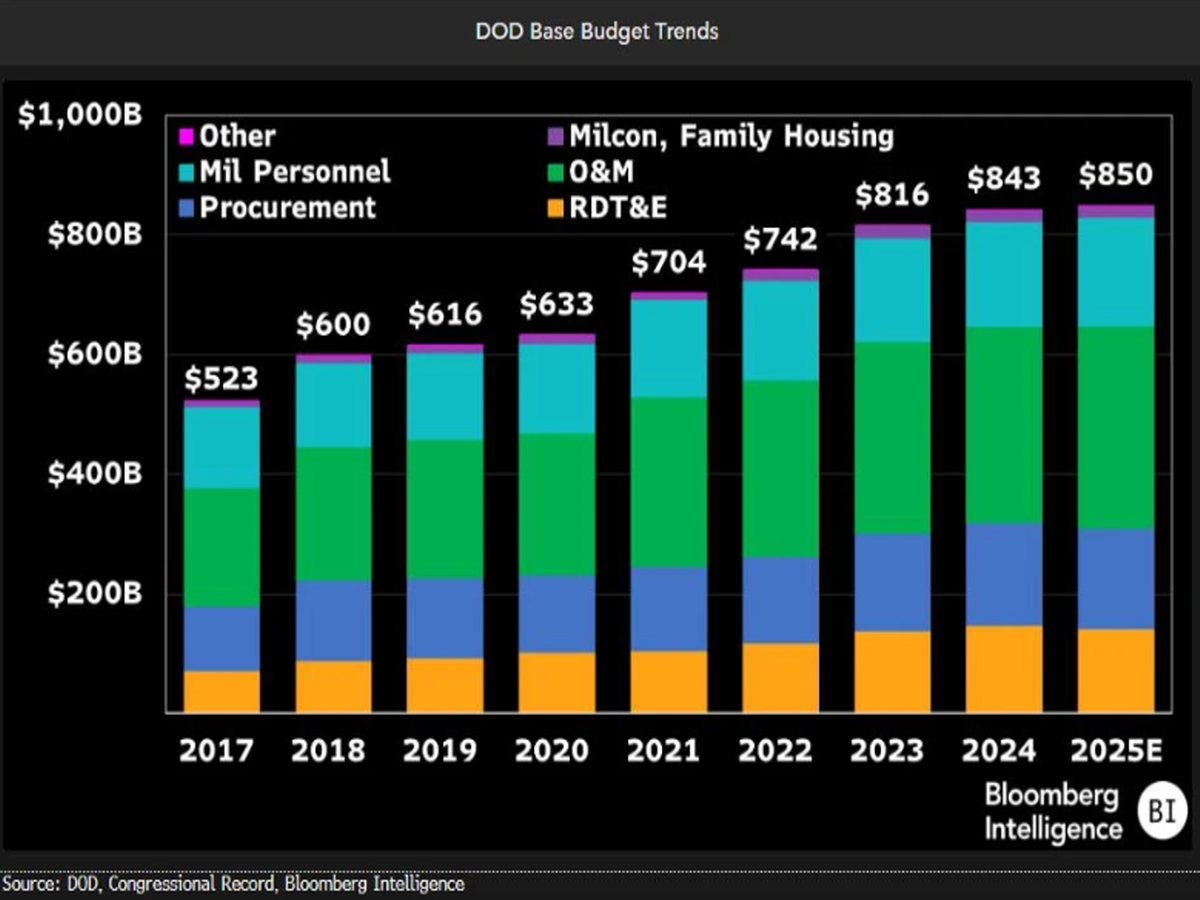
A new budget cycle is taking shape across advanced economies, and defense is moving closer to the center of industrial policy. The OECD’s recent work argues that higher defense spending has meaningful macroeconomic and fiscal effects, while its March 2026 interim outlook also suggests stronger defense spending could support growth in parts of Europe even as energy prices weigh on activity.

That does not mean the story is simple. The OECD also warns that governments financing rearmament with debt may face tighter fiscal choices later, and the IMF says the Middle East war is already disrupting trade and economic activity while pushing up energy prices and financial volatility. In other words, capital is moving toward resilience and rearmament, but under conditions that can still strain the broader economy.

For markets, the key point is that defense budgets increasingly function as directional capital. They shape supply chains, technology priorities, and the commercial prospects of firms positioned around air defense, dual-use systems, energy resilience, and strategic manufacturing. The winners may not simply be the largest contractors, but the companies closest to procurement, integration, and scalable industrial delivery. That last point is an inference from the policy direction, but it fits the pattern laid out by the OECD and IMF.
References
OECD, Fiscal and Macroeconomic Impacts of Defence Spending.
OECD, Economic Outlook, Interim Report, March 2026.
IMF, Statement on the Middle East.
IMF Press Briefing, March 19, 2026.
Socko/Ghost