Tag: defense innovation

  • Emerging Civil-Military Dual-Use Technologies Driving Strategic Autonomy in Indo-Pacific Supply Chains

    Emerging Civil-Military Dual-Use Technologies Driving Strategic Autonomy in Indo-Pacific Supply Chains

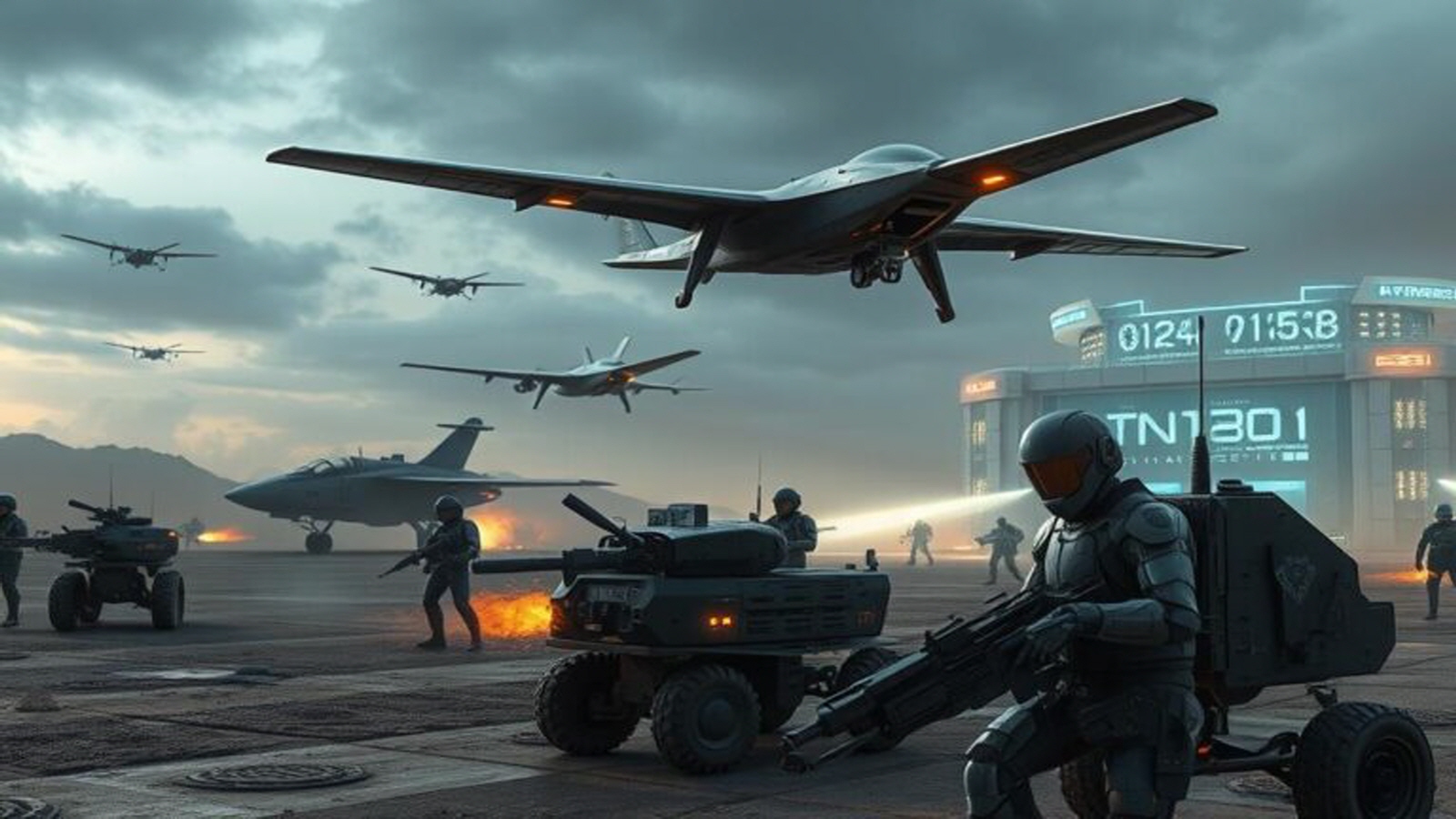
    The Indo-Pacific has become the world’s most contested technological theater, where military innovation and civilian industry are now inseparable. The region’s pursuit of strategic autonomy—the ability to secure economic value chains without dependence on geopolitical rivals—is increasingly driven by dual-use technologies originally developed for defense: AI-enabled sensing, quantum-secure communications, autonomous systems, resilient robotics and advanced semiconductor architectures.

    The convergence of defense and civilian innovation is not a future scenario. It is already rewriting the rules of supply-chain security, investment behavior and industrial strategy across the Indo-Pacific.

    1. AI: From Battlefield Decision Systems to Industrial Optimization

    AI began as a force-multiplier for ISR (intelligence, surveillance, reconnaissance) and autonomous targeting. Today, its dual-use expansion is transforming:

    maritime logistics and port automation,

    energy grid forecasting and resilience,

    aviation maintenance and predictive safety,

    financial risk modeling tied to supply-chain disruptions.

    Indo-Pacific governments increasingly view AI as a strategic asset, not merely a commercial tool. Nations such as South Korea, Japan, Australia and Singapore are integrating military-grade AI frameworks into commercial logistics networks to ensure continuity during geopolitical shocks—a concern heightened by Taiwan Strait tensions and the weaponization of trade routes.

    2. Quantum Computing: The Backbone of Future Supply-Chain Integrity

    Quantum technologies—particularly post-quantum cryptography and quantum key distribution (QKD)—were initially classified defense research.
    Now they are being rapidly deployed into civilian telecommunications and financial clearance systems across the region.

    Quantum integration enables:

    tamper-proof supply-chain authentication,

    secure semiconductor design collaboration,

    encrypted energy-grid command systems,

    high-fidelity modeling of rare-earth mineral extraction.

    As the U.S., Japan and Australia deepen quantum cooperation under AUKUS Pillar II, capital flows to quantum startups have surged, signaling a regional hedge against Chinese technological overreach.

    3. Autonomous Systems: Civilian Infrastructure Built on Military Logic

    Autonomous platforms—UAVs, maritime drones, robotic logistics vehicles—originated as battlefield tools. Today, they shape civilian sectors:

    offshore wind maintenance

    agricultural automation in Australia and Indonesia

    autonomous port operations in Singapore and Busan

    undersea mapping critical for submarine cables and energy pipelines

    These systems reduce vulnerability to chokepoints such as the South China Sea, enabling Indo-Pacific states to maintain operational continuity without foreign intervention.

    4. Supply-Chain Resilience: Dual-Use Technologies Become Strategic Shields

    The Indo-Pacific’s semiconductor reliance, rare-earth vulnerabilities and maritime exposure demand resilience that only dual-use technology can provide.

    New standards emerging include:

    defense-grade cybersecurity in private logistics,

    parallelized “critical tech corridors” bypassing conflict zones,

    AI-managed redundancy frameworks for semiconductor production,

    autonomous monitoring of submarine cable security.

    This shift is pulling institutional capital toward firms specializing in defense-grade AI, robotics, and quantum technologies—blurring the line between commercial and national-security sectors.

    5. Markets Respond: Capital Reallocates to Defense-Tech Innovators

    Regional capital markets—from Tokyo to Sydney to Seoul—are reweighting portfolios toward technology-driven defense firms.
    Drivers include:

    the need for supply-chain sovereignty,

    defense procurement modernization,

    public-private co-investment programs,

    and the recognition that civil-military convergence is irreversible.

    Companies able to demonstrate dual-use scalability—military-origin technology with commercial deployment potential—are becoming prime targets for global funds seeking exposure to Indo-Pacific resilience themes.

    Conclusion: The Indo-Pacific Is Building a New Industrial Doctrine

    Civil-military dual-use technologies are no longer supplementary components of national strategy—they are the central infrastructure of Indo-Pacific security and economic competitiveness.

    AI, quantum and autonomous systems will define which nations can maintain sovereignty, protect value chains and attract long-term capital.
    The region’s future will belong to states and companies that can deploy military-born innovations at industrial scale, constructing supply chains that are self-reliant, intelligent and geopolitically resilient.

    SockoPower | Defense-Tech & Strategic Intelligence
    High-end analysis for a world entering techno-geopolitical competition.
  • Taiwan’s Home-Built Satellite Launch Taiwan’s First Home-Built Satellite Marks a Turning Point in the Global Civil-Military High-Tech Race

    Taiwan’s Home-Built Satellite Launch Taiwan’s First Home-Built Satellite Marks a Turning Point in the Global Civil-Military High-Tech Race

    Taiwan’s successful launch of its first fully home-built satellite—carried to orbit by SpaceX’s Falcon 9—signals far more than a technological achievement. It represents a strategic shift in the global civil-military innovation race at a moment when supply chain security, dual-use technology, and geopolitical resilience are becoming unavoidable priorities for governments worldwide.

    Named Chi Po-lin, the Formosat-8 satellite is the first in a planned constellation of eight Earth-observation platforms designed and manufactured domestically. While many countries still rely on external suppliers or lease commercial imaging services, Taiwan’s program demonstrates a decisive move toward indigenous high-tech autonomy. The satellite will orbit at 561 kilometers, collecting high-resolution data not only for environmental and urban-planning purposes but also for disaster response, climate monitoring, and national security applications.

    Leveraging local innovation pipelines, Taiwan’s space agency (TASA) reports that 84–86% of the satellite’s components were domestically manufactured—a milestone that dramatically reduces foreign dependency in an era of widening geopolitical uncertainty.

    But the deeper significance lies not in the technical details alone. Rather, Formosat-8 illustrates how small and mid-sized states are increasingly turning to dual-use space technologies to strengthen deterrence, upgrade national digital infrastructure, and build strategic resilience against external coercion. This shift echoes broader trends throughout the Indo-Pacific, where satellites, drones, AI-enabled sensing, and secure communications systems are reshaping both civil and military capabilities.

    Taiwan’s decision to build and deploy one satellite per year until 2031 will eventually create a sovereign, persistent surveillance network—allowing real-time environmental mapping, maritime domain awareness, and early warning capabilities. In practice, this means that critical information such as disaster zones, illegal fishing, covert military deployments, and gray-zone activities can be monitored without relying on foreign satellite windows.

    For an island under continuous geopolitical pressure, reducing vulnerability in the information supply chain is no longer optional—it is survival strategy.

    The launch also underscores the rise of commercial space actors as indispensable global partners. SpaceX, with its reliable and cost-efficient launch cadence, has effectively become the universal logistics backbone for emerging space nations. If a satellite fits in the payload bay, SpaceX will put it into orbit with unprecedented speed, allowing countries like Taiwan to compress development cycles and enter strategic orbits years ahead of schedule.

    This dynamic is accelerating a more fragmented yet innovative global space ecosystem. Nations with advanced semiconductor, manufacturing, and AI sectors—like Taiwan—are now using these strengths to enter the aerospace and defense space at a lower barrier of entry than in the past. Meanwhile, dual-use technologies are blurring the lines between civilian industry and strategic capabilities. A constellation designed for climate science can instantly become a national security asset; a commercial launch provider becomes a critical defense enabler.

    Taiwan’s achievement also fits into a larger Indo-Pacific trend: the rapid militarization of high-tech industries under democratic industrial policy. Japan, South Korea, Australia, and India are simultaneously expanding space reconnaissance programs, low-orbit communication networks, hypersonic research pipelines, and autonomous defense platforms. The region is heading toward a future where civilian innovation clusters—semiconductors, composites, robotics, photonics—power the next generation of deterrence architectures.

    China and Russia, meanwhile, are escalating counter-space programs, testing ASAT technologies, and integrating space-based ISR into joint operational planning. The United States continues to expand its Space Force and commercial launch ecosystem while encouraging allies to build capacity rather than depend on Washington alone.

    Against this backdrop, Taiwan’s satellite is more than a scientific tool; it is a sovereign digital shield.

    The Formosat-8 launch also demonstrates a strategic industrial truth: nations that build and control their own data infrastructure will dominate the next geopolitical era. Countries reliant on foreign satellite imagery, foreign cloud servers, or foreign supply chains will lack autonomy in crises. Taiwan’s approach—DIY innovation, domestic component manufacturing, and multi-year constellation planning—offers a roadmap for other small states seeking to build resilience in a contested world.

    In the realm of supply chains, Taiwan’s move strengthens its position as a high-tech manufacturing hub capable of integrating electronics, advanced materials, sensors, optics, and AI. The satellite program complements its semiconductor ecosystem, creating a vertically integrated dual-use industrial base aligned with U.S., European, and Indo-Pacific security interests.

    For global defense markets, this development is another indicator that the next decade will belong not only to superpowers but also to agile, technologically capable democracies building localized high-tech ecosystems. In space, as on Earth, speed, autonomy, and resilience increasingly outweigh sheer size.

    Taiwan’s new constellation is a warning shot to adversaries and a signal to allies: the era of small-state innovation powering big-state deterrence has arrived.

  • Integration of Dual-Use Technologies in Civil-Military Infrastructure

    Integration of Dual-Use Technologies in Civil-Military Infrastructure

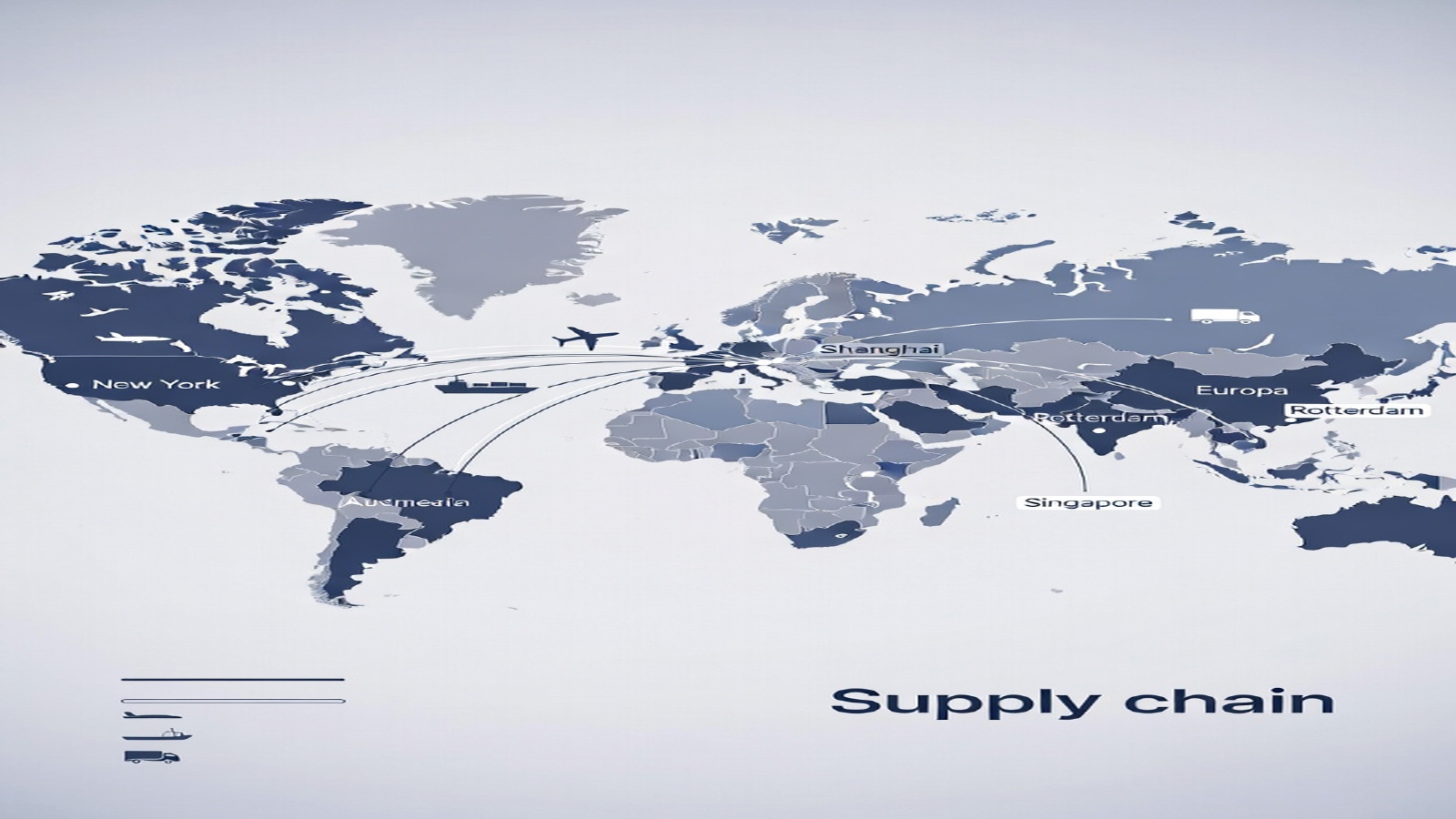
    Dual-use technologies are no longer confined to research labs or military pilot programs. Across the Indo-Pacific, Europe, and the Middle East, nations are embedding AI-driven logistics, quantum-secure communications, and advanced additive manufacturing directly into civilian and military infrastructure.

    This shift is transforming global supply chain resilience, altering the balance between commercial innovation and strategic national defense.

    1. AI-Integrated Infrastructure: The New Logistics Backbone

    AI-enhanced routing, predictive maintenance, and autonomous transport systems are now standard across major ports and logistics hubs.

    Civilian impact: Faster cargo turnover, reduced downtime.
    Military advantage: Real-time battlefield logistics, resilient supply chains during conflict or sanctions.

    Nations like the U.S., Japan, Singapore, and South Korea are embedding AI into dual-use ports and airbases that seamlessly switch to military operations during crises.

    2. Quantum Communications for Strategic Mobility

    Quantum-resistant encryption is being deployed in civil financial networks while simultaneously securing military command networks.

    This dual deployment creates a self-reinforcing ecosystem: commercial demand funds R&D, and military requirements push security standards upward.

    China, the EU, and the U.S. are leading a new competition for quantum-secure trade corridors and hardened digital supply routes.

    3. Advanced Manufacturing: 3D Printing and Rapid Deployment Hubs

    Factories capable of 3D printing spare parts, drones, and modular infrastructure now serve two masters:

    Civilian: Rapid product development, local industrial capacity.

    Defense: On-demand equipment, field-deployable repair hubs, modular battlefield logistics.

    The result is a tighter integration between commercial production hubs and military force projection, tightening control over global chokepoints.

    4. Geopolitical Implications: New Supply Chain Blocs

    As nations encode dual-use technologies into their infrastructure:

    Supply chains become more localized. Production hubs become more securitized. Global trade routes become strategically contested.

    The world is shifting toward two major tech-infrastructure blocs:
    a U.S.-led open innovation network, and a China-centered state-driven dual-use industrial corridor.

    References

    OECD Digital Security & Emerging Tech Briefings

    U.S. DoD Emerging Capabilities Reports

    EU Dual-Use Export Control Framework

    RAND Corporation: Civil-Military Technology Integration

  • How Dual-Use Technologies Are Reshaping Defense and Global Markets

    How Dual-Use Technologies Are Reshaping Defense and Global Markets

    Introduction: The Blur Between Silicon Valley and the Military-Industrial Base

    Across the world, the boundary between civilian innovation and military modernization is collapsing.
    AI laboratories, cloud hyperscalers, semiconductor fabs, and aerospace startups are now critical players in national defense—not because governments invited them in, but because commercial technologies have surpassed traditional defense R&D in scale, speed, and capability.

    Dual-use technologies—AI, quantum computing, hypersonics, robotics, biotech, and space systems—are reshaping both defense architectures and commercial capital markets.

    1. AI as the Central Nervous System of Dual-Use Transformation

    Commercial AI firms now generate innovations far faster than government labs:

    • Large-scale models accelerating ISR fusion
    • Autonomous navigation for logistics and weapons
    • Predictive maintenance & supply forecasting
    • Commercial cloud replacing government data centers

    The shift is so dramatic that defense planners increasingly build strategies around what the commercial sector will produce next—not what military R&D will develop internally.

    2. Quantum Computing and Encryption: Offensive and Defensive Stakes

    Qantum technologies represent one of the most strategically sensitive dual-use domains:

    • Civilian use: chemistry, materials, pharmaceuticals, finance
    • Military use: codebreaking (“Q-Day”), secure comms, navigation without GPS

    States are racing to secure intellectual property, leading to new forms of export control, investment screening, and talent restrictions.

    3. Hypersonics and the Acceleration of Aerospace Commercialization

    Hypersonic propulsion—once exclusive to defense—is now being pursued by commercial space and transportation firms.
    This creates three strategic consequences:

    1. Commercial capital reduces R&D costs for militaries
    2. Supply chains become harder to regulate
    3. Rival states exploit gray zones to acquire sensitive tech

    The dual-use nature makes non-proliferation regimes nearly impossible to enforce.

    4. Capital Markets Become the Battlefield

    Dual-use tech attracts massive venture investment, which becomes a national security factor:

    • U.S. Outbound Investment Controls (EO 14105)
    • Europe’s tightening FDI screening
    • China’s tech funds supporting AI, drones, and materials
    • Gulf sovereign wealth funds investing strategically in dual-use startups

    The global map of “who funds what” now shapes geopolitical alliances.

    5. Regulatory, Ethical, and IP Conflicts Intensify

    As civilian firms hold core strategic IP, governments confront new challenges:

    • Who owns battlefield algorithms?
    • Can commercial AI companies refuse military contracts?
    • How do states secure IP without crippling innovation?

    The result is a world where technology governance = national strategy.


    Conclusion

    The rise of dual-use civil–military innovation is not a trend—it is a structural transformation.
    It will define future military power, economic competitiveness, and geopolitical stability.