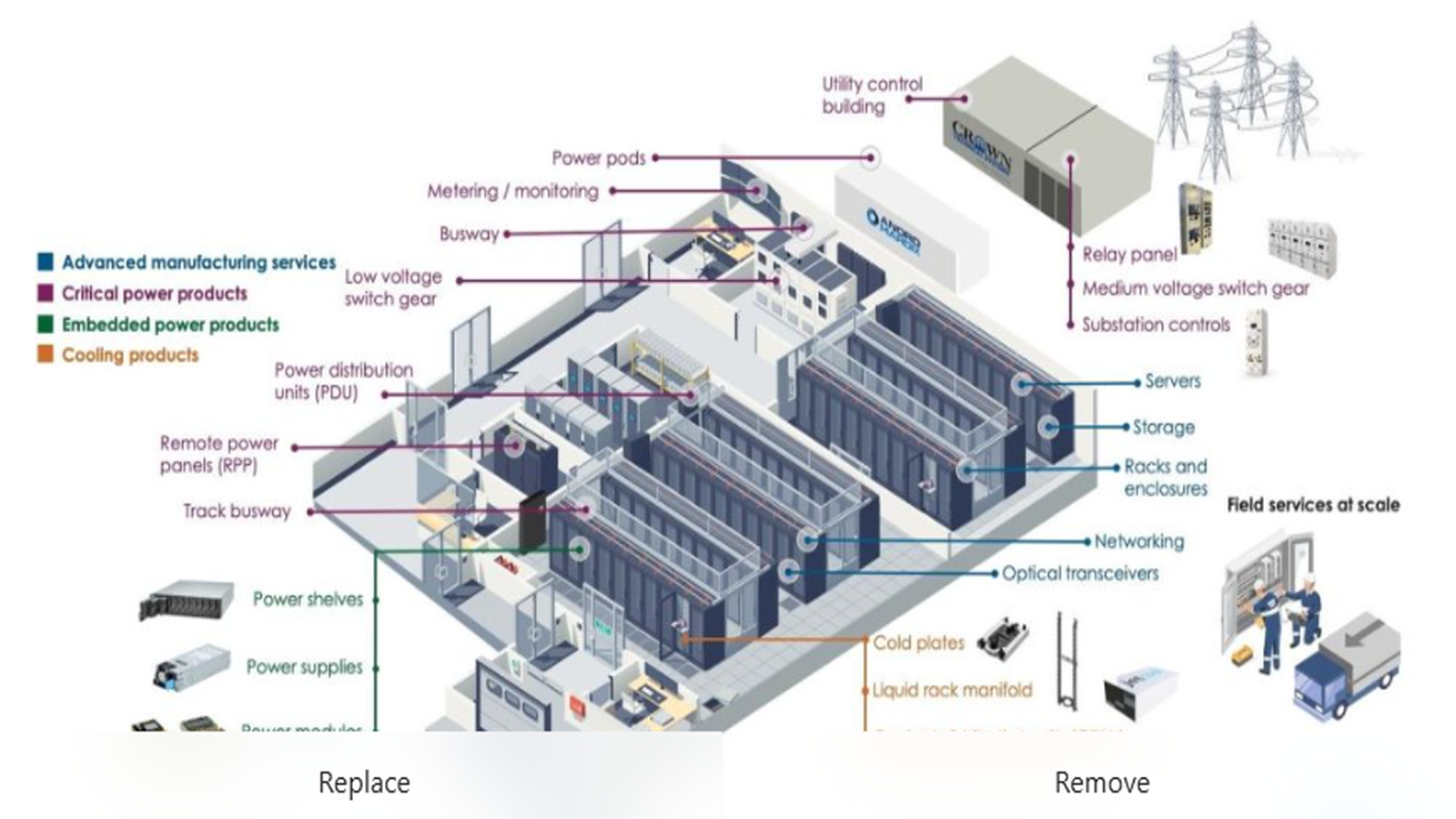
Tag: critical infrastructure

  • NATO Briefing: Data Centers Have Become an Energy-Security Chokepoint

    NATO Briefing: Data Centers Have Become an Energy-Security Chokepoint

    In recent internal briefings and strategic discussions, NATO has quietly reframed a long-standing assumption:
    energy security is no longer just about pipelines, refineries, or transmission towers.
    It is now inseparable from data center resilience.

    This shift reflects a hard reality of modern warfare and statecraft—digital continuity is operational continuity. When data centers lose power, command-and-control degrades, ISR pipelines stall, AI-enabled analysis halts, and civil-military coordination fractures. Energy vulnerability, in short, has become a frontline risk.

    From Power Plants to Server Racks: A Strategic Reclassification

    For decades, alliance energy planning focused on fuel supply and grid robustness. Today, that lens has expanded. Data centers—once treated as civilian IT assets—are now understood as strategic infrastructure with military consequences.

    Three developments drove this reassessment:

    1. Explosive Power Density
      AI training, real-time analytics, and persistent surveillance workloads have dramatically increased energy intensity per rack. A brief outage now produces outsized operational damage.
    2. Civil–Military Interdependence
      Military systems increasingly rely on commercial clouds, regional colocation hubs, and civilian power grids. The boundary between “civilian blackout” and “military disruption” has effectively collapsed.
    3. Multi-Domain Attack Surface
      A single data center can be pressured simultaneously via cyber intrusion, grid manipulation, physical sabotage, or supply-chain denial. Energy is the common point of failure.

    Why Energy Vulnerability Equals Operational Risk

    In NATO assessments, data centers are no longer a passive backend. They are active enablers of:

    • Command, Control, Communications, Computers (C4)
    • ISR fusion and sensor processing
    • AI-assisted decision support
    • Logistics, targeting, and coordination across theaters

    An energy shock—whether intentional or accidental—can degrade these functions faster than kinetic strikes. Unlike hardened bases, many data centers were designed for efficiency, not prolonged denial environments.

    Threat Scenarios Now Taken Seriously

    NATO planners increasingly model scenarios that once sat outside traditional military analysis:

    • Grid-Level Disruption → Regional Data Center Collapse
      Targeted attacks on substations or control software can cascade into digital paralysis.
    • Cyber–Energy Coupling Attacks
      Malware targeting energy management systems can selectively starve data centers of power while masking intent.
    • Supply-Chain Energy Constraints
      Delays in generators, transformers, fuel delivery, or cooling components extend outage recovery timelines well beyond acceptable operational windows.

    These are not hypothetical edge cases. They are realistic pressure points in high-intensity or gray-zone conflict.

    Resilience Is the New Deterrence

    Within NATO discussions, a clear concept is emerging: resilience is deterrence.

    That translates into several strategic directions:

    • Decentralized and Redundant Power Architectures
      Microgrids, on-site generation, and diversified energy inputs reduce single-point failure risk.
    • Integrated Energy–Cyber Defense
      Power infrastructure security can no longer be separated from cyber defense planning.
    • Civil–Military Coordination Frameworks
      Data center operators, grid authorities, and defense planners must share threat models and contingency protocols.
    • Energy-Aware Siting and Design
      Location, cooling strategy, and grid dependency are now strategic variables—not just cost considerations.

    Strategic Implication: The Battlefield Runs on Electricity

    The implication is blunt but unavoidable:

    Data centers sit at the intersection of energy, digital command, and national resilience. NATO’s evolving posture signals that energy-secure computing infrastructure is no longer a technical afterthought—it is a core element of alliance readiness.

    For policymakers, defense planners, and infrastructure operators, the message is clear:
    Protect the power, or lose the fight before it begins.

    References

    Allied and open-source defense analyses on civil–military energy interdependence and grid security.

    NATO — Energy Security and Resilience Frameworks, official alliance briefings and policy overviews.

    European Parliament Research Service — Energy System Disruptions and Security Implications, policy briefings on infrastructure resilience.

    Foreign Policy Research Institute (FPRI) — Data Centers and National Power, analysis on digital infrastructure as strategic assets.

    Socko/Ghost

  • Impact of Military-Grade Cybersecurity Innovations on Global Capital Markets and Supply Chain Resilience

    Impact of Military-Grade Cybersecurity Innovations on Global Capital Markets and Supply Chain Resilience

    The modern economy is being reshaped not only by supply-chain fragility but by the rising intensity of hybrid warfare—a domain where cyberattacks, disinformation, and infrastructure disruption converge. As states adapt, military-grade cybersecurity technologies—once confined to classified defense networks—are rapidly permeating global commercial supply chains.

    This migration is transforming investor behavior, infrastructure valuation, and capital allocation patterns across global markets.

    1. Hybrid Warfare Turns Cybersecurity into a Strategic Market Indicator

    Supply chains are no longer assessed purely on cost efficiency; they are rated on vulnerability to foreign cyber intrusion. Military-origin tools—including behavioral anomaly detection, zero-trust architectures, quantum-resistant cryptography and autonomous network defense systems—are now embedded in:

    logistics platforms,

    semiconductor fabs,

    financial clearinghouses,

    energy transmission systems,

    maritime shipping networks.

    The shift is driven by the realization that cyber weaknesses are national vulnerabilities, and national vulnerabilities depress capital markets.

    Countries in the Indo-Pacific, EU and North America now treat cybersecurity standards as macro-financial stability indicators.

    2. Commercial Supply Chains Move Toward Defense-Level Frameworks

    Corporations are adopting systems once reserved for defense agencies:

    AI-driven threat hunting trained on battlefield cyber data,

    satellite-linked redundancy networks safeguarding maritime trade,

    quantum-hardened encryption layers between critical industrial nodes,

    autonomous cyber-defense bots capable of isolating hostile code in seconds.

    This defense-to-commercial transfer reduces operational risk and raises confidence that supply chains can remain functional even during geopolitical crises.

    As a result, firms demonstrating robust cyber architecture benefit from:

    lower insurance premiums,

    higher valuation multiples,

    increased access to long-horizon capital.

    3. Investor Confidence Shifts: Cybersecure Infrastructure Outperforms

    The capital markets are rewarding companies that integrate military-grade cybersecurity because investors understand that hybrid threats—especially those from state-sponsored actors—are now permanent features of the global landscape.

    Key investment trends include:

    Infrastructure funds overweighting cyber-hardened utilities,

    Sovereign wealth funds backing defense-tech cybersecurity platforms,

    Private equity reallocating toward supply-chain security enablers,

    Capital flight from vulnerable sectors lacking critical cyber protections.

    Cyber resilience has become a valuation driver.
    Weak cybersecurity is now treated similarly to weak liquidity or poor governance: a red flag.

    4. Capital Flows Redirect Toward Firms Protecting Strategic Infrastructure

    Defense-tech companies providing commercialized cybersecurity solutions are experiencing a surge in:

    cross-border investment,

    joint ventures with energy and telecom giants,

    multi-year procurement contracts,

    government-backed financing frameworks.

    The market recognizes that digitally insecure supply chains cannot survive an era of strategic competition.
    Therefore, firms offering:

    quantum-resilient communication,

    autonomous cyber-defense systems,

    military-grade monitoring of industrial networks

    are becoming anchors of next-generation infrastructure portfolios.

    5. The New Reality: Cybersecurity = Supply Chain Survival

    Hybrid warfare has created a world where:

    Supply chains are not only physical but increasingly digital battlegrounds.

    Military-grade cybersecurity is no longer a defense-sector commodity; it is a global economic necessity.

    Companies securing critical infrastructure are receiving capital inflows normally reserved for high-growth technology sectors. Their role is shifting from “IT expense” to strategic backbone of national resilience.

    Conclusion: A New Investment Doctrine for a New Era

    The proliferation of defense-origin cybersecurity tools across commercial supply chains marks a structural evolution in global markets.
    Cyber resilience is now synonymous with economic resilience.

    Capital flows will continue to favor firms that fortify supply chains against hybrid threats. Those who fail to adapt risk being priced out—not by competitors, but by the security expectations of global investors.

    SockoPower | Defense-Tech & Strategic Intelligence
    Where technology, warfare and global markets converge.