Tag: autonomous systems

  • Emerging Civil-Military Dual-Use Technologies Driving Strategic Autonomy in Indo-Pacific Supply Chains

    Emerging Civil-Military Dual-Use Technologies Driving Strategic Autonomy in Indo-Pacific Supply Chains

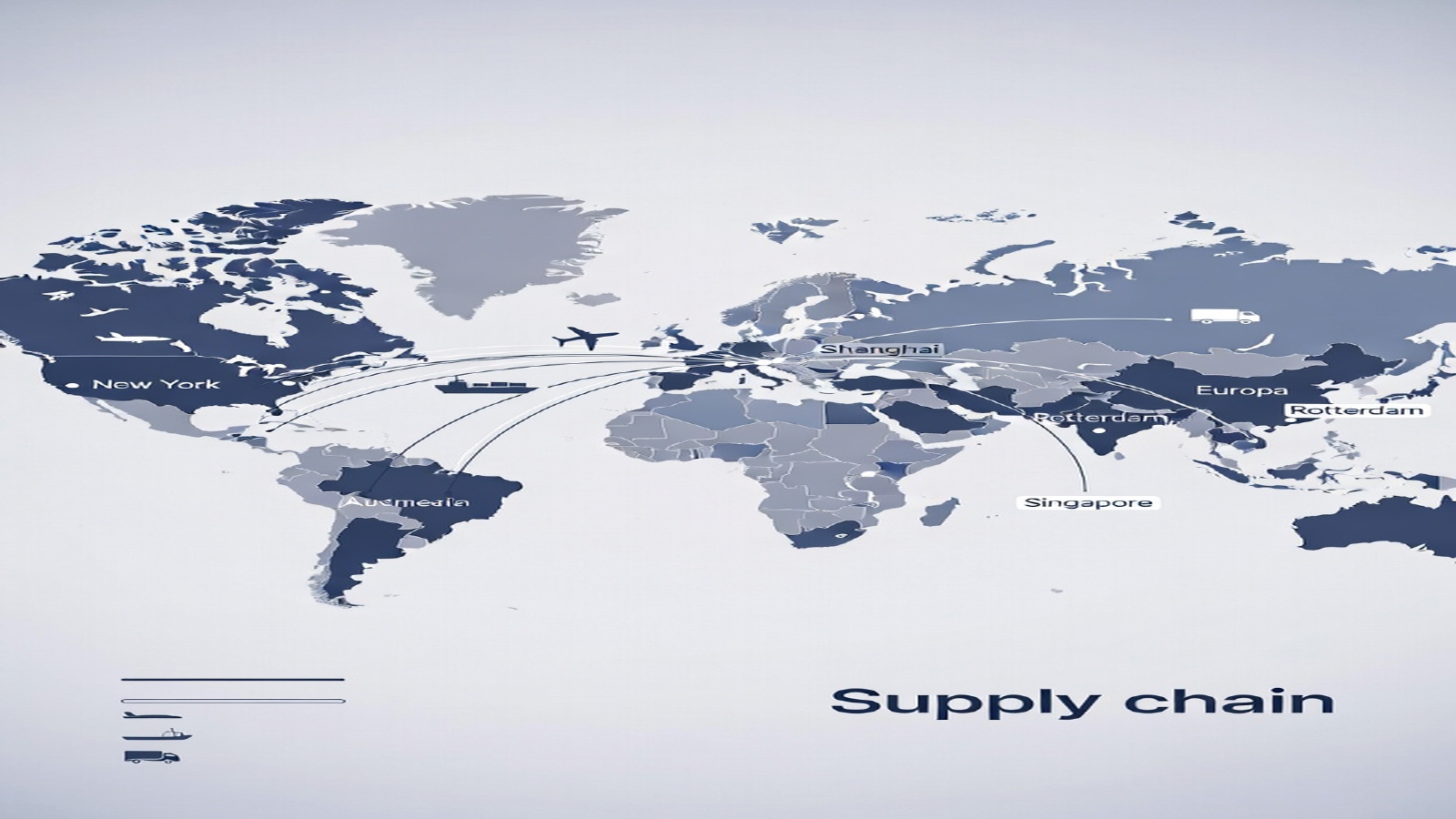
    The Indo-Pacific has become the world’s most contested technological theater, where military innovation and civilian industry are now inseparable. The region’s pursuit of strategic autonomy—the ability to secure economic value chains without dependence on geopolitical rivals—is increasingly driven by dual-use technologies originally developed for defense: AI-enabled sensing, quantum-secure communications, autonomous systems, resilient robotics and advanced semiconductor architectures.

    The convergence of defense and civilian innovation is not a future scenario. It is already rewriting the rules of supply-chain security, investment behavior and industrial strategy across the Indo-Pacific.

    1. AI: From Battlefield Decision Systems to Industrial Optimization

    AI began as a force-multiplier for ISR (intelligence, surveillance, reconnaissance) and autonomous targeting. Today, its dual-use expansion is transforming:

    maritime logistics and port automation,

    energy grid forecasting and resilience,

    aviation maintenance and predictive safety,

    financial risk modeling tied to supply-chain disruptions.

    Indo-Pacific governments increasingly view AI as a strategic asset, not merely a commercial tool. Nations such as South Korea, Japan, Australia and Singapore are integrating military-grade AI frameworks into commercial logistics networks to ensure continuity during geopolitical shocks—a concern heightened by Taiwan Strait tensions and the weaponization of trade routes.

    2. Quantum Computing: The Backbone of Future Supply-Chain Integrity

    Quantum technologies—particularly post-quantum cryptography and quantum key distribution (QKD)—were initially classified defense research.
    Now they are being rapidly deployed into civilian telecommunications and financial clearance systems across the region.

    Quantum integration enables:

    tamper-proof supply-chain authentication,

    secure semiconductor design collaboration,

    encrypted energy-grid command systems,

    high-fidelity modeling of rare-earth mineral extraction.

    As the U.S., Japan and Australia deepen quantum cooperation under AUKUS Pillar II, capital flows to quantum startups have surged, signaling a regional hedge against Chinese technological overreach.

    3. Autonomous Systems: Civilian Infrastructure Built on Military Logic

    Autonomous platforms—UAVs, maritime drones, robotic logistics vehicles—originated as battlefield tools. Today, they shape civilian sectors:

    offshore wind maintenance

    agricultural automation in Australia and Indonesia

    autonomous port operations in Singapore and Busan

    undersea mapping critical for submarine cables and energy pipelines

    These systems reduce vulnerability to chokepoints such as the South China Sea, enabling Indo-Pacific states to maintain operational continuity without foreign intervention.

    4. Supply-Chain Resilience: Dual-Use Technologies Become Strategic Shields

    The Indo-Pacific’s semiconductor reliance, rare-earth vulnerabilities and maritime exposure demand resilience that only dual-use technology can provide.

    New standards emerging include:

    defense-grade cybersecurity in private logistics,

    parallelized “critical tech corridors” bypassing conflict zones,

    AI-managed redundancy frameworks for semiconductor production,

    autonomous monitoring of submarine cable security.

    This shift is pulling institutional capital toward firms specializing in defense-grade AI, robotics, and quantum technologies—blurring the line between commercial and national-security sectors.

    5. Markets Respond: Capital Reallocates to Defense-Tech Innovators

    Regional capital markets—from Tokyo to Sydney to Seoul—are reweighting portfolios toward technology-driven defense firms.
    Drivers include:

    the need for supply-chain sovereignty,

    defense procurement modernization,

    public-private co-investment programs,

    and the recognition that civil-military convergence is irreversible.

    Companies able to demonstrate dual-use scalability—military-origin technology with commercial deployment potential—are becoming prime targets for global funds seeking exposure to Indo-Pacific resilience themes.

    Conclusion: The Indo-Pacific Is Building a New Industrial Doctrine

    Civil-military dual-use technologies are no longer supplementary components of national strategy—they are the central infrastructure of Indo-Pacific security and economic competitiveness.

    AI, quantum and autonomous systems will define which nations can maintain sovereignty, protect value chains and attract long-term capital.
    The region’s future will belong to states and companies that can deploy military-born innovations at industrial scale, constructing supply chains that are self-reliant, intelligent and geopolitically resilient.

    SockoPower | Defense-Tech & Strategic Intelligence
    High-end analysis for a world entering techno-geopolitical competition.
  • Counter-Drone Warfare at Scale — Why NATO’s New Multi-Layer Kill-Web Marks the Beginning of Cost-Dominant Air Defense.

    Counter-Drone Warfare at Scale — Why NATO’s New Multi-Layer Kill-Web Marks the Beginning of Cost-Dominant Air Defense.

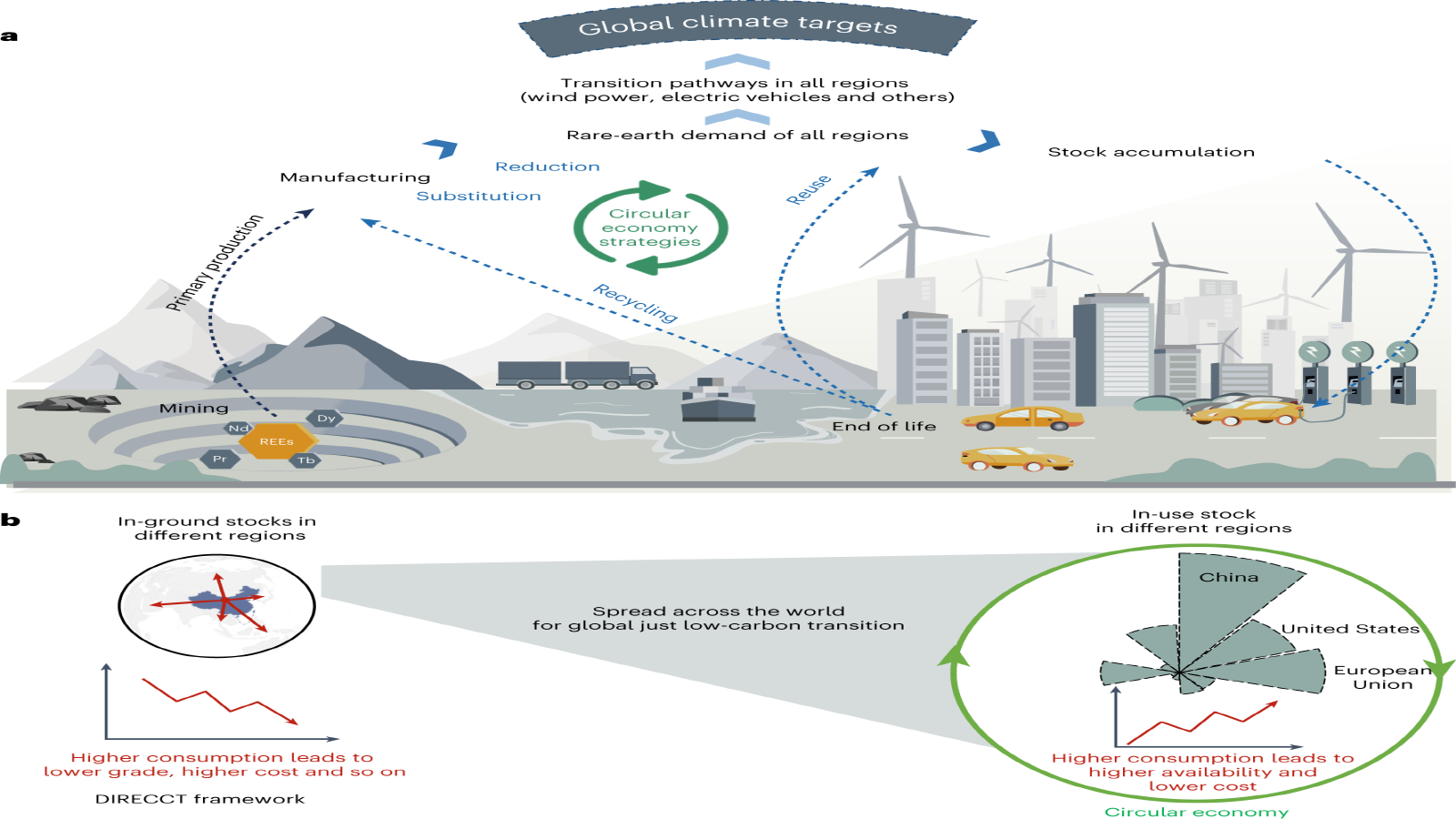
    The future of air defense is no longer about billion-dollar systems shooting million-dollar missiles at improvised threats. Across NATO’s northern flank, militaries are rapidly shifting from platform-centric defense to sensor-centric kill-webs—distributed networks that merge commercial, military, and AI-enabled technologies into a single responsive grid.

    A major demonstration in northern Germany revealed something critical:
    ? NATO can now stand up a fully integrated counter-UAS ecosystem in days, not years.

    This shift signals a massive transformation in procurement, doctrine, and industrial supply chains—one that will define both battlefield survivability and defense sector investment priorities through 2030.

    1. A New Model: Low-Cost Kill Chains That Out-Scale the Threat

    Instead of shooting down $20k drones with $4M interceptors, NATO partners are adopting a layered approach:

    • AI-guided small arms with smart aiming modules

    Turns every soldier into an anti-drone node—effective against close-range FPV drones.

    • Net-launching interceptor drones

    Critical for urban environments and civilian areas where explosives are unacceptable.

    • Medium-caliber gun systems with automated tracking

    Bridges the gap between rifle-range and missile-range threats.

    • Open-architecture fusion of passive + active sensors

    A breakthrough:
    Passive radar that reads distortions in FM radio waves merged with active radar and EO/IR sensors—creating a resilient mesh that doesn’t depend on GPS or continuous emissions.

    Why this matters:
    Russia, Iran, and China are producing drones at industrial scale. Western militaries must counter mass with even cheaper mass, reinforced by real-time data.

    2. 3D Printing at the Tactical Edge — The Next Military Logistics Superpower

    One of the most strategically important demonstrations: a deployable 3D-printing tent producing operational drone frames within hours.

    Military impact:

    Enables on-demand replacement of attrited drones

    Supports custom drone geometries for local missions

    Removes bottlenecks from long-distance supply chains

    Allows rapid adaptation to evolving threat profiles

    This is not just convenience—it is logistics overmatch.

    In a future where drone attrition rates exceed 60–70% per mission, the side that can print faster and deploy faster wins.

    3. The Real Breakthrough: Sensor Fusion With Zero Latency

    For the first time, NATO demonstrated:

    • Seamless data-sharing across classification levels

    Classified → sensitive but unclassified → unclassified
    All in real time, with no latency penalties.

    • Multi-level dissemination

    Snipers

    FPV drone operators

    Mobile air-defense teams

    Unit commanders

    This is equivalent to taking the “JADC2 vision” and building a deployable version in a field in Germany.

    Strategic implication:
    NATO is building a kill-web that can function even without U.S. satellite or AWACS support—critical if American force posture shifts due to political or resource constraints.

    4. Europe Prepares for a Post-Assurance Era

    European officers attending the demo were interested in a simple question:

    “Can this stop Russian drone saturation attacks?”

    The answer—while not explicit—was implied:

    NATO is preparing Europe to defend itself even if U.S. support fluctuates.

    The technologies showcased are affordable at scale. They reduce  dependency on high-end U.S. platforms. They can be produced in Europe with COTS components. They operate without deep logistics chains

    This fits a broader trend:
    Strategic autonomy through distributed lethality.

    5. Economic and Industrial Implications for 2025–2030 Defense  manufacturers

    → Must pivot to modular open-systems architectures
    → Compete on cost-per-kill, not high-end specs

    AI companies

    → Battlefield sensor fusion is becoming a multi-billion-dollar market
    → Real-time edge compute for drone detection is critical

    3D-printing and advanced manufacturing sectors

    → Enter a new era as NATO tactically deploys additive manufacturing Investors.

    → Counter-UAS tech, AI-guided targeting, autonomous defense drones
    → Will outperform traditional aerospace segments in CAGR through 2030

    Geopolitics

    → Russia, China, and Iran accelerating low-cost drone proliferation
    → NATO racing to maintain defensive cost-dominance
    → Countries with strong electronics + additive manufacturing capacity gain leverage

    Bottom Line

    The Germany demonstration wasn’t a product expo. It was a strategic signal:

    NATO is shifting from legacy air defense to scalable, distributed, AI-enabled counter-drone ecosystems.

    This transition will define the next arms race — one centered on cost  efficiency, manufacturing agility, and information dominance.

    It’s not the end of traditional air defense. But it is the beginning of a new era where kill-web scale > platform power.