If the next defense cycle is driven by drone saturation, layered defense, and faster decision loops, then the market may reward integrators more than platform sellers alone. That matters for Hanwha Systems. According to Hanwha’s own materials, the company’s portfolio includes multifunction radar, command-control-communication systems, surveillance technologies, and broader defense-electronics capabilities rather than just a single headline platform.
That portfolio looks better aligned with current demand than it might have a few years ago. IISS argues Gulf defense planning is moving toward layered air defense against lower-cost unmanned threats, and Reuters reports growing regional interest in practical interceptor and drone-defense solutions. In that environment, firms that help link detection, tracking, command, and response may hold an advantage over firms offering isolated hardware without systems depth. That final point is an inference, but it is strongly supported by the direction of demand.
Hanwha’s broader positioning also matters. The company has recently emphasized global expansion, surveillance and electronic-warfare systems, and integrated defense offerings across land, sea, air, cyber, and space. For investors or industry watchers, the real question is not whether Hanwha can sell one product into one competition. It is whether the company is moving into the new defense stack: sensors, fusion, response, and industrial partnerships. Right now, the answer appears to be yes.
References Hanwha, Hanwha Systems company profile. Hanwha, Hanwha’s Four Defense Companies Gear up for Global Expansion. Hanwha, Aerospace & Defense, Mechatronics. Hanwha, Hanwha expands industrial alliance in Canada for CPSP. IISS, Defending the Skies of the Arab Gulf States. Reuters, Ukraine’s drone masters eye Iran war to kickstart export ambitions.
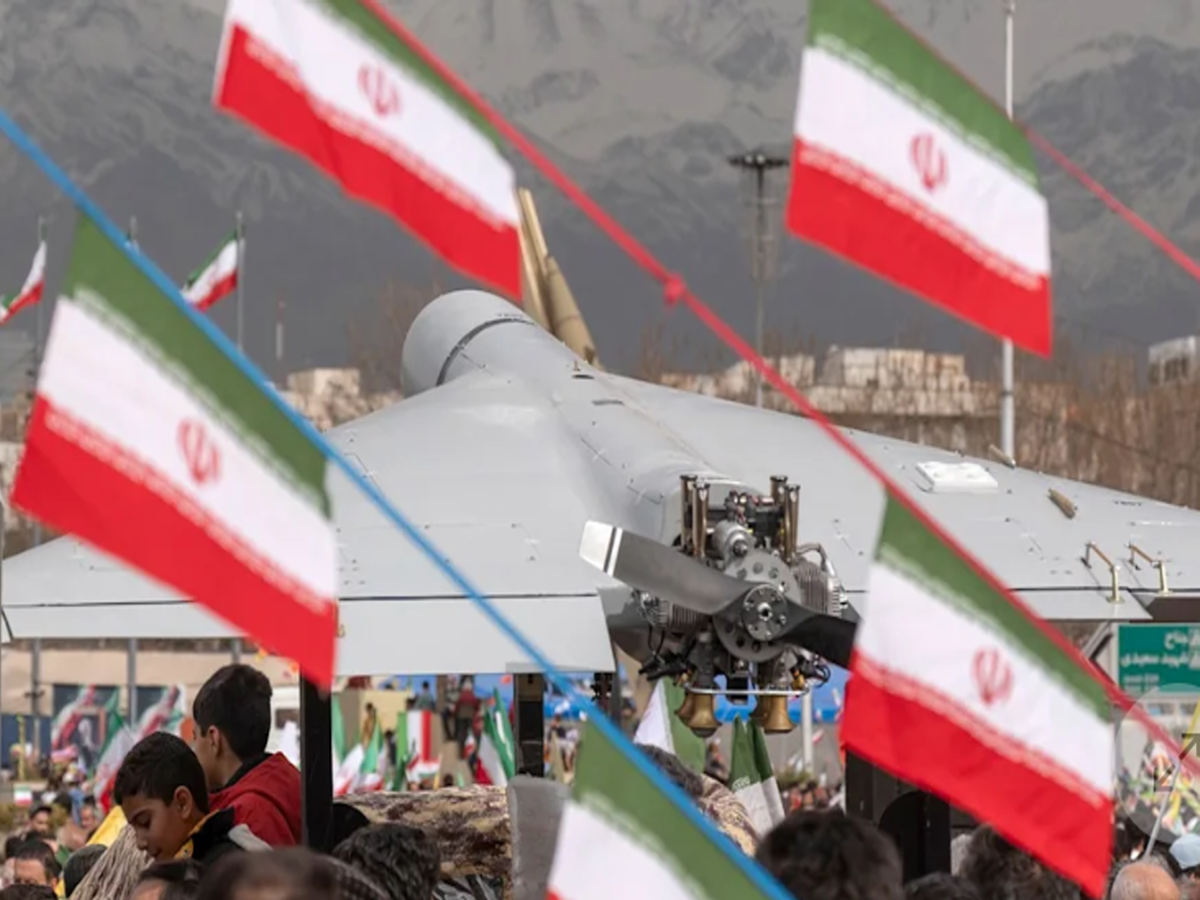
Iran’s recent use of large drone salvos has sharpened a lesson that defense planners already suspected: traditional air-defense systems are too expensive to be the only answer to cheap, mass-produced attack drones. What matters now is not just range or prestige, but whether a country can detect, classify, and stop repeated low-cost threats without exhausting its own inventory.
That is why the Gulf’s next defense cycle is likely to be shaped by layered drone defense rather than legacy missile defense alone. IISS argues that Gulf states need a broader mix of lower-cost interception, radar integration, and distributed defensive architecture, while Reuters reports that Ukrainian firms are already trying to export interceptor know-how to Gulf buyers worried about Iranian-style attacks.
For markets, this is an early signal rather than a finished outcome. The strongest demand may not go first to the most glamorous offensive platform, but to the firms that can deliver practical drone shields: sensors, software, short-range interceptors, and systems integration. In that sense, Iran’s barrage is not just a military event. It is a procurement signal.
References IISS, Defending the Skies of the Arab Gulf States. Reuters, Ukraine’s drone masters eye Iran war to kickstart export ambitions. Reuters, Ukraine and Saudi Arabia sign deal on defence cooperation.
The Iran war is forcing both militaries and investors to confront a brutal new arithmetic. Cheap one-way attack drones can be launched in large numbers, impose real pressure on energy infrastructure and civilian systems, and force defenders to spend far more money on detection and interception than the attacker spends on launch. CSIS argues that Iran’s drone campaign in the Gulf relied heavily on saturation waves of Shahed-style systems, designed less for precision battlefield brilliance than for persistence, disruption, and economic asymmetry.
That matters because the center of gravity in defense markets may be shifting. In earlier years, much of the fascination was with the offensive platform itself: range, payload, autonomy, and survivability. But recent conflict dynamics suggest the more scalable business opportunity may lie in what stops these systems. IISS notes that Gulf states face a layered UAV threat and that long-range missile defense was never meant to be the primary answer to lower-cost unmanned systems. That points to a broader demand curve for radar integration, AI-assisted tracking, electronic warfare, short-range interceptors, and lower-cost kill chains built specifically for drone-heavy environments.
The commercial market is already reacting. Reuters reported this week that Ukrainian defense firms are trying to turn wartime know-how in drone interception into export business for Gulf customers worried about Iranian UAV attacks. The report says Ukrainian companies see growing interest from Saudi Arabia, Qatar, and the United Arab Emirates, precisely because the region is looking for more practical and affordable ways to counter mass drone raids. That is an important signal: the next wave of defense demand may favor companies that can offer fast, scalable, and comparatively cheap counter-UAS solutions rather than exquisite but expensive legacy systems alone.
This shift also changes how investors should read “defense technology.” The winning firms may not be the ones with the most dramatic hardware demo, but the ones that connect sensors, software, interceptors, data fusion, and logistics into a repeatable operating system. In other words, the market prize is moving from standalone platforms toward integrated defense architecture. That is partly an inference, but it is strongly supported by the way CSIS frames the economic asymmetry of drone warfare and by IISS’s emphasis on layered and diversified counter-UAV options across the Gulf.
Supply chains are therefore becoming part of the weapons story, not just a background industrial detail. A drone-heavy battlespace rewards manufacturers that can build at volume, replenish fast, and integrate components without long procurement delays. It also rewards states and contractors that can secure access to electronics, propulsion, communications modules, and low-cost interceptor production. SIPRI’s latest yearbook reinforces the larger pattern: armed UAVs and missiles are becoming increasingly central across modern conflicts, making industrial capacity and production resilience more important strategic variables, not merely back-office concerns.
The result is a new investment logic. The headline technology may still be the attack drone, but the deeper market may sit one layer below and one layer above it: below, in components, manufacturing, and replenishment; above, in command software, sensors, and integrated defense networks. For Gulf states, Europe, and Asia-Pacific buyers watching the Iran war, the lesson is becoming clearer. The future defense winner may not simply be the company that builds the sword. It may be the company that builds the shield, scales it fast, and connects it to the broader industrial chain.
References CSIS, Unpacking Iran’s Drone Campaign in the Gulf: Early Lessons for Future Drone Warfare. IISS, Defending the Skies of the Arab Gulf States. IISS, Uninhabited Middle East: UAVs, ISR, Deterrence and War. Reuters, Ukraine’s drone masters eye Iran war to kickstart export ambitions. SIPRI Yearbook 2025, chapter on missiles and armed uncrewed aerial vehicles.